

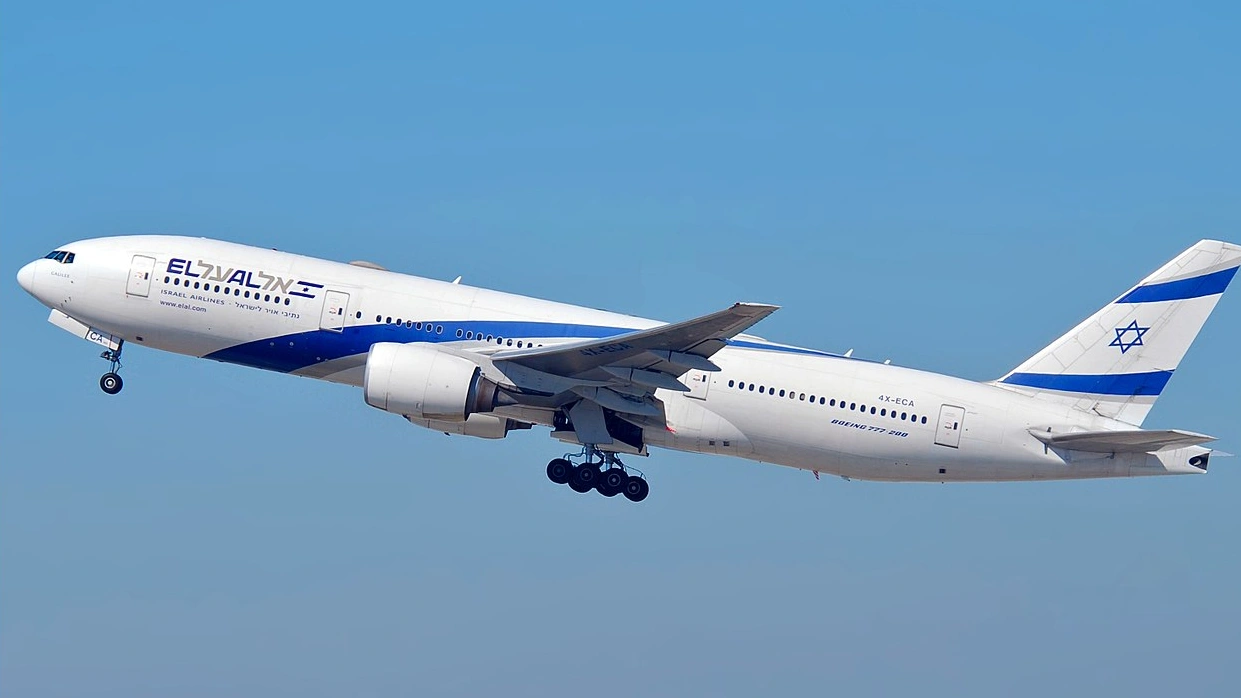
TEL AVIV- EL AL (LY) flight LY7, a Boeing 777-200ER arriving from Tel Aviv (TLV), experienced a go-around at New York John F. Kennedy International Airport (JFK) on October 11, 2026. The incident involved communication problems between the flight crew and the tower controller.
The exchange included confusion over heading and altitude instructions, gusty winds, and a potential traffic conflict involving a departing aircraft. A Saudia (SV) Boeing 777-300ER was following the EL AL flight.

What Happened During the EL AL Go-Around?
The EL AL crew reported that it was established on the localizer for Runway 4R. JFK Tower issued a landing clearance, and the pilot acknowledged it without repeating the runway number or callsign.
The pilot then requested a wind check. The controller asked, “Who’s asking?” The pilot identified EL AL 7, after which the controller repeated the landing clearance and reported winds from 100 degrees at 13 knots, gusting to 22 knots.
The initial exchange raised questions about the completeness of the readback and why the controller provided wind information only after the pilot requested it. The gusty conditions made the information relevant to the approach.
The situation escalated after another pilot reported a dead animal on the runway, possibly a goose. The controller asked the EL AL crew whether it wanted to land or go around. The crew chose to go around.
The controller instructed the aircraft to turn right heading 130 and climb to 2,000 feet. After a pause, the crew asked which heading to fly.
The controller reportedly replied, “I don’t know, I’m not sure.”
The crew subsequently reported climbing to 4,000 feet, rather than the 2,000 feet assigned by the controller. The controller repeated the instruction to turn right heading 130.
The crew later appeared to ask whether the heading was 120 or 130 degrees. The original account’s author noted uncertainty about the number heard in the recording. The controller confirmed heading 130, warned of traffic to the aircraft’s left, and again instructed the crew to turn right.
According to the OMAAT, the EL AL aircraft did not turn promptly despite repeated instructions. The delay raised concern about a possible traffic conflict with a departing aircraft.
The sequence highlights the importance of clear heading and altitude instructions during a go-around.
The flight crew needed to follow the assigned instructions, while the controller needed to resolve uncertainty with precise communication.

Saudia’s Response to Runway Hazard
The original account also describes the Saudia Boeing 777-300ER following the EL AL aircraft. Its pilot reportedly indicated a willingness to land if the animal on the runway was small.
The account does not confirm the animal’s species or size, nor does it establish the final outcome of the Saudia aircraft’s approach.
The EL AL aircraft eventually landed at JFK. After landing, the crew received a telephone number to call, reportedly in connection with a possible pilot deviation.
The account does not confirm whether a formal finding of pilot deviation followed. It also does not establish that an actual loss of separation occurred.
Bottom Line
The reported incident involved communication problems on both sides. The flight crew sought repeated clarification of its heading and reported an altitude that differed from the controller’s instruction.
The controller, meanwhile, reportedly expressed uncertainty about a heading he had already assigned.
The exchange highlights the importance of accurate readbacks, clear instructions and prompt coordination during a go-around.
Stay tuned with us. Further, follow us on social media for the latest updates.
Join us on Telegram Group for the Latest Aviation Updates. Subsequently, follow us on Google News
