


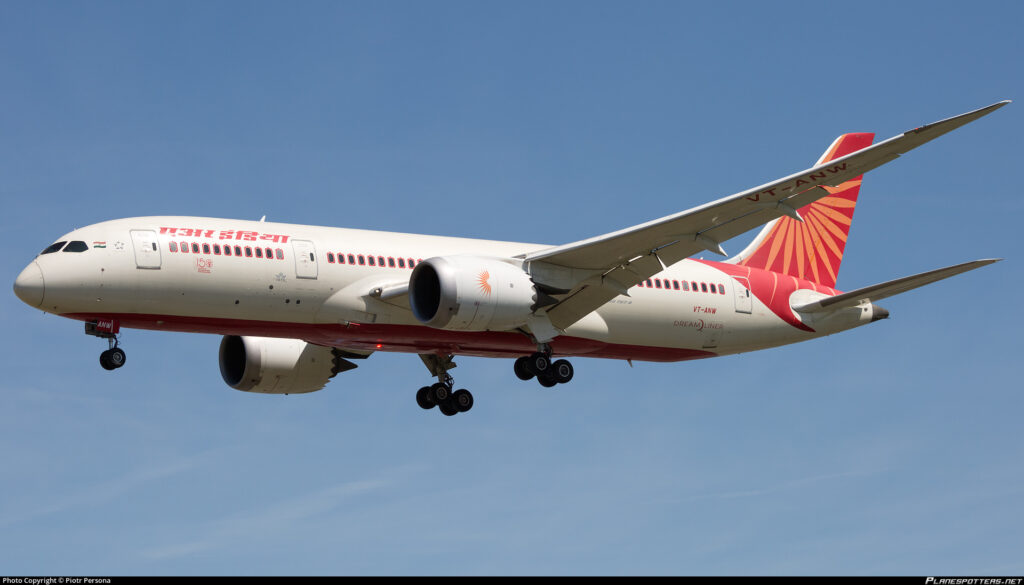
GURUGRAM- Air India (AI) flight AI2030, travelling from Frankfurt Airport (FRA) to Indira Gandhi International Airport, Delhi (DEL), was diverted to Jaipur International Airport (JAI) on Wednesday, October 14, 2026, after a suspected hijack alert.
The Boeing 787-9, registered VT-TSE and previously operated by Vistara, carried 306 passengers and crew members.
The Directorate General of Civil Aviation (DGCA) is investigating whether Mumbai (BOM) air traffic control (ATC), its newly installed radar system, a transponder signal or another technical issue triggered the warning.
Security agencies cleared the aircraft and crew after checks, but the cause remained unconfirmed as of October 15, 2026.
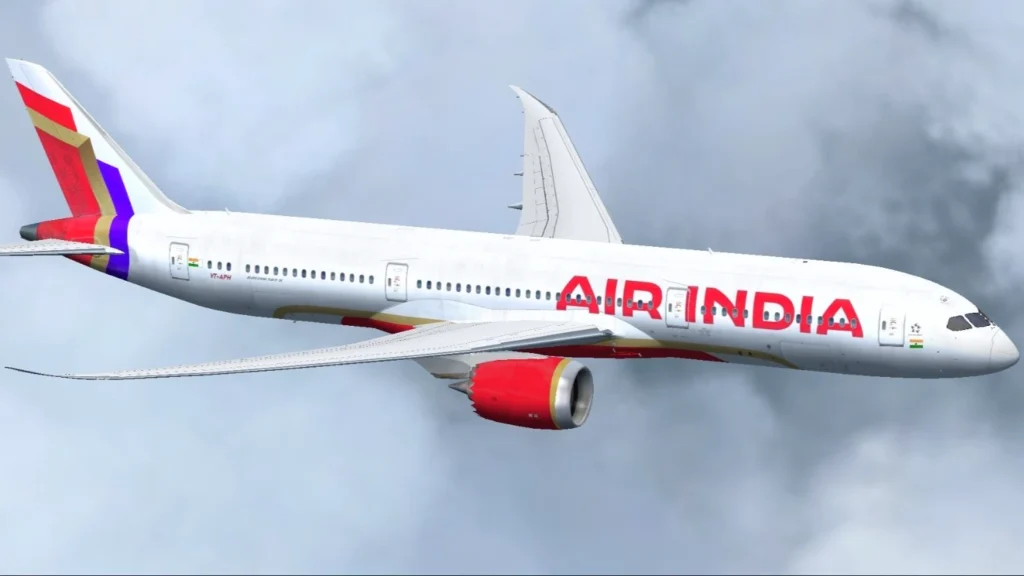
Investigators Examines Air India AI2030 Alert
The diversion has raised questions about radar reliability, cockpit communications and aviation security procedures.
Although the flight crew reportedly told controllers that operations were normal, authorities followed precautionary protocols and directed the aircraft to Jaipur for inspection.
In its October 15 report, Outlook India highlighted the possibility of a technical issue involving Mumbai ATC’s newly installed radar system.
Investigators are examining the alert’s origin, including whether the aircraft transmitted an emergency code or whether a ground-based system generated an incorrect warning. No confirmed finding has established the cause.
Mumbai ATC Radar System Under Scrutiny
Investigators are focusing on Mumbai ATC, which has been handling en-route traffic for Indian aircraft travelling between Delhi and western destinations. Indian carriers have been taking longer routes following the closure of Pakistani airspace to them, increasing the role of alternative air traffic control arrangements.
According to reports, the pilots did not transmit transponder code 7500, even though the Mumbai ATC system reportedly indicated a possible hijack involving flight AI2030.
The crew told controllers that there was no emergency on board, but established security procedures required the aircraft to divert.
The newly installed radar system is one area of the investigation. Authorities need to determine whether the alert resulted from a radar or software issue, a problem with the processing of transponder information, or another technical or operational factor. A radar malfunction remains a possibility rather than a confirmed finding.
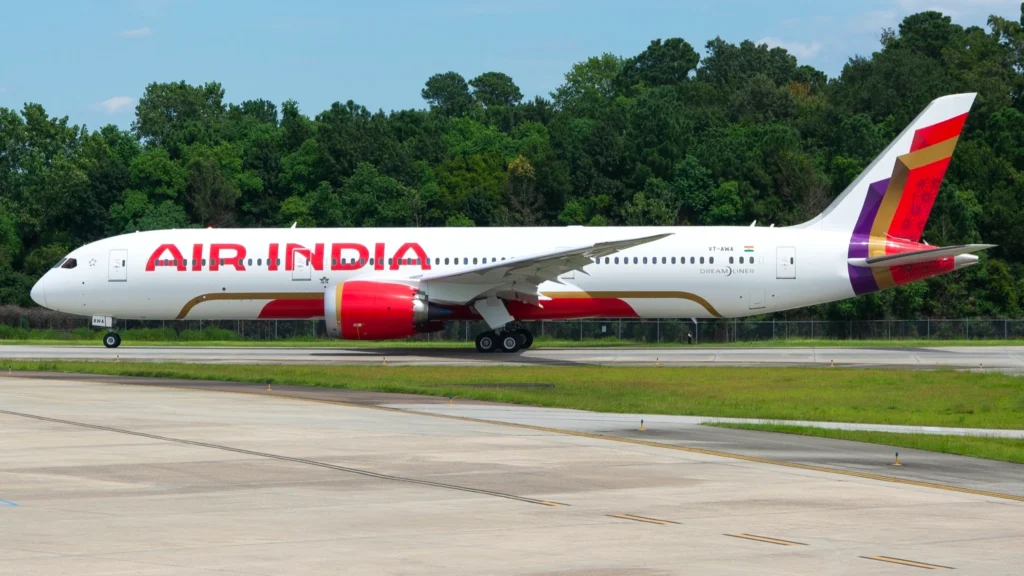
What Transponder Code 7500 Means
Transponder code 7500 is the internationally recognised aviation code for hijacking or unlawful interference with an aircraft.
A transponder sends a four-digit code that helps air traffic controllers identify aircraft and interpret their status. When controllers receive code 7500, they treat it as a serious security warning and follow the required response procedures.
Reports differ on whether the pilots of AI2030 transmitted the code. An initial Hindustan Times report, citing DGCA sources, said the pilot issued a hijacking alert.
However, The Times of India’s October 15 report said the pilots denied transmitting code 7500 and that the newly installed Mumbai ATC system had conveyed the warning. Hindustan Times subsequently reported that the DGCA would examine the ATC system for a possible technical error.
The Boeing 787-9’s cockpit controls require pilots to enter the four digits individually. Senior Boeing 787 pilots quoted by The Times of India described an accidental entry of code 7500 as a “one in a trillion” chance, explaining that no single button can activate the entire code by mistake.
Senior air traffic controllers said that when a pilot transmits 7500, the aircraft’s radar target turns red and an alarm sounds.
These technical details make the sequence of events central to the investigation. Authorities must compare cockpit records, transponder data and ATC system logs to establish whether the aircraft transmitted the code or the warning arose elsewhere.

Jaipur Diversion and Passenger Security Checks
The aircraft landed safely in Jaipur and was moved to a remote parking bay for security checks. Published reports differ on the precise landing time.
The Times of India’s October 15 report placed the arrival at around 11 AM, while an earlier Hindustan Times report gave a landing time of 9:35 AM and said the aircraft reached an isolation bay at 9:45 AM.
Passengers and crew reportedly remained on board for about two hours before authorities asked them to disembark. Security personnel screened passengers, inspected baggage and examined the aircraft before clearing it to continue its journey.
After the checks, passengers reboarded the aircraft and the same crew prepared to operate the flight to Delhi.
Hindustan Times reported that AI2030 took off from Jaipur at 2:37 p.m. and landed in Delhi at 3:11 PM on Wednesday, October 14. No confirmed hijacking was established during the security response.
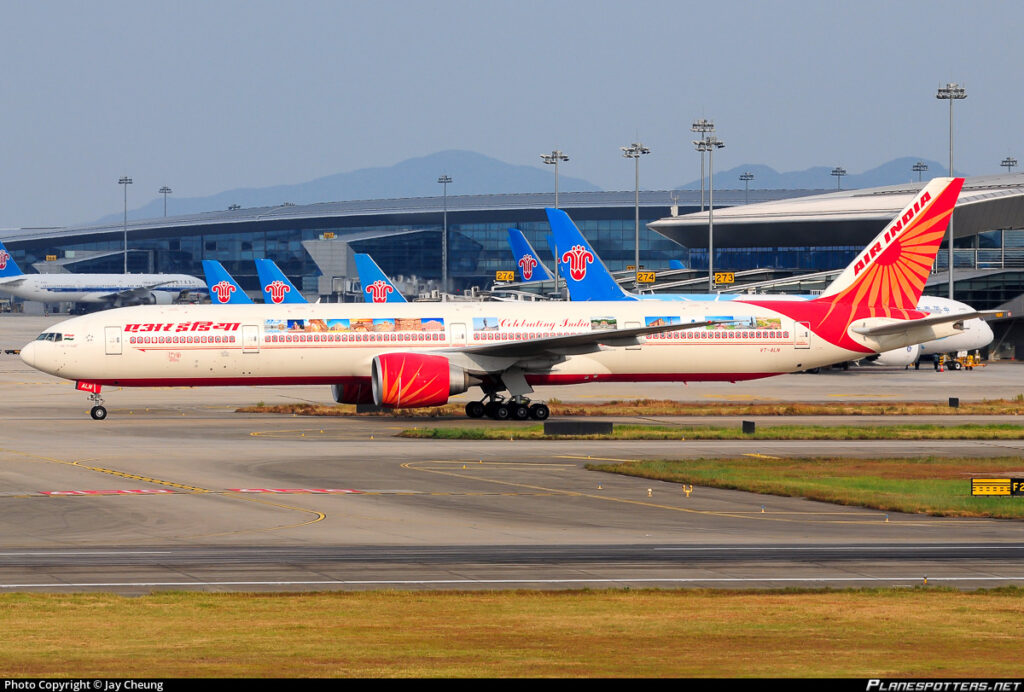
Air India Confirms Diversion
Air India confirmed that flight AI2030 was diverted on October 14 following a perceived security concern. The airline said the aircraft landed safely in Jaipur and that the relevant security agencies completed their checks and cleared the aircraft and crew.
The airline also confirmed that all passengers disembarked for security screening before reboarding.
It apologised for the disruption and said its teams worked with the authorities to minimise inconvenience.
Air India reiterated that the safety and security of its passengers and crew remained its highest priority.
AAI Leadership Vacancies Raise Oversight Questions
The incident has also renewed questions about leadership and oversight within the Airports Authority of India (AAI), which oversees air navigation services at its airports.
The Times of India reported that the post of Member (Air Navigation Services) had remained vacant for some time and that AAI was operating without a regular chairman. These vacancies have raised broader concerns about oversight of air traffic management operations.
However, the available reports have not established a direct connection between the leadership vacancies and the AI2030 alert. The investigation must determine the technical and operational cause before any such link can be assessed.
What DGCA Investigation Must Establish
As of October 15, 2026, investigators had not publicly confirmed what triggered the warning. The DGCA is expected to examine the ATC system for a possible technical error, while aviation and security agencies investigate the circumstances surrounding the alert.
The investigation needs to establish whether the aircraft transmitted code 7500, whether the ground-based system generated an incorrect warning, or whether another technical or operational issue occurred. Records from the aircraft’s transponder and cockpit systems, together with ATC logs, will be important in reconstructing the sequence of events.
The findings should clarify whether equipment, software, operating procedures or human inputs contributed to the incident. Until authorities establish the cause, the suspected radar fault and the possibility of an accidental transponder entry must remain investigative possibilities rather than conclusions.
The diversion demonstrates why air traffic control systems, pilot-controller communications and aviation security procedures must work reliably together. The DGCA’s findings will determine whether corrective action is needed to prevent similar false alerts and avoid unnecessary diversions and passenger disruption.
Stay tuned with us. Further, follow us on social media for the latest updates.
Join us on Telegram Group for the Latest Aviation Updates. Subsequently, follow us on Google News
