

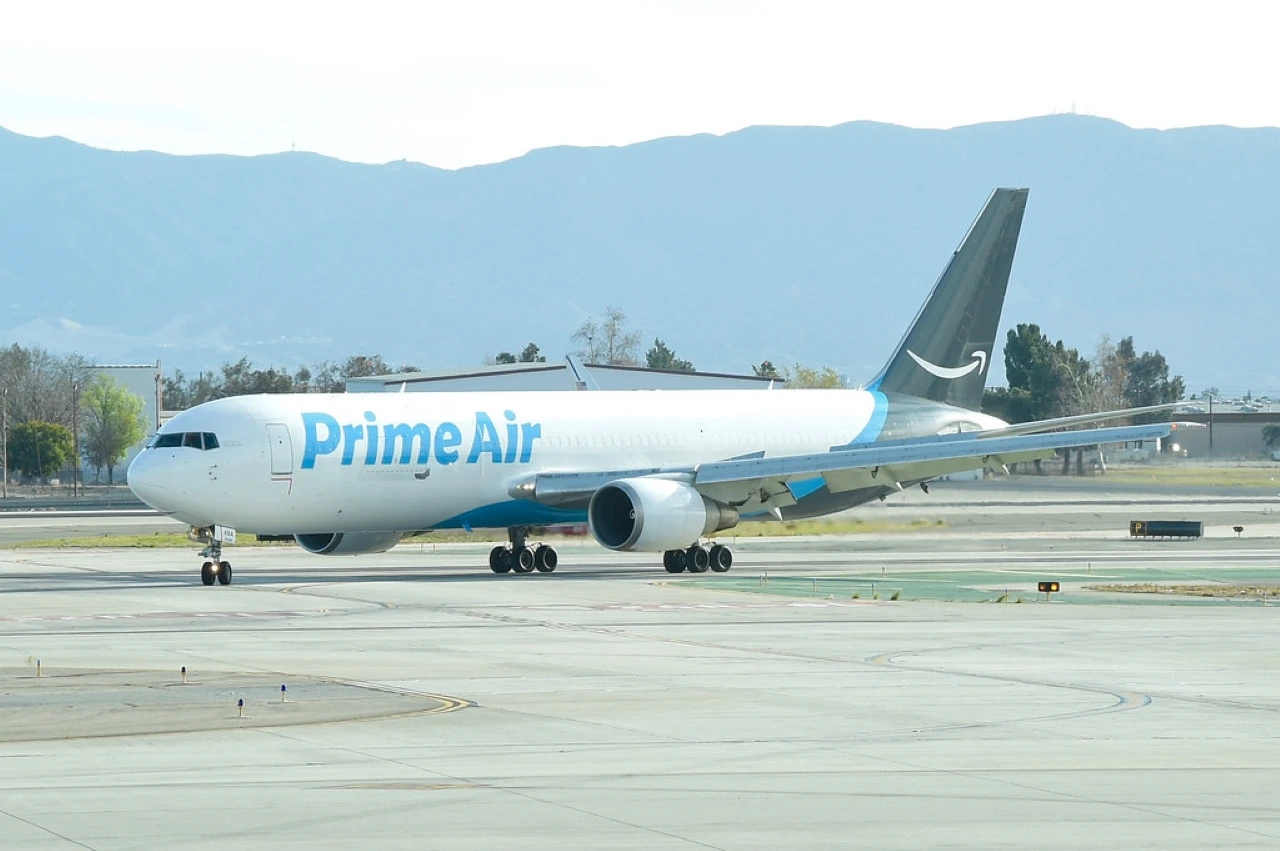
CINCINNATI- 21 Air (2I), operating a Boeing 767-33A cargo aircraft on behalf of Amazon Air, was involved in a runway-overrun accident at Miami (MIA) on September 6, 2026.
Flight 7598 was operating from San Juan (SJU) to Miami when it overran Runway 30, and 5 people were killed.
Preliminary National Transportation Safety Board (NTSB) data shows that one pilot warned the other that the aircraft was too fast during the final approach.
The cockpit voice recorder also captured repeated sink-rate and terrain warnings before touchdown, followed by a go-around call only 15 seconds before the recording ended.

Final Minutes Show Repeated Speed Concerns
The NTSB recovered the cockpit voice recorder (CVR) and flight data recorder (FDR) and successfully read both at its Vehicle Recorder Laboratory in Washington, D.C. The CVR contained more than two hours of good-quality audio across four channels.
The FDR contained approximately 54 hours of data covering more than 400 parameters. The NTSB has emphasized that its findings are preliminary and subject to change.
The NTSB has not yet released a formal written CVR transcript. Its preliminary summary gives the following sequence, with all CVR times measured backward from the end of the recording:
| Time to end of CVR | Observation |
|---|---|
| 06:02 | A pilot called for flaps to be set to 1 degree. |
| 04:18 | The flight crew checked in with Miami tower and was cleared to land on Runway 30. |
| 02:53 | A pilot called for flaps to be set to 5 degrees. |
| 02:37 | The landing gear was lowered. |
| 02:14 | A pilot called for flaps to be set to 15 degrees. |
| 01:42 | A pilot called for flaps to be set to 20 degrees. The other pilot cautioned that they were too fast. That pilot continued making comments about the aircraft’s excessive speed for the remainder of the recording. The NTSB said there was not a consistent verbal response to those comments. |
| 01:23 | Sounds consistent with autopilot disconnect. |
| 01:12 | Electronic “one thousand” callout. |
| 01:04 | Electronic “sink rate sink rate” callout. |
| 00:58 | Electronic “five hundred” callout. |
| 00:57 | Another electronic “sink rate sink rate” callout. |
| 00:54 | Electronic “one hundred” callout. |
| 00:50 | Electronic “minimums” callout. |
| 00:48 | Electronic “too low terrain” callout, annunciated four times. |
| 00:41 | A pilot called for flaps to be set to 30 degrees. |
| 00:40 | Electronic “forty” callout. |
| 00:39 | Another electronic “too low terrain” callout. |
| 00:36 | Electronic “ten” callout. |
| 00:31 | Sounds similar to the aircraft touching down. |
| 00:15 | A pilot called for a go-around. |
| 00:10 | Sounds similar to the aircraft departing the paved surface. |
| 00:00 | The CVR recording ended. |
The sequence shows the crew moving through flap settings of 1, 5, 15, 20, and 30 degrees during the final approach.
The landing gear was lowered 2 minutes and 37 seconds before the end of the CVR recording, while the call for 30 degrees of flap came only 41 seconds before the recording ended.
The aircraft then produced another “too low terrain” warning 39 seconds before the end of the recording. The recorded sequence places the apparent touchdown at 31 seconds before the CVR ended.
The timing is significant because the final aircraft configuration changes occurred shortly before touchdown, while the cockpit was also dealing with repeated speed and terrain warnings. The NTSB has not yet determined why the approach developed in this manner.
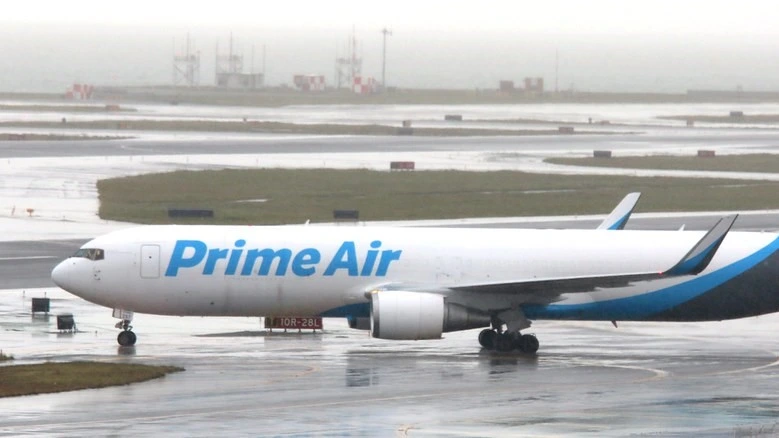
Go-Around Came After Touchdown
The CVR indicates that a pilot called for a go-around approximately 15 seconds before the recording ended.
The NTSB’s FDR data provides a separate sequence of events around touchdown, although the agency cautions that CVR and FDR times have not been precisely synchronized.
The nose and right main landing gear touched down at a groundspeed of 158 knots. Brakes were applied at 146 knots, and the left main landing gear touched down at 134 knots. At 120 knots, the brakes were released and the throttles were increased to a setting consistent with go-around thrust.
About four seconds later, the throttles were reduced to idle power and the brakes were applied again at a groundspeed of 117 knots. Braking remained applied and the throttles stayed at idle until the FDR recording ended.
The FDR recorded marked changes in lateral, longitudinal and vertical acceleration when the aircraft was traveling at 96 knots, and the final recorded groundspeed was 65 knots.
The NTSB said there was no indication in the recorded data that speed brakes or thrust reversers were deployed before the FDR recording ended.

Key Investigative Issue
The most notable CVR finding concerns repeated communication about excessive speed. At approximately 1 minute and 42 seconds before the end of the recording, one pilot warned that the aircraft was too fast.
According to the NTSB, that pilot continued commenting on the excessive speed for the remainder of the recording, but there was no consistent verbal response.
That sequence places crew communication and decision-making among the important issues for investigators to examine.
The available information does not establish why the approach continued, why the speed concern did not lead to an earlier change in the approach, or why the go-around was not called sooner.
These are investigative questions rather than established findings. The NTSB has not issued a probable cause.

Pilot Identities and Roles
The pilots were identified as Captain Joseph Carroll, 55, and First Officer Jaime Felipe Silva Molina, 37. CBS News reported that their identities were established using information from the Miami-Dade Sheriff’s Office, LinkedIn profiles and the FAA pilot database.
Public reporting has identified Carroll as the captain and Silva Molina as the first officer. That distinction matters when interpreting claims about which pilot was speaking or flying. The NTSB’s preliminary release itself refers only to “a pilot” and “the other pilot” in its CVR timeline.
Claims based on an accent heard in radio communications do not establish a pilot’s role, qualifications or the cause of an accident. The investigation must rely on recorder data and other verified evidence.
What Investigation Has Established
The NTSB has established that Flight 7598 was a Part 121 cargo flight from San Juan to Miami and that the Boeing 767-33A overran the end of Runway 30 during landing. The investigation remains ongoing under case DCA26MA352.
The preliminary record establishes a sequence in which the crew progressively configured the aircraft, one pilot repeatedly raised concerns about excessive speed, multiple automated warnings occurred during the final approach, the aircraft touched down, and a go-around was called afterward.
The NTSB said five people were killed in the accident. CBS News reported that all of those killed were in two vehicles struck during the crash and that five people were injured, including the two pilots.
The NTSB plans to convene a CVR group to review the accident recording and produce a written transcript. Until the agency completes that work and its broader investigation, the available recorder information remains preliminary.
OMAAT was among the publications that drew attention to the significance of the preliminary cockpit-recording findings and the crew coordination questions they raise.
Stay tuned with us. Further, follow us on social media for the latest updates.
Join us on Telegram Group for the Latest Aviation Updates. Subsequently, follow us on Google News
