

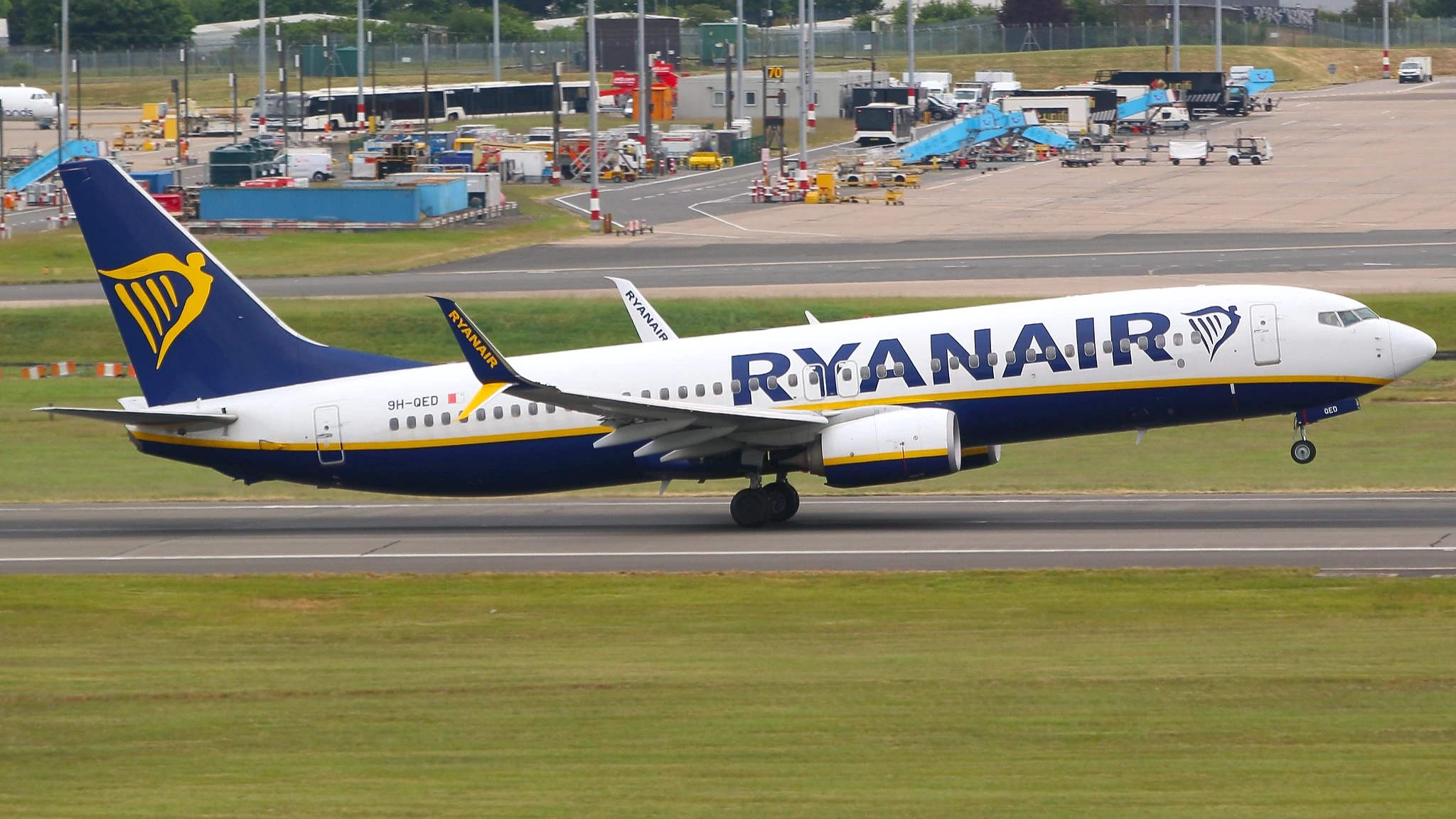
DUBLIN— The National Transportation Safety Board (NTSB) has taken control of the investigation into a Ryanair (FR) flight on which a window dislodged shortly after takeoff, partially pulling a passenger out of the aircraft before others pulled him back inside.
The flight departed Thessaloniki (SKG) in northern Greece and was bound for Memmingen (FMM) in southern Germany.
The US agency confirmed on Thursday that the July 10 incident occurred in Greek airspace, not over the Republic of North Macedonia as investigators had initially believed. Malta Air, a subsidiary of Ryanair (FR), operated the Boeing 737-800 involved in the emergency.
US Agency to Investigate Ryanair Window Blowout Incident
International aviation rules permit Greece’s Hellenic Air and Rail Safety Investigation Authority to transfer the investigation to another safety body.
The NTSB accepted that transfer and is now leading the probe, with Greece participating as a party to the inquiry.
The jurisdiction shift followed a closer review of the aircraft’s flight path. Investigators had first placed the event over North Macedonia, but the revised analysis confirmed it happened within Greek airspace. That finding cleared the way for Greek authorities to hand the matter to the NTSB.
Sequence of Events on the Morning Flight
The incident took place on a morning service from Thessaloniki to Memmingen, near Munich. Passengers told Greek media they heard a loud bang, watched oxygen masks drop, and felt the aircraft begin to lose altitude.
A former airline captain, the window blowing out would have triggered rapid decompression, a sudden loss of cabin pressure that can create a brief but strong suction effect near the opening before conditions stabilize. This explanation came from Shye Gilad, who teaches at Georgetown University’s business school in the United States.
Gilad stressed the value of restraints during those first moments. “The seat belt can help in those first few seconds. It’s a difference maker, and people should keep their seat belts fastened at all times,” he said. He described such events as “very rare” because “it takes a lot to breach a cabin.”
A series of short videos recorded inside the cabin and shared by Radio Thessaloniki showed passengers wearing oxygen masks after the cabin lost pressure. Another clip appeared to show the blown-out window with a man seated nearby, and a third, apparently filmed after landing, showed first responders working in the aisle.
Passenger Injuries and Medical Response
A 61-year-old passenger, who was not identified by name, suffered neck and shoulder injuries along with friction burns, according to a Greek hospital official. It remained unclear on Thursday whether that passenger was still hospitalized.
Ryanair said one passenger requested and received medical care after landing. The carrier added that a replacement aircraft later flew the affected passengers on to Germany.
Conflicting Accounts on the Cause
The NTSB previously stated it was notified that the flight turned back because of “a right engine issue and cabin decompression.” Ryanair has not publicly addressed the engine issue raised by the US agency.
When asked by email to comment on the reported engine problem, the airline repeated its earlier statement that the flight returned to Thessaloniki after a window became dislodged. The gap between the two accounts remains part of the open investigation.
Aircraft and Flight Path Details
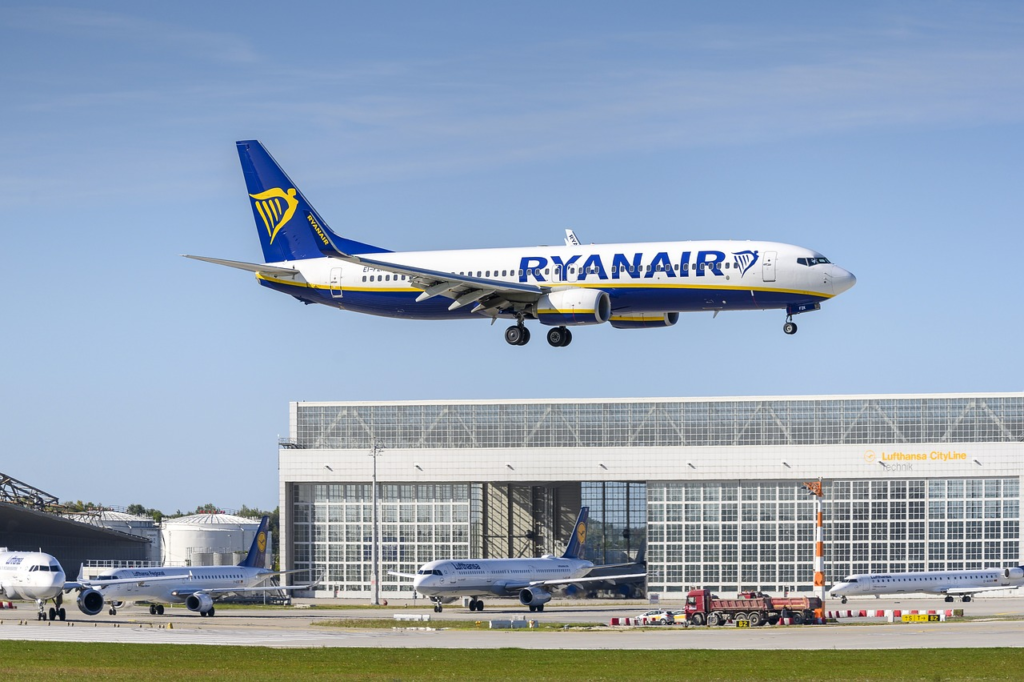
Flight records show the aircraft, a Boeing 737-800 delivered new to Ryanair in 2008, had climbed past 15,000 feet (4,570 meters) about six minutes after departure before immediately descending to roughly 6,000 feet (1,830 meters).
Flight-tracking site Flightradar24 reported that the aircraft held the lower altitude for about 30 minutes to burn fuel. It then returned to Thessaloniki approximately one hour after takeoff.
Stay tuned with us. Further, follow us on social media for the latest updates.
Join us on Telegram Group for the Latest Aviation Updates. Subsequently, follow us on Google News
