

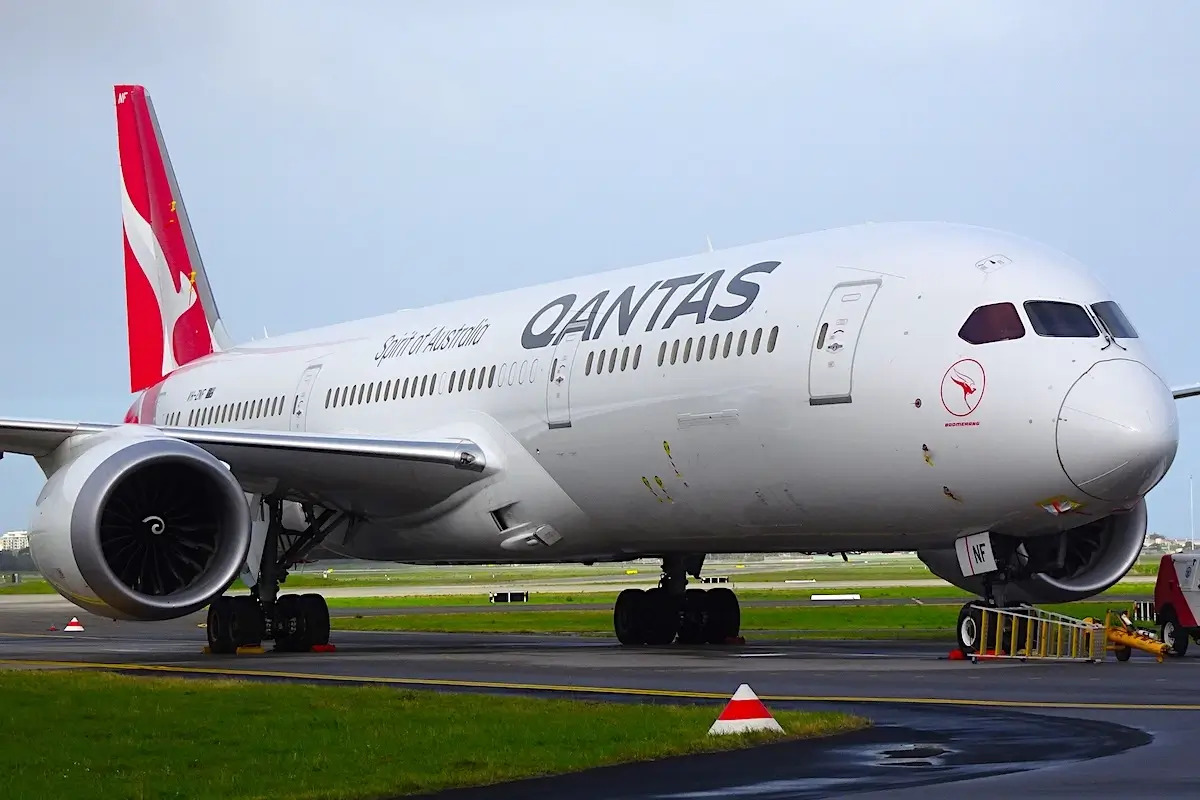
HONOLULU- A blind disability advocate has described a distressing experience aboard a Qantas (QF) flight from Honolulu (HNL) to Sydney (SYD), after a fellow passenger openly criticised her while she was eating lunch. Emma Bennison, chief executive of Disability Advocacy Network Australia (DANA), said the man’s remarks made her feel humiliated and constantly watched during the journey.
The incident occurred last week on the 10-hour-and-45-minute flight, during which Bennison was travelling back to Australia. Although the passenger later apologised after a cabin manager intervened, the encounter left her so uncomfortable that she became reluctant to leave her seat, even when she needed to use the bathroom.
Qantas Passenger Faces Remarks
Bennison’s experience began during the onboard lunch service. As she attempted to spread butter across a piece of bread, she found that the butter was too hard to use with a knife and decided to break it into smaller pieces so that it could melt on the warm bread.
However, a nearby passenger loudly commented on her actions, expressing surprise that she was using her fingers. Bennison said she immediately felt uncomfortable because the man had made his observation audible to other passengers rather than addressing her directly.
The situation escalated when she overheard the man questioning a flight attendant about whether the cabin crew had been informed that a blind passenger would be travelling on the flight. The attendant confirmed that the crew had received the necessary briefing, but the man indicated that nobody had informed him.
Bennison said the comments made her feel as though everyone around her was monitoring her behaviour. Having travelled frequently on domestic and international flights, she explained that she had never previously experienced someone openly expressing such opinions about her everyday actions.

Cabin Manager Intervenes
Concerned about the remaining eight hours of the journey, Bennison raised the issue with the cabin crew. The cabin manager, who had assisted her during the outbound journey the previous week, was already familiar with her needs and understood that she could move independently around the aircraft.
The manager asked whether Bennison wanted her to speak to the passenger. Although she initially worried that confronting him could make the situation worse, she eventually accepted the offer.
Following the conversation with the cabin manager, the passenger approached Bennison and apologised. He explained that his comments came from curiosity because he had not encountered a similar situation before.
Bennison accepted that people might naturally have questions about disability but explained that they should approach the person directly rather than discuss them as though they were absent.
She told him that his behaviour had made her feel like an animal in a zoo. She also emphasised that she was a competent individual who managed an organisation and deserved the same dignity and respect as any other passenger.
Despite the apology, the encounter continued to affect her confidence. Bennison said she became hesitant to get up from her seat because she felt the passenger might still be watching her movements.
Disability Awareness Needed
Bennison praised the cabin manager for listening to her concerns, offering her a choice about how to handle the situation and checking on her throughout the remainder of the flight. She said the crew member’s support made a significant difference during an otherwise uncomfortable journey.
The disability advocate also believes the incident reflects broader problems in how people with disabilities are treated in public.
She argued that negative discussions surrounding Australia’s National Disability Insurance Scheme (NDIS) have contributed to an environment in which discriminatory attitudes are increasingly expressed openly.
Bennison also called for stronger disability awareness training across the aviation industry. She believes airlines should move beyond basic online training and introduce practical, scenario-based programmes involving people with disabilities themselves, the Daily Mail flagged.
She stressed that curiosity should not prevent respectful interaction and that disabled passengers should be treated as independent individuals rather than objects of observation.
Despite the experience, Bennison said she would not allow the encounter to undermine her confidence or discourage her from travelling. She wants people with disabilities to remain visible, participate in everyday activities, and continue flying without having their dignity questioned.
Stay tuned with us. Further, follow us on social media for the latest updates.
Join us on Telegram Group for the Latest Aviation Updates. Subsequently, follow us on Google News
