

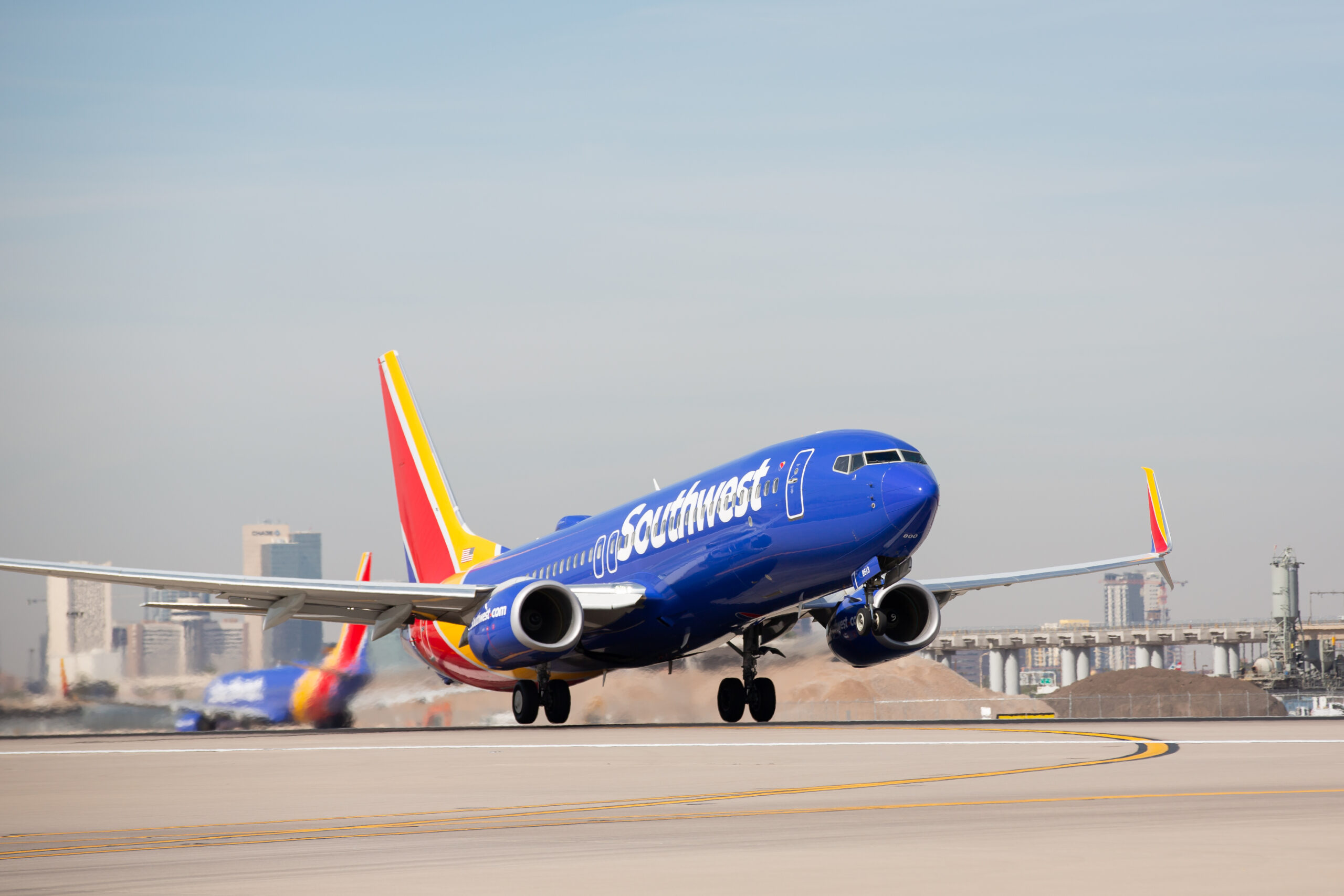
DALLAS- Southwest Airlines (WN) completed 99.22% of its flights in August 2026, the best completion rate among the North American airlines in Cirium’s report.
WestJet (WS) led North America in on-time performance for the fourth consecutive month, with 82.55% of completed flights arriving within 15 minutes of schedule. Its 93.74% completion rate, however, was the lowest in the group, showing why cancellations can change the picture of airline reliability.
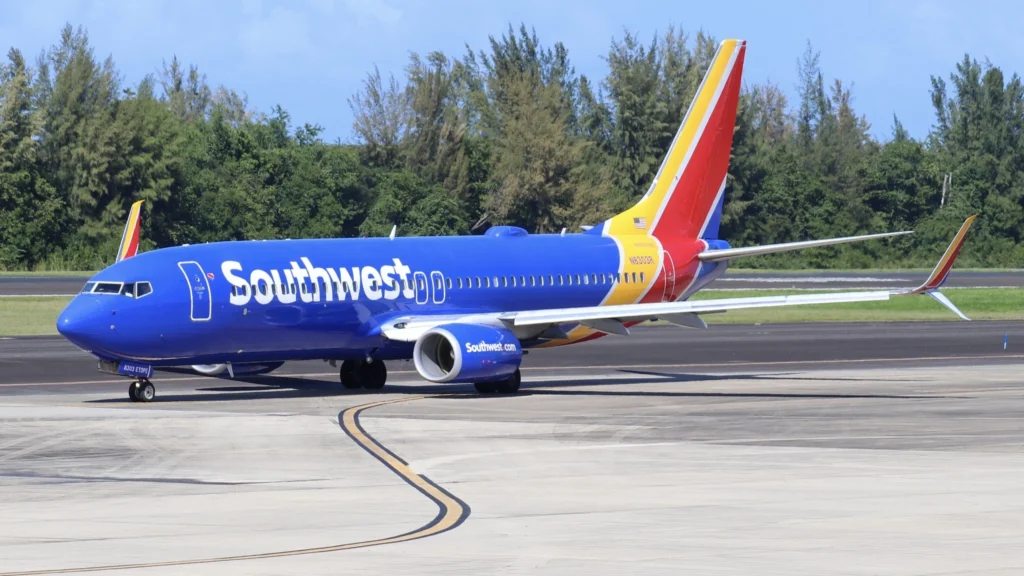
Southwest Was Late, But Rarely Cancelled
Cirium’s August 2026 data shows a clear difference between on-time performance and completion rate.
A cancelled flight does not count as a late arrival in the on-time measurement, so an airline that cancels more flights can appear more punctual than an airline that operates those flights with delays.
That difference was especially significant for WestJet and Southwest. WestJet had the highest on-time percentage in North America but the lowest completion rate. Southwest ranked sixth for on-time performance but first for completion.
| Rank | Airline | On-Time | Completion | Approx. Canceled |
|---|---|---|---|---|
| 1 | WestJet | 82.55% | 93.74% | 1,230 |
| 2 | Delta Air Lines | 79.15% | 98.23% | 2,839 |
| 3 | United Airlines | 74.49% | 98.53% | 2,320 |
| 4 | American Airlines | 74.19% | 97.72% | 4,524 |
| 5 | Alaska Airlines | 73.95% | 98.57% | 706 |
| 6 | Southwest | 68.28% | 99.22% | 922 |
| 7 | Frontier | 67.18% | 97.79% | 462 |
| 8 | Air Canada | 65.44% | 95.22% | 1,735 |
| 9 | JetBlue | 63.85% | 94.91% | 1,617 |
WestJet cancelled approximately 1,230 flights from a schedule of 19,652. Southwest cancelled about 922 flights while operating roughly 6 times as many flights. That works out to about one cancellation for every 16 WestJet flights compared with fewer than one in 128 Southwest flights.
As reported by View from the Wing, Southwest therefore performed much better on the question of whether the scheduled flight actually operated, even though its on-time percentage did not reflect that strength.
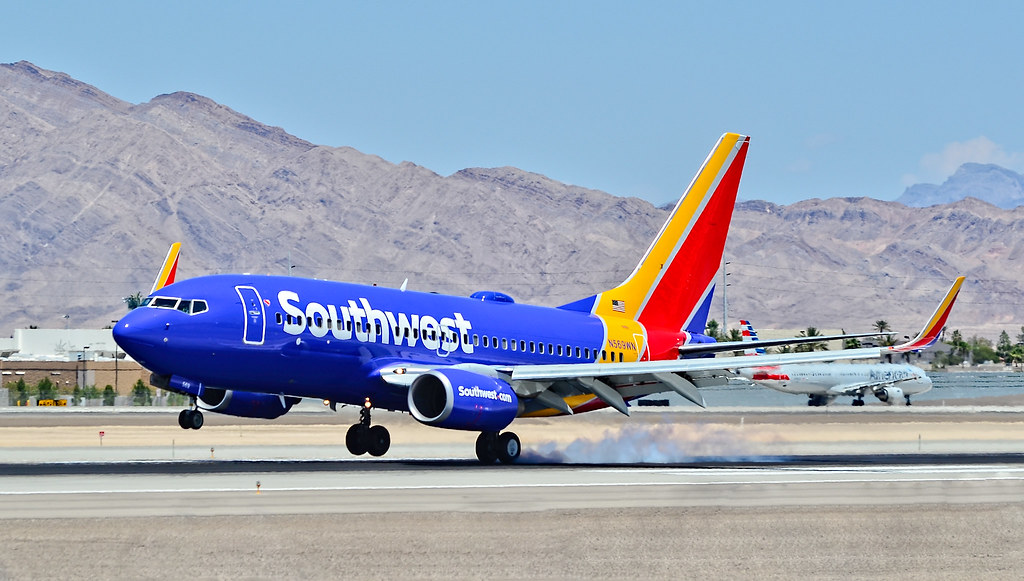
Delay Can Be Better Than Cancellation
A 25 minute delay is usually preferable to a cancellation that forces a passenger to wait until the following day.
That difference matters particularly for Southwest because the airline generally cannot hand passengers over to another carrier through an interline agreement when a flight is cancelled.
On the other hand, a delayed connecting flight can still leave a passenger stranded, so on-time performance remains important. Southwest’s August results show a tradeoff between keeping flights operating and keeping them on schedule.

Southwest’s Fast Turns Can Hurt Punctuality
Southwest’s 30-minute boarding process is part of its effort to turn aircraft quickly on the ground. That leaves the airline with less schedule buffer to absorb disruptions.
Passengers are also bringing more bags onto aircraft than they did when Southwest did not charge for checked bags. Longer boarding times can make it harder to keep a tightly scheduled operation on time.
The result was visible in August: Southwest completed 99.22% of its flights, but only 68.28% of completed flights arrived within 15 minutes of schedule.
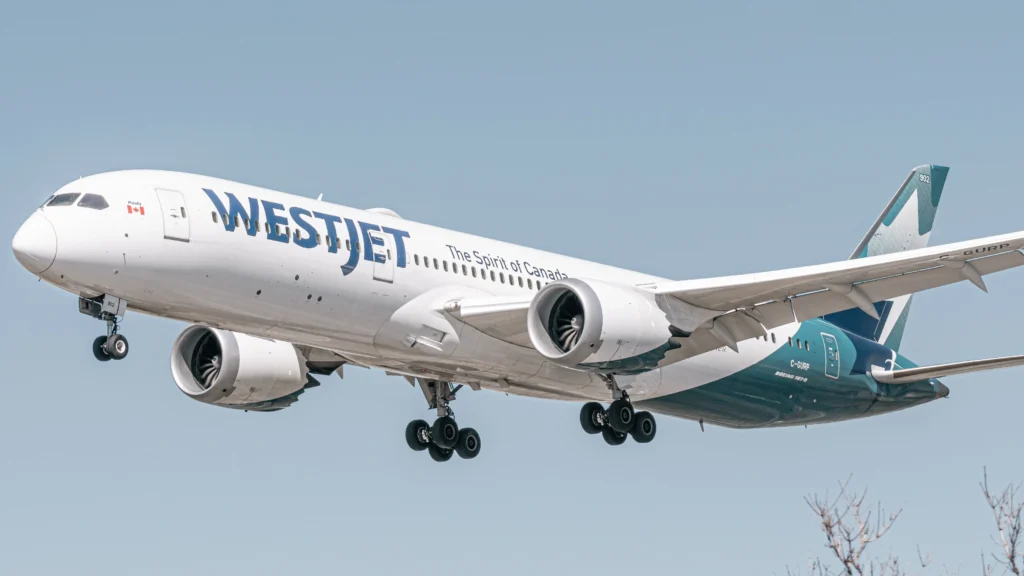
WestJet’s Strike Weighed on August Results
WestJet led North America in on-time performance for the fourth straight month at 82.55%, but its completion rate fell to 93.74%, the lowest in the regional ranking.
WestJet’s flight attendants went on strike at the beginning of August, causing a network-wide work stoppage.
WestJet and the Canadian Union of Public Employees reached a tentative agreement on August 3, ending the work stoppage and the related network-wide operational disruption. The airline then faced the task of restoring service and recovering from the disruption.
The strike helps explain why WestJet’s strong on-time figure needs to be considered alongside its cancellation rate. Cancelled flights were excluded from the late-flight calculation but still disrupted passengers.
JetBlue Faced Weather and Operational Problems
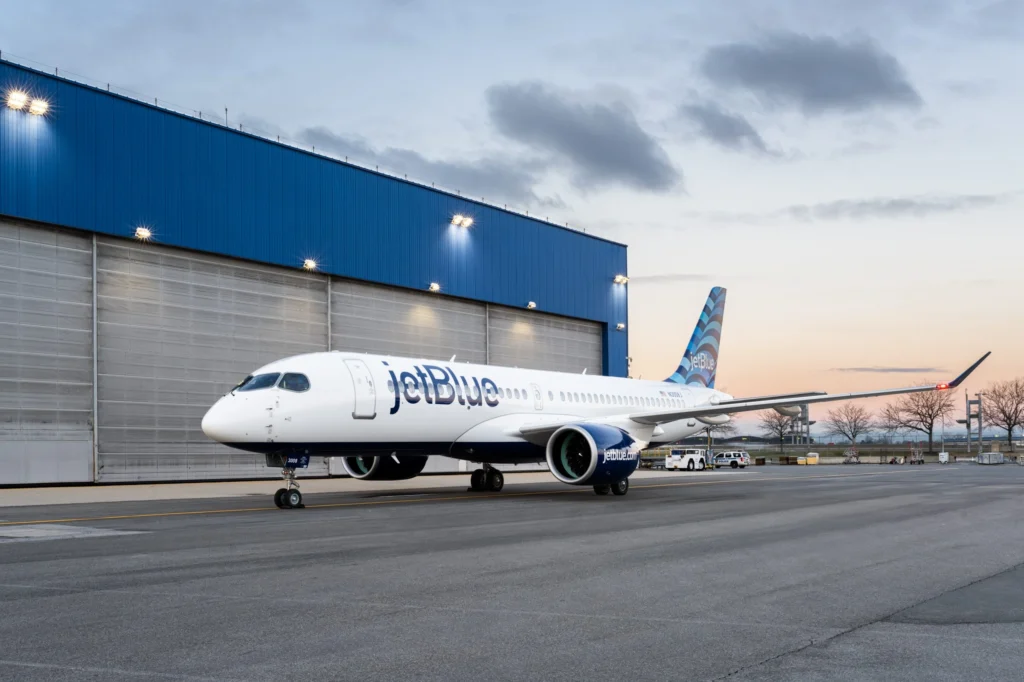
JetBlue recorded the weakest on-time performance in the North American group at 63.85% and cancelled more than 5% of its flights.
Northeast weather was a factor, but the airline was already struggling to recover from disruptions. Its pilots had described recurring scheduling-system failures, crew schedulers who could not be reached and pilots stranded out of position without hotel accommodation.
Another crew trip-pickup and trading software outage was reported on August 9. Nearly half of JetBlue flights were delayed during that disruption.
The result was an airline that delayed more than one-third of completed flights while also cancelling more than 5% of scheduled flights.
Alaska’s OTP Declined Through Summer
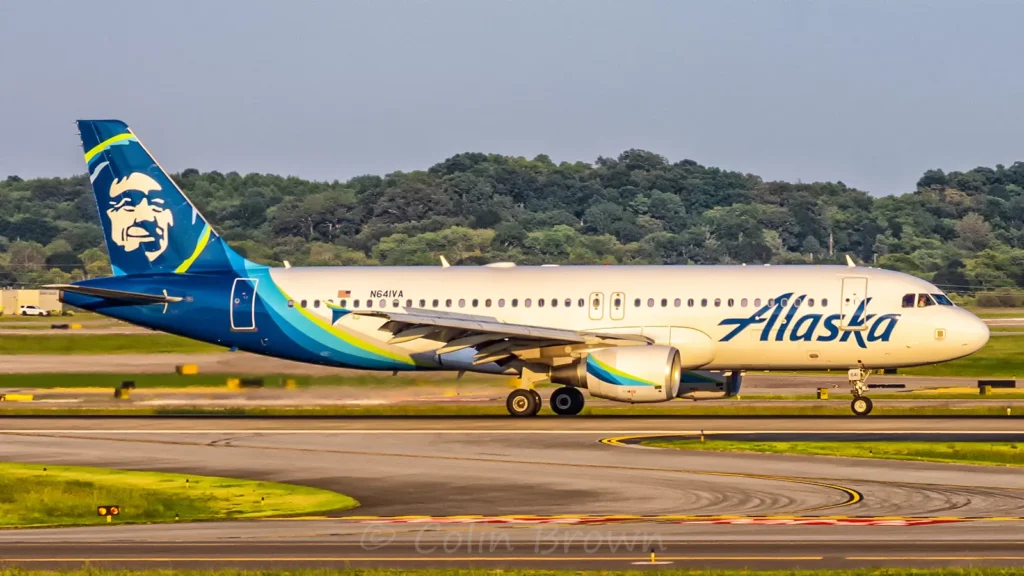
Alaska’s on-time performance (OTP) fell from 80.59% in June to 76.19% in July and 73.95% in August. Its August completion rate was 98.57%.
The August result remained better than average, but the airline faced weather issues in Seattle, while Hawaii was affected by a hurricane.
Air Canada Continued to Slide
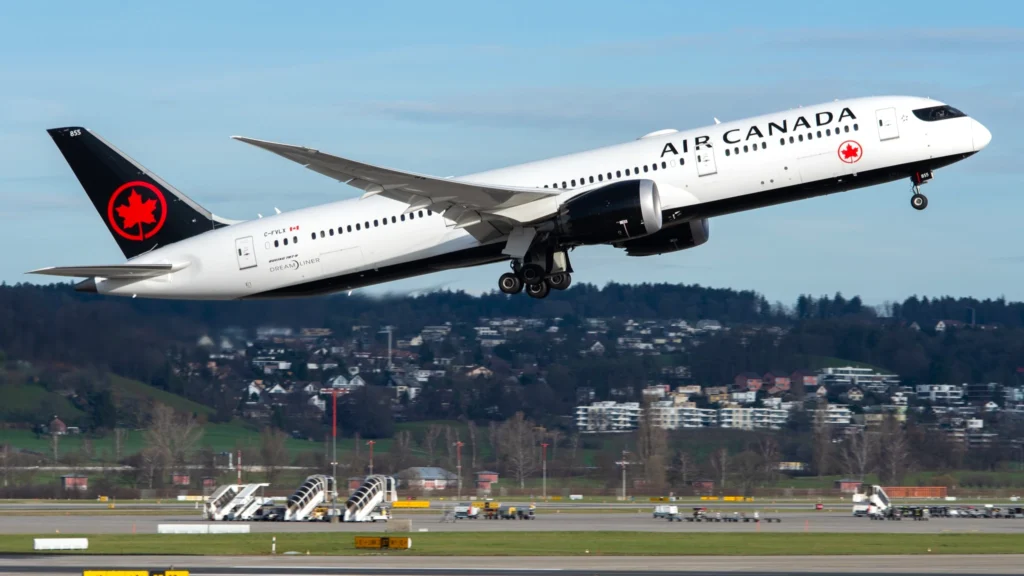
Air Canada’s on-time performance improved as temperatures warmed earlier in the year, reaching 78.65% in May.
It then declined to 71.90% in June, 68.47% in July and 65.44% in August. Its August completion rate was 95.22%.
WestJet also operates in Canada, so Canadian weather alone does not explain the difference between the two carriers.
Air Canada is much larger and spreads its operation across three hubs, while WestJet is concentrated around Calgary.
Frontier Trades Schedule Slack for Low Fares
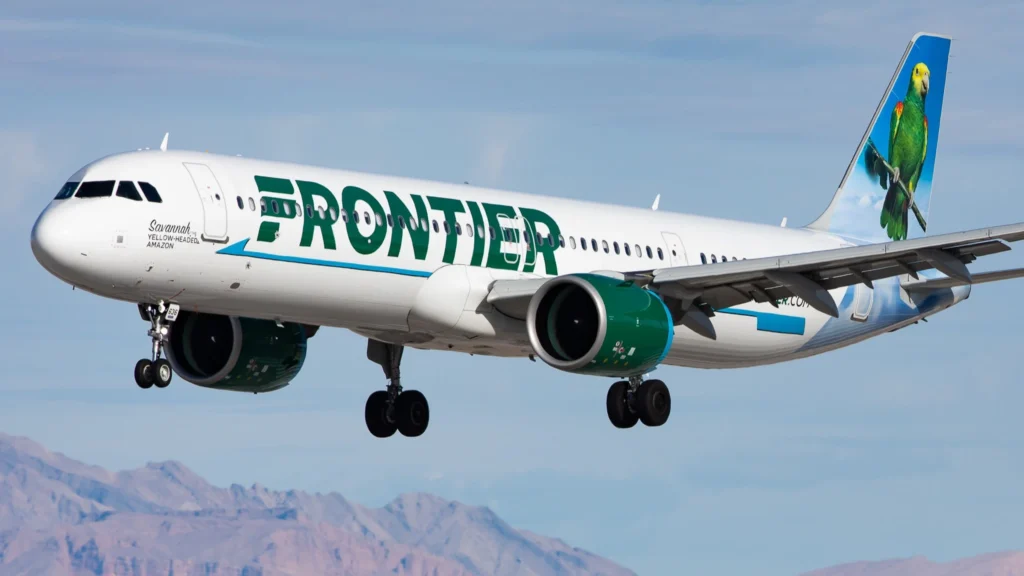
Frontier recorded a 67.18% on-time rate in August. High aircraft utilization on peak days and quick turns are central to its low-cost structure, and the airline acknowledges that these practices make it more vulnerable to delays, cancellations and aircraft unavailability.
Frontier has moved toward out-and-back schedules that return aircraft and crews to bases each night. That approach keeps some problems from spreading across the network, but the airline does not build as much slack into its schedules.
Passenger reaccommodation is also difficult when flights are cancelled because Frontier operates relatively thin schedules and lacks interline agreements with other carriers.
The tradeoff is that lower fares can come with less operational redundancy and less ability to recover quickly when a disruption occurs.
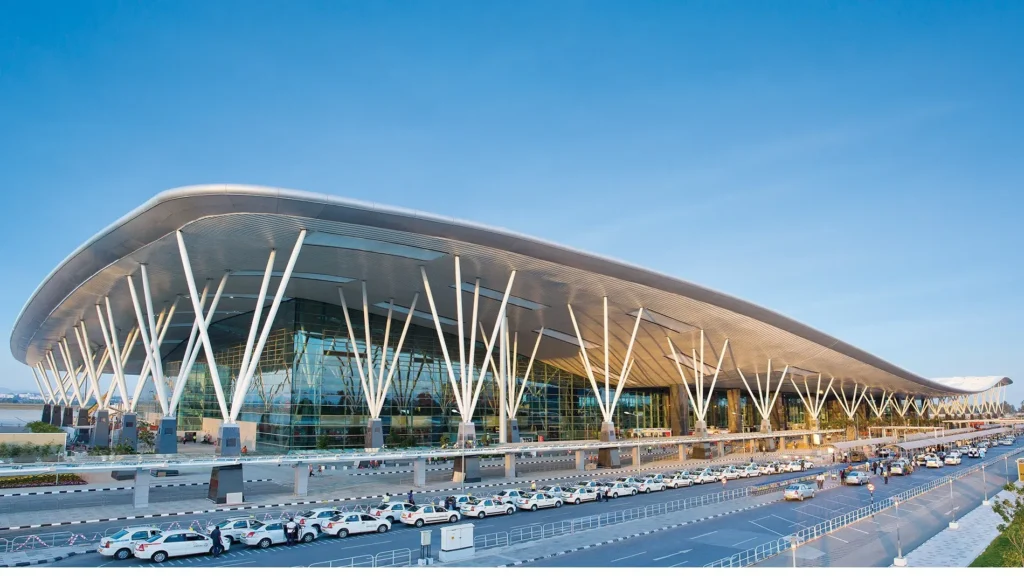
Airport Reliability
Cirium also ranks airports by on-time performance. The data does not isolate the airport’s own contribution to the result because performance is influenced heavily by dominant carriers and weather.
Some airports are easier to operate from under otherwise equal conditions, but those factors can be overwhelmed by other operational issues.
India took the top 3 positions in the large-airport category:
- Hyderabad (HYD): 90.07%
- Bengaluru (BLR): 89.98%
- Kolkata (CCU): 89.05%
Mexico City also performed well, but the airport handles fewer flights than it otherwise might because the government has been careful with access to the airport.
Aeroméxico recorded 89.74% on-time performance and a 99.94% completion factor, helping make Mexico City’s airport performance look particularly strong.
What the August Data Means for Travelers
The August 2026 results show why airline reliability should not be judged by on-time performance alone.
WestJet delivered the highest share of on-time arrivals but also had the lowest completion rate in the North American group.
Southwest showed the reverse pattern, with the lowest on-time result among the 5 top-ranked carriers but the best completion rate overall.
For passengers, the distinction is practical. A delay can be frustrating, while a cancellation can leave a traveler facing a much longer wait and fewer alternatives.
Southwest’s August performance suggests that its main strength was keeping scheduled flights operating, even when many of them did not arrive within 15 minutes of schedule.
Stay tuned with us. Further, follow us on social media for the latest updates.
Join us on Telegram Group for the Latest Aviation Updates. Subsequently, follow us on Google News
