


ZURICH- Noida International Airport (DXN) in Jewar may see a slower operational ramp-up as geopolitical uncertainty weighs on airline network expansion. Zurich Airport Ltd (ZRH), the parent of Zurich Airport International AG, expects near-term performance to remain uncertain despite its positive long-term view of India.
IndiGo (6E) and Akasa Air (QP) currently serve Noida International Airport (DXN), which has built a network of 17 domestic routes since beginning commercial operations on June 15. The airport is also entering the competitive National Capital Region (NCR) market alongside Indira Gandhi International Airport (DEL) in Delhi.

Zurich Airport Warns of Slower Initial Growth
Zurich Airport Ltd said in its latest investor presentation that Noida International Airport could experience a slower-than-expected ramp-up because of the challenging geopolitical environment.
The company said near-term performance remains subject to elevated uncertainty, although it expects the airport’s route network to continue expanding. International services are expected to follow as the operation develops.
The cautious outlook reflects broader pressures facing airlines. The conflict in West Asia has affected network planning, while the continued closure of Pakistani airspace has disrupted west-bound international operations and limited some opportunities for route expansion.
Despite these challenges, Zurich Airport remains confident about India’s long-term aviation prospects. The company identifies India as the world’s third-largest aviation market and one of the fastest-growing major aviation markets globally.
India and Brazil remain key focus markets for Zurich Airport, supported by its existing presence and the potential for synergies across its international investments.

Noida Airport Builds Initial Domestic Network
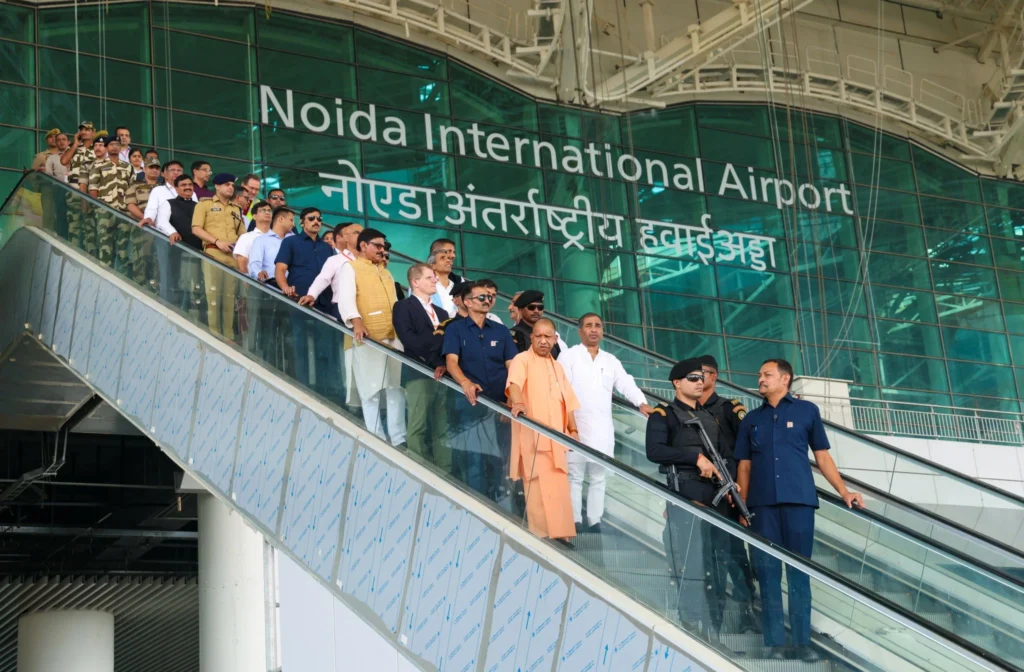
Noida International Airport began commercial operations on June 15 after approximately four years of construction.
IndiGo and Akasa Air currently operate from the airport, together providing services across 17 domestic routes. The initial network gives the airport a foundation for developing traffic before it expands into a broader international operation.
Air India Express had also planned to start flights from Jewar but later withdrew its plans amid financial pressures. Those pressures were further affected by the conflict in West Asia.
The airport’s early traffic figures show a gradual but significant increase in activity. According to Zurich Airport, NIA handled 204 flights in June, including arrivals and departures. The figure rose to 1,044 flights in July.
Passenger traffic also increased substantially, from approximately 25,000 passengers in June to around 77,000 in July.

Initial Financial Performance Remains Under Pressure
The airport’s early operating performance has also reflected the challenges of building a new aviation hub.
According to Zurich Airport, Noida International Airport recorded an EBITDA operating loss of 2.4 million Swiss francs, equivalent to approximately $3 million, during the first six months of 2026.
Such early losses need to be viewed alongside the airport’s ongoing ramp-up. Building passenger volumes, establishing airline connectivity and increasing aircraft movements typically require time, particularly when carriers are operating under wider financial and geopolitical pressures.
The immediate priority for NIA is therefore to build a stable traffic base and attract additional airline capacity.

NIA Enters a Competitive NCR Market
Noida International Airport is entering one of India’s largest and most competitive aviation markets.
The airport is expected to initially play an important role in adding capacity between the NCR and major Indian metropolitan areas. This could become particularly relevant during peak periods when Delhi’s Indira Gandhi International Airport faces capacity constraints.
NIA could also support regional connectivity by adding ultra-short-haul services and linking the NCR with tier-II and tier-III cities.
The airport’s development therefore has implications beyond passenger growth. Its ability to attract additional routes could help distribute aviation demand across the NCR and provide airlines with another operating base in the region.
Ground Connectivity Remains a Key Challenge
Location could influence how quickly Noida International Airport builds its passenger base.
The airport has expressway connectivity, but it is approximately 80 km from central Delhi and nearly 60 km from central Noida. These distances could affect passenger choice, particularly while the airport’s rail connectivity remains under development.
Plans for rapid rail and high-speed rail links are in place, but these projects are expected to take several years to become operational.
Until stronger public transport connections are available, road access will remain an important part of NIA’s ability to attract passengers from across the NCR.
Long-Term Growth Outlook Remains Positive
Noida International Airport was initially expected to experience a relatively modest traffic ramp-up, with stronger growth anticipated as Delhi airport moves closer to its capacity limits.
Delhi’s airport still has scope for further expansion, meaning NIA must establish its own passenger base rather than relying immediately on capacity constraints at its larger NCR counterpart.
The long-term outlook is more favorable. India’s expanding aviation market should create additional demand for airport capacity, domestic connectivity and international services.
Zurich Airport expects this broader market growth to provide significant opportunities for Noida International Airport. If NIA can expand its route network, improve surface connectivity and attract more airlines, it could strengthen its position as a major aviation gateway for the NCR.
Stay tuned with us. Further, follow us on social media for the latest updates.
Join us on Telegram Group for the Latest Aviation Updates. Subsequently, follow us on Google News
