

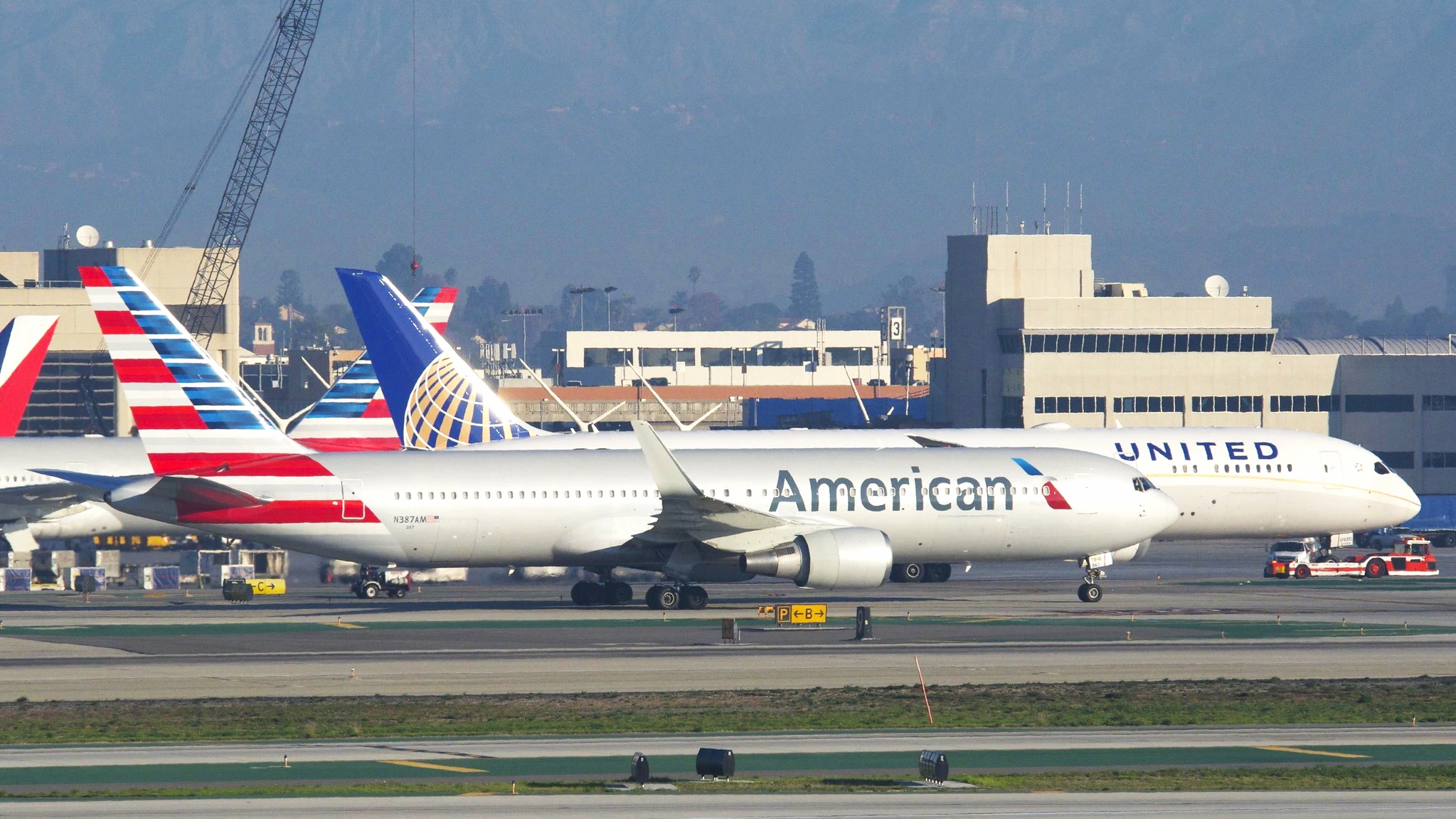
FORT WORTH- American Airlines (AA) is reversing years of cabin and service cuts to win back customers from United Airlines (UA) and Delta Air Lines (DL).
It is adding seatback screens, Starlink Wi-Fi and a reopened Flagship Dining at Los Angeles (LAX), while United plans a return to New York (JFK) next year.

American Airlines Premium Pivot Faces a Race Against Time
United CEO Scott Kirby says one of his biggest competitive advantages will not last, because other airlines will add Starlink internet. He is investing anyway.
That answers the argument Doug Parker made at American in 2017 for not investing in product. Parker held that better products get copied, so they cannot offer an enduring advantage.
Delta spent nearly 2 decades showing how investment in operations, product and employees can work together. United has improved sharply over the past decade.
American has changed a great deal since its explicit premium pivot in January 2025, which View from the Wing first reported. It is now trying to win back customers while losing money, carrying heavy debt and paying more for fuel, so it must show results before Wall Street loses patience.

Why Parker’s 2017 Strategy Fell Short
At American’s September 2017 media and investor day, the airline argued that competitors would match a better product.
Corporate culture and employees would then set American apart. The theory held that employees would take care of customers, and customers would take care of shareholders. American went on to alienate all three groups.
Executives did not explain how the plan would work. The presentation covered nicer employee facilities, help with health and wellness benefits and a disproportionate amount of time on company-sponsored weight loss programs. It gave little sense of the mission employees were meant to rally around.
American was also preparing a new domestic interior with less legroom, less padded seats and no seatback screens.
Executives did not think the airline needed native booking in its mobile app. Sending customers to a mobile website was good enough.
A year later, Parker told employees: “we work really hard to match our service to our competitors, and they do the same to us.” He described watching what competitors put onboard, including meals, to keep American comparable.
He was surprised by the idea that customers might choose United or Delta because of a different inflight product.
How Delta Built Its Lead
Richard Anderson became Delta CEO in 2007. Together with Glen Hauenstein and Gil West, he built an airline around keeping its promises to passengers and driving hard bargains with its counterparties.
Anderson later explained that line maintenance produced much of the advantage. An older airplane stays reliable if mechanics can work on it where it spends the night, fix recurring problems and have it ready in the morning.
Delta also worked to eliminate involuntary denied boarding. A customer who buys a ticket, arrives on time and follows every instruction should not lose a seat because the airline oversold. Finding enough volunteers protected that relationship.
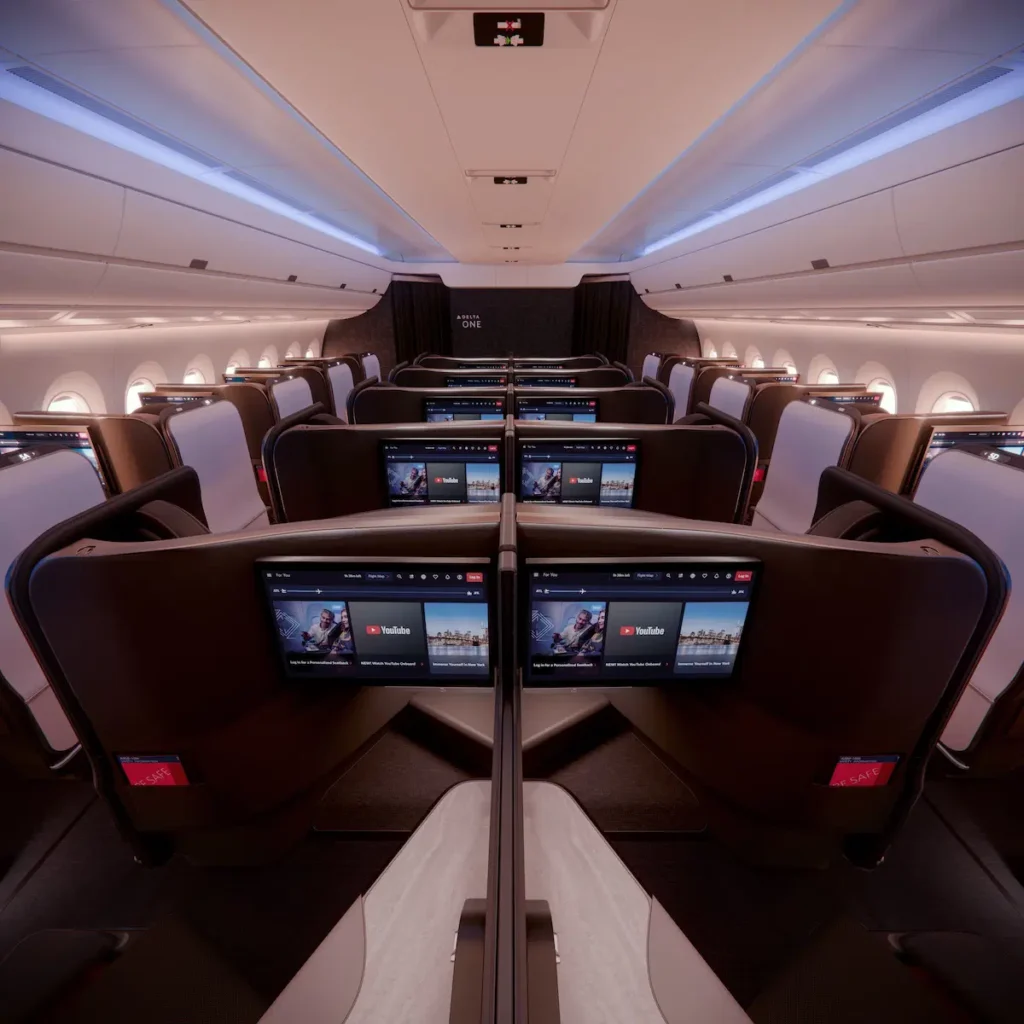
Delta also invested in seatback screens, and its non-union crews were somewhat friendlier than those at competitors.
Delta then focused on the markets with the most spending power. In the 2011 slot swap with US Airways, Delta received 132 daily LaGuardia slot pairs. US Airways received 42 pairs at Washington National, rights to extra daily Sao Paulo service in 2015 and $66.5 million.
Required divestitures reduced Delta’s net gain, though it eventually got back the slots transferred to WestJet. The deal still gave Delta the platform to build its New York business.
US Airways strengthened its Washington position, but after merging with American it had to give up slots there anyway. The combined airline could not keep all the holdings of both carriers.
American, once headquartered in New York, could never position itself there the way Delta did. Delta invested in facilities at LaGuardia, JFK and Los Angeles, which positioned it to overtake American in co-brand credit card spending.
Delta’s operational edge has since narrowed. It is still slightly more reliable than peers, but it struggles to recover when operations fail, and it no longer goes months without a mainline cancellation.
Its Boeing 767s out of New York are arguably the weakest product across the Atlantic and among carriers competing for premium transcontinental business.
Delta’s weak mileage value should not serve as a lesson for rivals to devalue their own loyalty programs. Delta offset it with a stronger experience, strong positions in top spending markets and little competition in Atlanta, the Upper Midwest and Salt Lake City.
United’s Shift From Cuts to Investment
Kirby took a long time to reach his current view. He was American’s president when it cut meal service in 2014. Planning for the domestic interior without screens began while he was still there, though the first aircraft with that interior entered service after he left.
He first brought the same approach to United. The airline cut full domestic first class meals on flights under 4 hours outside the dinner window, then reversed the change after customer complaints.
It eliminated Polaris wine flights and cocktail carts. It also cut one flight attendant from business class and moved to pre-plated entrees.
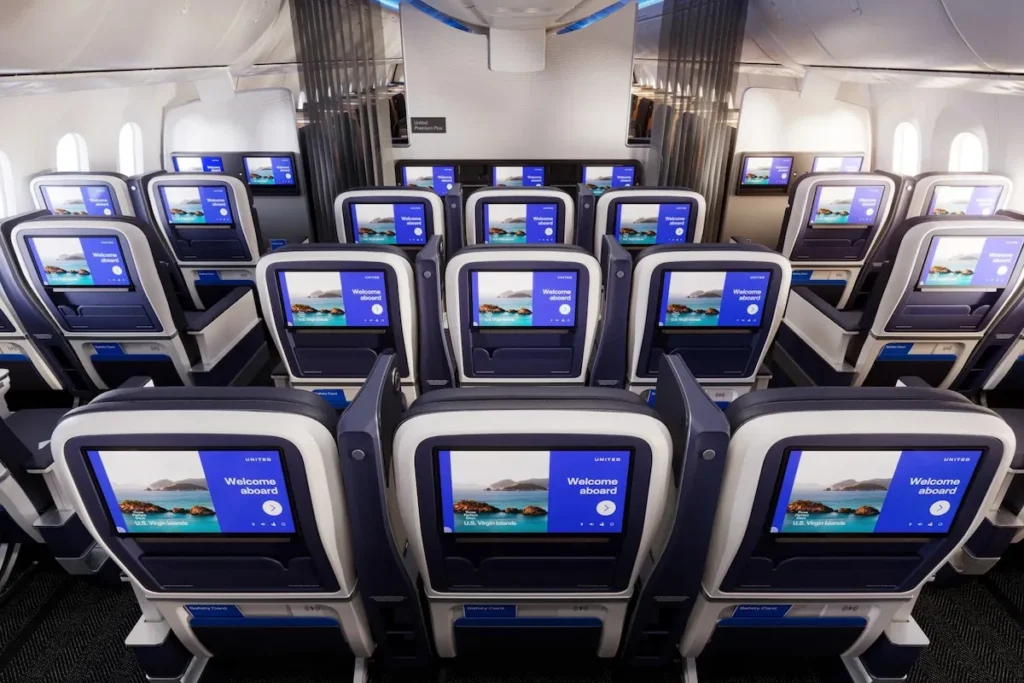
Some early product spending probably went too far after Oscar Munoz returned from medical leave and most proposals were approved. The later United NEXT plan took a different approach. It committed to seatback screens, bigger bins and a better domestic cabin, backed by sustained investment in the mobile app.
Most passengers sit in coach, so improving their experience raises what they will pay and builds a reputation for future business class sales. Many international business class passengers fly coach domestically, and that experience shapes most of their opinion when they buy long-haul business seats.
The app serves coach as much as the premium cabin. Passengers can manage changes, get help improving a seat assignment and receive clearer explanations when something goes wrong. They use it repeatedly, which gives them a reason to stay even after another airline matches the cabin.
By 2025, Kirby described a different test for food spending. He told Brian Sumers: “Every year we’re going to consciously spend more for customers in a bet that we’ll just win more brand-loyal customers.” He could not prove how much extra ticket revenue better food would produce. The old approach could measure the savings from moving a meal window by 15 minutes. It could not measure the revenue lost through a series of small disappointments.
United’s network rebuild started earlier. Kirby restored domestic connectivity cut under Jeff Smisek. In October 2017, he explained that better connections would help sell credit cards, since a customer whose schedule does not work will not take the card.
American went the other way in New York, Chicago and Los Angeles. That made it less useful in the most valuable spending markets and gave customers fewer reasons to use the American card. Route accounting can miss this effect. A Chicago customer’s work trips may be what earns an airline’s card, even if the miles are later redeemed for Hawaii. Credit Hawaii with the benefit and cut Chicago, and the airline loses the spending that created the miles.
Aviation watchdog JonNYC shared excerpts attributed to United Chief Commercial Officer Andrew Nocella:
- United reached 50% of revenue from Chicago-based passengers in the second quarter of 2026 and gained share in its other hub cities.
- It expects to largely complete United NEXT connectivity goals at its midcontinent hubs by summer 2027.
- Attention then shifts to coastal gateways and international expansion, including a planned return to New York JFK next year.
- Premium capacity will grow faster than main cabin capacity as United adds Airbus A321neo and A321XLR aircraft at scale.
United’s hubs sit in some of the best cities for card spending and long-haul travel. Those hubs existed before Kirby, though they face more competition than other airlines’ most important hubs.
Starlink and 2-3 Year Window
In his Cheeky Pint interview, Kirby said two or three years is enough time to get passengers to try United, find other things they like, and move their loyalty and credit card spending. Interviewer John Collison described the opportunity as a two-to-three-year window, and Kirby agreed.
Other airlines will eventually have comparable low Earth orbit connectivity. United expects Starlink on more than 1,000 aircraft by the end of 2026 and plans to finish before the end of 2027.
American, Southwest, Alaska and Frontier are all adding it, and Southwest expects to finish around the same time as United.
Kirby said: “they’re going to try us for Starlink, and they’re going to stay because all the other technology, and everything else is better.” A temporary advantage can start a customer relationship that outlasts it.
The biggest gap may open with Delta. It has committed to Amazon Leo, with an initial installation on 500 aircraft beginning in 2028.
Its current Wi-Fi runs on Viasat service sponsored by T-Mobile and is free for SkyMiles members, but heavy demand has strained its bandwidth. Parker was right that competitors can copy a feature. Copying the feature does not, on its own, win back the customer.

What American Has Changed So Far
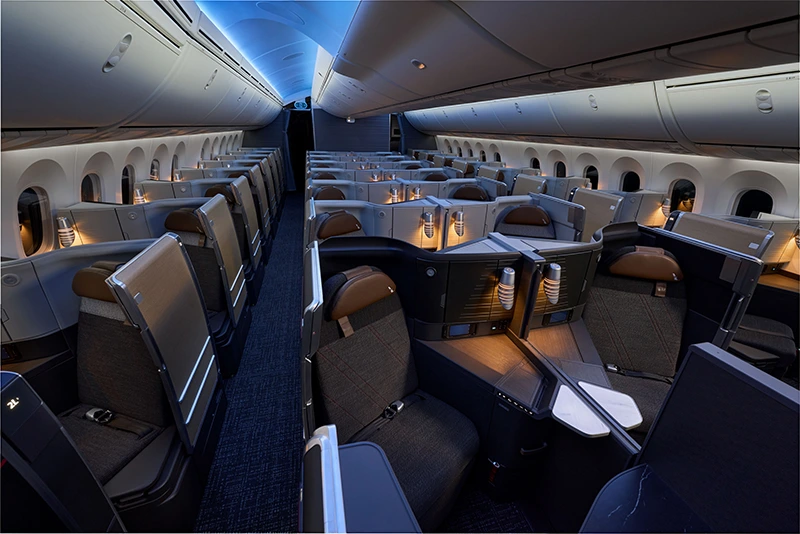
American has improved everything from coffee and wine to lounges, business class suites and the coach experience. Its larger commitments now include:
- Premium seating: Premium seats make up about 25% of narrowbody seats and are planned to reach about 40%. A319 and A320 aircraft are gaining an extra first class row, and the 737 MAX 10 will have 24 first class seats.
- Seatback screens: Every seat on new narrowbody deliveries from 2028 will have a 4K screen with Bluetooth audio and USB-C charging. Existing aircraft will be retrofitted.
- Starlink: American first announced Starlink for more than 500 Airbus aircraft in May. In October it expanded the plan to its entire mainline fleet of more than 1,000 aircraft, with installations starting in early 2027. Regional aircraft are not included.
- Denied boarding: Employees have been told to stop involuntarily bumping passengers, and airport leadership has more authority to secure volunteers. American is changing what it asks employees to prioritize and giving them tools to do it.
- Flagship Dining: Since September 15, qualifying Flagship Business passengers can use Flagship Dining at Dallas Fort Worth and Miami. The Los Angeles room closed in March 2020, and an American spokesperson said on October 28 that it would reopen the following week. Qualifying passengers include those on Flagship flights between Los Angeles and New York JFK.
The Los Angeles move is defensive, since Delta’s business class lounge is much better and United’s had also been better than American’s Flagship Dining.
Some customers will return simply because American stops giving them reasons to avoid it. Matching what travelers already get elsewhere is unlikely to be enough, though.
Delta competes on reliability, paired with service and screens that rivals long skipped. United competes on Starlink, paired with a stronger global network. American still needs a proposition no one else offers.
Debt, Fuel Costs and Investor Pressure
American entered the pandemic with heavy debt after spending more than $12 billion on share buybacks under Parker. Borrowing while returning that much cash left it weaker than competitors. It has high debt service, less room to borrow and less ability to pursue acquisitions.
Its third-quarter 2026 results show the strain. Revenue reached a record $16.3 billion, up 19.3%, but fuel expense rose $1.9 billion, or 67.5%. American posted a net loss of $269 million, or an adjusted loss of $182 million.
It ended September with $11.8 billion in available liquidity and $29.3 billion in long-term debt, including current maturities.
The fourth-quarter outlook assumes fuel near $4.70 per gallon, and American expects a full-year adjusted loss of $1.00 to $1.60 per share.
The risk is that investors demand results before enough customers have experienced the improvements. They could also demand cuts to the spending that would produce those results.
Seatback screens will not begin arriving on new aircraft until 2028, and the fleet retrofit continues into the next decade. American needs sooner improvements to bring customers back and raise their spending before then. The interest and fuel bills are arriving now.
Stay tuned with us. Further, follow us on social media for the latest updates.
Join us on Telegram Group for the Latest Aviation Updates. Subsequently, follow us on Google News
