

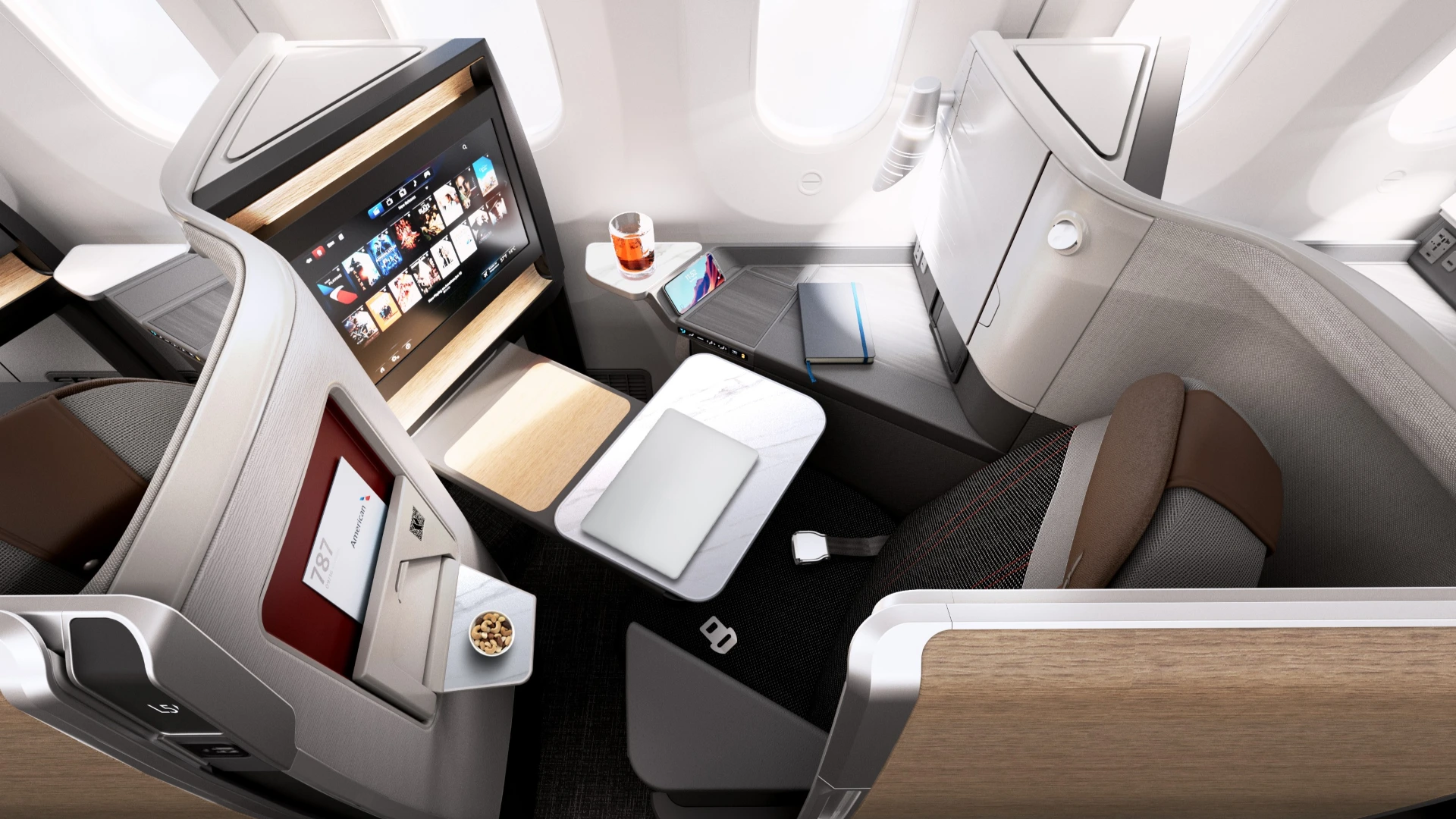
FORT WORTH- American Airlines (AA) has told federal regulators that it is allowed to sell a passenger a premium seat, move that passenger into a lower cabin, and keep a large share of the fare.
The carrier made the argument in a formal answer filed with the United States Department of Transportation (DOT).
In the same filing, American Airlines agreed to abandon the disputed rule, which refunds only 40 percent of the premium fare after a downgrade.
Consumer advocates say the policy is unfair and deceptive, and they want the DOT to act rather than close the case.
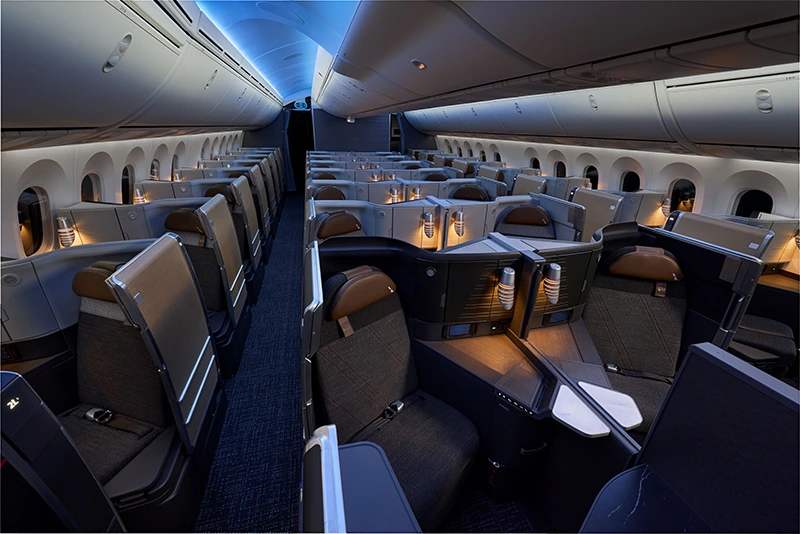
American Airlines First Class Downgrade Refund Policy
An involuntary downgrade happens when an airline sells a passenger a seat in a premium cabin, then moves that passenger into a lower cabin before or during travel. The reasons vary, including oversold premium cabins, a swapped aircraft, or a broken seat.
When it happens, the passenger has paid for a service the airline did not deliver, and the size of the refund decides how much of that money comes back.
Reporting last month revealed that American had quietly changed its rules so that a downgraded passenger, for example someone moved from business class to coach, receives a refund of only 40 percent of the fare for that flight.
The DOT position is different. The Department states that an airline must refund the difference between the original fare and the downgraded fare.
Under that standard, a passenger who buys a $10,000 business class ticket, when the coach fare was $1,000, should receive a $9,000 refund, which is the difference between the two fares. American’s formula instead refunds 40 percent of the fare, roughly $4,000, and keeps about $6,000 for the same trip.
Critics say this design rewards airlines for overselling premium cabins, because the carrier profits from every downgrade it creates.
Ben Edelman and Mike Borsetti filed a formal complaint with the DOT. They argued that American’s 40 percent formula is inconsistent with federal regulations and amounts to an unfair and deceptive practice.
They asked the Department to order American to refund based on the actual fare available when the ticket was purchased.
American Airlines has now filed its formal answer, a filing surfaced by JonNYC and reported by View from the Wing. The response defends the policy as legal while also committing to change it.
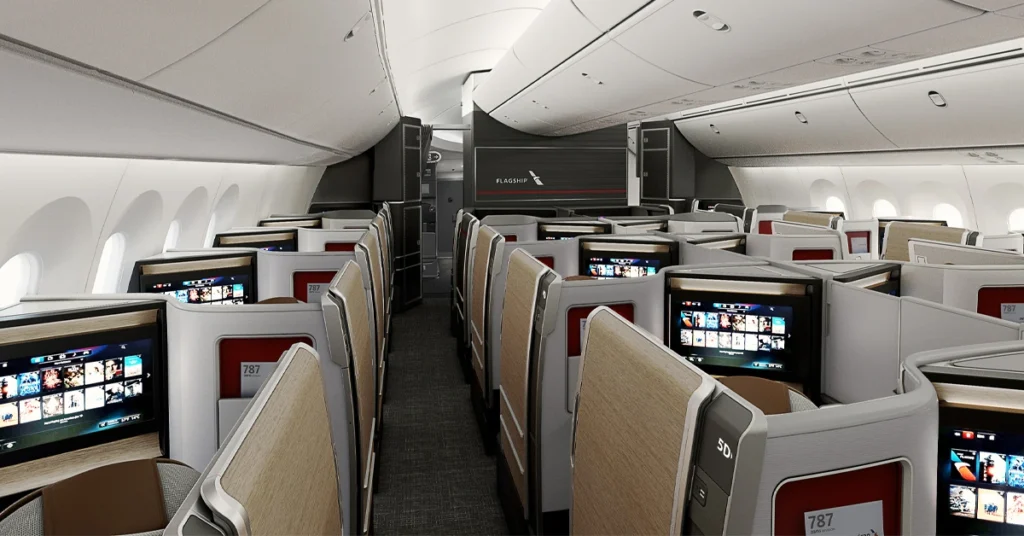
American Says It Can Decide Its Own Refund Amount
American argues that a passenger can reject the downgrade, decline to travel, and take a full refund. The carrier treats that option as the passenger’s protection.
If the passenger chooses to fly, American says the only relevant regulatory language promises an “appropriate refund” but does not spell out how to calculate it. Because the rule does not define the term, American claims it may apply its own judgment. It describes 40 percent as a “standardized proxy,” arguing that a true fare difference is hard to calculate because prices shift constantly, fares must be allocated across connecting flights, and different fares carry different restrictions.
American also contends that a specific regulation already governs downgrade refunds, so the DOT cannot use its general power over unfair or deceptive practices to impose a particular formula. The carrier adds that because the policy appears in its Contract of Carriage, it cannot be deceptive, and because customers can refuse travel, it cannot be unfair.
American acknowledges the DOT guidance requiring a refund of the fare difference, but calls that guidance nonbinding and says it does not require the airline to do anything.
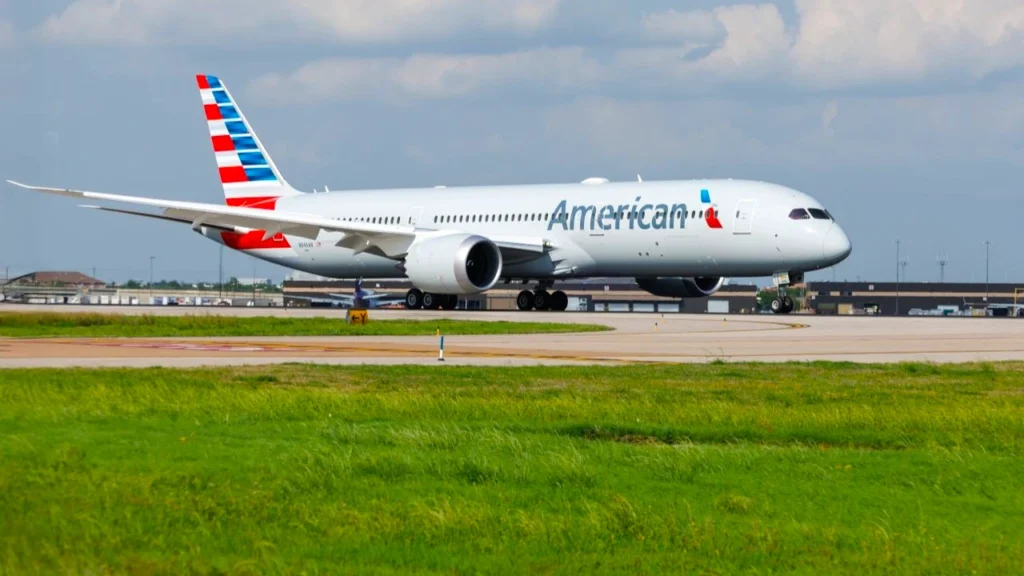
American Airlines Agrees To New Refund Formula
Despite laying out this legal theory, American has promised to change the policy by the end of the month.
The new calculation will take the passenger’s allocated premium-cabin fare for the affected segment, then subtract the average fare actually paid by passengers who bought and flew in the lower cabin on that flight and segment.
American does not admit the old method was improper. It does not plan to revisit or adjust refunds already issued to downgraded passengers. It has asked the DOT to dismiss the complaint.

What The New Formula Still Leaves Unclear
The replacement method raises its own questions for travelers. It is unclear how American will define the average fare, and whether that figure will blend Basic Economy, fully refundable, corporate, consolidator, and connecting fares together.
A flight sold out in the premium cabin but nearly empty in the back could produce a distorted result. Surcharges also vary by destination, which complicates the math further.
On routes with strong coach demand and weak premium demand, refunds could fall close to zero. Passengers may also have no clear way to audit the figure.
American will still avoid refunding the gap between what a customer actually paid and what that customer could have paid at the time of booking, even though the carrier records website sessions and can identify the fares and inventory available at the moment of purchase.
Why Critics Say American Is Wrong On Law
The complaint and its supporters argue that American’s legal position does not hold up. They point to numerous flaws in the filing and suggest the airline’s senior legal team should question the outside counsel who supervised it.
In their view, the carrier either misunderstands this area of law or is being disingenuous with the Department, and both outcomes damage its credibility. One reading of the answer is that American recognizes its approach was hard to defend and is presenting many arguments at once to blur the issue and avoid penalties for unfair and deceptive conduct.
The absence of a prescribed algorithm does not allow the airline to substitute any calculation it prefers. The preamble to the DOT’s final rule states that the carrier’s obligation is to refund fare differences, whether the downgrade results from oversales or any other situation. A flat 40 percent is not a fare-difference calculation. Even if the Department drafted the rule poorly and failed to write down what it intended, that gap does not give the airline the license it claims.
The DOT also considered a percentage approach during its rulemaking. An airline proposed a percentage refund, and the Department rejected it in favor of fare differences, drawing a contrast with the European Union’s 30 to 75 percent refund requirements. That history suggests an airline setting its own percentage is not consistent with DOT rules.
Critics say American’s use of §250.6(c) undercuts its own case. That section requires an “appropriate refund” when an oversold passenger accepts a lower cabin, and American leans on it to defend downgrade refunds in every situation. Yet American also argues that other passenger protections in Part 250 do not apply because Part 250 covers only oversales. When Part 250 would impose duties on American, the carrier treats it as narrow.
When one provision helps American, it treats that provision as broad. For a downgrade caused by an aircraft swap or a broken seat, §250.6(c) does not apply, so it cannot serve as the specific regulation that shields American from the DOT’s wider authority. The carrier cannot claim that Part 250 is too narrow to protect passengers but broad enough to protect itself.
The DOT has addressed related questions before, including a case brought by Mike Borsetti. In Borsetti v. British Airways (BA), the Department held that Part 250 did not apply where every confirmed passenger traveled, and no one faced involuntary denied boarding.
The disclosure argument also draws criticism. Publishing a term in a Contract of Carriage does not automatically make it non-deceptive, because that logic would let an airline contract around any DOT regulation. Disclosure does not turn an otherwise unlawful term into a lawful one. Section 253.7 requires conspicuous written notice of a refund-restricting term’s key features on or with the ticket.
Here, the 40 percent limit appeared on American’s website inside collapsed Contract of Carriage language, not clearly on the e-ticket receipt. Under §253.4, an incorporated term that lacks adequate notice cannot bind a passenger.
The claim that the cancel option makes the policy fair also faces pushback. A passenger who learns at the airport that a premium seat is unavailable cannot easily unwind prepaid hotels, cruises, and onward travel. American offers no data to justify 40 percent as a reasonable figure and concedes that actual differences may be larger or smaller.
A single percentage cannot logically fit downgrades from first to business, business to premium economy, business to coach, and domestic first to coach. American says a precise calculation is too burdensome, yet its new policy commits the carrier to calculating a precise difference, a contradiction that appears within the same filing.
Why The DOT Should Still Take Action
American’s core position is that it acted lawfully and that it will stop the practice, so the Department does not need to intervene.
The counterargument is that American has kept downgraded customers’ money for roughly four months and does not intend to return it.
Reducing future harm does not repair the harm already done. Fixing the policy going forward may lessen any penalty, but it does not remove the obligation to correct the past cases.
On that basis, advocates say the DOT should keep the complaint open rather than dismiss it.
Stay tuned with us. Further, follow us on social media for the latest updates.
Join us on Telegram Group for the Latest Aviation Updates. Subsequently, follow us on Google News
