

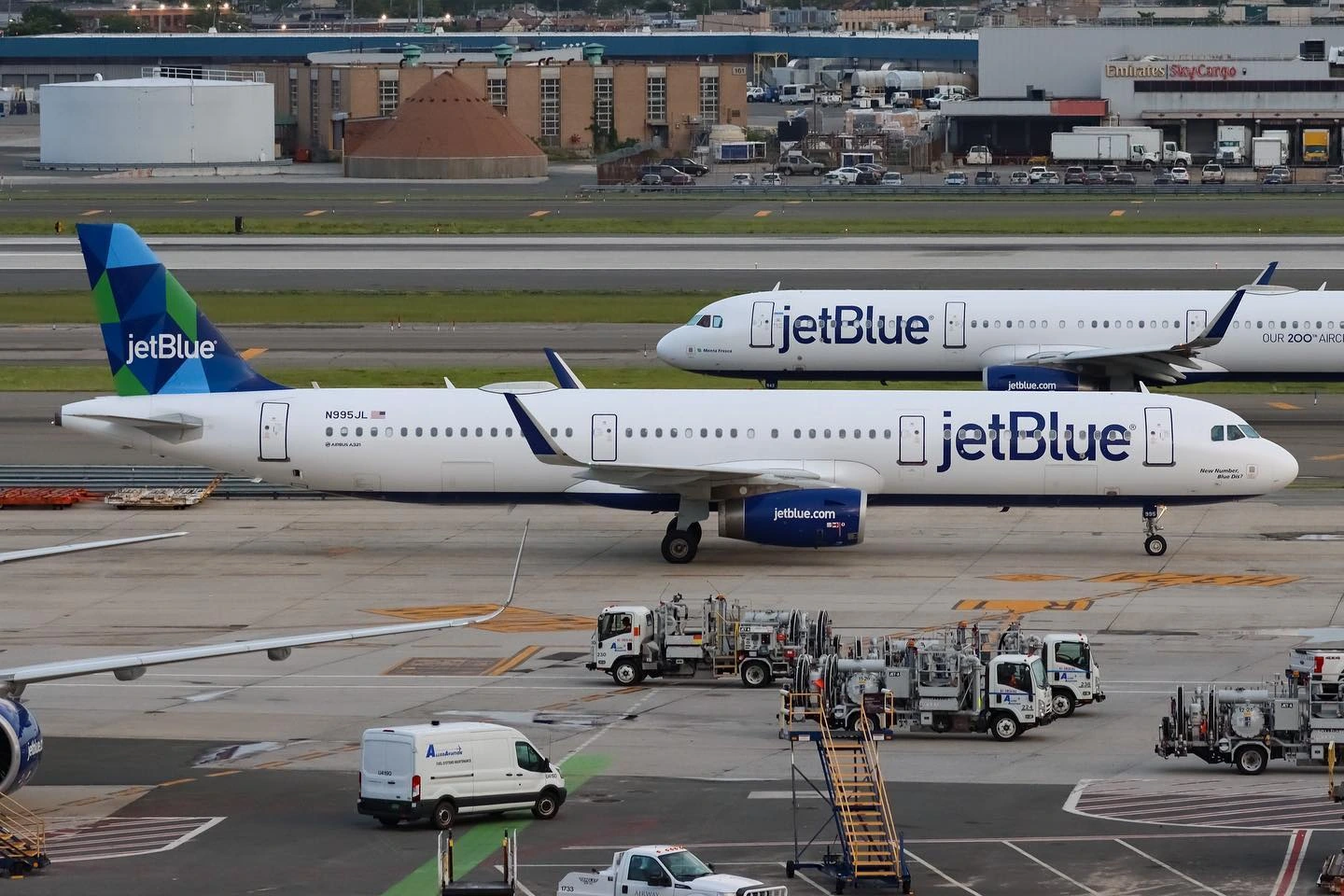
NEW YORK— A U.S. federal judge has allowed a lawsuit against JetBlue Airways (B6) to move forward after rejecting the airline’s attempt to dismiss claims that it improperly keeps Transportation Security Administration (TSA) security fees when passengers cancel award tickets.
The ruling centers on whether customers are entitled to receive those government-imposed fees as cash refunds instead of travel credits.
Plaintiffs argue the airline’s refund policy violates federal regulations requiring TSA security fees to be returned when no travel takes place and conflicts with JetBlue’s own Contract of Carriage.

TSA Fee Dispute After Cancellations
Under U.S. law, airlines must collect several government-imposed taxes and fees when tickets are purchased. Certain charges, including the TSA September 11 Security Fee and customs and immigration inspection fees, are refundable if a passenger cancels a trip and does not travel.
According to the lawsuit, JetBlue does not return the TSA fee as cash on canceled award tickets.
Instead, the airline places the amount into a Travel Bank credit, which may expire if unused and comes with restrictions on how it can be redeemed.
Passengers also argue the airline limits the use of those credits.
For example, a credit from a one-way award ticket cannot always be combined toward taxes on a more expensive or international redemption, reducing its practical value.

Judge Rejects JetBlue Dismissal Bid
JetBlue sought to have the case dismissed by arguing that the Airline Deregulation Act prevents state-law claims involving airline pricing, services, and ticket refunds.
The carrier maintained that the dispute concerns fare-related policies protected by federal law.
However, the judge disagreed, finding that the lawsuit focuses on enforcing JetBlue’s own contractual promise rather than regulating fares or services. The airline’s Contract of Carriage states that taxes and fees will be refunded whenever required by applicable law.
The court concluded that enforcing this commitment does not interfere with airline pricing because the TSA fee is a federally mandated charge rather than part of the airfare. As a result, the breach-of-contract claims may proceed.
Consumer Rights Impact on Refunds
Although the lawsuit survived JetBlue’s dismissal request, it currently applies only to individual plaintiffs rather than a broader class of customers. JetBlue’s customer agreement includes a class-action waiver, preventing affected travelers from automatically combining similar claims.
Legal observers note that pursuing a lawsuit over a $5.60 refund is financially unrealistic for most consumers because court filing costs far exceed the disputed amount.
Critics argue this makes it difficult for passengers to enforce their rights, even if federal rules require refunds, View from the Wing reported.
Supporters of broader consumer protections say disputes involving small individual losses are precisely the type of cases that class actions are designed to address.
For now, however, the lawsuit will continue on behalf of individual passengers as the court considers the remaining claims.
Stay tuned with us. Further, follow us on social media for the latest updates.
Join us on Telegram Group for the Latest Aviation Updates. Subsequently, follow us on Google News
