

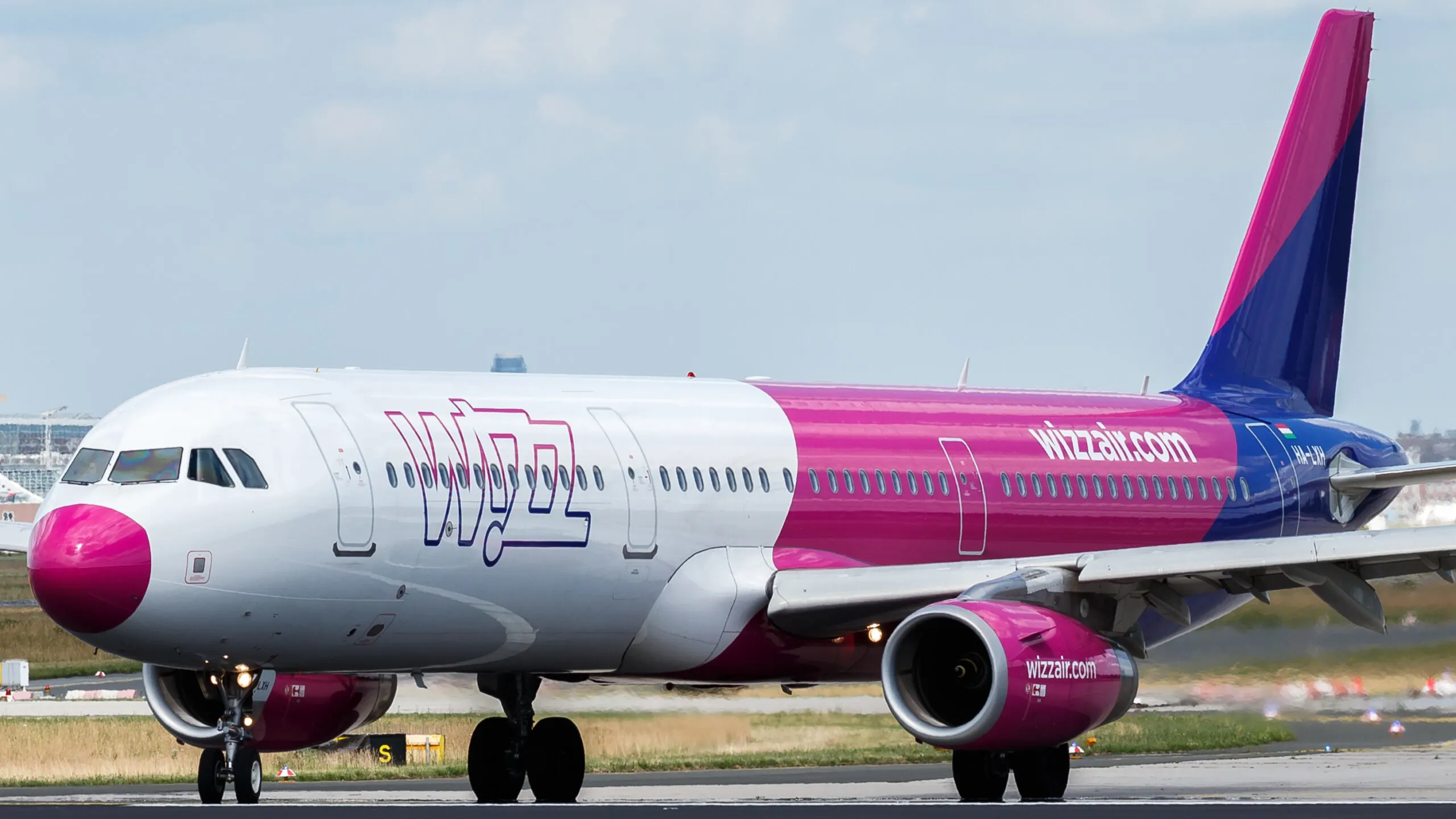
BUDAPEST- Wizz Air (W6) plans to strengthen its presence in the German market, but the low-cost carrier will not open a dedicated base there for now. Instead, the airline intends to serve German cities from stations elsewhere, keeping its operating model flexible while it studies local costs.
The Hungarian carrier, based in Budapest (BUD), reported strong growth at Hamburg Airport (HAM) and expects to move around 10.9 million passengers across Germany this year.
In a recent episode of the podcast “Luftraum” (Airspace), Wizz Air manager for sustainability and communications Anastasia Nowak outlined the airline’s views on expansion, younger travelers, artificial intelligence, and long-term plans for a return to Ukraine.
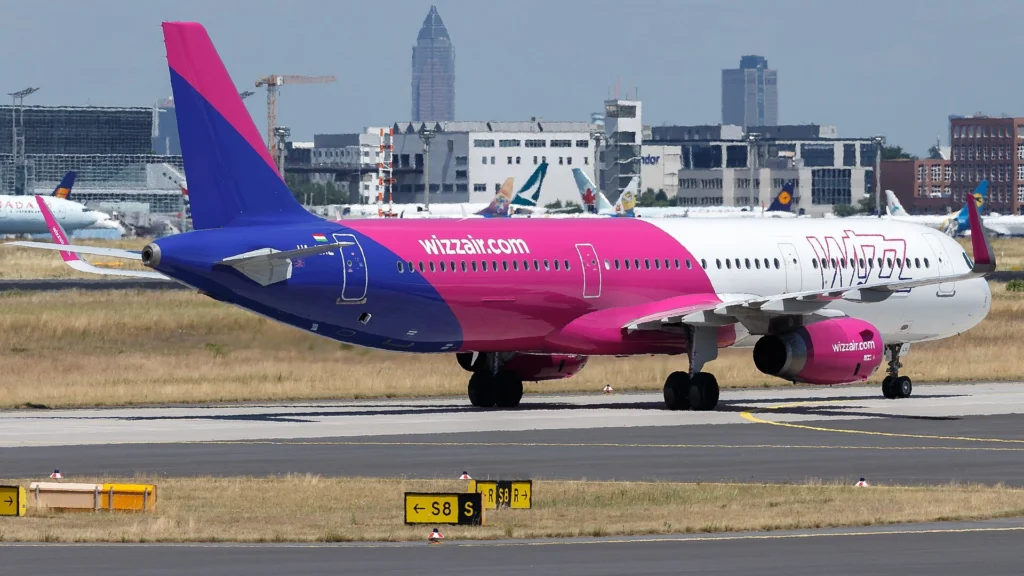
Wizz Air Germany Expansion
Wizz Air ranks among the largest low-cost airlines in Europe. Founded in 2003 by chief executive József Váradi, the ultra-low-cost group carried more than 68 million passengers in 2025, making it the third largest low-cost carrier in Europe behind Ryanair and easyJet. Germany has become a growing part of that network, and Hamburg stands out as a clear example.
“If I remember correctly, we saw growth of around 36 percent compared to the previous year,” Nowak said, describing the airline’s performance at the airport.
Wizz Air aims to carry more than one million passengers through Hamburg this year. The carrier expects growth across the wider German market as well. “We want to transport 10.9 million passengers, that’s a significant increase for us,” Nowak said.
Part of that opening comes from a gap left by rivals. Ryanair cut a series of German routes for the winter 2025/2026 season, citing high air traffic control fees and German aviation taxes, with Wizz Air among the carriers stepping into the space it left behind.
Wizz Air launched 10 new routes from Germany in March 2026, including a new Hamburg service to Montenegro’s capital.
Why the Airline Holds Off on a German Base
Industry speculation has suggested that Wizz Air could eventually station aircraft in Germany. The airline says no decision has been made. “We are examining various options, but I can’t confirm anything at the moment,” Nowak said.
High local costs shape this stance. “Taxes are generally very high in Germany, not just at airports,” Nowak explained. That pressure is easing slightly.
A cut to Germany’s aviation tax took effect on 1 July 2026, returning the levy to the levels that applied before a 2024 increase. Even so, the airline values flexibility. By operating without a local base, Wizz Air can shift capacity quickly and respond to demand as it changes.
Central and Eastern Europe
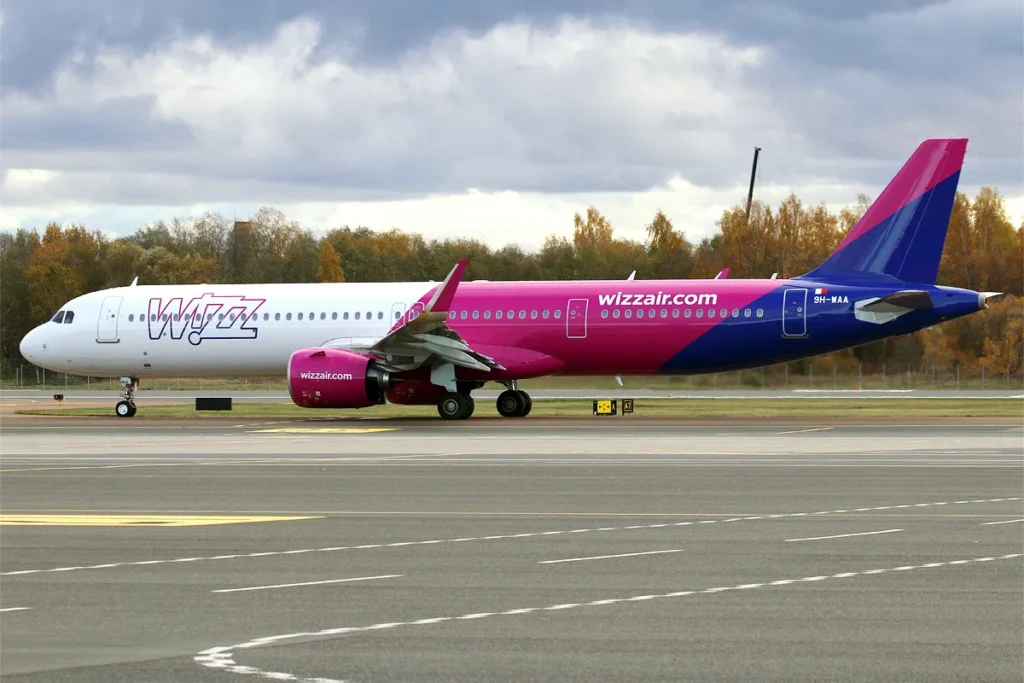
Even with its German push, Wizz Air keeps the strongest focus on its home region. “Our main focus will remain Central and Eastern Europe,” Nowak said. Romania, Bulgaria, Albania, and Hungary rank among the most important markets.
The airline is also expanding into Southern Europe. “We are currently seeing very strong growth in Italy as well,” Nowak said, noting that Wizz Air has opened several bases in the country in recent years. Albania has become another rising market.
“Albania has become very popular with many travelers,” she added. Across the continent, Wizz Air now operates more than 260 aircraft and a network that spans about 40 bases.
Changing Passenger Profile
Wizz Air was founded to connect people with their countries of origin. “Twenty years ago, our passengers were primarily people visiting friends and family,” Nowak said. That profile has shifted over time.
Today the airline serves many different traveler types, and more than a quarter of its routes now fall clearly within the leisure segment. Business travel is also rising.
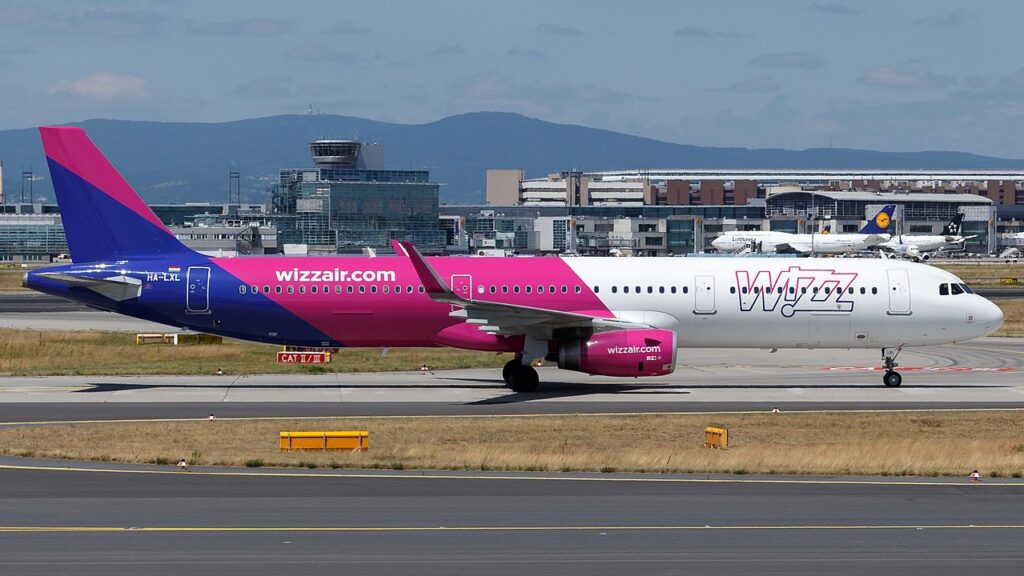
Younger customers form the core of the base. “The majority of our passengers are between 25 and 40 years old,” Nowak said. This group shapes how the brand markets itself. “We don’t try to make marketing unnecessarily complicated,” she said.
Campaigns such as “Let’s Get Lost” target younger audiences, and the airline leans heavily on digital tools. “Millennials and Gen Z don’t particularly like talking to people. That’s why we’ve created ways for them to do as much as possible themselves,” Nowak said.
How Low Fares Stay Profitable
Nowak pushed back on the idea that cheap tickets signal poor quality. “It’s a misconception that low costs mean low quality,” she said. The fleet matters most in her view.
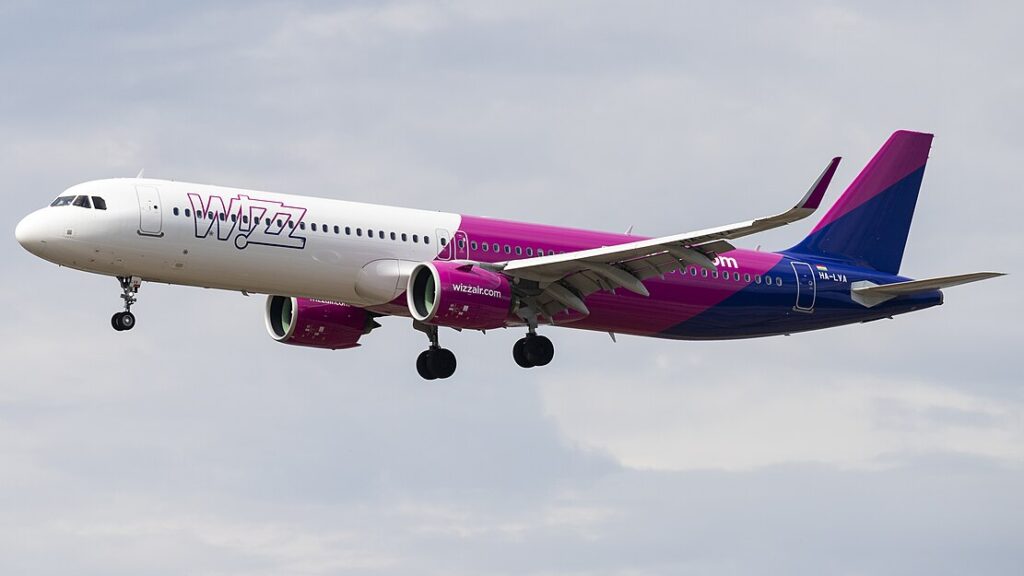
Wizz Air flies mostly modern Airbus jets, and efficiency drives the savings. “The Airbus A321neo consumes around 20 percent less fuel than its predecessor,” she explained.
Airbus puts the A321neo’s benefit at more than 20 percent fuel and CO2 savings, along with a 50 percent noise reduction, compared with earlier single-aisle models. Wizz Air is the world’s largest operator of the type.
High aircraft use supports the model. According to Aero Telegraph, Wizz Air jets fly an average of about 12.5 hours per day. Fast turnarounds add to the gains. The airline runs an internal program called “Every Minute Matters,” which rewards teams that turn aircraft around most quickly.
The carrier reports an average aircraft age of about 4.57 years, which it describes as one of the youngest fleets among major European airlines.
Artificial Intelligence Drives Efficiency
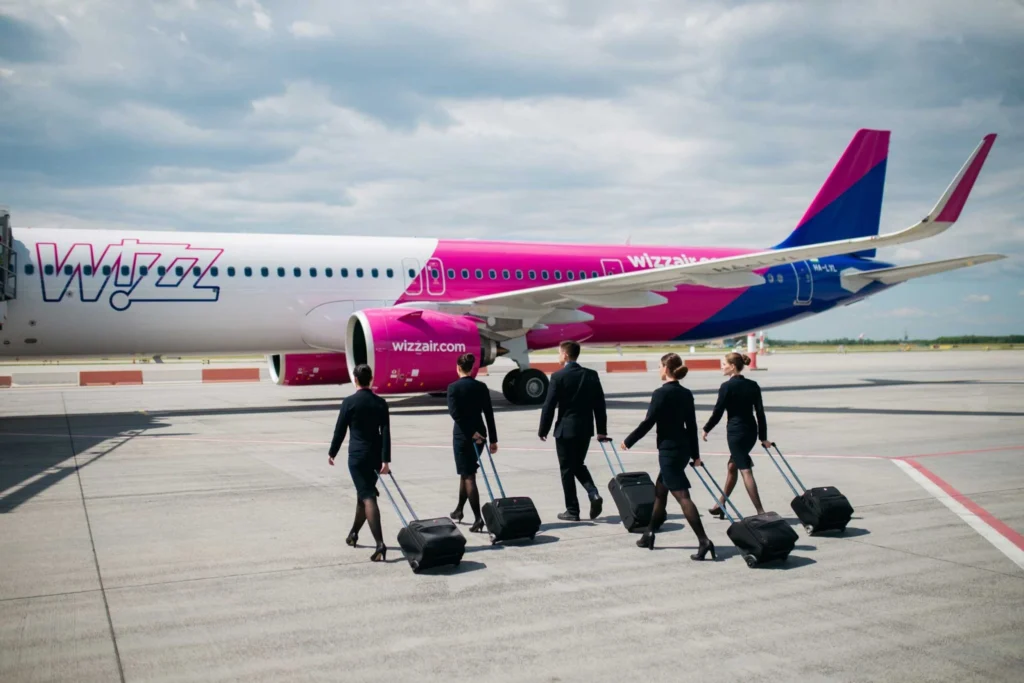
Wizz Air treats technology as a competitive tool. “We already use AI in the Operations Control Center and in flight operations,” Nowak said. She believes rivals lack similar systems. “Our competitors don’t have the same solutions to operate as efficiently as we do,” she said.
The airline runs these systems from its Budapest headquarters, where around 50 staff work in shifts. “It doesn’t look like NASA,” Nowak said, “but there are many systems and a lot of AI that can make suggestions for our entire fleet within about 20 minutes, for example, regarding route replanning.”
Long-Term Plans and a Return to Ukraine
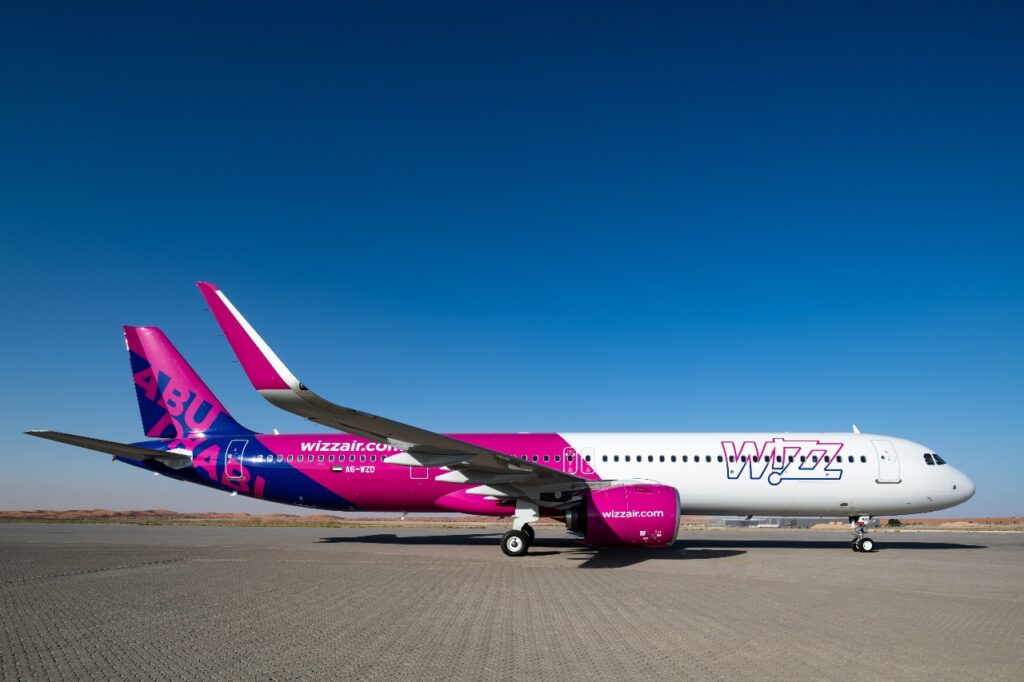
Wizz Air continues to plan for growth despite wider geopolitical uncertainty. The airline recently reshaped its delivery schedule toward an all-A321neo fleet from 2033 and now targets annual seat growth of around 10 to 12 percent, a pace its chief executive called more sustainable.
The carrier also wants to lead the return to Ukrainian skies once conditions allow. “We want to be the first airline to resume operations in Ukraine as soon as the situation is over,” Nowak said.
The airline ran a Ukrainian unit that flew from Kyiv and Lviv before the 2022 invasion, when several of its aircraft were stranded in the country.
Until then, the carrier focuses on connecting cities across Central and Eastern Europe. Each new aircraft brings a large hiring need. “For every additional aircraft, we need at least 40 new employees,” Nowak said. “It’s crazy how fast we’re growing.”
Stay tuned with us. Further, follow us on social media for the latest updates.
Join us on Telegram Group for the Latest Aviation Updates. Subsequently, follow us on Google News
