

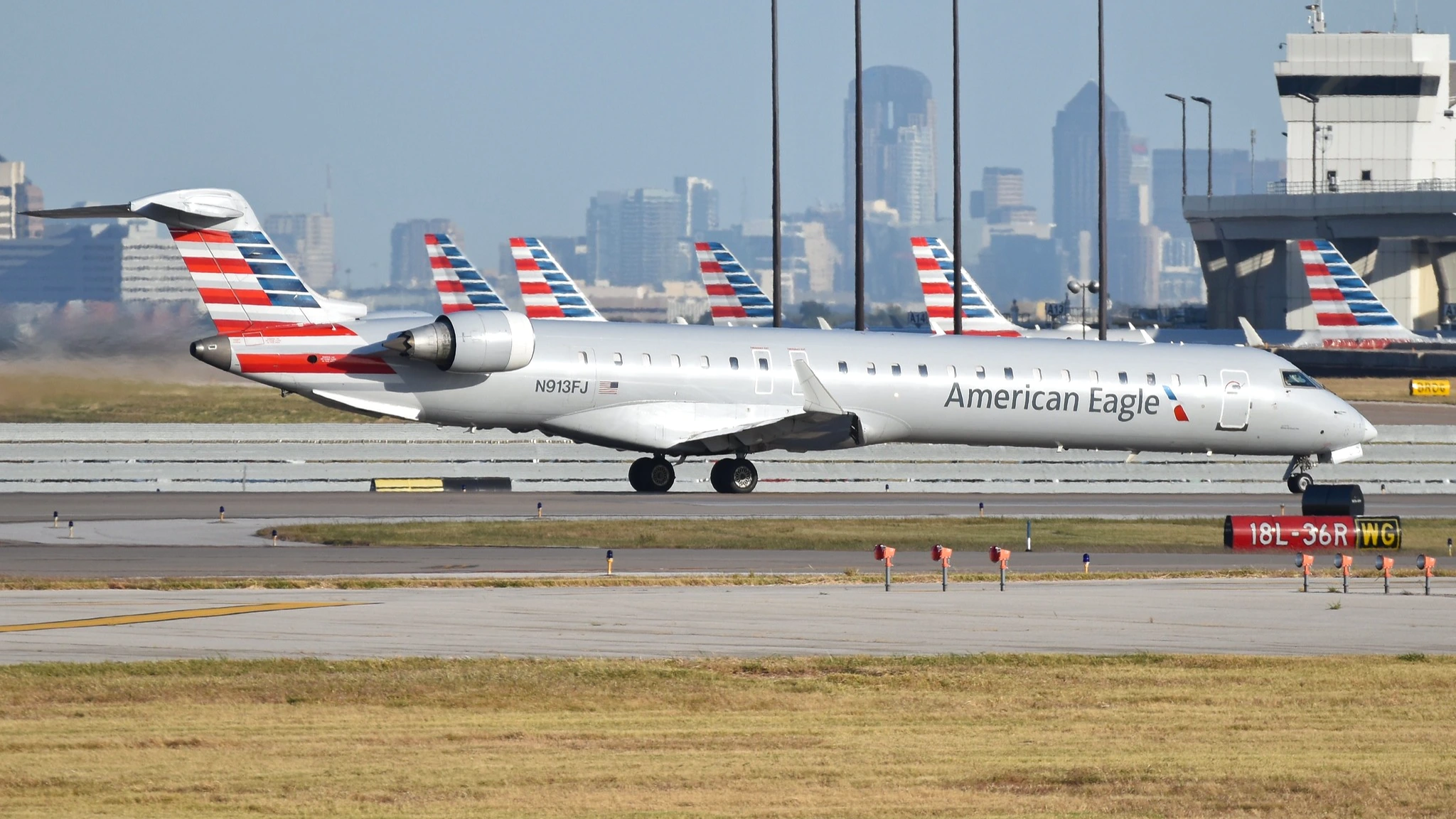
FORT WORTH- American Airlines (AA) has fitted one seat on certain regional jets with a hard table in place of a cushion, and the design is fully intentional. The aircraft belongs to wholly owned regional carrier Envoy Air (MQ), and the blocked position sits in the back row by the window.
According to View from the Wing, this setup appears on 56 Embraer E170 jets flown for American, split between Envoy Air (MQ) and Republic Airways (YX). The reason is not a fault or a broken seat. American blocks the position to stay inside its pilot contract scope rules, which cap how much regional flying the airline can outsource.
How a Hard Table Turns a Seat Into a Non-Seat
The affected aircraft is a 20-year-old ex-Republic E170. Without the table, the jet would hold 66 seats, and that number creates a problem under American’s pilot union contract.
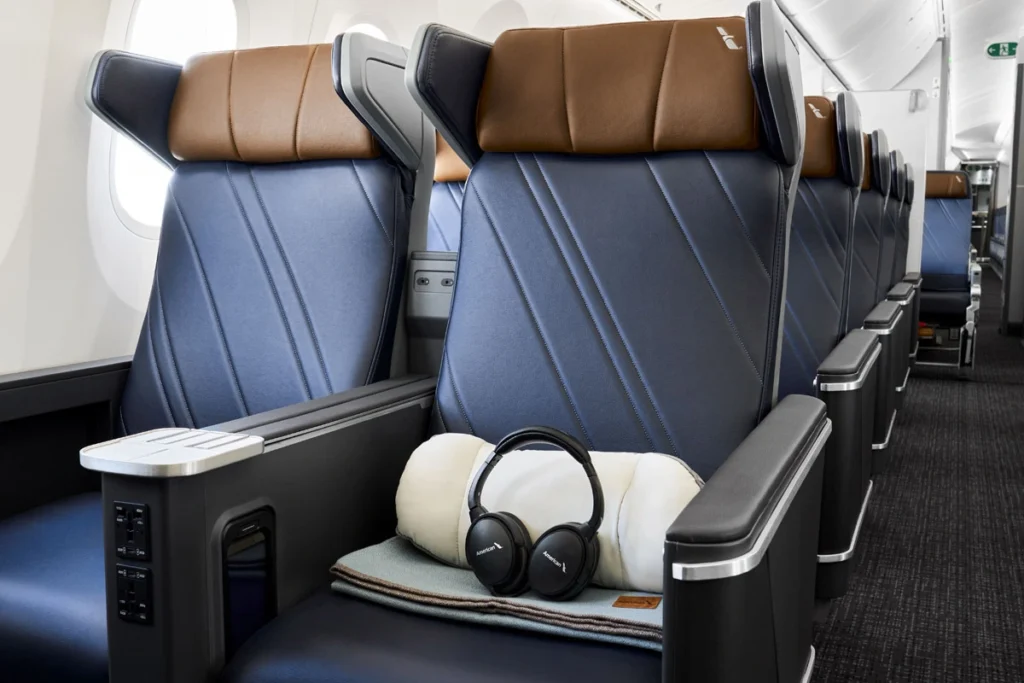
The hard cover over seat 21F keeps the aircraft at 65 seats. American’s pilot agreement sets scope limits for jets in the 66 to 76 seat range. Planes in that category cannot exceed 40% of the airline’s mainline narrowbody fleet.
By blocking a single seat, American keeps each of these E170s at 65 seats and avoids using a valuable slot in that restricted tranche.
The 56 aircraft break down across two operators. Envoy Air flies 43 of them, with 6 owned outright and 37 leased as of the most recent year-end filing. Republic Airways holds the remaining 13, as View from the Wing flagged.
Why the Airline Keeps the Seat Frame in Place
A fair question follows: if the seat cannot be used, why install it at all? The answer comes down to certification cost and structural design.
Leaving the space empty is not certified, and gaining that approval takes far more work. A hard cover, by contrast, wins approval easily as a non-occupiable position. It preserves the cabin basics that regulators check, including seat track loads, sidewall clearance, and crashworthiness assumptions. An open gap beside a passenger seat would demand fresh certification.
The seat pair also works as a single structural assembly. On 2-2 regional jet layouts, the aisle and window seats share legs, floor track attachments, and trim, and engineers certify them together. Removing just one seat would require custom work.
Keeping the frame lets American hold a near-standard interior, avoid unique parts, and restore the seat later if scope rules ever change.
How Other Airlines Block Seats
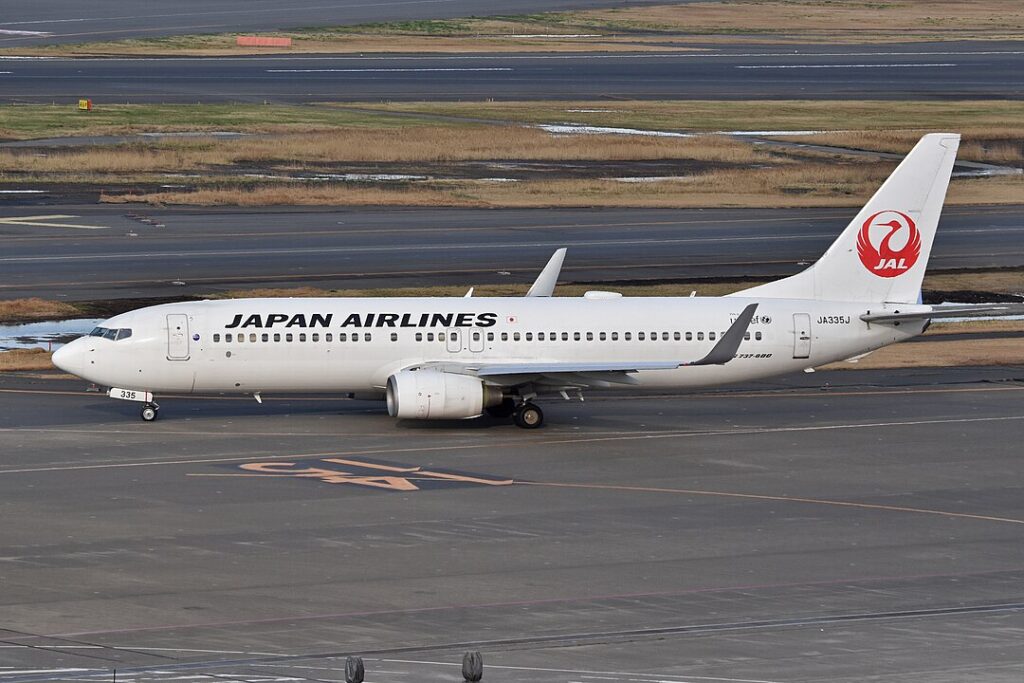
American is not alone in blocking seats, though the reasons vary. Japan Airlines (JL) blocks a coach seat on Boeing 737-800s that operate domestic flights. Travelers nicknamed it the cheek splitter 9000.
That Japan Airlines case is about safety. The aisle seat in question has no proper bulkhead or seat in front of it, which regulators treat as a hazard. The airline cannot simply remove the aisle seat, because doing so would recreate the same danger for the passenger behind it. So the carrier keeps the seat as an effective bulkhead and deactivates it.
Why American’s Case Comes Down to Pilots
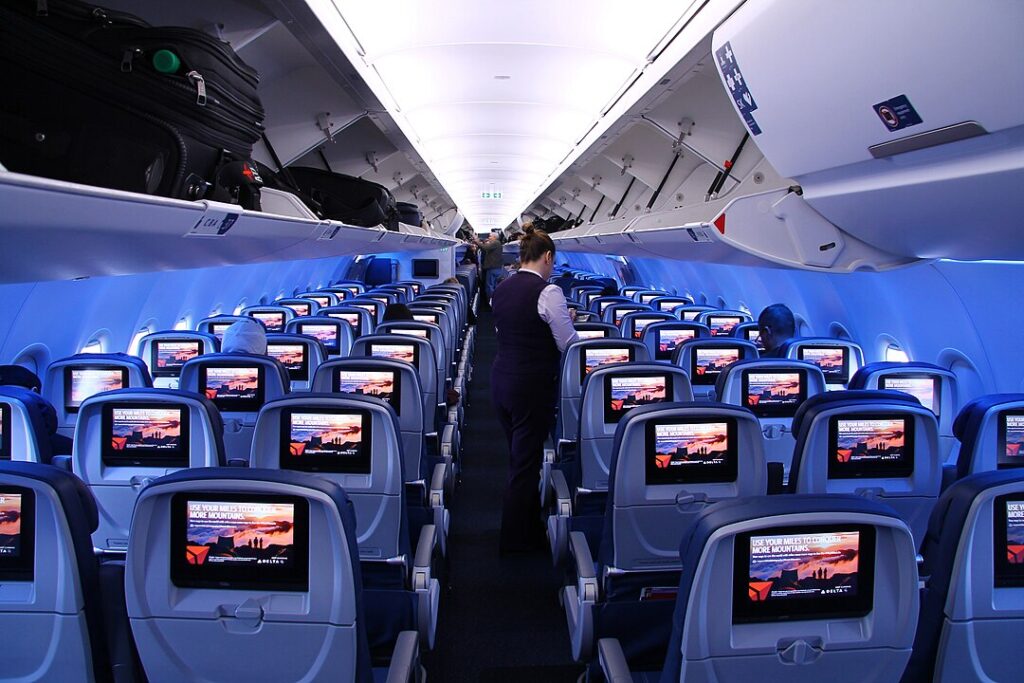
American’s blocked seat is not a safety measure. Airlines often block seats to stay under a staffing threshold.
For example, 150 seats require 3 flight attendants, while 151 seats would demand 4, which raises cost. United Airlines (UA) plans to block middle seats on its new Airbus A321XLRs so it can fly with one fewer flight attendant.
American’s situation is different because it centers on pilot rules. The airline and its pilots agreed on which flying belongs to mainline crews and which can go to cheaper regional carrier pilots. American must follow those limits.
A 65-seat plane stays within the deal, while a 66-seat plane would consume a scarce slot in the 66 to 76-seat category. The tray table over seat 21F ensures that position never counts as a real seat.
Stay tuned with us. Further, follow us on social media for the latest updates.
Join us on Telegram Group for the Latest Aviation Updates. Subsequently, follow us on Google News
