

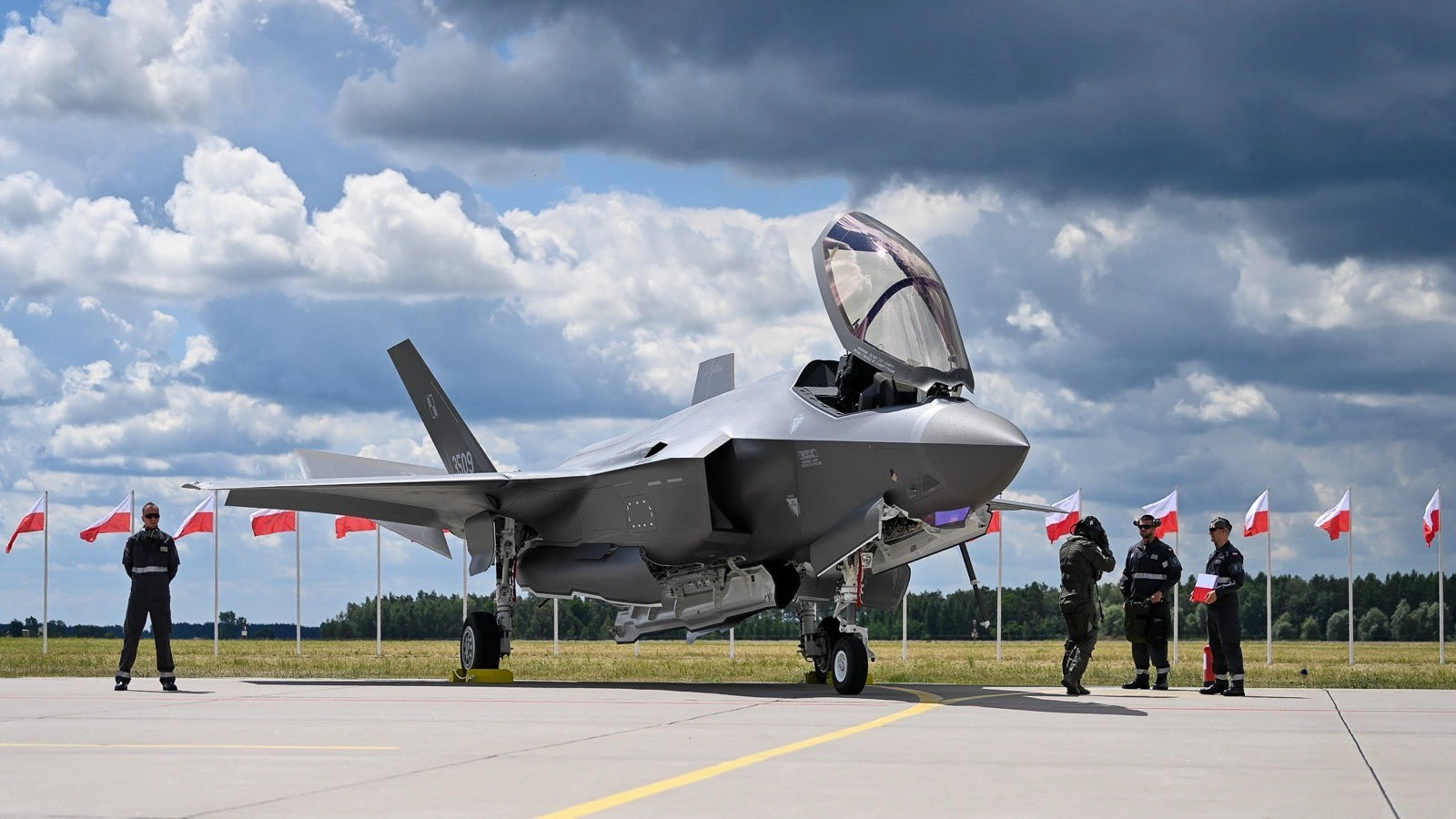
BETHESDA— Lockheed Martin has revived its pitch to sell the F-35 Lightning II stealth fighter to Spain, with a bipartisan US House delegation visiting Madrid (MAD) this week to press the case before the Defense Commission of the Congress of Deputies.
The renewed push follows the collapse of the trilateral FCAS (Future Combat Air System) program, which leaves Spain without a clear path to a sixth-generation fighter, even as Madrid (MAD) reportedly explores Turkey’s KAAN as an alternative.
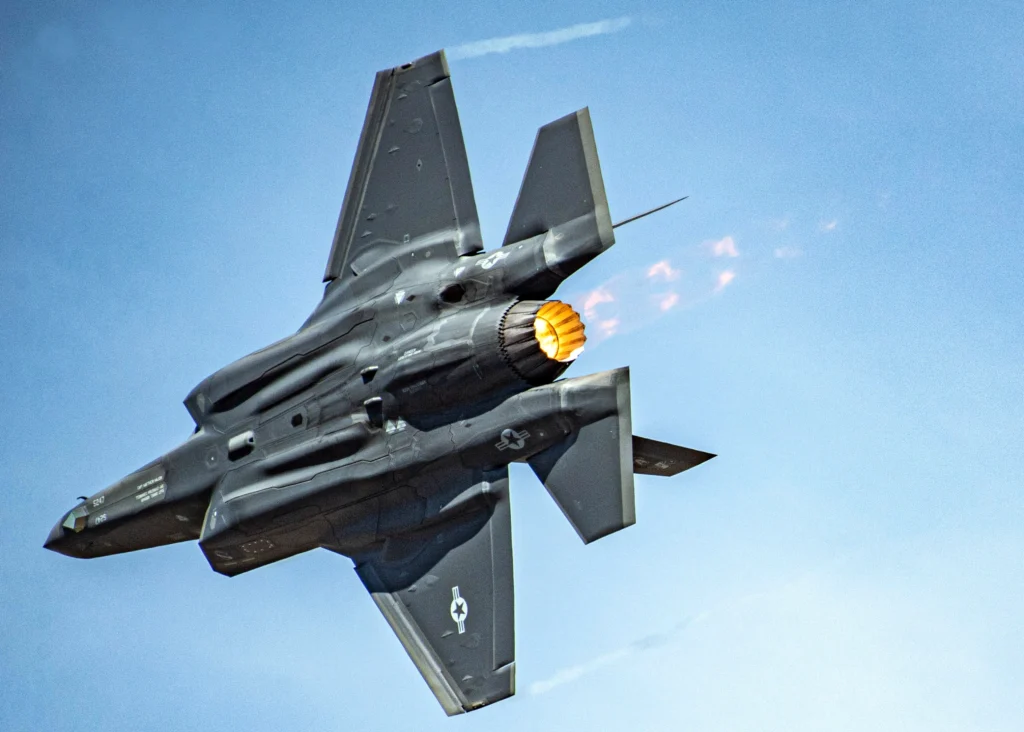
US Lawmakers Press Spain To Reconsider F-35
A bipartisan delegation from the US House of Representatives arrived in Spain this week to discuss several bilateral issues, according to Spanish outlet Infodefensa, which reported the visit on June 25. The group included Republicans Nathaniel Moran and Craig Goldman, along with Democrats Jim Costa and Brendan Boyle.
During their meeting with the Defense Commission of the Congress of Deputies, the lawmakers pushed for the sale of the F-35 to Spain. They argued that several other NATO members have already purchased the stealth fighter, positioning the jet as a proven choice within the alliance.
The report noted that the four lawmakers are among politicians who have received donations from Lockheed Martin and hold close ties to the defense giant, including interests linked to aircraft production in their states.
This detail suggested the lawmakers may form part of a Lockheed lobbying effort eager to secure new orders, though the report stated these claims could not be independently verified.
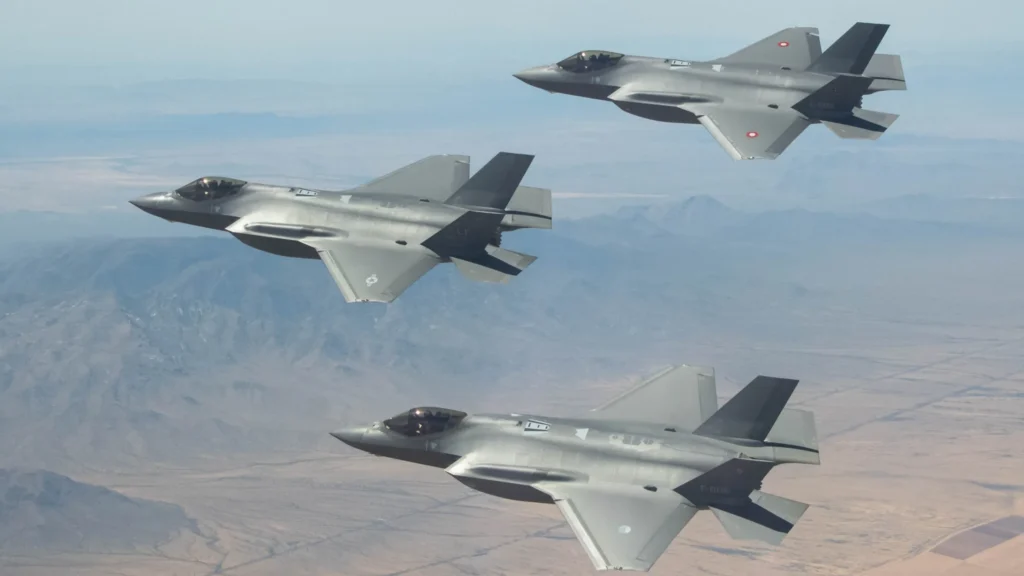
Tensions Between Madrid And Washington Shape The Backdrop
The visit comes during a strained period in Spain-US relations. Spanish Prime Minister Pedro Sánchez denied US forces access to Spanish military bases to launch strikes on Iran in March 2026, a decision that angered US President Donald Trump. Trump had already criticized Spain for refusing to raise defense spending to 5% of its GDP.
Spain shelved its F-35 plans in August 2025, choosing to prioritize defense spending within Europe and effectively closing the door on the American jet at the time.
American politicians now appear to be working to persuade Madrid to reverse that decision.
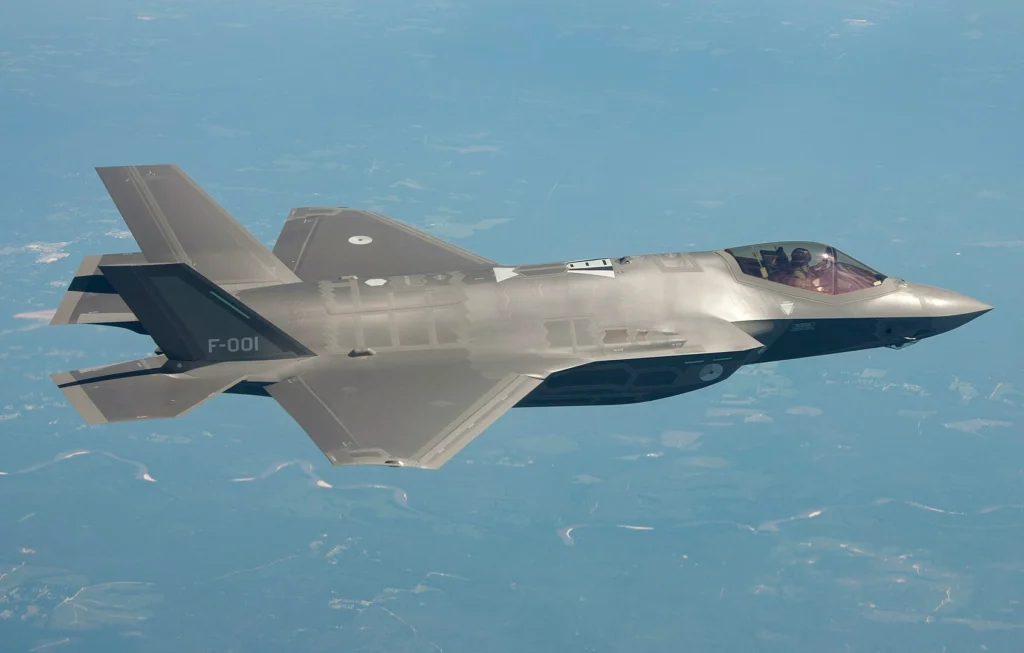
Spain’s On-Again, Off-Again History With The F-35
Spain has repeatedly approached the F-35 and then stepped back. In 2021, the country reportedly considered buying 50 jets, split between 25 F-35A variants to replace the Spanish Air Force’s Boeing F/A-18 Hornets and 25 F-35B variants to replace the Spanish Navy’s AV-8B Harrier II aircraft.
Spain reversed course in November 2023, announcing it had no plans to buy the F-35 and would focus on the Eurofighter Typhoon instead. Reports in 2024 indicated Spain was again weighing the purchase to urgently replace its aging Hornets, but the country officially ended its F-35 pursuit last year.
Lockheed Martin signaled it had not given up. Jonathan Linn, the company’s senior manager for Business Development for South, Central, and Eastern Europe, visited Spain in November 2025 as part of its global supply chain program.
He acknowledged that Spain’s official position against the jet did not end Lockheed’s involvement, and confirmed the company remained interested in selling the fifth-generation aircraft to Madrid.
FCAS Collapse Leaves Spain Without A Long-Term Path
The FCAS program, jointly pursued by France, Germany, and Spain, collapsed over irreconcilable differences between Airbus, representing Germany and Spain, and Dassault Aviation, representing France. The disputes spanned work-sharing, design philosophy, and supplier selection.
France has maintained it can develop a next-generation fighter alone and has committed to continuing work through 2040. French Defense Minister Catherine Vautrin told parliament the project represented eight years of commitment and 2.5 billion in investment, most of which would support continued work on a fighter jet through 2040.
Airbus, meanwhile, has formed a coalition of defense companies called “Team Gen 6” and submitted a position paper on a sixth-generation fighter to the German government.
The coalition states it does not seek to launch a new project, though experts believe it may be aiming to do exactly that or to partner with Sweden’s Saab.
Germany is acquiring Tranche 4 and Tranche 5 variants of the Eurofighter Typhoon, while France is developing the Rafale F5 as an interim solution. Spain has fewer fallback options, which means the FCAS collapse may have affected it the hardest, especially after it already rejected the F-35.
Spain Weighs Turkey’s KAAN As A Temporary Fix
The Spanish government is reportedly considering Turkey’s KAAN, a fifth-generation stealth fighter that Ankara began developing after being expelled from the F-35 consortium.
The Trump administration has reportedly approved the sale of GE F110 engines for the KAAN, helping Ankara clear a major hurdle toward fielding the jet by the end of the decade.
Turkish Aerospace Industries (TAI) disclosed in May 2026 that preliminary government-to-government discussions were underway with Spain over a potential KAAN sale.
The talks were believed to be at an early stage, involving both technical and political channels, and were expected to proceed through a government-to-government route.
Spanish officials reportedly view such a purchase as a way to buy time until another European next-generation platform becomes available, according to an earlier report from the Spanish business newspaper El Economista.
Some experts believe Spain’s tilt toward European systems reflects a broader effort to reduce reliance on the US amid strain in the transatlantic relationship and uncertainty over buying American equipment under Trump.
F-35 Loses Ground Among Global Buyers
Lockheed’s intensified lobbying comes as the F-35 faces mounting setbacks. Several existing buyers have cut their orders, and prospective customers have backed away since Trump took office, citing unilateral tariffs, his weaker commitment to NATO, and concerns about US reliability as a defense partner.
Canada placed its F-35 purchase on hold amid tensions with Washington, and Portugal abandoned its plans, citing the administration’s unpredictability.
Switzerland reduced its original order of 36 F-35A jets over rising costs. India showed no real interest in the aircraft after it was verbally offered by Trump and Vice President J.D. Vance.
Lockheed also lost the Next-Generation Air Dominance (NGAD) contract to Boeing. In April 2025, Lockheed CEO Jim Taiclet claimed the company could integrate 80% of sixth-generation NGAD technology into the F-35 at half the cost, creating what he called a “fifth-generation plus” variant, but the concept has not yet materialized.
Against this backdrop, the targeted lobbying to win a Spanish order fits the company’s wider effort to reverse the jet’s declining fortunes.
Stay tuned with us. Further, follow us on social media for the latest updates.
Join us on Telegram Group for the Latest Aviation Updates. Subsequently, follow us on Google News
