

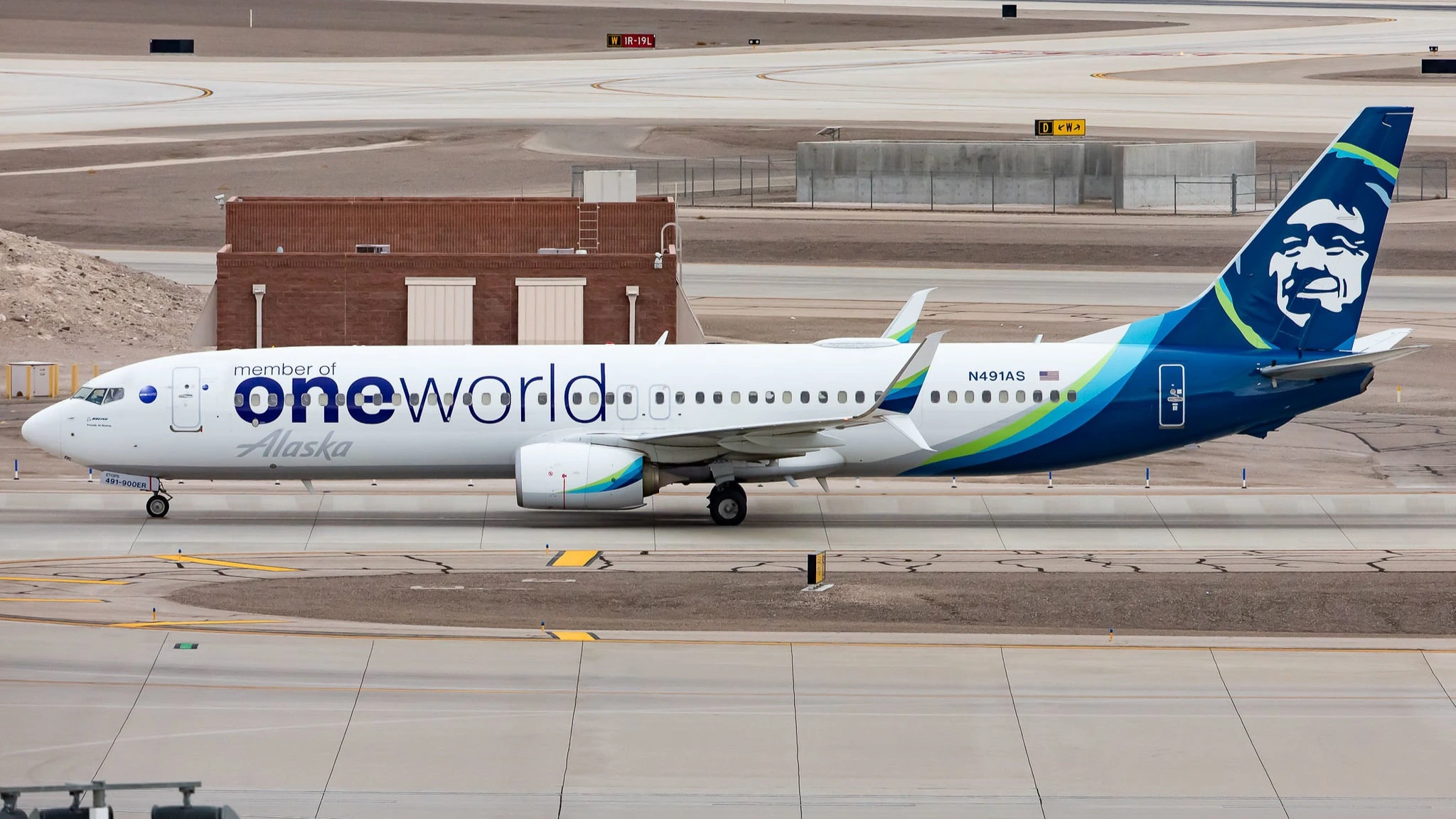
SEATTLE- The U.S. Court of Appeals for the Ninth Circuit has revived a religious discrimination lawsuit against Alaska Airlines (AS) and its flight attendants’ union. The case centers on two flight attendants fired in 2021 after they questioned the carrier’s support for the proposed federal Equality Act on an internal staff network run from its Seattle (SEA) base.
A three-judge panel sitting in San Francisco (SFO) ruled on Wednesday, June 24, 2026, that a jury should decide whether the airline and the Association of Flight Attendants-CWA (AFA) acted on religious bias. The decision reverses a lower court that had thrown out the claims before trial and clears the way for the case to move forward.
Alaska Airlines Religious Lawsuit
The panel reversed a 2024 summary judgment that had favored Alaska Airlines and the AFA. Judge Daniel A. Bress wrote the opinion in Brown v. Alaska Airlines, Inc., No. 24-3789.
The court held that flight attendants Marli Brown and Lacey Smith presented enough evidence for a jury to find that the airline and the union discriminated against them because of their religious beliefs.
The ruling does not decide whether Alaska or the union broke the law. It returns the dispute to the U.S. District Court for the Western District of Washington in Seattle, where the plaintiffs have requested a jury trial.
First Liberty Institute, a conservative Christian legal nonprofit, represents the two women. Senior Counsel Stephanie Taub argued the appeal in August 2025 and said the decision confirms that civil rights laws protect workers of faith from discrimination by employers or unions.
How the Dispute Began
In early 2021, Alaska Airlines posted on its internal network, Alaska’s World, announcing support for the Equality Act.
The proposed legislation would have extended federal nondiscrimination protections to cover sexual orientation and gender identity. The bill passed the U.S. House of Representatives in 2021 but stalled in the Senate.
Alaska invited employees to comment. Internal records cited by the court show the company knew the legislation raised religious concerns for some staff. The airline’s managing director for culture testified that the company was aware that those concerns kept surfacing.
The Two Posts That Led to Firings
Smith, a six-year employee, posted a single-sentence question asking whether a company could regulate morality. Brown wrote a longer reply arguing that the act would suppress religious freedom and affect women’s shelters, prisons, and private spaces. Brown also stated that the measure could let predators exploit access rules.
Alaska deleted both comments, closed commenting, and opened investigations into both women.
During her interview, Brown identified her post as religious, said she respected her LGBTQ coworkers, expressed regret for any offense, and requested a religious accommodation. Her supervisor found her sincere and recommended only a record of the discussion.
The airline fired her anyway, saying she equated LGBTQ people with predators and violated anti-harassment policy. Smith, following union advice, framed her comment as philosophical rather than religious. She was also fired.
The Union’s Role in the Case
The court gave significant weight to the conduct of AFA officials. Records show the union took an unusually active part in Alaska’s investigation. AFA Master Executive Council President Jeffrey Peterson flagged Brown’s post to management and texted that he hated Smith.
Another union representative wrote that the two should be removed, and the union’s grievance chair privately described the comments in crude terms and hoped for a suspension.
AFA filed a grievance for Brown but discouraged her from stressing religious discrimination, then declined to take the case to arbitration.
The panel found that a reasonable jury could view these statements as evidence of anti-religious bias. The court rejected the union’s argument that the firing was Alaska’s decision alone, holding that this did not remove AFA’s duty of fair representation.
Alaska’s Policy Changes
After the posts appeared, Alaska did not initially delete them. A senior people officer first posted a company response stating that support for the act concerned protection from discrimination and that staff were expected to live by Alaska’s values.
The airline then removed both comments, ended its existing three-strikes commenting policy, and revised its rules to bar religious and political opinions on the network.
A Split Decision on One Claim
The revival of Brown’s Title VII claim was unanimous because her post was openly religious and understood that way by both the airline and the union.
The revival of Smith’s claim was 2-1. Smith was already under an active disciplinary warning from a prior incident, and she had not described her post as religious during the disciplinary process.
The court still found that a jury could view Alaska’s stated reasons for firing Smith as pretextual. The claims against the union were unanimously revived for both women.

What Happens Next
The case now returns to federal court in Seattle for trial. First Liberty expects proceedings to begin within months unless Alaska reaches a settlement. Alaska declined to comment on the ruling, and AFA could not be reached.
The decision follows other recent cases involving cabin crew and faith-based speech, including a Southwest Airlines flight attendant who was reinstated and awarded damages after her union supported her dismissal, and a United Airlines flight attendant who settled after being fired over comments about Pride Month.
Stay tuned with us. Further, follow us on social media for the latest updates.
Join us on Telegram Group for the Latest Aviation Updates. Subsequently, follow us on Google News
