

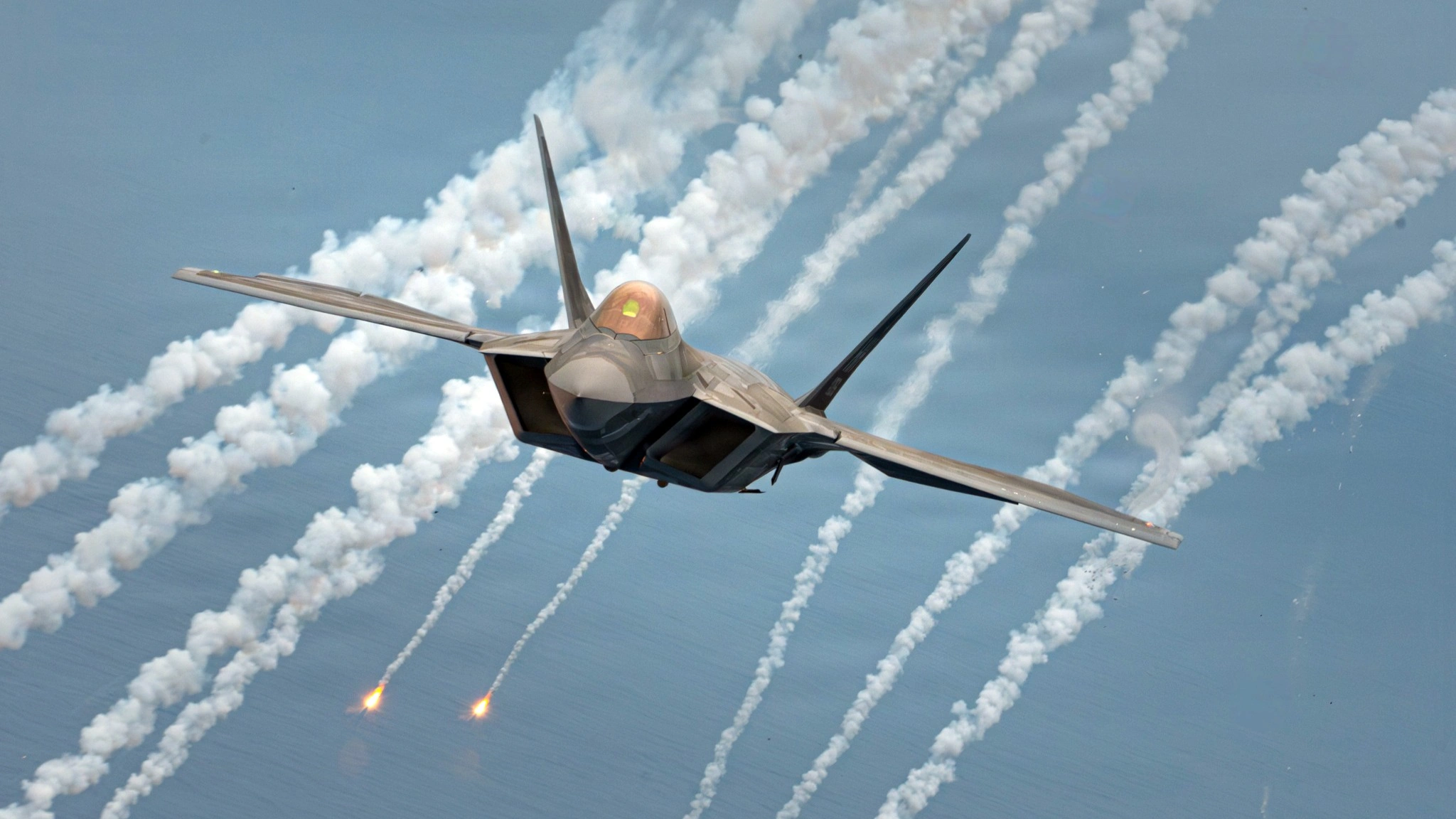
KANSAS- A US Air Force investigation found that combined mistakes by a KC-46 boom operator and an F-22 pilot snapped a refueling boom, causing roughly $10 million in damage when it fell into the Atlantic Ocean.
The tanker belonged to the 22nd Air Refueling Wing at McConnell Air Force Base in Kansas.
The KC-46 was scheduled to refuel 7 F-22s from the 1st Fighter Wing at Joint Base Langley-Eustis in Virginia during a training mission.
An Accident Investigation Board report, published June 12, pointed to both human factors and a known aircraft deficiency as causes of the accident.
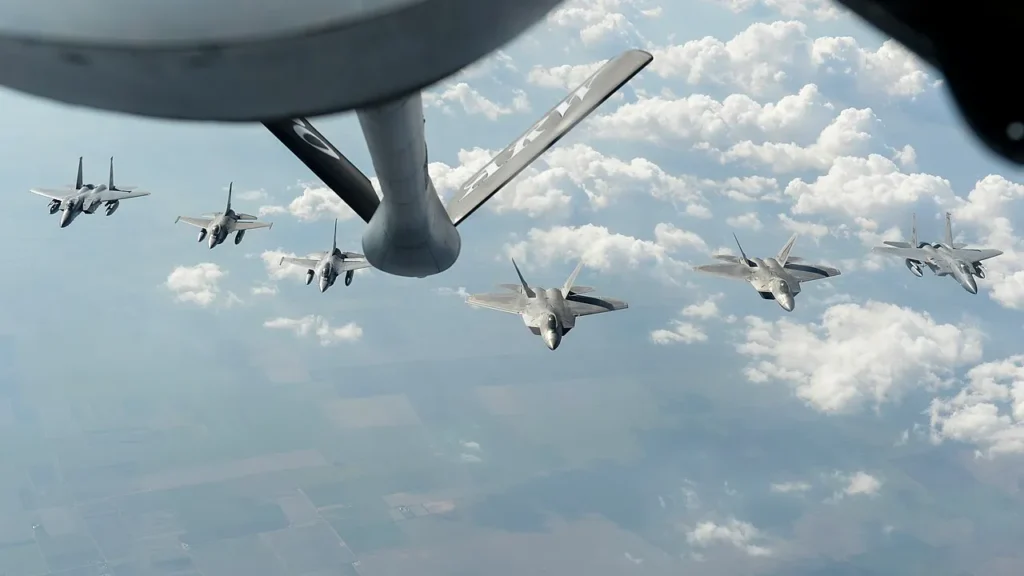
How the Refueling Boom Broke Apart
The report identified incorrect control inputs by the boom operator as the primary cause. Those inputs put the boom “out of trim,” while the F-22 pilot failed to fully account for the tanker’s “stiff boom,” a documented aircraft deficiency.
The boom became stuck, or “bound” in Air Force terms. When it finally disconnected, it jerked upward, struck the tanker’s tail assembly, and broke in half.
As reported by Air and Space Forces, the incident occurred on July 8, 2025. Human error remained the central focus of the investigators, even though the stiff boom contributed to the sequence of events.
The boom operator was a qualified instructor with more than 1,000 flight hours across the KC-135 and KC-46. The F-22 pilot, by contrast, was a student with just 13 hours in the aircraft at the time of the accident. This experience gap shaped how the refueling attempt unfolded.

Troubled Approach From the Start
The refueling began poorly. The F-22 approached the KC-46 3 times before making contact. Twice, the boom operator called for emergency separations because the fighter pilot could not hold the correct position.
After the two aircraft connected, the boom operator issued many verbal corrections, four of them in less than 15 seconds.
The F-22 kept pushing forward relative to the tanker, nearing the “inner telescope disconnect limit.” At that point, the KC-46’s refueling system automatically disconnects to stop the boom from being driven too far inward.
The operator’s inputs also increased the load on the boom, which triggered a warning. When the operator initiated a disconnect to retract the boom’s telescope, he could not, because the boom was already bound.

Moment of Impact
The boom operator then told the F-22 to break away, but failed to pull the boom back. The boom wrenched free as the fighter pulled off, swinging upward and striking the KC-46’s empennage.
The impact damaged the tail cone, the auxiliary power unit exhaust, and the boom itself.
The KC-46 flight commander described the impact as a loud noise and violent action that caused the aircraft to “kind of bow wave several times” before the boom began to oscillate and ultimately separate.
Investigators Conclusion
The board determined that the boom operator’s control inputs created high radial force on the nozzle. Investigators reasoned that if the operator had simply waited, the nozzle likely would have unbound, allowing the telescope to retract properly.
Technical documents advise that when operators suspect a stuck nozzle, they should first neutralize their flight controls to avoid abrupt boom inputs.
The board also cited the F-22 pilot’s actions as a substantially contributing factor. To manage the stiff boom, the pilot must apply power to drive the boom into place, then reduce that power so the receiver does not drift forward.
The F-22 pilot did not reduce power, which contributed to the nozzle binding and the resulting mishap.
Stay tuned with us. Further, follow us on social media for the latest updates.
Join us on Telegram Group for the Latest Aviation Updates. Subsequently, follow us on Google News
