

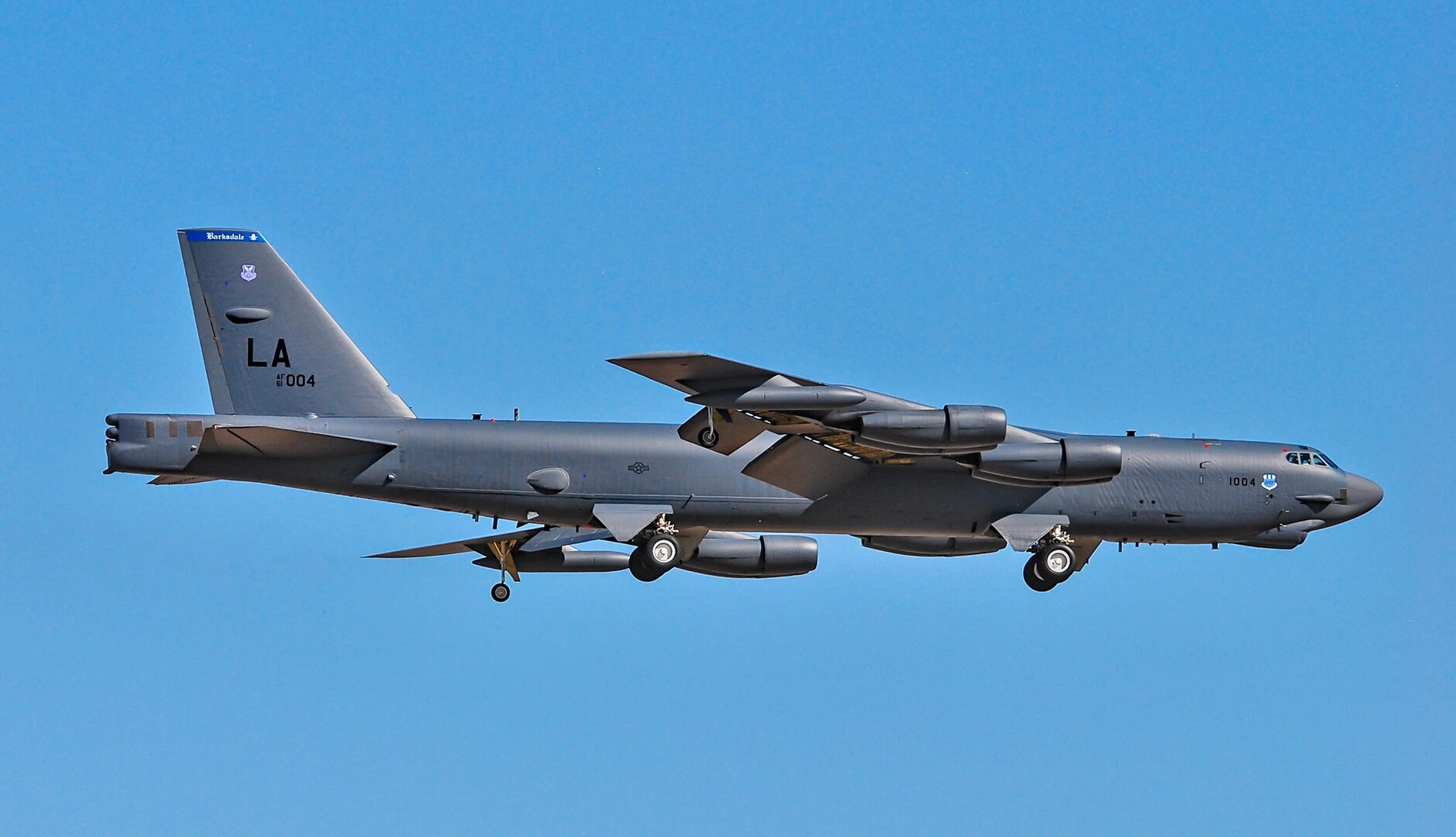
CALIFORNIA- A Boeing B-52H Stratofortress bomber crashed shortly after takeoff from Edwards Air Force Base, California, on June 15, killing all eight people on board.
The aircraft was conducting a local test mission in support of the US Air Force’s Radar Modernization Program when the accident occurred.
The crash has prompted multiple investigations as the Air Force works to determine the cause of one of the deadliest B-52 accidents in recent years.
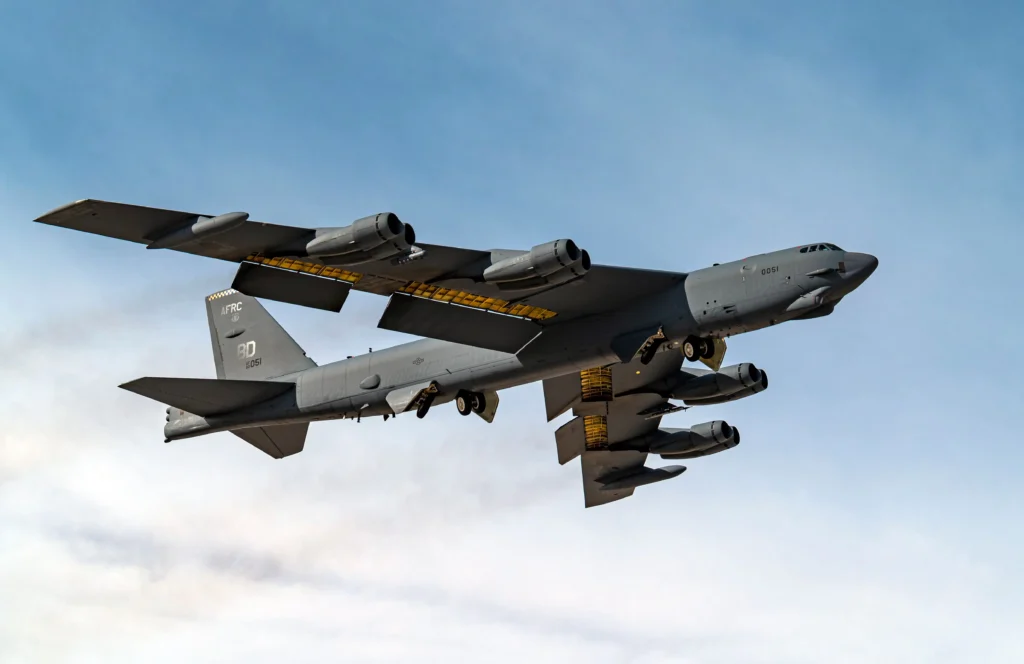
Deadly B-52 Test Flight Ends in Tragedy
The B-52H crashed at approximately 11:20 AM local time shortly after departing Edwards Air Force Base on a local test sortie.
According to Air Force officials, the aircraft went down immediately after takeoff and burst into flames.
Colonel James Hayes, Deputy Commander of the 412th Test Wing, confirmed that all eight occupants aboard the bomber were killed.
“Today, Edwards Air Force Base experienced a horrible tragedy and we lost eight great Americans,” Hayes said during a news conference. He added that the accident was considered unsurvivable and extended condolences to the families of the victims.
BREAKING: A U.S. Air Force B-52 bomber crashed shortly after takeoff at Edwards Air Force Base, triggering an emergency response.
— Fox News (@FoxNews) June 15, 2026
Emergency crews rushed to the scene as thick black smoke billowed from the wreckage scattered across the desert airfield.
More details, including… pic.twitter.com/JRx3R4ElJW
The aircraft was supporting the Air Force’s Radar Modernization Program, a major effort to upgrade the B-52 fleet with new radar capabilities. The modernization project is one of several initiatives designed to extend the operational life of the bomber through at least 2050.
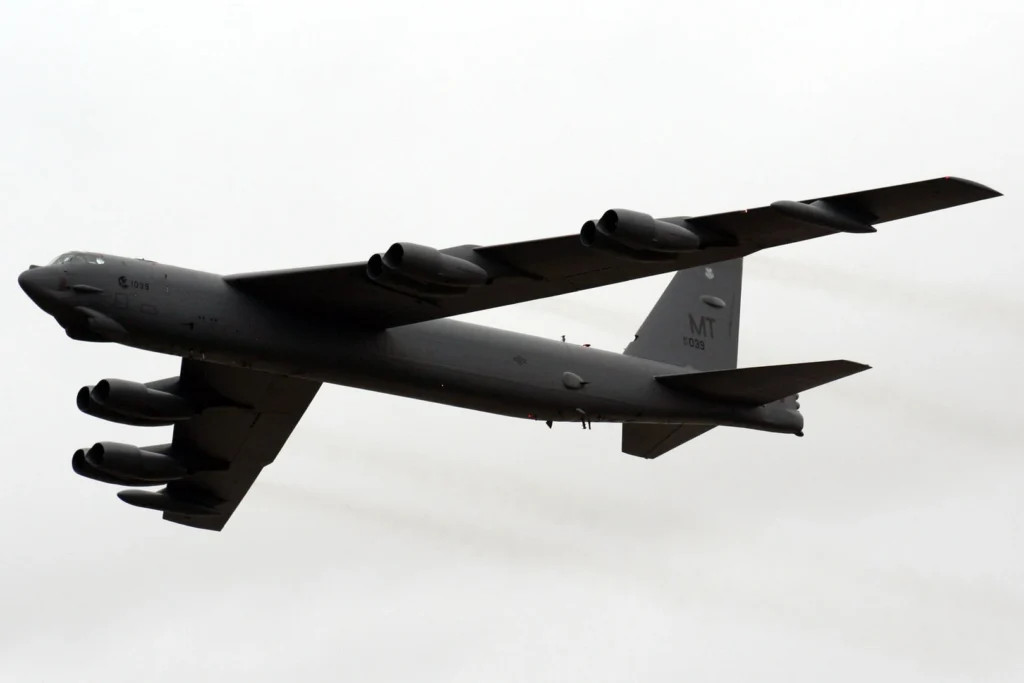
Emergency Response and Recovery Operations
Emergency response personnel arrived at the crash site shortly after the accident and worked to extinguish the fire. Images and videos circulating on social media showed firefighters spraying water on the smoldering wreckage.
A live camera feed from the ALERTCalifornia program at the University of California San Diego also captured a large column of black smoke rising from the area around the time of the crash.
Recovery teams have begun collecting evidence and searching for the aircraft’s flight recorder. If recovered, investigators will analyze the recorded data to help determine the root cause of the accident.
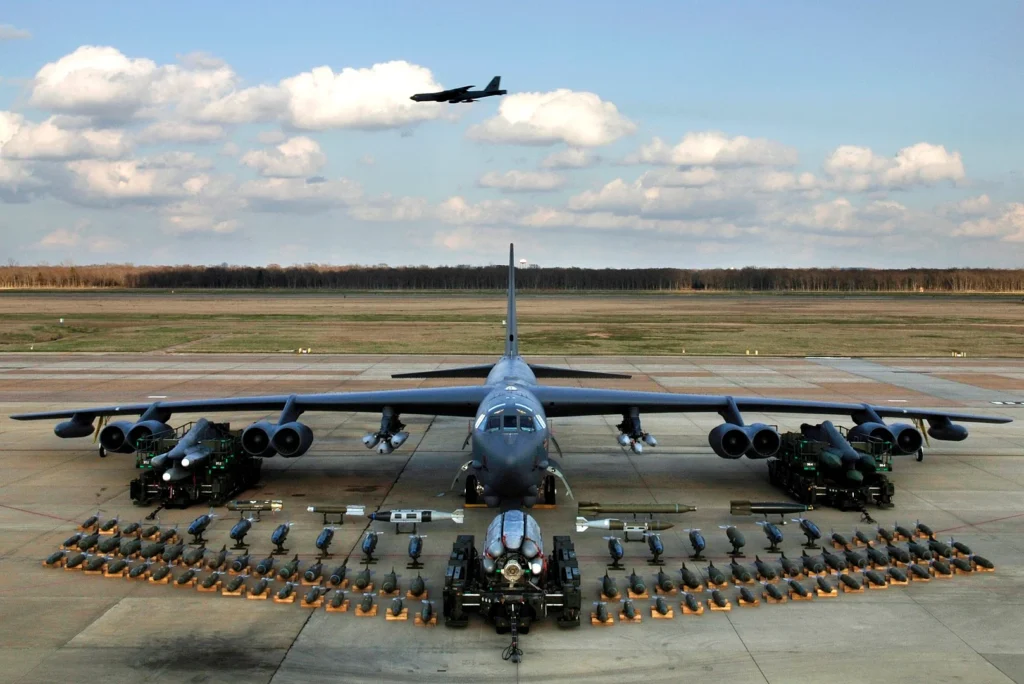
Investigation Underway
Officials stated that there is currently no indication of what caused the crash.
An interim safety board will first gather initial facts surrounding the accident. That process will be followed by a formal safety investigation board, which will conduct a detailed review of operational, maintenance, and technical factors.
According to Air Force officials, the safety investigation could take approximately 30 days to complete.
Afterward, an accident investigation board will determine what information can be released publicly and shared with the victims’ families. The full investigative process could take up to six months.
Authorities confirmed that the bomber carried a mixed crew consisting of military service members, government civilians, and contractors supporting the test mission.
Officials declined to release additional details about the victims because next-of-kin notifications were still underway.
The identity of the specific B-52 involved in the crash has not yet been disclosed.
Operations Suspended and B-52 Modernization
Following the accident, Edwards Air Force Base temporarily halted flight operations.
Air Force officials confirmed that the airfield was closed while recovery and investigation efforts continued.
Colonel Hayes stated that the suspension of operations was primarily related to the condition of the runway following the crash.
The duration of the closure has not been announced.
Edwards Air Force Base serves as the U.S. Air Force’s primary flight testing center and plays a critical role in evaluating new aircraft systems, weapons, and technologies.
Reported by Air and Space Forces, a B-52 arrived at Edwards Air Force Base in December to begin testing the bomber’s next-generation radar system. The Radar Modernization Program is considered one of the most significant upgrades planned for the Stratofortress fleet.
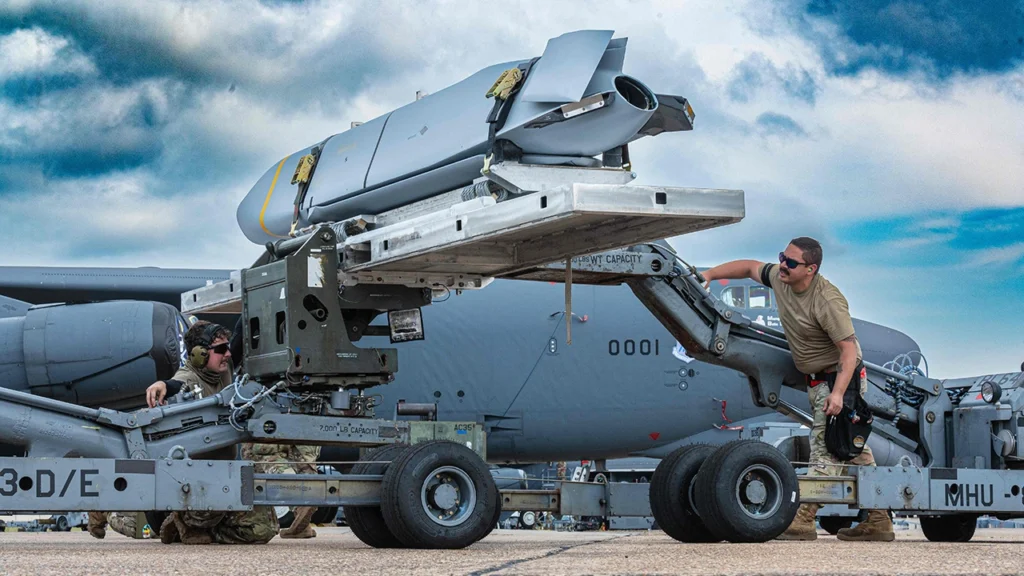
The base also supports testing of advanced weapons programs, including the hypersonic Air-launched Rapid Response Weapon (ARRW) and the nuclear-capable Long-Range Standoff (LRSO) cruise missile.
One of the Air Force’s Oldest Aircraft Fleets
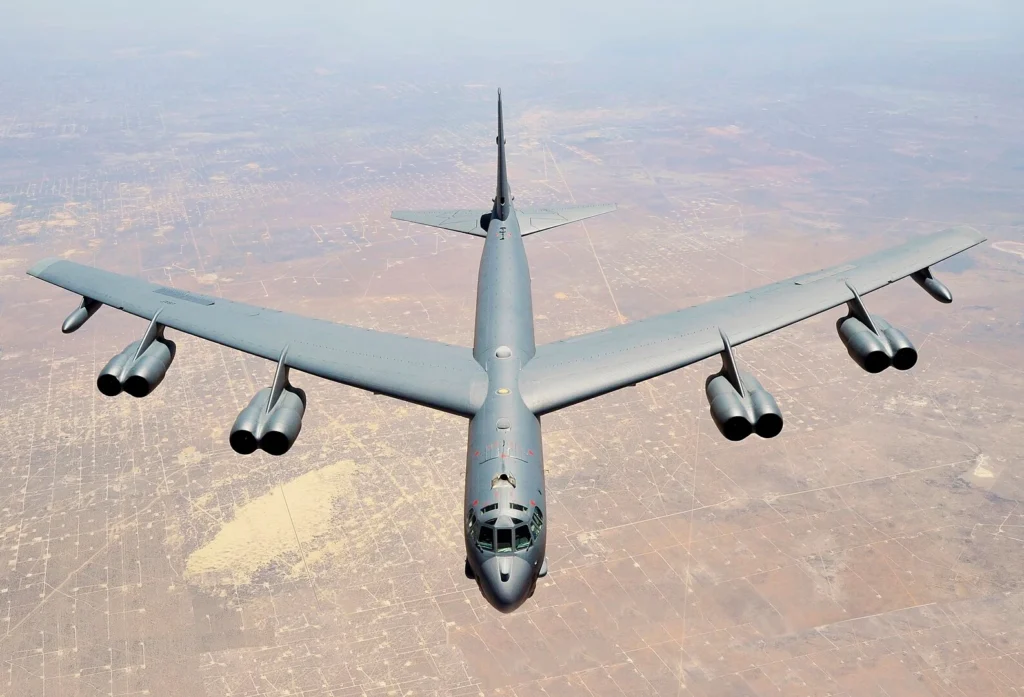
The B-52 Stratofortress remains one of the oldest aircraft in active U.S. Air Force service. The current fleet consists of 76 aircraft with an average age exceeding 64 years.
Despite its age, the bomber continues to serve as a key component of the United States’ long-range strike capability. Ongoing modernization efforts are intended to keep the aircraft operational for at least another two decades.
Air Force records indicate that the last Class A mishap involving a B-52 occurred during fiscal year 2018.
The service had not lost a B-52 bomber since 2016, when one crashed at Andersen Air Force Base in Guam following an aborted takeoff.
Focus Turns to Determining the Cause
Investigators are expected to examine flight recorder data, maintenance records, mission requirements, weather conditions, and aircraft systems as part of the inquiry.
The findings will help determine the factors that led to the crash and may influence future safety procedures for the B-52 fleet.
As recovery efforts continue, the focus remains on supporting the families of the victims and establishing the circumstances behind the fatal accident.
Stay tuned with us. Further, follow us on social media for the latest updates.
Join us on Telegram Group for the Latest Aviation Updates. Subsequently, follow us on Google News
