


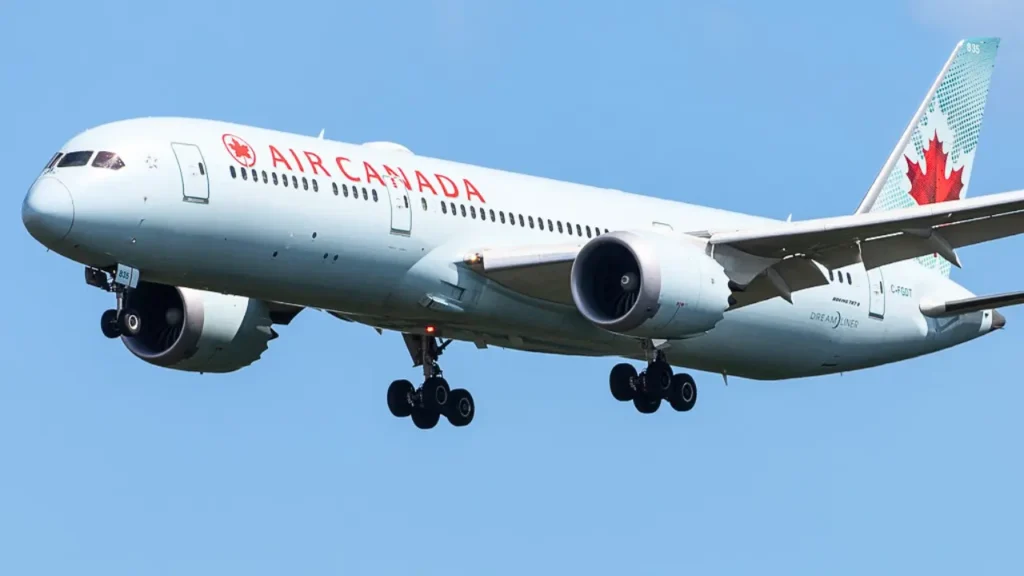
BUDAPEST- Air Canada (AC) has launched its new direct service between Budapest (BUD) and Toronto (YYZ), marking the second North American route added to the Hungarian capital this summer. The airline will operate the link using the wide-body Boeing 787-9 Dreamliner until October 24, 2026.
The arrival of the flight at Budapest Ferenc Liszt International Airport (BUD) follows the recent launch of American Airlines (AA) service from Budapest to Philadelphia (PHL), signaling stronger transatlantic ties. Officials say the route meets steady demand, as nearly 90,000 passengers travel between Hungary and Canada each year.

Air Canada Toronto to Budapest Flights
Air Canada began the Budapest to Toronto service on June 6, 2026, and will continue operating it through October 24, 2026.
The route starts at four flights per week and increases to five weekly flights during the peak months of July and August. During the busiest period, the airline operates on Mondays, Wednesdays, Fridays, Saturdays, and Sundays.
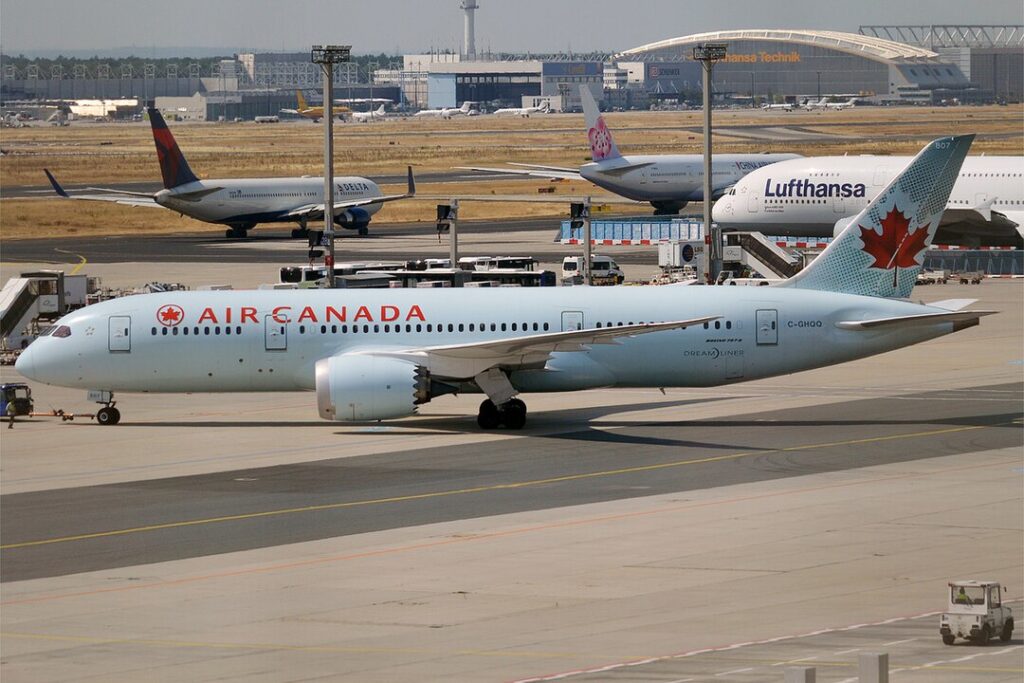
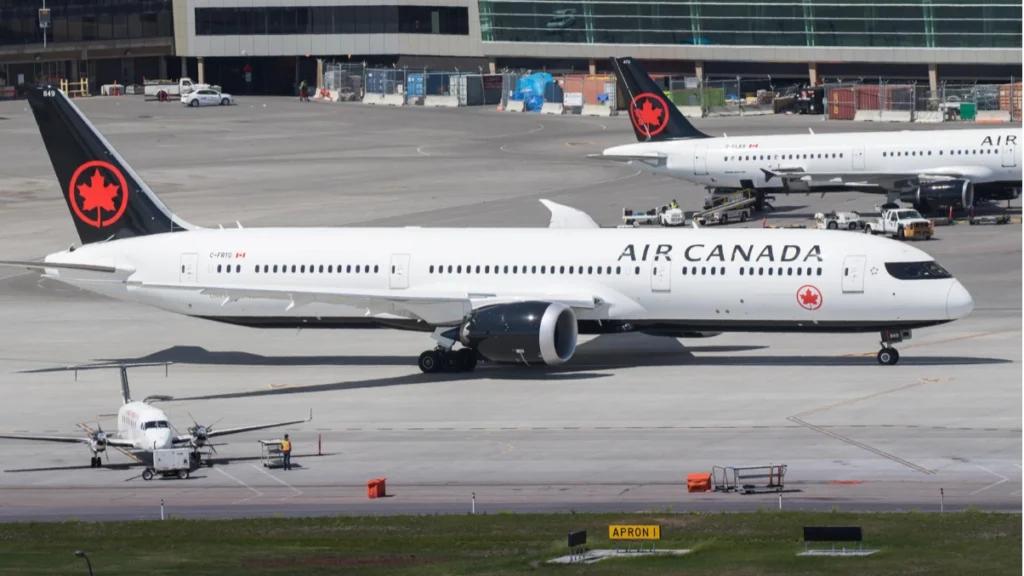
The carrier deploys the Boeing 787-9 Dreamliner on the route, offering three cabin options: Business Class, Premium Economy, and Economy Class. This cabin mix allows both leisure and business travelers to select a service level that fits their needs. Air Canada provides 47,680 seats between the two cities across the summer season.
The flight covers the distance in about nine hours. Flights depart Toronto at 7:00 p.m. local time and arrive in Budapest at 9:40 a.m. the following morning. Return flights leave the Hungarian capital at 11:45 a.m. and land in Toronto at 3:05 p.m.
Connections Across North America and Beyond
Toronto Pearson International Airport (YYZ) serves as a major gateway for onward travel. Through this hub, passengers can reach more than 48 Canadian destinations and over 100 North American cities with convenient connections.
The network also opens access to the United States, the Caribbean, Hawaii, Central America, and several South American countries.
François Berisot, CEO of Budapest Airport, welcomed the new service. He said the connection is one of the most anticipated of the summer season for both leisure and business passengers. He added that it is the second direct North American destination of the summer and will further strengthen overseas interest in the Hungarian capital.
Rocky Lo, Managing Director of International Sales at Air Canada, said the airline is the only carrier offering non-stop service between the two cities.
He noted that the route connects families, tourists, and businesses across the Atlantic, while giving Hungarian customers access to Air Canada’s global network into the United States, the Caribbean, Central America, and Latin America.
Strong Demand and Diaspora Ties
The route is expected to attract significant interest because it meets existing high demand. Travelers visiting friends and relatives account for one-third of the traffic between the two countries.
The service is also expected to support popular river cruise guests, business travelers, and the MICE segment, which covers meetings, incentive trips, conferences, and exhibitions.
François Lafreniere, Canada’s Ambassador to Hungary, said the direct link could strengthen tourism and business ties further. He highlighted the roughly 350,000-member Hungarian-Canadian diaspora that stands to benefit from easier travel.
The ambassador noted the symbolic timing of the route’s launch, which coincides with the 70th anniversary of the 1956 Revolution, an event that triggered one of the largest waves of Hungarian immigration to Canada.
Airport Growth Supports New Routes
Budapest Airport handled nearly 20 million passengers last year, an increase of about 20 percent compared to 2023. Zsolt Tárkányi, State Secretary at the Ministry for Transport and Investment, said the growing interest in Budapest is reflected in this performance. He added that the current infrastructure will soon be insufficient to meet demand.
Officials confirmed plans for a rail link between the airport and downtown Budapest, integrated into the national rail network.
The proposed high-speed line would branch off the main Line 100 and reach the airport through an underground section.
The government is currently focused on securing EU funds, with any funding for the high-speed rail line likely to come in the next budget cycle.
Stay tuned with us. Further, follow us on social media for the latest updates.
Join us on Telegram Group for the Latest Aviation Updates. Subsequently, follow us on Google News
