

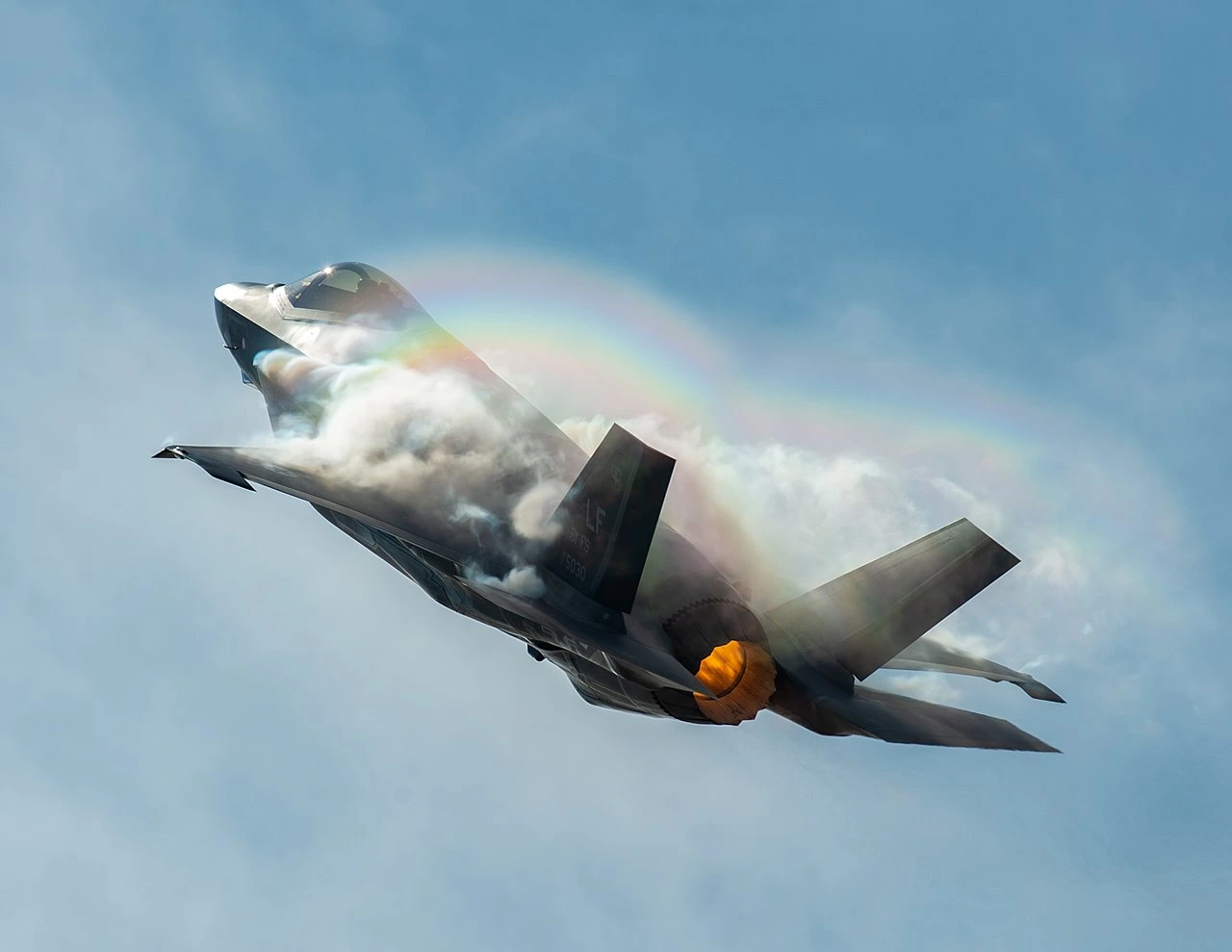
WASHINGTON— The U.S. State Department has approved a potential $842 million sale of 200 AGM-158B JASSM-ER cruise missiles to Denmark, a decision announced on June 5, 2026, that sharply expands the long-range strike reach of the Royal Danish Air Force’s F-35A fleet. The package gives Copenhagen (CPH) the ability to hold high-value military targets at risk far beyond its borders.
The acquisition strengthens NATO deterrence across the Baltic region and near Russia’s western military infrastructure. With a range exceeding 925 kilometers and a low-observable design, the missile lets Danish F-35s strike command centers, air defense sites, and logistics hubs without entering the most dangerous threat zones.
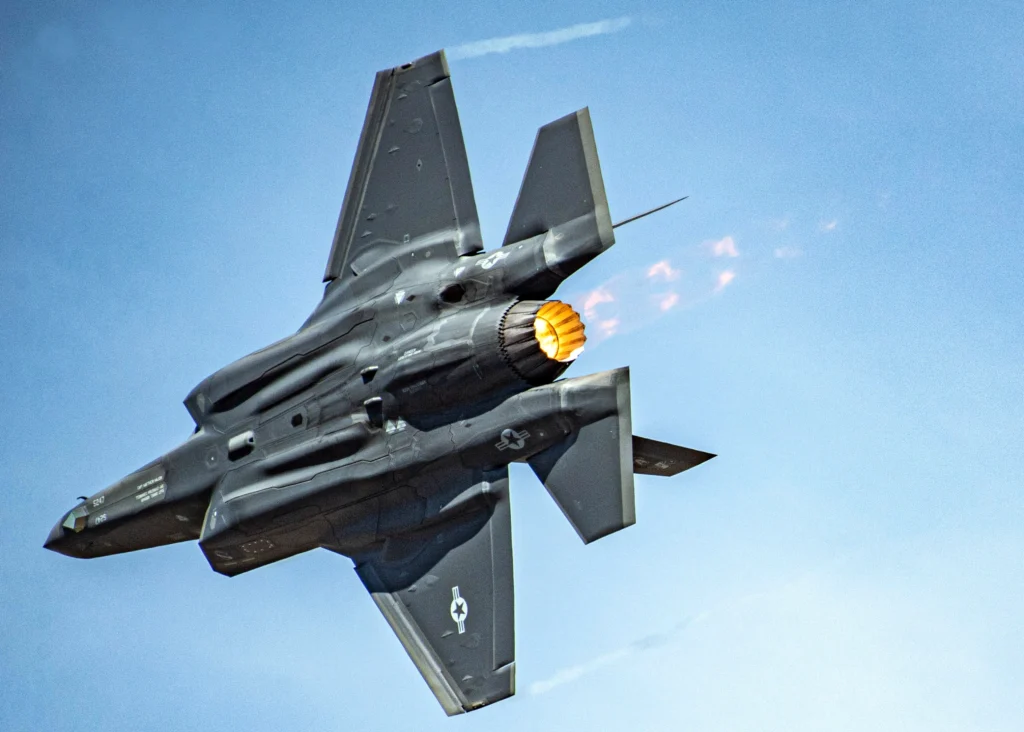
Denmark Builds a Wartime Strike Arsenal Around the F-35A
On June 5, 2026, the U.S. State Department cleared a possible Foreign Military Sale to Denmark worth up to $842 million for 200 JASSM-ER missiles and the infrastructure needed to field and sustain them.
The package covers missile containers, test and support equipment, classified and unclassified software, spare parts, logistics support, transportation, engineering assistance, technical publications, and long-term sustainment.
The approval appears modest next to larger fighter or air defense deals, yet it marks one of the most consequential shifts in Danish military capability since the choice to acquire the F-35A.
Denmark currently lacks an operational conventional weapon able to strike targets more than 900 kilometers from the launch point.
Once fielded, the JASSM-ER will let the Royal Danish Air Force attack command facilities, integrated air defense nodes, air bases, missile infrastructure, and other fixed military objectives at distances previously reachable only through allied support.
Air Defense and Long-Range Strike as One System
The approval follows Copenhagen’s September 2025 decision to establish a dedicated long-range strike capability and to allocate roughly DKK 58 billion for medium- and long-range air defense systems.
Viewed together, the two programs signal a force-planning shift built on the conclusion that defending against missile and drone attacks requires not only interceptors but also the ability to destroy launch systems before weapons leave the ground.
The Danish decision grew out of a broader reassessment shaped by the war in Ukraine and evolving NATO capability targets.
Throughout that conflict, Ukrainian and Russian operations repeatedly showed that air defenses alone cannot remove the threat posed by large inventories of ballistic missiles, cruise missiles, and one-way attack drones. Even successful interceptions burn through expensive interceptors while adversaries regenerate attacks if launch systems survive.
Danish planners, therefore, moved toward a model that pairs active air defense with long-range precision strike. The DKK 58 billion air defense program and the future JASSM-ER inventory are linked elements of the same structure.
One is meant to defeat incoming threats, while the other attacks the launchers, command centers, radars, and logistics that support those threats. This logic aligns with NATO requirements that increasingly stress operational-depth strike.
A Stockpile Sized for Sustained Conflict
For much of the post-Cold War period, many European air forces focused on expeditionary operations, counterinsurgency, and limited strike missions, so long-range conventional strike inventories fell sharply. The Danish decision reflects the return of a capability requirement that had largely vanished from European force planning for more than two decades.
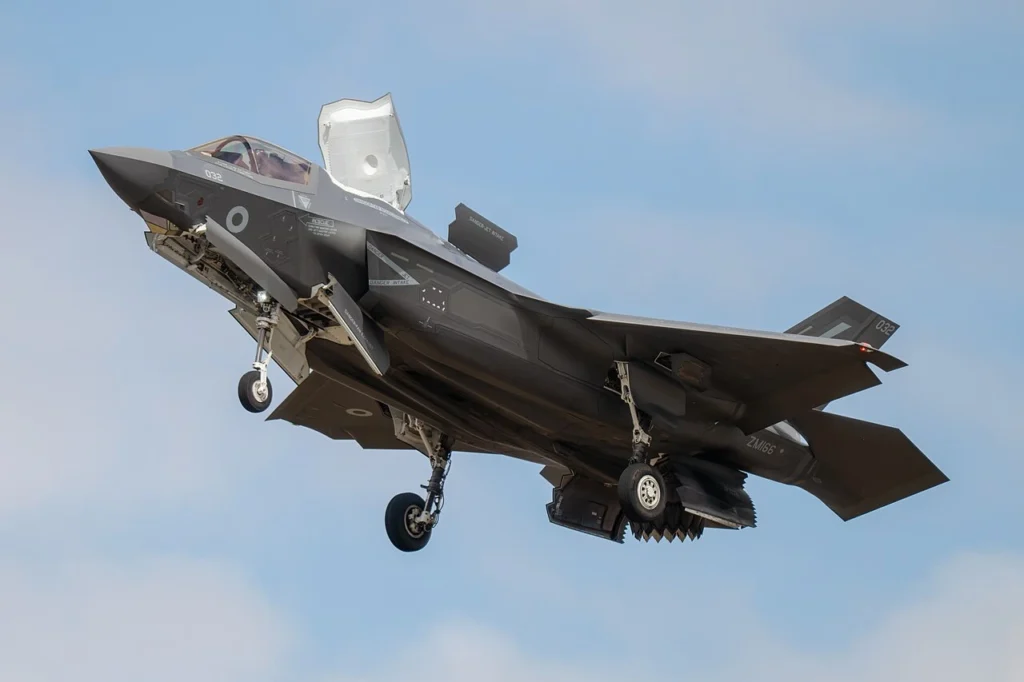
The size of the buy stands out against Denmark’s combat aviation fleet. The Royal Danish Air Force is expected to operate 43 F-35A fighters, so a stockpile of 200 missiles works out to about 4.7 missiles per aircraft.
Inventories are not allocated on a fixed per-aircraft basis, but the quantity shows Denmark is buying a wartime stockpile rather than a token contingency reserve.
The package values each missile at roughly $4.21 million when all support elements are included. By comparison, FY2024 U.S. procurement data places AGM-158B-2 flyaway costs near $1.6 million per missile, excluding software, support equipment, logistics, transportation, technical services, and sustainment.
The figure also stands out in a European context. Italy received approval in December 2025 for 100 JASSM-ER missiles, and the Netherlands approved 120.
Denmark’s request doubles the Italian quantity and substantially exceeds the Dutch buy, despite Denmark operating fewer F-35s than either country.
The inventory is broadly comparable to Finland’s entire JASSM stockpile, long regarded as one of the most substantial conventional strike arsenals in Northern Europe.
Inside the AGM-158B JASSM-ER
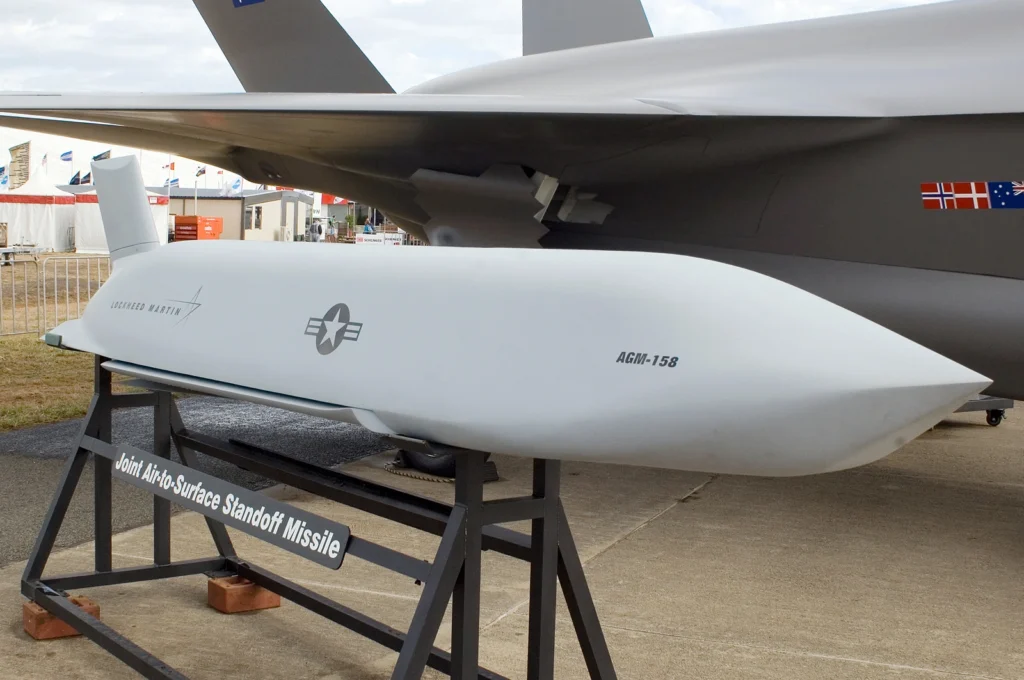
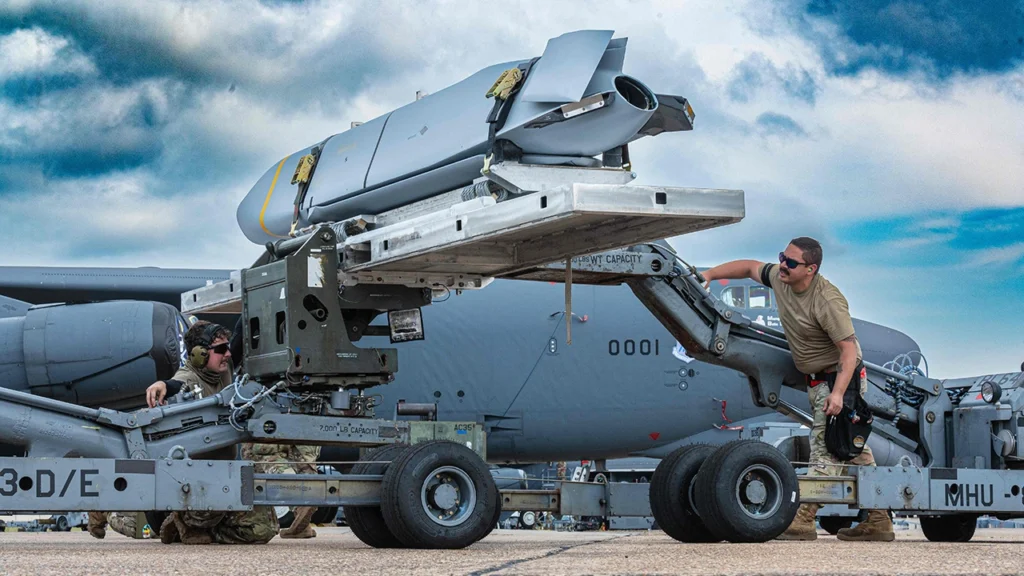
The JASSM-ER was developed to solve a specific problem, namely, striking heavily defended targets without exposing launch aircraft to modern air defense networks.
The AGM-158B entered service with the U.S. Air Force in 2014 and keeps the same 4.29-meter length as the original AGM-158A despite nearly tripling operational range.
The missile weighs about 1,200 kilograms and is powered by a Williams F107-WR-105 turbofan, replacing the turbojet used in the earlier JASSM.
The range exceeds 925 kilometers and is commonly assessed at around 1,000 kilometers. The weapon carries a 450-kilogram WDU-42/B penetrating warhead optimized for hardened targets, while guidance combines inertial navigation, GPS updates, and imaging infrared terminal homing.
Circular error probable is estimated at roughly three meters, allowing the missile to attack aircraft shelters, command bunkers, radar facilities, air defense sites, and logistics infrastructure with a high probability of success using a single weapon. Its low-observable airframe further reduces radar detection opportunities during flight.
How Denmark Will Employ the Missile
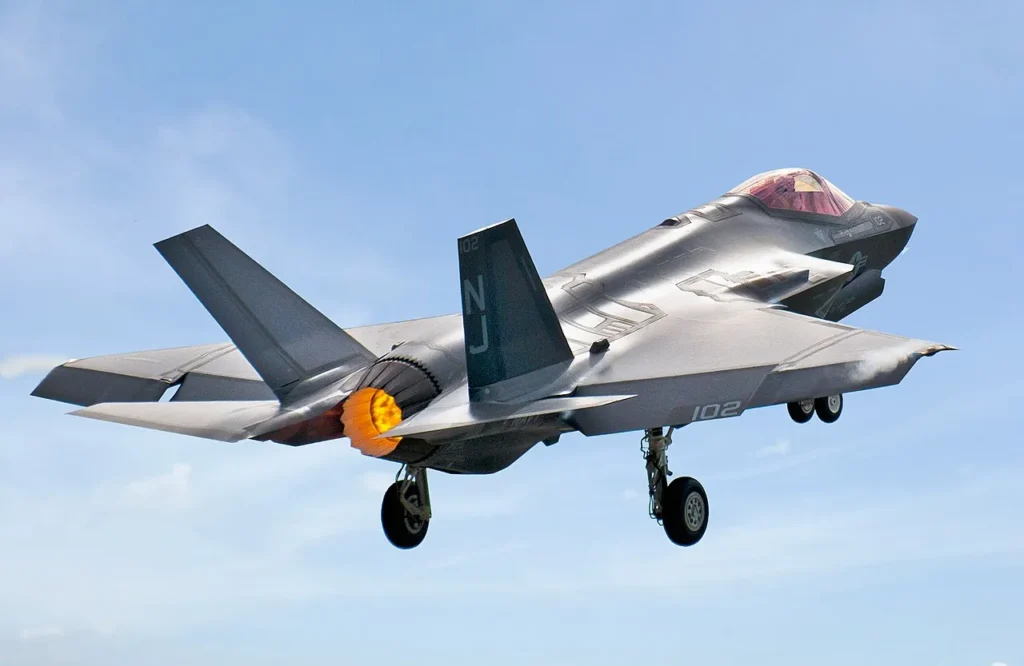
The relationship between the missile and the F-35A shapes how Denmark will use the capability. Contrary to a common assumption, the JASSM-ER cannot fit inside the F-35’s internal weapons bay.
The missile must be carried externally, which reduces some of the aircraft’s low-observable characteristics. The missile’s range partly offsets this limitation. The stealth fighter does not need to penetrate deeply into defended airspace because the missile itself provides the reach.
A Danish F-35 can stay hundreds of kilometers from hostile air defenses, use its sensors to identify and classify targets, and release the missile well outside the engagement envelope of many long-range surface-to-air missiles.
An F-35A operating over Danish territory or nearby maritime areas could launch a weapon capable of traveling roughly 1,000 kilometers before impact. Combined with the fighter’s own operational radius, the JASSM-ER creates a strike envelope reaching across much of the Baltic theater.

A Growing European JASSM Community
The acquisition places Denmark within an expanding European group of JASSM operators. Finland remains the largest, having acquired 70 AGM-158A missiles in 2012 and received approval in 2023 for 150 additional AGM-158B-2 missiles, bringing its approved inventory to 220.
Poland purchased 40 AGM-158A missiles in 2014 and 70 AGM-158B missiles in 2016, for a total of 110. Italy received approval in December 2025 for 100 AGM-158B/B-2 missiles for its F-35 fleet, and the Netherlands followed with approval for 120 AGM-158B missiles.
Denmark’s planned acquisition of 200 missiles would therefore exceed the inventories approved for Poland, Italy, and the Netherlands and would rank second only to Finland among confirmed European operators.
Germany is also moving toward adopting the missile as part of its broader long-range strike modernization.
Multiple countries now field the same weapon, integrate it with similar aircraft, use comparable mission-planning systems, and rely on related logistics and sustainment structures. The result is a growing pool of alliance aircraft able to conduct coordinated stand-off strikes against operational-depth targets.
Combat Use and the Stockpile Question
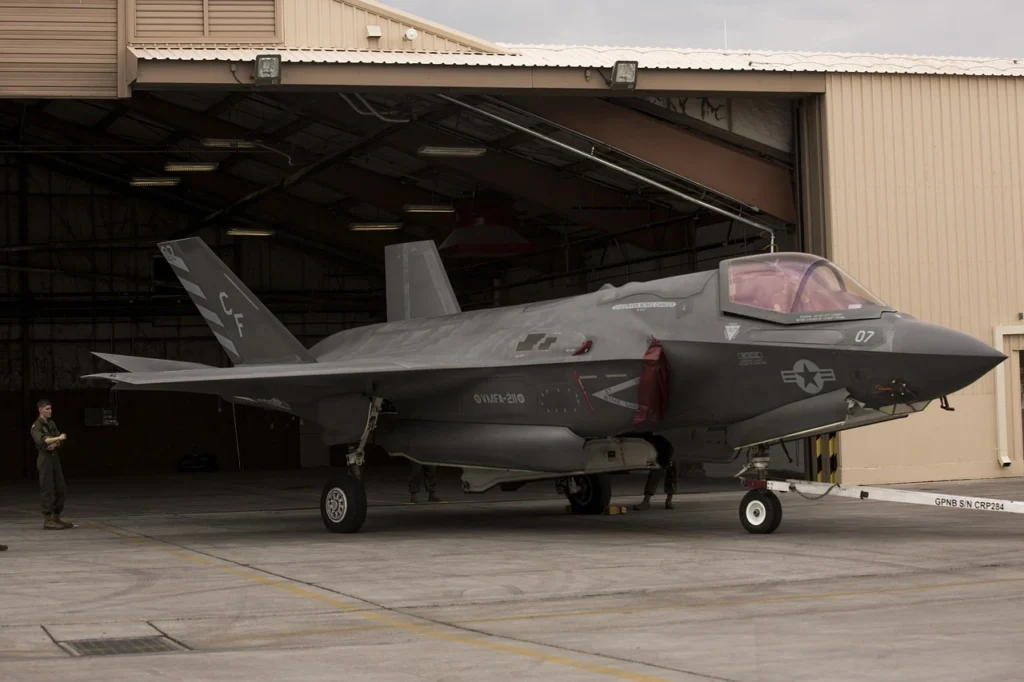
The JASSM first entered combat during U.S. strikes against Syria in April 2018 and was later used against ISIS targets and during operations in Yemen. The largest use came during the 2026 campaign against Iran, where roughly 1,100 JASSM and JASSM-ER missiles were reportedly expended over 39 days of operations.
That figure carries weight because estimated U.S. inventories before the conflict stood near 4,400 missiles, so one campaign consumed about 25 percent of available stocks. Lockheed Martin’s annual production capacity stood at roughly 500 missiles in 2023, with expansion plans targeting around 1,000 per year.
Even at the higher rate, replacing 1,100 missiles would take more than a year of uninterrupted production. The scale of expenditure has already pushed U.S. plans to acquire roughly 4,300 additional JASSM missiles through FY2031.
For Denmark, these figures provided a key basis for buying 200 missiles rather than a much smaller number, since modern high-intensity warfare consumes precision munitions at rates far above peacetime assumptions. The purchase reflects both a requirement for long-range strike and recognition that stockpile depth now drives combat endurance.
Once integrated with the F-35A fleet, the capability will let Denmark contribute directly to NATO suppression of enemy air defenses, strikes against command-and-control systems, and attacks on fixed military infrastructure across much of the Baltic region, including the Kaliningrad area and parts of northwestern Russia.
Stay tuned with us. Further, follow us on social media for the latest updates.
Join us on Telegram Group for the Latest Aviation Updates. Subsequently, follow us on Google News
