


WASHINGTON- Two United States Navy EA-18G Growler fighter jets collided during an aerial demonstration at Mountain Home Air Force Base (MUO), Idaho, on May 17, destroying aircraft collectively valued at approximately $136 million.
The US Navy confirmed that each EA-18G Growler carried an estimated replacement cost of nearly $68 million, making the incident one of the costliest non-combat military aviation accidents in recent years.
The aircraft, assigned to Electronic Attack Squadron VAQ-129 at Naval Air Station Whidbey Island (NUW), Washington, were participating in the “Gunfighter Skies” air show when they struck each other mid-air during a coordinated maneuver.
All four aviators aboard the two aircraft successfully ejected before impact and survived the accident without life-threatening injuries.

Growler Jet Role
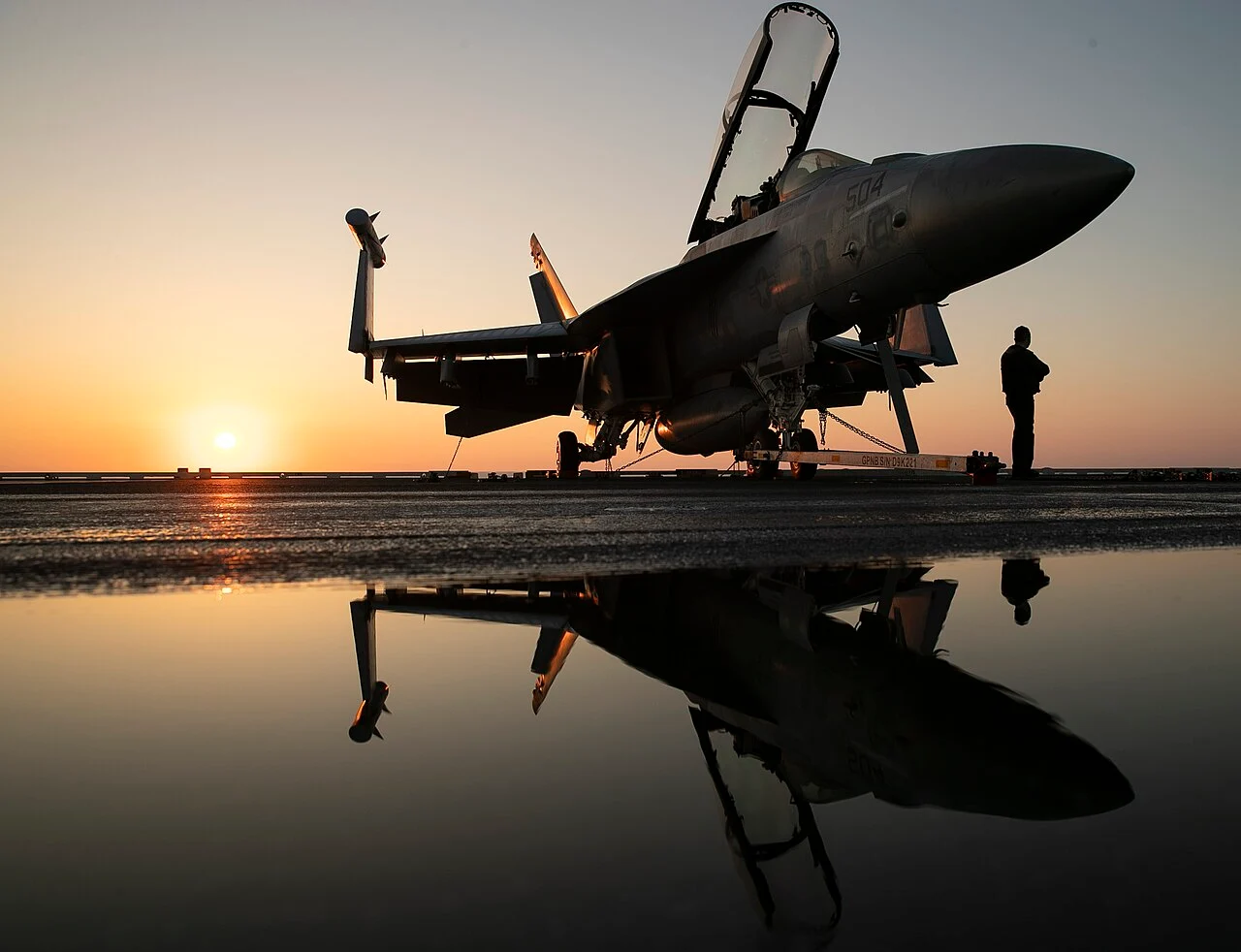
The EA-18G Growler is among the Navy’s most advanced airborne electronic warfare platforms. Developed from the Boeing F/A-18F Super Hornet, the aircraft entered operational service in 2009 and specializes in suppressing enemy radar systems, communications networks, and air-defense infrastructure.
Unlike conventional multirole fighters, the Growler combines combat capability with sophisticated electronic attack systems.
The aircraft carries the AN/ALQ-218 receiver suite and ALQ-99 tactical jamming pods, enabling crews to identify hostile emissions and disrupt targeting systems during military operations.
The twin-seat aircraft can exceed Mach 1.8 while also carrying AIM-120 AMRAAM missiles and other weapons.
Because fewer than 200 Growlers have been produced for the US Navy and allied operators, replacing destroyed aircraft could require years of procurement planning and congressional funding approvals.
Military analyst John Venable of the Mitchell Institute for Aerospace Studies told CNN that air shows serve a broader purpose beyond entertainment.
He said such demonstrations allow the public to witness military precision flying while encouraging future recruitment into aviation and defense services.
Air Show Risks
The collision has intensified debate over the operational risks associated with military demonstration flights involving frontline combat aircraft.
Tactical air show routines often require close formation flying, abrupt directional changes, and synchronized maneuvers that leave minimal margin for pilot error.
Defense observers note that modern military aircraft now incorporate classified electronics, encrypted communication systems, advanced radar technology, and highly specialized mission software. As a result, the financial impact of losing combat aircraft extends far beyond the destruction of the airframe itself.
The Navy has experienced several expensive aviation incidents in recent years, prompting renewed scrutiny over operational safety standards and training oversight.
Critics argue that deploying highly specialized combat assets in public demonstrations increases unnecessary risk, especially as replacement costs continue to rise sharply across modern military fleets.

Crew Survival Details
Witness footage showed both Growlers descending rapidly after making contact during the performance. Aviation analysts said the relatively low altitude gave the crews only seconds to activate their escape systems before the aircraft impacted the ground.
The EA-18G is equipped with advanced “zero-zero” ejection seats designed to function even at zero altitude and zero airspeed, Simple Flying flagged.
These systems use explosive charges and rocket-assisted propulsion to separate aviators safely from failing aircraft before parachutes deploy.
Emergency responders arrived shortly after the crash, and the Navy later confirmed that all four crew members escaped without critical injuries.
Aviation specialists described the outcome as exceptionally fortunate given the speed of the aircraft and the violent nature of the collision.
Stay tuned with us. Further, follow us on social media for the latest updates.
Join us on Telegram Group for the Latest Aviation Updates. Subsequently, follow us on Google News
