

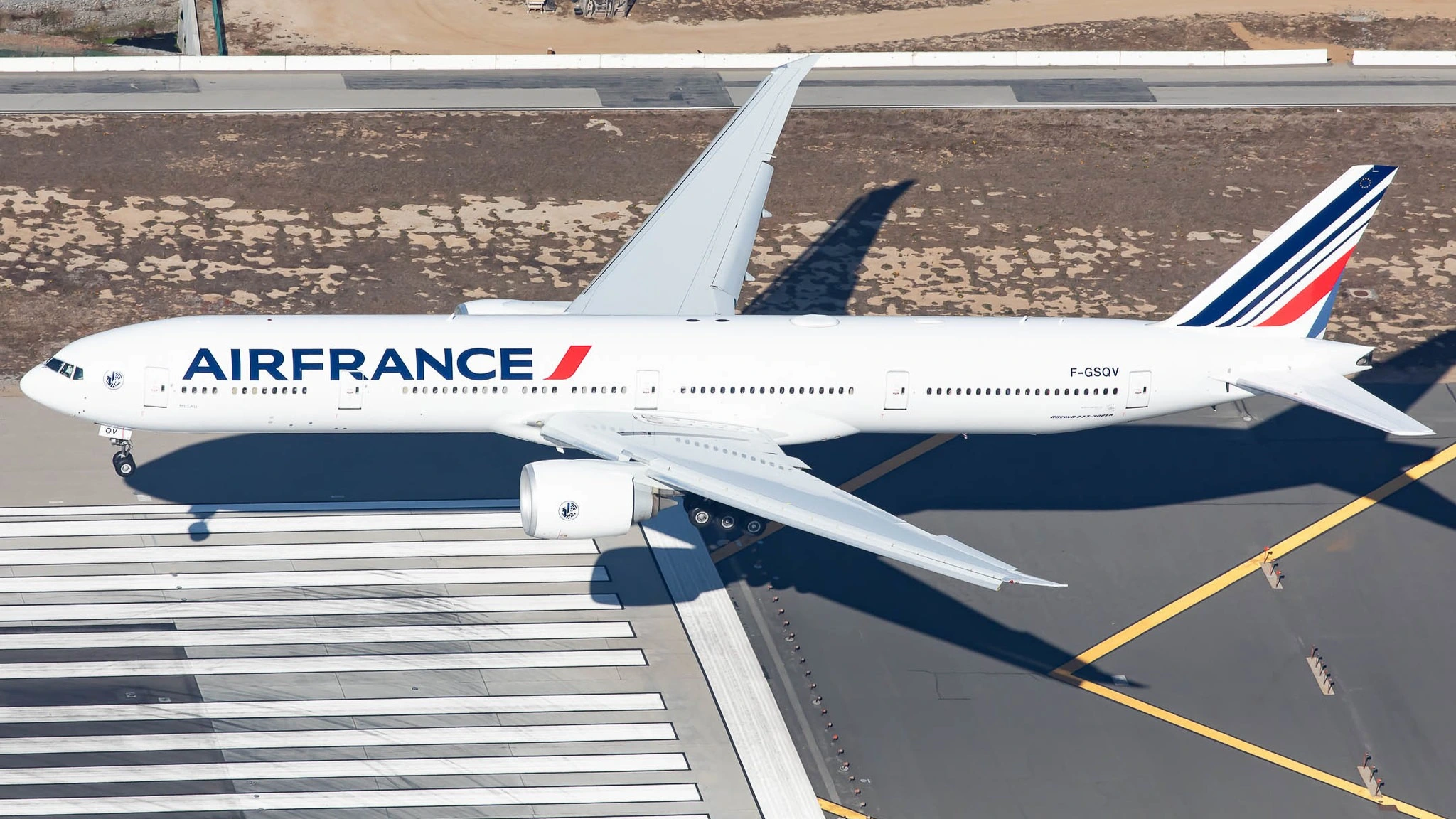
PARIS— Air France (AF) flight AF111, a Boeing 777-228ER operating the long-haul route from Shanghai Pudong International Airport (PVG) to Paris Charles de Gaulle Airport (CDG), declared an emergency and diverted to Munich Airport (MUC) on May 7, 2026, after the flight crew identified a problem with the aircraft’s left engine.
The 24-year-old widebody, registered F-GSPY, was less than one hour from completing its scheduled flight to Paris when the issue developed in cruise. Pilots transmitted Squawk 7700, descended from 35,475 feet, and landed safely on Munich runway 26R, where airport fire brigade vehicles were positioned to meet the aircraft on a remote taxiway.
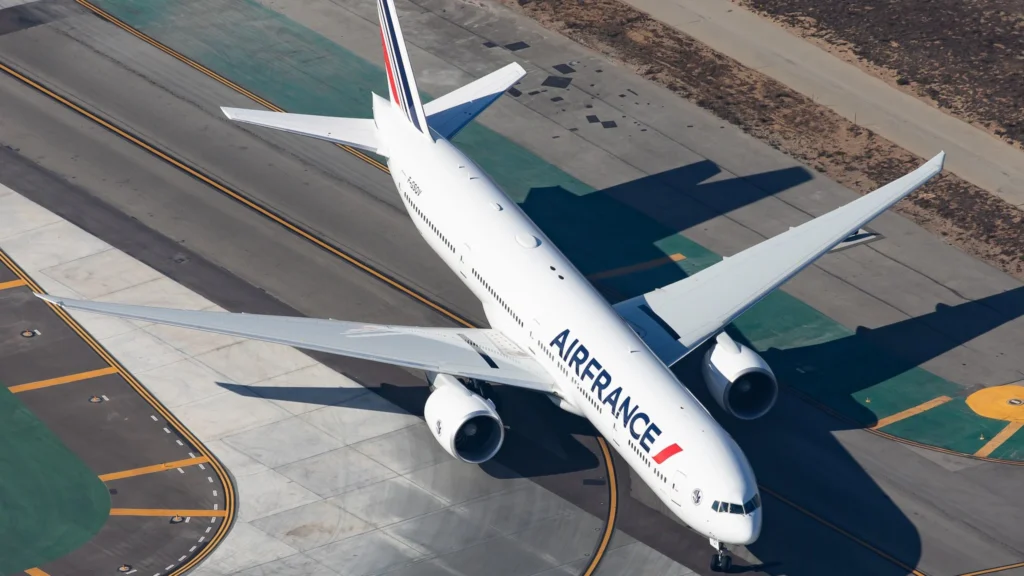
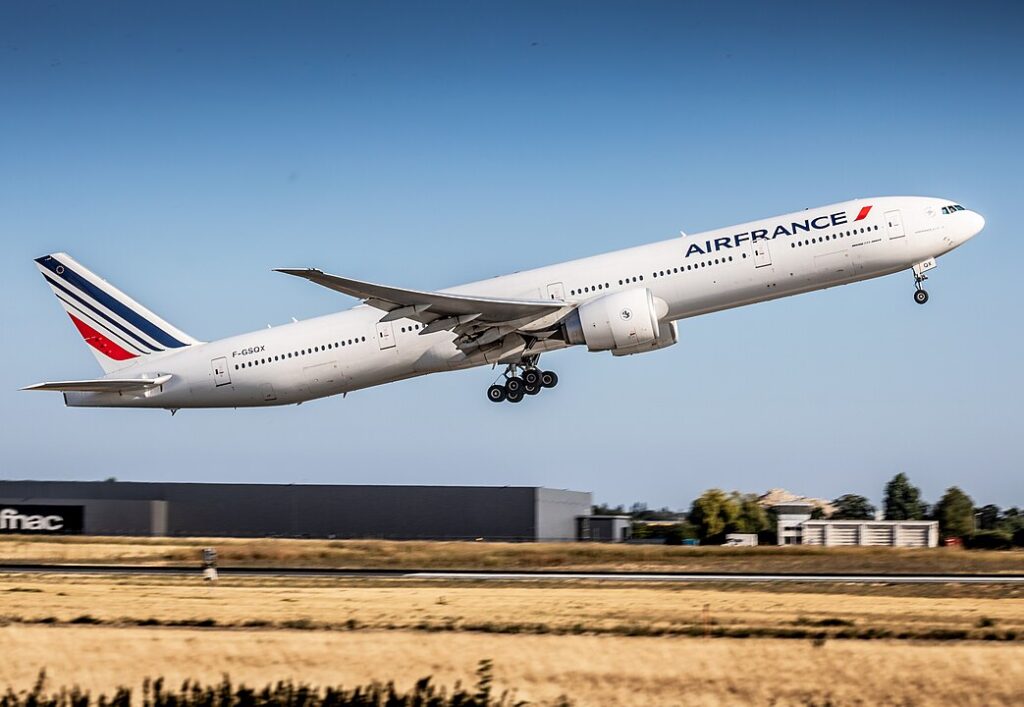
Air France Boeing 777 Emergency Landing at Munich
Flight AF111 departed Shanghai Pudong (PVG) on the evening of May 6, 2026, at approximately 21:39 local time, bound for Paris (CDG) on what is normally a 13 to 14-hour westbound sector.
The aircraft tracked its standard great-circle routing across China, Central Asia, and Eastern Europe, entering German airspace roughly 13 hours into the flight while cruising at high altitude.
According to Flightradar24 data, the Boeing 777-228ER was descending through 35,475 feet at a ground speed of 441 mph over Bavaria when the crew reported a malfunction involving the number one (left) engine.
The pilots immediately squawked 7700, the international transponder code used to declare a general emergency, alerting Munich air traffic control to the situation.
Munich was selected as the most suitable diversion airport given the aircraft’s position, the runway length required for a Boeing 777-200ER, and the availability of full emergency response capability.
The flight was vectored for an expedited approach and landed on runway 26R at around 04:45 local time. Multiple Flughafenlöschfahrzeug (FLF) airport fire trucks were already positioned along the runway and escorted the twin-engine jet to a remote taxiway after touchdown.
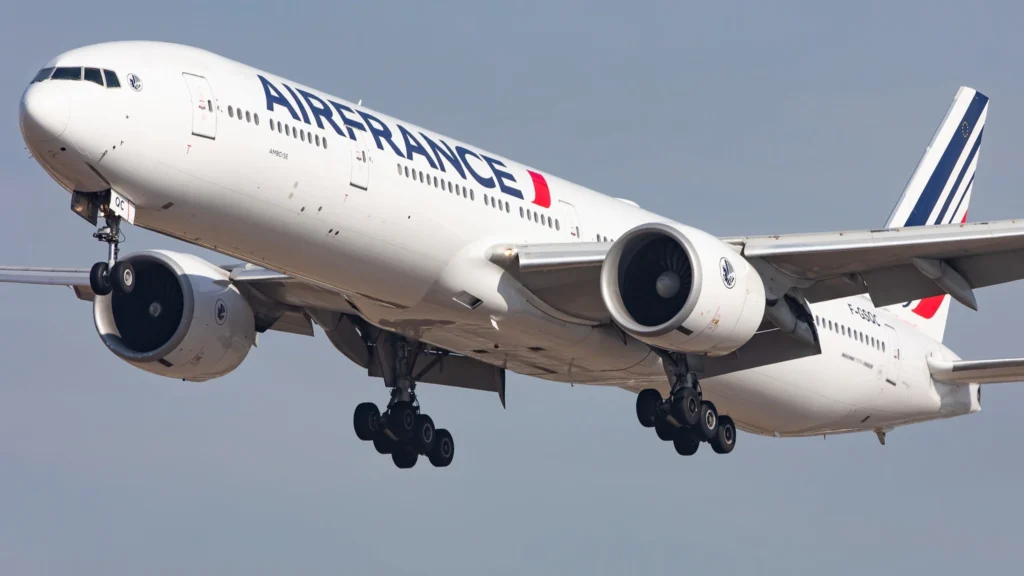
Aircraft, Registration, and Fleet Background
The aircraft involved is F-GSPY, a Boeing 777-228ER delivered to Air France in 2001, making it approximately 24 years old at the time of the incident.
The Boeing 777-200ER variant is powered by two General Electric GE90 engines and is one of the older widebody types still in service on Air France’s Asia network.
The carrier continues to operate a mixed fleet of 777-200ERs and the larger 777-300ERs on its long-haul routes between Europe and Asia, North America, Africa, and South America.
The age of the airframe has drawn attention in the aftermath of the diversion, with industry observers noting that older long-haul aircraft typically require more intensive maintenance oversight.
Air France has historically rotated its older 777-200ERs through scheduled heavy maintenance at its Paris and Toulouse facilities.
Engine reliability on long sectors such as Shanghai to Paris is critical because the route includes extended portions over remote terrain where ETOPS (Extended-range Twin-engine Operational Performance Standards) compliance is essential.
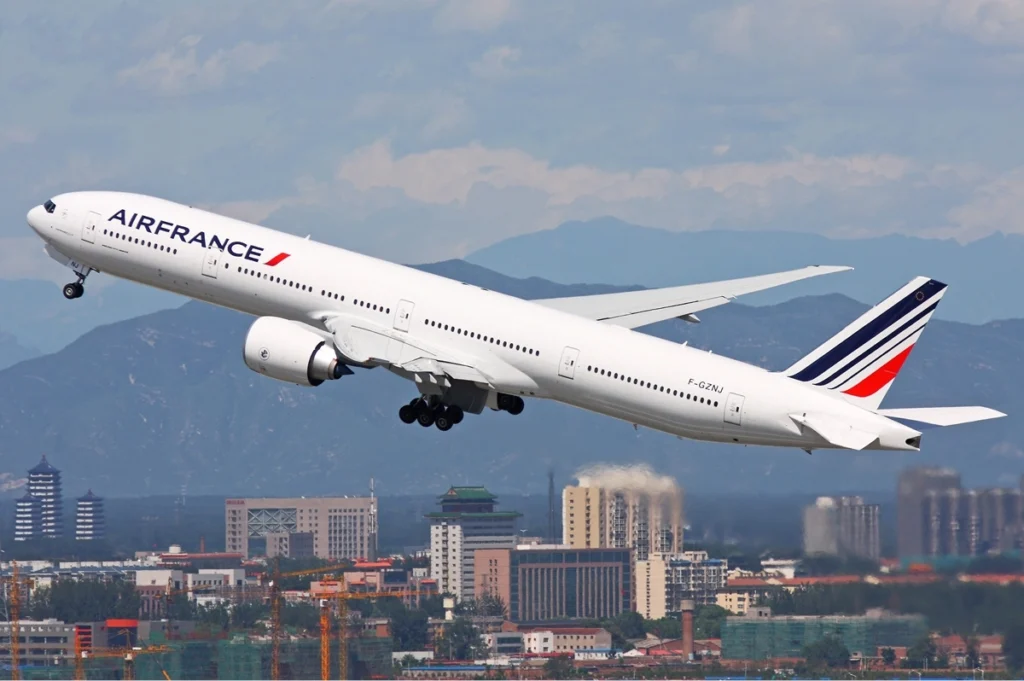
Passenger Impact and Onward Travel
Passengers aboard AF111 were less than 60 minutes from arriving at Paris Charles de Gaulle when the diversion was initiated.
Air France is rebooking affected travellers onto alternative services to Paris, with options including SkyTeam partner flights and the carrier’s own additional rotations from Munich and other European hubs.
Travellers requiring hotel accommodation in Munich are being assisted under standard EU261 passenger rights provisions.
The diverted aircraft, F-GSPY, will remain on the ground in Munich pending engineering inspection.
Air France maintenance teams are expected to assess the left engine to determine the precise nature of the malfunction, the cause, and whether a ferry flight or on-site repair will be required to return the aircraft to service.
Standard Emergency Response Procedures
The presence of multiple ground vehicles meeting the aircraft on a remote taxiway is consistent with standard procedure for any aircraft landing under a declared emergency.
Munich Airport’s fire brigade routinely deploys foam tenders, rescue units, and command vehicles whenever a Squawk 7700 arrival is announced, regardless of whether a fire or fuel leak is suspected.
The aircraft reportedly crossed the runway threshold at approximately 1,500 feet above ground level on final approach with an indicated airspeed of around 150 knots before touching down.
There has been no official confirmation from Air France or Munich Airport regarding the severity of the landing or whether the affected engine was shut down in flight as a precaution.
Stay tuned with us. Further, follow us on social media for the latest updates.
Join us on Telegram Group for the Latest Aviation Updates. Subsequently, follow us on Google News
