

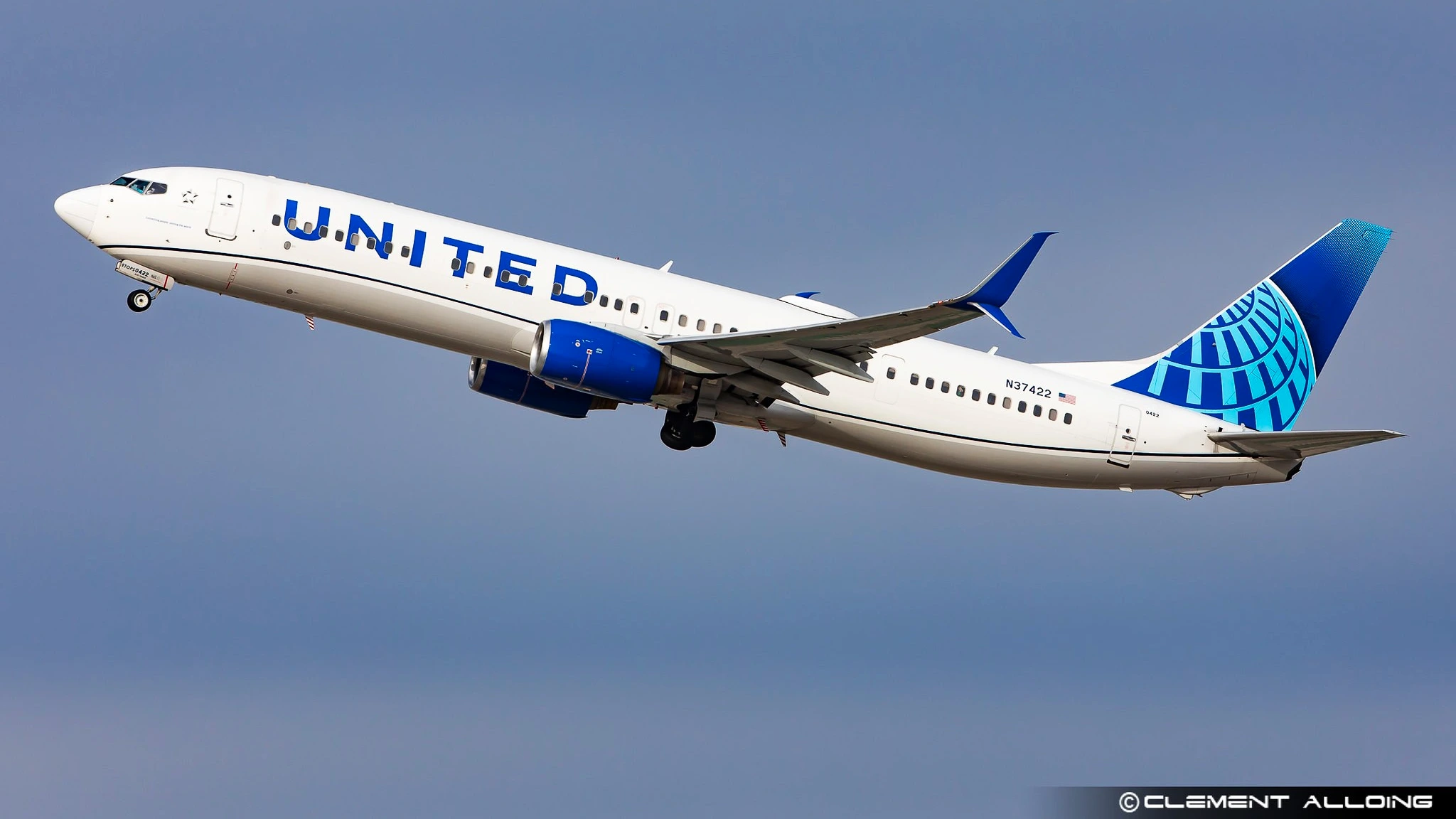
CHICAGO- United Airlines (UA) Boeing 737 MAX 9 operating flight UA1950 from Houston Bush Intercontinental Airport (IAH) to McAllen International Airport (MFE) declared an emergency and returned to Houston (IAH) after the flight crew reported striking an unidentified object during climb-out.
The aircraft landed safely on runway 26L with 115 souls on board and approximately 8,000 pounds of fuel remaining.
The incident occurred at around 8,500 feet when the crew observed a flash and heard a loud bang near the nose of the aircraft. After leveling off at 10,000 feet to troubleshoot, the crew entered a holding pattern, coordinated with their operations center, and ultimately requested radar vectors for an ILS approach back to IAH.
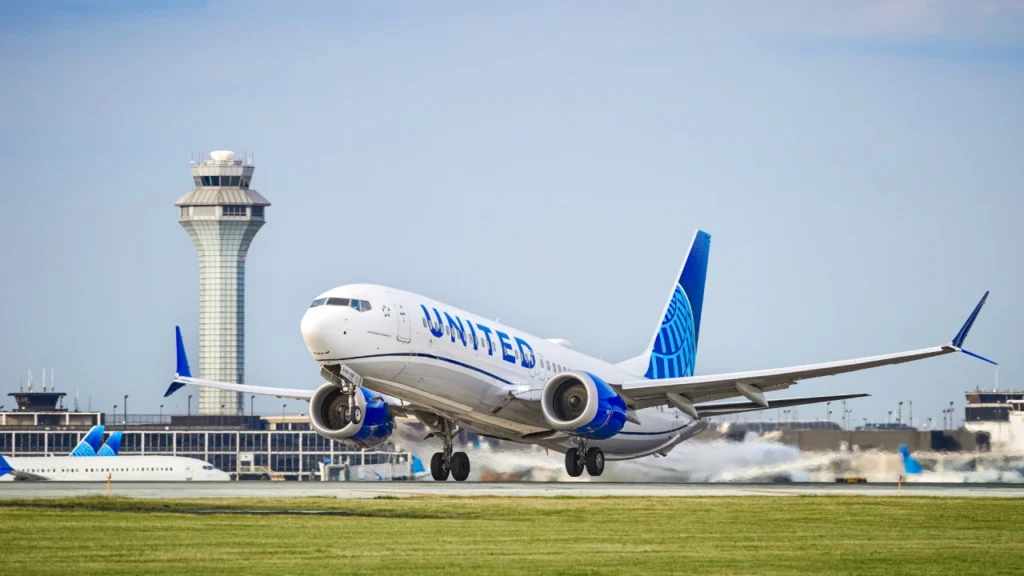
United Airlines 737 MAX 9 Strikes an Object
The Boeing 737 MAX 9, registered N17420, departed Houston Bush Intercontinental Airport on a scheduled domestic service to McAllen. During the initial climb, at approximately 8,500 feet, the flight crew witnessed a white flash followed by a loud bang near the aircraft’s nose section.
The crew immediately leveled off at 10,000 feet and informed Houston Departure of the situation while initiating troubleshooting procedures.
Air traffic control offered the crew flexibility, providing a block altitude between 10,000 and 16,000 feet and offering vectors to a holding pattern. The crew initially chose to remain on the RNAV departure route while contacting United Airlines’ operations center for guidance.
Shortly after, the crew requested a present-position hold and was cleared to hold northeast of their position on a 025-degree radial with left turns and 10-mile legs.
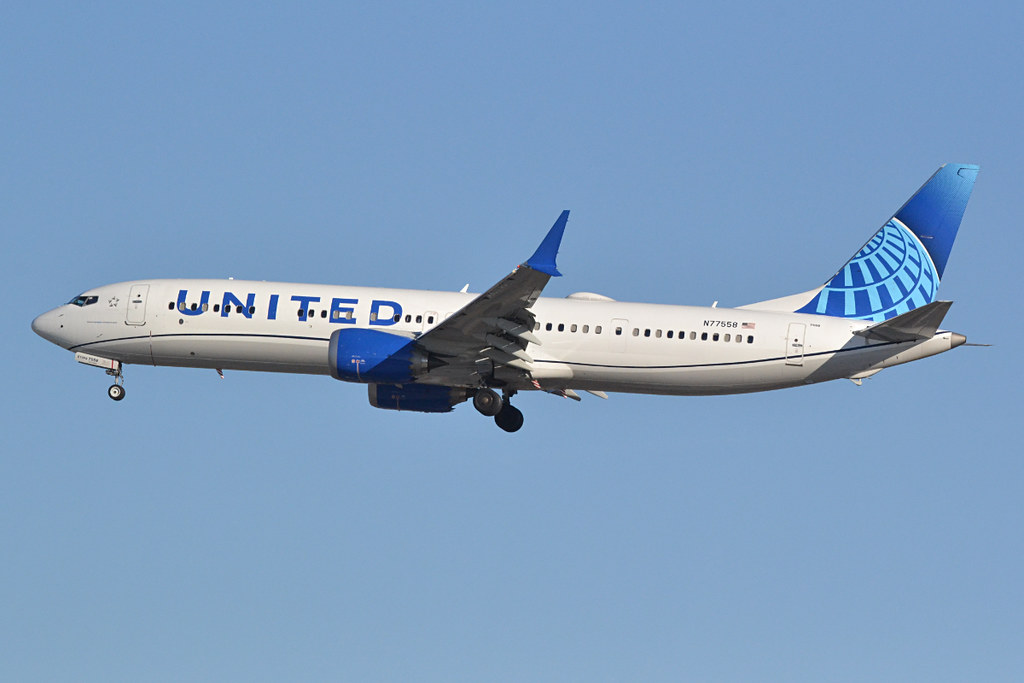
Emergency Declaration and Return to Houston
After completing their assessment, the crew of UA1950 formally declared an emergency. The captain reported 115 souls on board with roughly two hours of fuel, equivalent to approximately 8,000 pounds, and requested vectors for the ILS approach to runway 26L at IAH.
When asked by ATC about the nature of the emergency, the crew described seeing what appeared to be a white object followed by a loud bang directed toward the nose of the aircraft.
The crew informed ATC that they did not require emergency vehicles to be dispatched and intended to land and taxi under their own power.
Approach and Safe Landing at IAH
Houston Approach cleared United 1950 direct to the airport via radar vectors. The crew requested early configuration, indicating they would reduce to approach speed sooner than standard to allow for a stabilized approach under the circumstances.
ATC provided step-down descent clearances, guiding the aircraft from 10,000 feet through 6,000 feet and down to 2,000 feet before intercepting the runway 26L localizer.
Houston Tower cleared the flight to land on runway 26L with winds reported at 180 degrees at 7 to 8 knots and a ceiling near 2,000 feet. Fire and rescue trucks were placed on standby as a precautionary measure.
After touchdown, the crew was instructed to exit the runway and stop on the taxiway for an external inspection by ground vehicles.
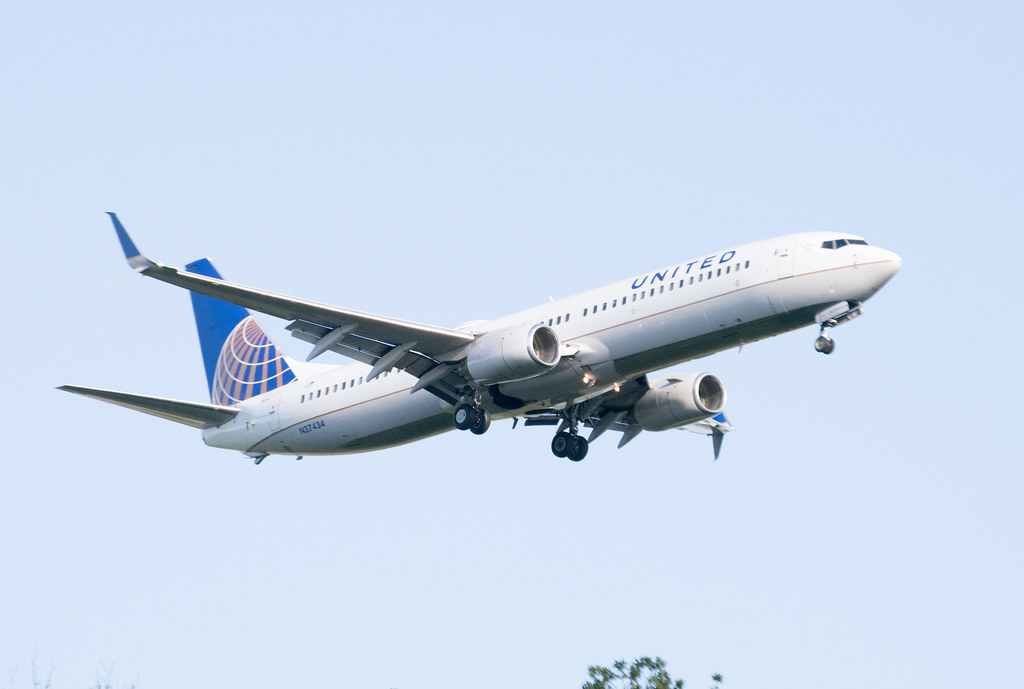
Post-Landing Inspection and ATC Coordination
Tower controllers asked the crew to report any visible damage found during inspection, specifically noting that if the strike involved a bird and damage was confirmed, a follow-up call to the tower would be required.
ATC also confirmed the impact area was reported near the captain’s windshield on the aircraft’s nose. The crew was provided a phone number during the approach to coordinate further details about potential damage to the airframe after landing.
The aircraft remained on the taxiway while ground crews conducted their assessment. The flight did not continue to McAllen.
Stay tuned with us. Further, follow us on social media for the latest updates.
Join us on Telegram Group for the Latest Aviation Updates. Subsequently, follow us on Google News
