

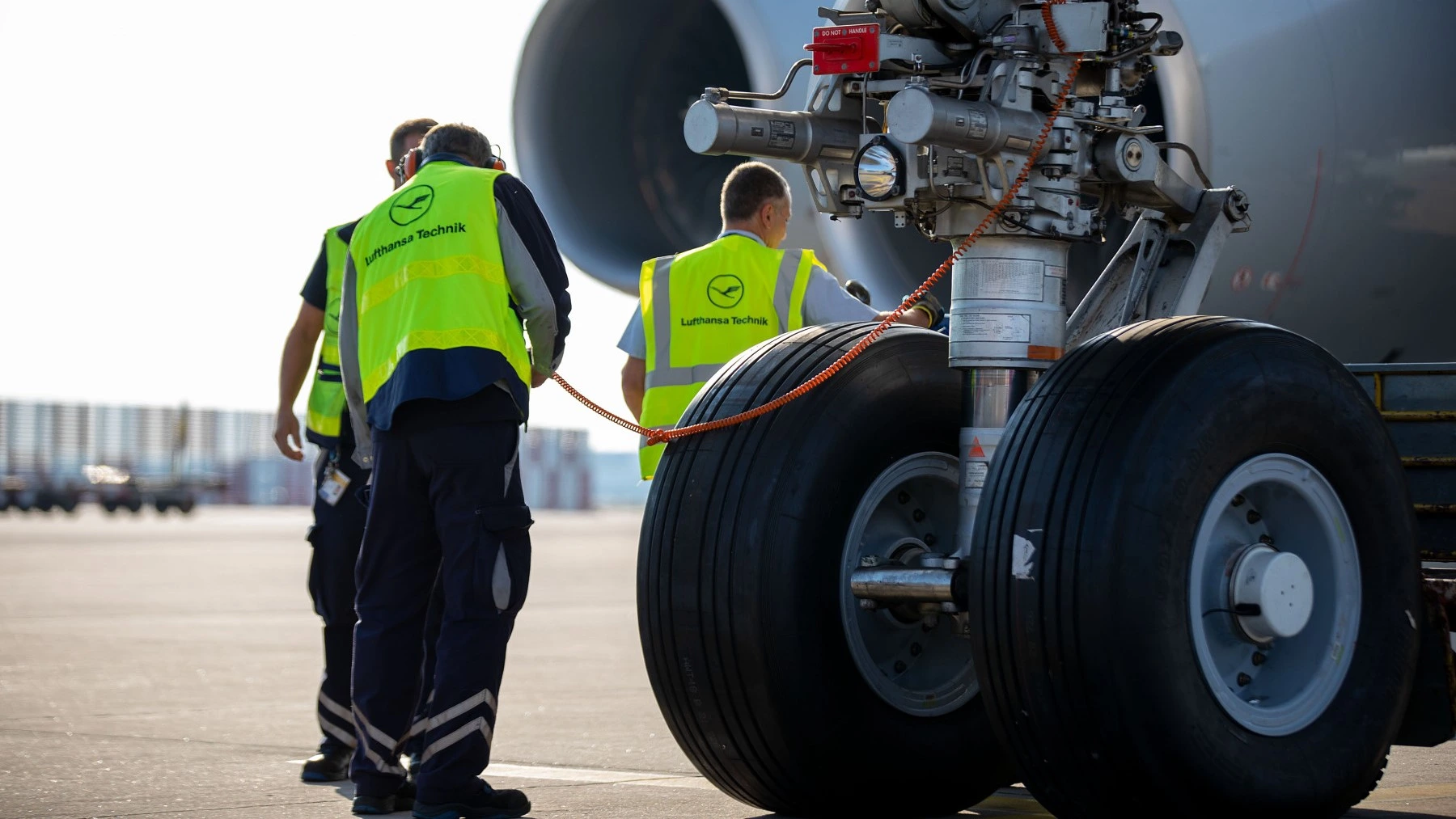
Lufthansa (LH) is not only Germany’s flag carrier but also one of the world’s largest aviation groups. While most passengers associate Lufthansa with long-haul flights and premium cabins, aviation professionals often think of something else entirely: engineering.
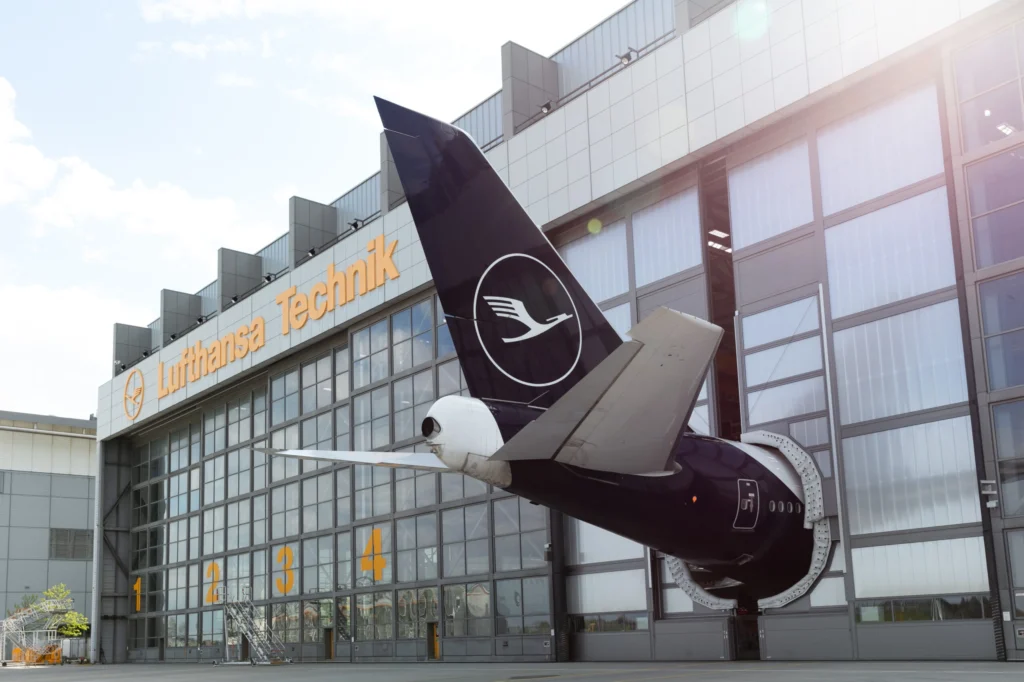
The Lufthansa Group operates hundreds of aircraft across multiple airlines, including Lufthansa, SWISS, Austrian Airlines, Brussels Airlines, and other subsidiaries. Supporting this enormous operation is a vast technical ecosystem led by Lufthansa Technik, one of the world’s most respected maintenance, repair, and overhaul (MRO) organisations.
For Aircraft Maintenance Engineers (AMEs) and Technicians, Lufthansa represents more than just an airline job. It offers exposure to one of the industry’s largest engineering operations, access to modern aircraft types, and career pathways extending far beyond Germany.
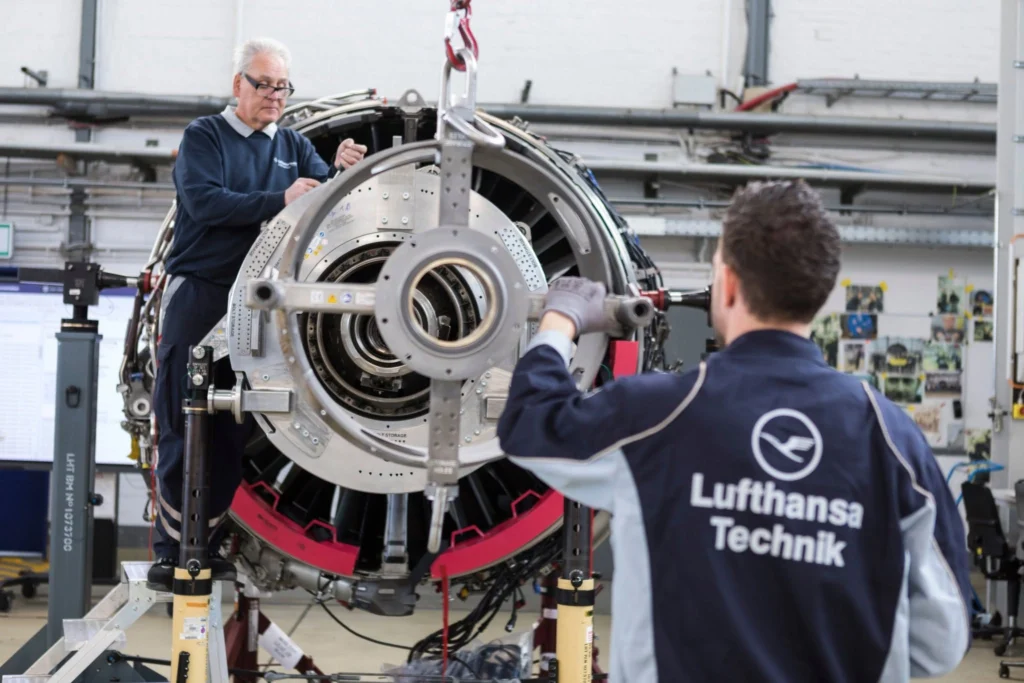
What Do Aircraft Engineers and Technicians Do?
Although they work closely together, engineers and technicians perform very different functions within aircraft maintenance.
Aircraft Maintenance Engineer (AME)
An AME is responsible for ensuring that maintenance work meets regulatory requirements and that the aircraft can safely return to service.
Their responsibilities typically include:
- Diagnosing aircraft defects and system failures
- Planning and supervising maintenance activities
- Reviewing technical documentation
- Conducting inspections and functional checks
- Certifying aircraft as airworthy after maintenance
The position combines technical expertise with legal responsibility, which is why licensed engineers command higher salaries.
Aircraft Maintenance Technician
Technicians perform much of the practical maintenance work required to keep aircraft operational.
Their duties commonly involve:
- Carrying out scheduled maintenance tasks
- Replacing aircraft components
- Performing inspections and repairs
- Assisting with troubleshooting activities
- Supporting engineers during major maintenance checks
In many ways, technicians are the hands-on workforce that keeps airline operations moving.
ALSO READ: Turkish Airlines AME and Technician Salary in 2026
Requirements to Join Lufthansa as an Engineer or Technician
Lufthansa and Lufthansa Technik maintain high recruitment standards due to the complexity of their operations.
Basic Requirements
- Diploma, apprenticeship, or degree in aircraft maintenance or engineering
- Strong understanding of aircraft systems
- Good English language skills
- German language proficiency for many roles
- Ability to work shifts and irregular schedules
For Aircraft Maintenance Engineers
Candidates generally require:
- EASA Part-66 Aircraft Maintenance Licence
- Several years of commercial aircraft maintenance experience
- Aircraft type ratings on Airbus or Boeing aircraft
- Experience performing certifying duties
Lufthansa particularly values engineers with experience on aircraft such as the Airbus A350, A320 family, Boeing 777, and Boeing 787.
For Aircraft Maintenance Technicians
Applicants usually need:
- Technical or vocational maintenance qualifications
- Practical maintenance experience
- Strong mechanical aptitude
- Willingness to undergo further training and certification
Many technicians eventually pursue EASA licensing to progress into engineer positions.
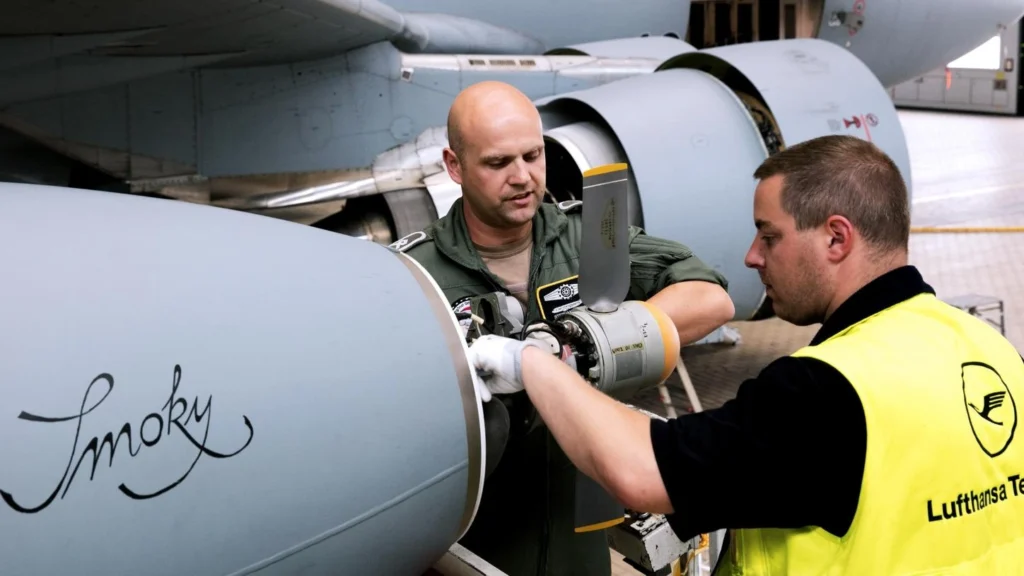
Lufthansa AME and Technician Salary in 2026
Lufthansa salaries are generally shaped by Germany’s strong collective bargaining agreements, structured career progression, and extensive employee benefits. Rather than offering exceptionally high starting salaries, Lufthansa tends to reward experience, qualifications, and long-term service. Recent collective agreements also introduced salary increases for maintenance personnel in 2026.
For Aircraft Maintenance Engineers, entry-level to mid-level licensed engineers often earn around €53,000 to €65,000 per year (approximately US$61,000 to US$75,000). Engineers at this level are typically fully licensed and have accumulated several years of maintenance experience.
As engineers acquire additional aircraft type ratings, broader certifying authority, and experience on complex fleets, compensation rises considerably. Many experienced certifying engineers at Lufthansa and Lufthansa Technik earn around €68,000 to €85,000 annually (approximately US$78,000 to US$98,000).
Senior engineers, technical specialists, and maintenance supervisors can receive packages approaching €90,000 to €105,000 per year (approximately US$104,000 to US$121,000), particularly when shift allowances, overtime, and management responsibilities are included.
In monthly terms, this means many Lufthansa AMEs earn somewhere between €4,400 and €8,700 per month (approximately US$5,100 to US$10,000) depending on experience and position.
Aircraft Maintenance Technicians operate under a different pay structure but still earn competitive salaries by German industrial standards.
New technicians often begin around €40,000 to €48,000 per year (approximately US$46,000 to US$55,000). This reflects the strong apprenticeship and technical training culture within Germany.
After gaining several years of experience and additional qualifications, technicians commonly progress into the €49,000 to €58,000 annual range (approximately US$57,000 to US$67,000).
Highly experienced technicians, particularly those working specialised maintenance programmes, engine shops, or heavy maintenance operations, can earn around €60,000 to €70,000 per year (approximately US$69,000 to US$81,000).
Overall, the salary landscape at Lufthansa can broadly be summarised as:
- Aircraft Maintenance Engineers: €53,000 to €105,000 per year (approximately US$61,000 to US$121,000)
- Aircraft Maintenance Technicians: €40,000 to €70,000 per year (approximately US$46,000 to US$81,000)
For technicians, obtaining an EASA licence remains the single most important step toward substantially higher earnings.
ALSO READ:
Benefits and Perks at Lufthansa Engineering
One reason many aviation professionals remain with Lufthansa for decades is the overall employment package rather than salary alone.
Common benefits include:
- Extensive staff travel privileges across the Lufthansa Group
- Pension and retirement programmes
- Strong collective bargaining protections
- Comprehensive healthcare and social benefits
- Professional training and licence support
- Opportunities to work across multiple Lufthansa Group companies
- Exposure to one of the world’s largest maintenance organisations
For many employees, job stability is considered one of Lufthansa’s strongest advantages.
ALSO READ: Emirates Aircraft Maintenance Engineer and Technician Salary in 2026
Bottom Line
Working as an AME or Technician at Lufthansa in 2026 offers a very different proposition compared to Gulf carriers or rapidly expanding Asian airlines. The attraction here is not necessarily the highest immediate salary, but rather stability, reputation, technical exposure, and long-term career development.
Licensed engineers earn significantly more because they carry the responsibility of certifying aircraft and ensuring regulatory compliance. Technicians earn competitive industrial salaries and have clear pathways toward higher-paying engineering roles through additional licensing.
For aviation professionals seeking experience with one of the world’s most respected engineering organisations, Lufthansa remains one of the strongest employers in global aviation maintenance.
Lufthansa AME and Technician Salary FAQs
In many engineering and maintenance positions, yes. While English is widely used in aviation, German language proficiency is often required for operational and regulatory reasons.
Experience on the Airbus A320 family, Airbus A350, Boeing 777, and Boeing 787 fleets is generally highly valued because these aircraft form an important part of Lufthansa Group operations.
Yes. Lufthansa Technik is widely regarded as one of the world’s leading aviation maintenance organisations and is often viewed as a prestigious employer within the global aircraft maintenance industry.
Stay tuned with us. Further, follow us on social media for the latest updates.
Join us on Telegram Group for the Latest Aviation Updates. Subsequently, follow us on Google News
