


DUBLIN- Ryanair (FR) CEO Michael O’Leary has warned that prolonged conflict in Iran and the closure of the Strait of Hormuz could push two or three European airlines into bankruptcy by late 2026.
The low-cost carrier faces an additional $50 million in fuel costs for April alone, with projections reaching $600 million over a year if oil remains at $150 per barrel.
O’Leary singled out Wizz Air (W6) and Air Baltic (BT) as carriers most vulnerable to collapse if prices hold at current levels.
Despite the crisis, Ryanair (FR) maintains its 2026 traffic target of 216 million passengers and has confirmed 2027 guidance of 222 to 223 million, supported by hedging contracts that cover 80% of its fuel needs at $67 per barrel through March 2027, Ilsole24ore reported exclusively.
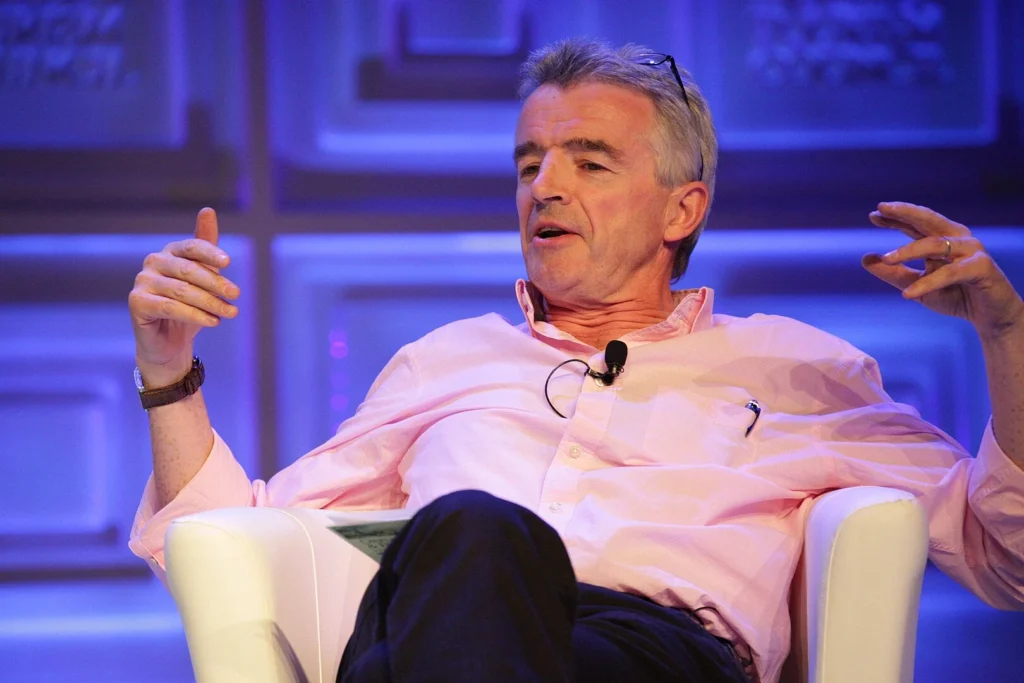
Ryanair CEO on Airlines Bankruptcy
The Iran conflict has sent shockwaves through the aviation fuel market. Before the war began in mid-March, jet fuel traded at approximately $74 per barrel. Within weeks, the closure of the Strait of Hormuz doubled that price to $150 per barrel, a level O’Leary describes as unsustainable for many operators.
Ryanair’s hedging strategy has partially shielded it from the worst impact. The airline locked in 80% of its fuel at $67 per barrel before the conflict, with coverage extending until March 2027.
However, the remaining 20% purchased on the open market now costs more than double pre-war levels, creating significant financial pressure even for the industry’s most cost-disciplined carrier.
O’Leary stated that predictions are currently impossible, noting the airline’s share price has already fallen from €32 to €25 since the conflict began.
Analysts estimate Ryanair’s 2026 profits at €2.2 billion, but the CEO declined to revise financial guidance, citing zero visibility on fuel prices beyond the immediate term.
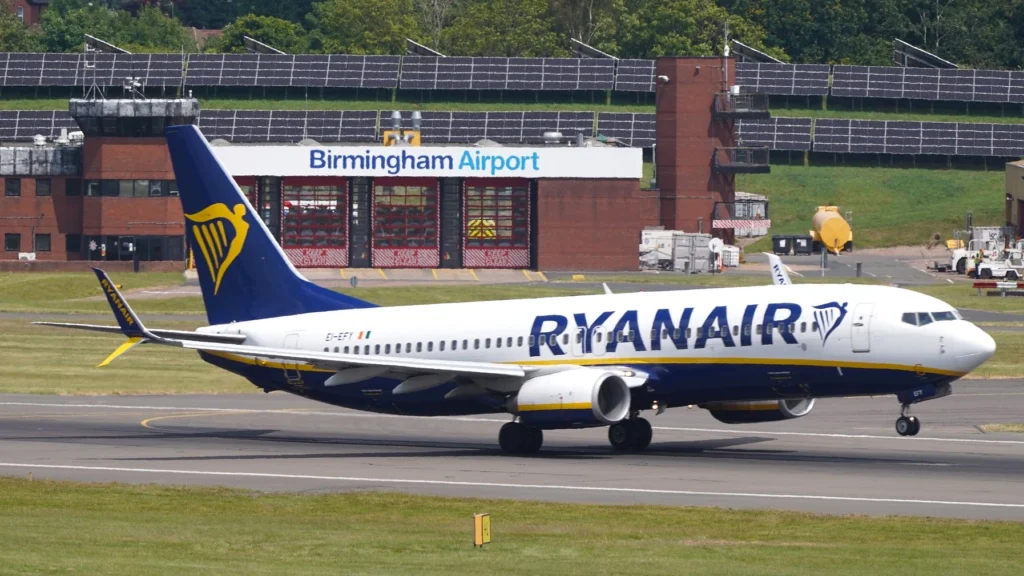
Supply Risks Loom for Summer Travel Season
Beyond cost, fuel availability poses an even greater threat. O’Leary confirmed that oil companies have assured supply through May, but June remains uncertain. An estimated 10% to 20% of Ryanair’s fuel supply is at risk if the conflict persists.
The United Kingdom faces the highest exposure because it sources fuel primarily from Kuwait. Other European countries draw supplies from Norway, West Africa, the United States, and Russia, reducing their immediate vulnerability.
O’Leary urged passengers to book early, warning that flight cancellations could follow if airports run out of fuel. Even if the war ends immediately, he estimated a three to four month recovery period before fuel prices could fall below $100 per barrel, potentially by September.
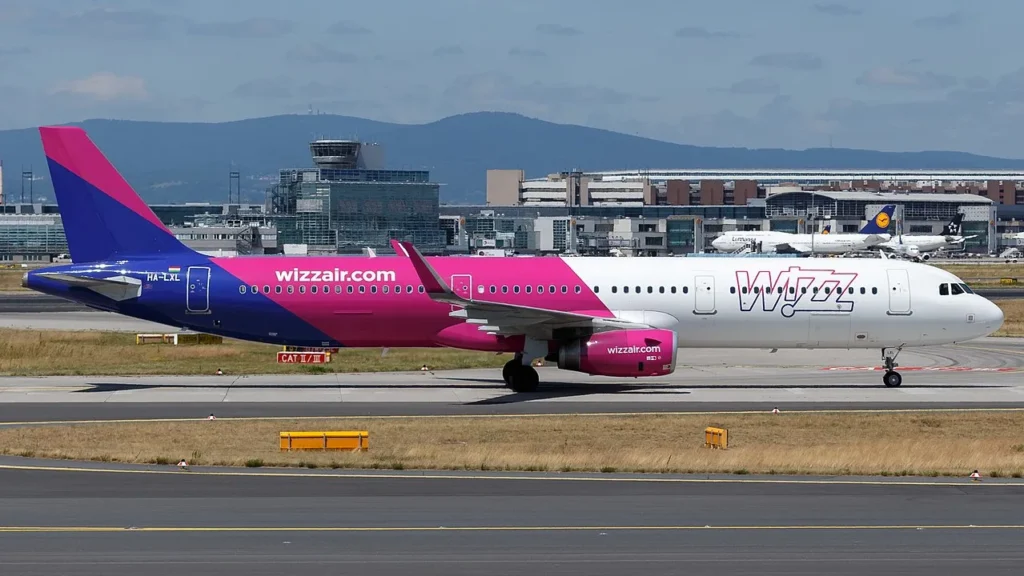
Wizz Air Pushes Back Against Bankruptcy Claims
Wizz Air (W6) issued a sharp rebuttal to O’Leary’s comments, calling them completely unfounded and untrue. The Hungarian carrier emphasized its sound financial structure, ample liquidity, and practice of financing aircraft 18 months in advance.
Wizz Air also highlighted that 75% of its fleet consists of Airbus A320neo family aircraft, which it says provides a structural cost advantage over competitors through lower fuel consumption.
The airline added that it maintains strong relationships with leading lessors and manufacturers and continues its fleet strategy without interruption.
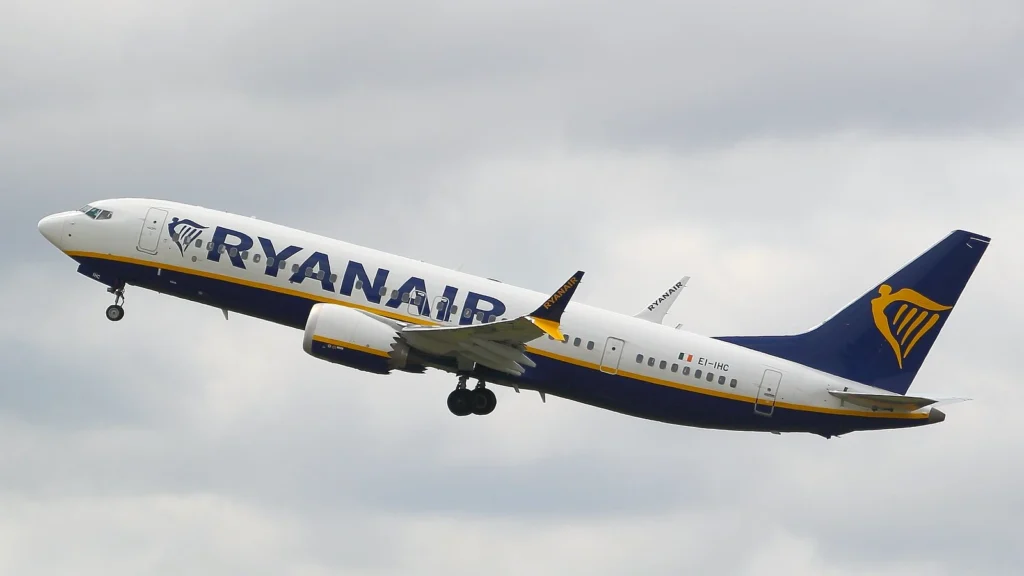
O’Leary Targets Airport Taxes and EU Policy
The Ryanair chief expanded his criticism beyond the war, targeting rising airport charges at Rome Fiumicino (FCO) and Rome Ciampino (CIA), where taxes are set to increase by 14% and 50% respectively by 2028.
O’Leary called airport taxes a worse long-term problem than war, arguing that governments rarely reverse such charges.
He pointed to Italian regions including Calabria, Friuli Venezia Giulia, Abruzzo, and cities like Trapani (TPS), Rimini (RMI), and Parma (PMF), where abolishing the municipal boarding surtax produced double-digit traffic growth. O’Leary said Ryanair could invest up to $4 billion more in Italy if the tax were fully removed.
He also called on the European Commission to reduce or abolish the Emissions Trading System, dismissing current EU priorities as a waste of time.
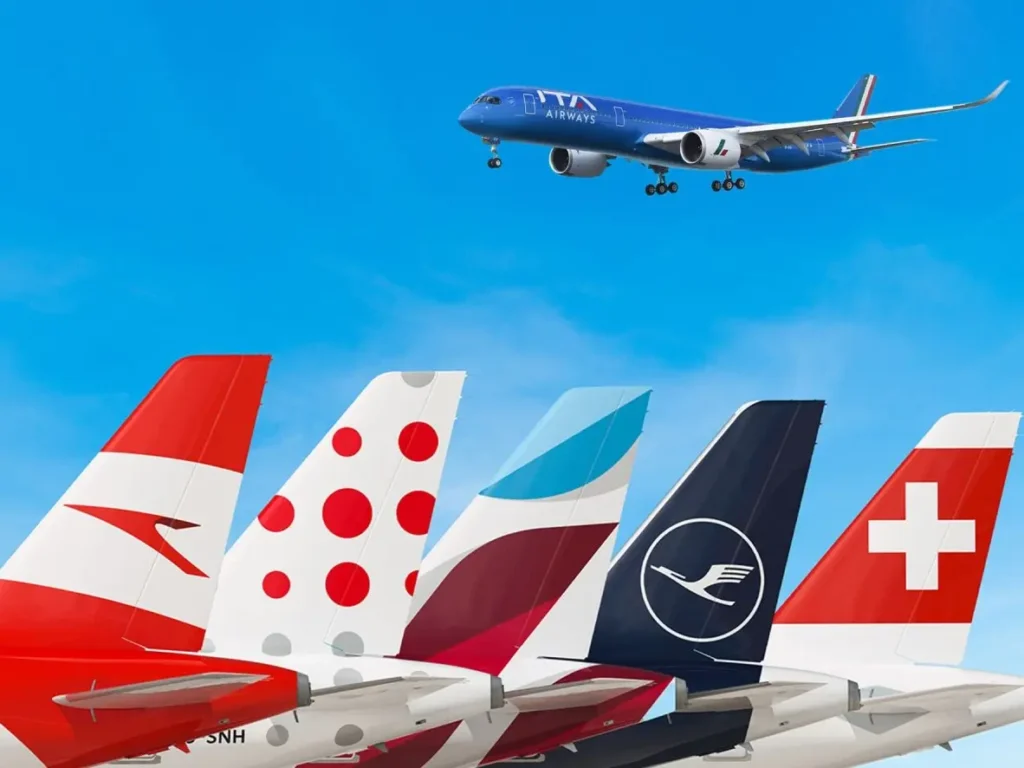
Lufthansa-ITA Airways Deal and O’Leary’s Contract Extension
O’Leary predicted that the Lufthansa (LH) and ITA Airways (AZ) merger would primarily benefit Lufthansa’s hub operations at Frankfurt (FRA) and Munich (MUC) rather than Italian passengers.
He expects Lufthansa to focus on feeding its own hubs from Italy without growing domestic or international routes, creating further opportunities for Ryanair.
Ryanair currently operates as Italy’s largest carrier by traffic, serving 69 million passengers in 2026, a figure 68% above pre-COVID levels.
The airline has invested $11 billion in the country, basing 111 aircraft across 20 operational bases and 32 airports with over 800 routes.
On his own future, O’Leary confirmed that an agreement in principle has been reached with the board to extend his contract from 2028 to 2032, with formal approval expected at the September shareholder assembly.
Stay tuned with us. Further, follow us on social media for the latest updates.
Join us on Telegram Group for the Latest Aviation Updates. Subsequently, follow us on Google News
