


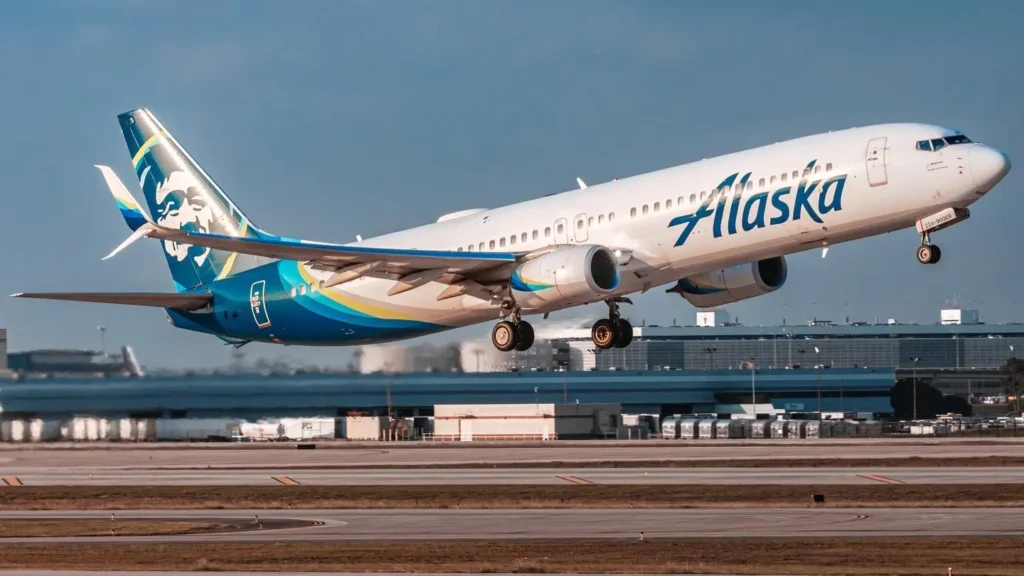
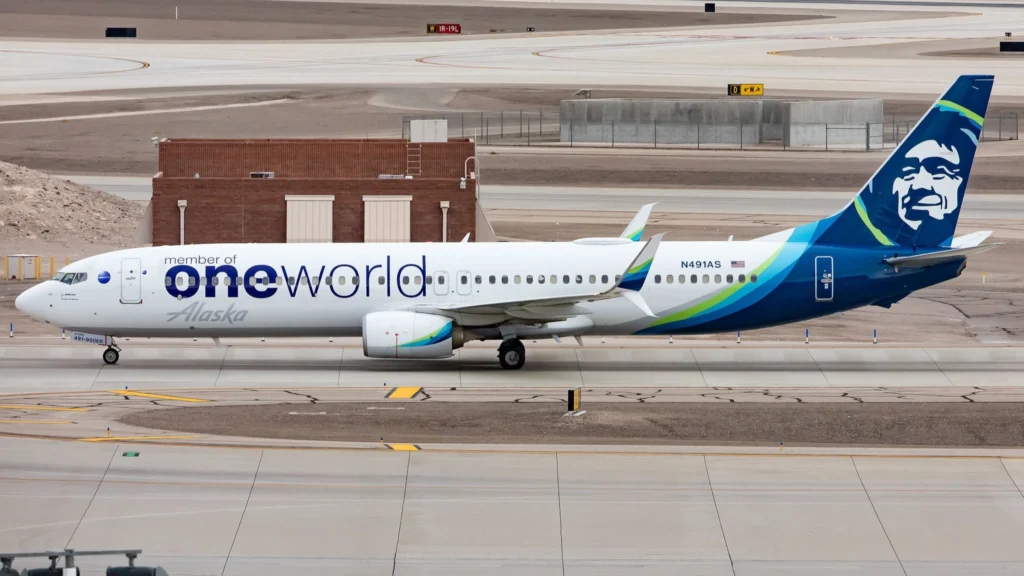
SEATTLE- U.S. Immigration and Customs Enforcement officers placed a detained Indian man on the wrong Alaska Airlines (AS) flight at Seattle-Tacoma International Airport (SEA), sending him to Sitka (SIT) instead of New York City (JFK) for his voluntary departure to India.
The previously unreported May 31, 2025, incident prompted Alaska Airlines (AS) to review its safety protocols and raise the matter with the Department of Homeland Security.
Rakesh Rakesh, 25, had spent months at the Northwest ICE Processing Center in Tacoma before an immigration judge granted his request for voluntary departure on May 21. Despite flight attendants alerting ICE officers that they were boarding the wrong aircraft, the agents directed the crew to continue boarding him, leading to a chain of events that added 16 extra days to his detention, the Seattle Times reported.
ICE Officers Ignored Crew Warnings
The incident unfolded when ICE officers bypassed the standard terminal gate process and brought Rakesh up a stairway from the airfield directly onto the jet bridge.
Federal agents are eligible for badges granting airfield access when escorting individuals in their custody, according to Port of Seattle spokesperson Perry Cooper. However, Alaska Airlines (AS) said the officers failed to follow established check-in procedures with airline gate agents before stepping onto the plane.
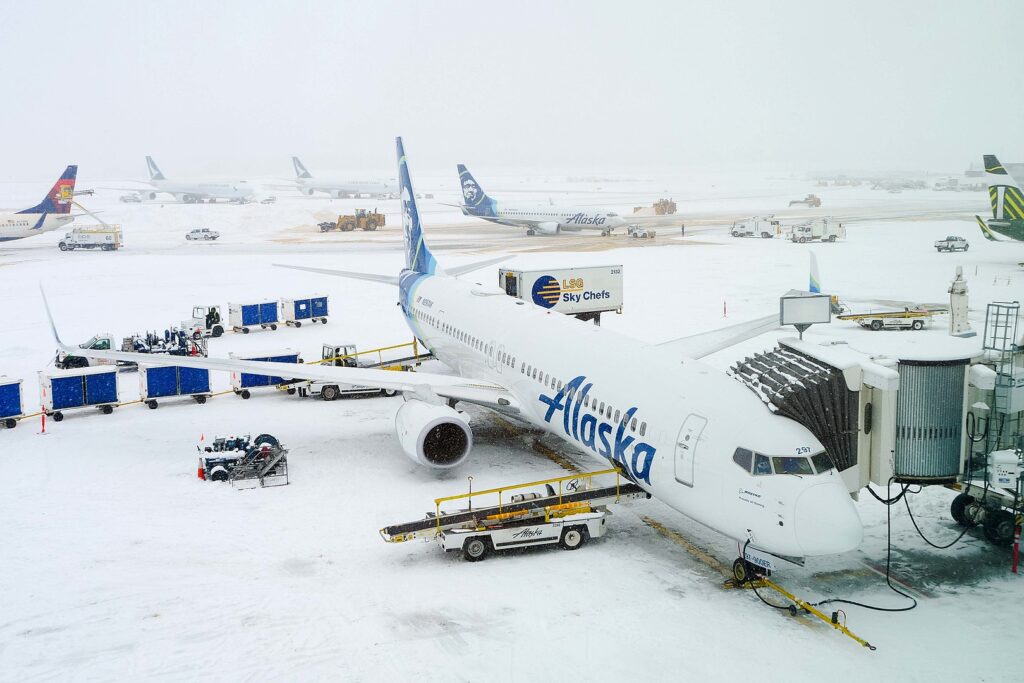
Had the officers checked in at the gate, they would have learned that the New York City (JFK) flight was parked adjacent to the Sitka (SIT) flight they were about to board.
Alaska Airlines spokesperson Alexa Rudin confirmed that flight attendants informed the officers they had the wrong plane, but the agents overrode the crew and directed them to board Rakesh anyway.
“ICE did not follow the established procedures for this passenger,” Rudin said. The airline described the encounter as a “non-standard interaction between law enforcement and our teams” and said it is evaluating how to better support crews in similar situations.
Captain Stepped In to Help Stranded Passenger in Sitka
After the flight departed, attendants alerted the captain, a veteran Alaska Airlines (AS) pilot. When the captain informed Rakesh of the situation, the 25-year-old grew afraid, uncertain whether his voluntary departure status still stood.
The captain took personal responsibility for the stranded passenger. After the plane landed in Sitka (SIT) around 10:30 p.m., the pilot brought Rakesh to his own hotel and booked an adjacent room.
He then arranged a return flight to Seattle (SEA) the following morning and helped Rakesh book connecting flights to New York City (JFK) and onward to India. Alaska Airlines covered the hotel, meals, and all rebooking costs.
Rudin called the captain “a true representation of our values of safety, kindness, and doing the right thing.”
ICE Redetained Rakesh Upon Return to Seattle
Rather than allowing Rakesh to continue his journey home, ICE agents met him when he arrived back at Seattle (SEA) and returned him to the Tacoma detention center. Rakesh said he pleaded with officers to let him leave the country, but his pleas were ignored. He went on a hunger strike for several days after being redetained.
Immigration attorney Larkin VanDerhoef, who took up Rakesh’s case pro bono after encountering the airline captain at the detention center, speculated that ICE may have refused to release Rakesh because no officers had been arranged to meet him at John F. Kennedy International Airport (JFK) for his connecting flight to India. VanDerhoef questioned the logic of that decision, noting the scale of ICE operations at JFK.
Nearly two weeks after Rakesh was redetained, VanDerhoef emailed ICE to inquire about departure plans. An officer confirmed a flight had been scheduled for June 17. Rakesh eventually made it back to India after spending 16 additional days in detention beyond his original departure date.
Alaska Airlines Introduced New Deportee Protocols Earlier in 2025
In February 2025, Alaska Airlines (AS) rolled out a “deportee checklist” packet for airline staff to provide to immigration officers placing unescorted individuals on flights. The packet includes airline policy information and a form requesting the names of officers and the individuals being removed.
An internal bulletin accompanying the checklist clarified that flight attendants are not required to hold passports or tickets on behalf of immigration officers, nor are they obligated to withhold travel documents from passengers boarded by federal agents.
Broader Pattern of ICE Inefficiency in Removal Cases
VanDerhoef said the incident fits a broader pattern of operational failures within ICE. He noted he has seen the agency schedule check-in appointments on days its offices were closed and fail to bring detained individuals to prearranged interviews with U.S. Citizenship and Immigration Services.
The attorney also pointed to the case of Russian national Yury Saaryan, who first requested to return to his home country in August but remained detained at ICE’s Tacoma facility months later.
ICE has previously attributed such delays to flight scheduling logistics and the process of obtaining travel documents from foreign governments. Neither issue applied in Rakesh’s case, as he had a valid passport and commercially booked flights ready.
Stay tuned with us. Further, follow us on social media for the latest updates.
Join us on Telegram Group for the Latest Aviation Updates. Subsequently, follow us on Google News
