


NEW YORK- SWISS International Air Lines (LX) diverted one of its Airbus A330 flights after smoke was detected in the Business Class cabin during a transatlantic journey from Zurich Airport (ZRH) to New York John F. Kennedy International Airport (JFK).
The aircraft, carrying 208 passengers, landed safely at Bangor International Airport (BGR) in Maine after the crew declared an emergency. No injuries were reported, and the airline has launched an investigation into the source of the smoke.
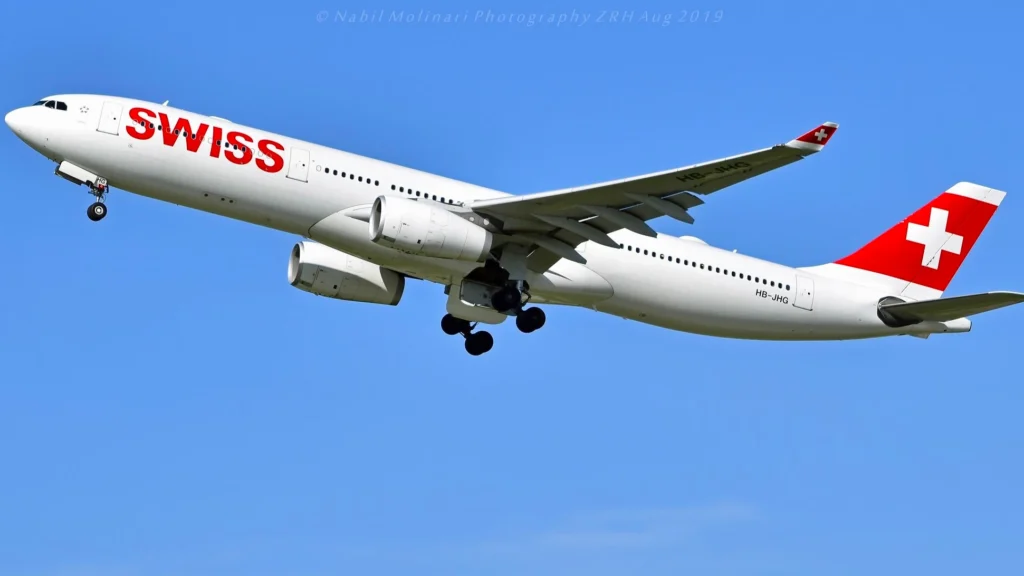
SWISS A330 Emergency Landing at Bangor
SWISS Flight LX16, operated by a 14-year-old Airbus A330, departed Zurich at approximately 10:30 a.m. local time on July 27 for its scheduled service to New York JFK. The aircraft had been airborne for around six and a half hours and was cruising at 32,000 feet near the coast of Nova Scotia when the crew reported smoke inside the cabin.
According to SWISS, smoke of an as yet unknown origin was detected in the forward section of the Business Class cabin. As a precaution, the pilots declared an emergency and diverted the aircraft to Bangor International Airport in Maine, which is a common diversion airport for transatlantic flights due to its strategic location.
Flight tracking data showed the aircraft descending more than 22,000 feet within approximately 10 minutes while changing course toward Bangor. The rapid descent highlighted the urgency of the situation as the crew prioritized a safe landing.
According to PYOK, the diversion followed standard aviation safety procedures, with the flight crew acting immediately after smoke was detected in the cabin.
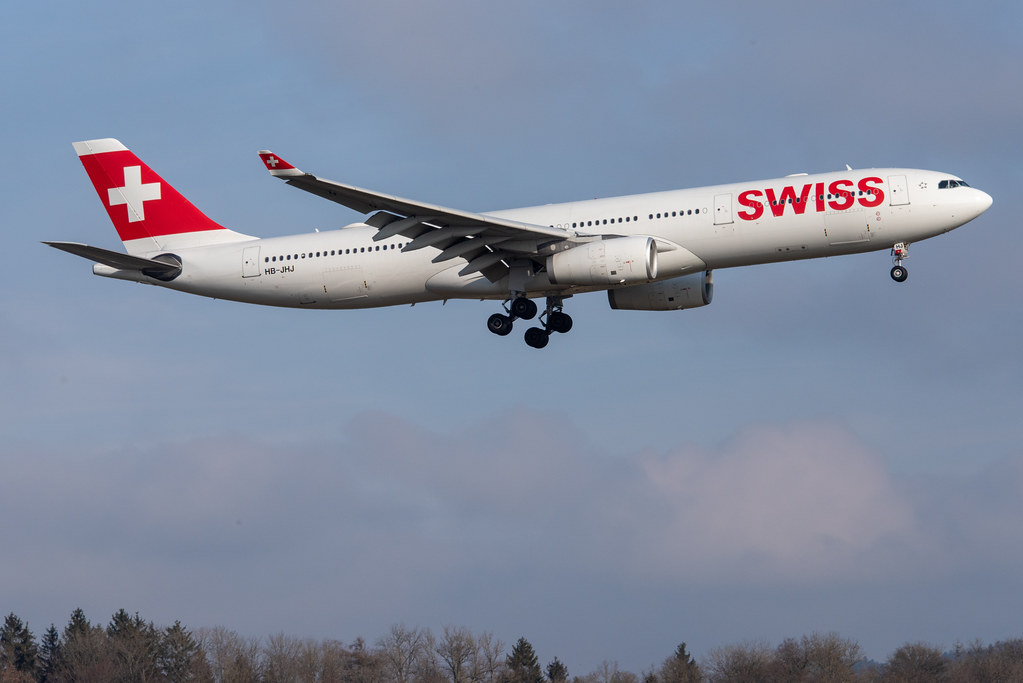
Emergency Response at Bangor Airport
The Airbus A330 landed safely at Bangor International Airport shortly after the diversion decision. Once on the ground, the pilots stopped the aircraft on the runway while airport rescue and firefighting teams conducted thermal imaging and visual inspections.
Cabin crew remained prepared for an emergency evacuation if conditions deteriorated. However, inspections found no evidence of an onboard fire, eliminating the need to evacuate passengers using emergency slides.
After remaining on the runway for nearly an hour during safety checks, the aircraft was cleared to taxi to the terminal, where passengers disembarked normally.
SWISS later confirmed that all passengers and crew members were safe.
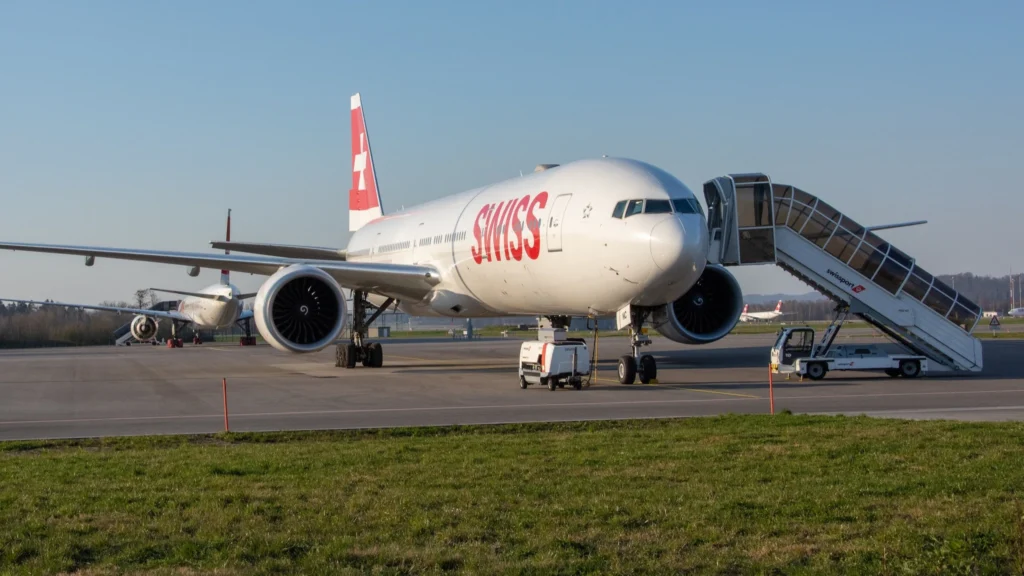
Airline Arranges Assistance for Passengers
In a statement, SWISS acknowledged that emergency diversions can be stressful for travelers and said its teams in both Switzerland and the United States immediately began arranging alternative travel.
The airline stated that it was working closely with Bangor International Airport to provide assistance and organize onward transportation to passengers’ final destinations as quickly as possible.
SWISS also emphasized that passenger safety remains its highest priority and that crews are trained to choose the safest available option whenever smoke is detected onboard.
The airline added that investigators will thoroughly inspect the aircraft before determining what caused the smoke. Officials said they would not speculate until the technical examination is complete.
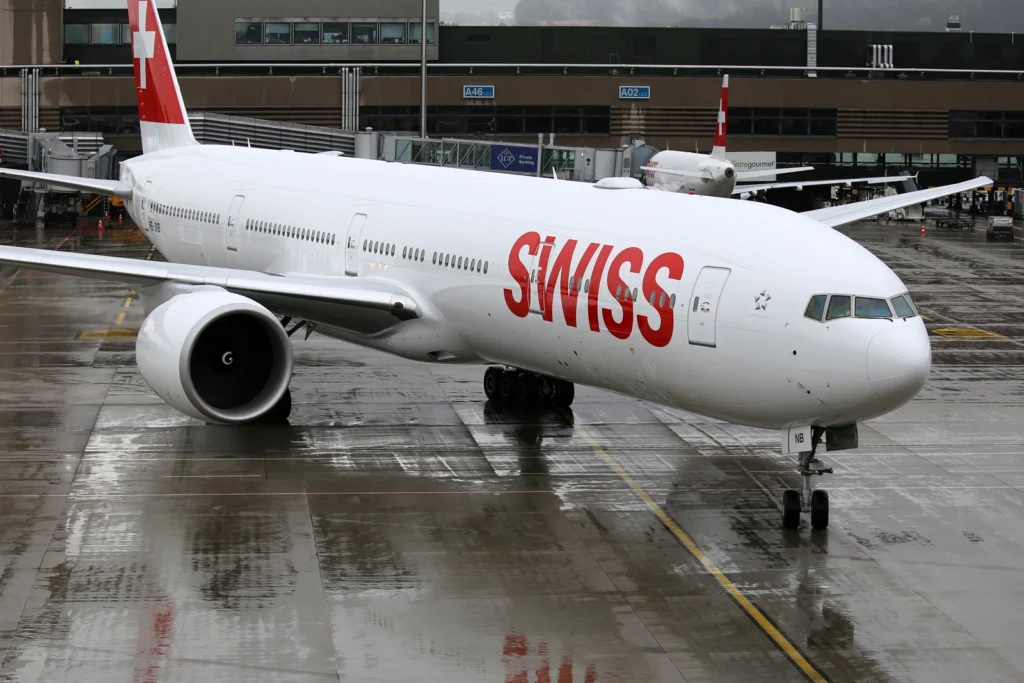
Aircraft Previously Involved in Delhi Incident
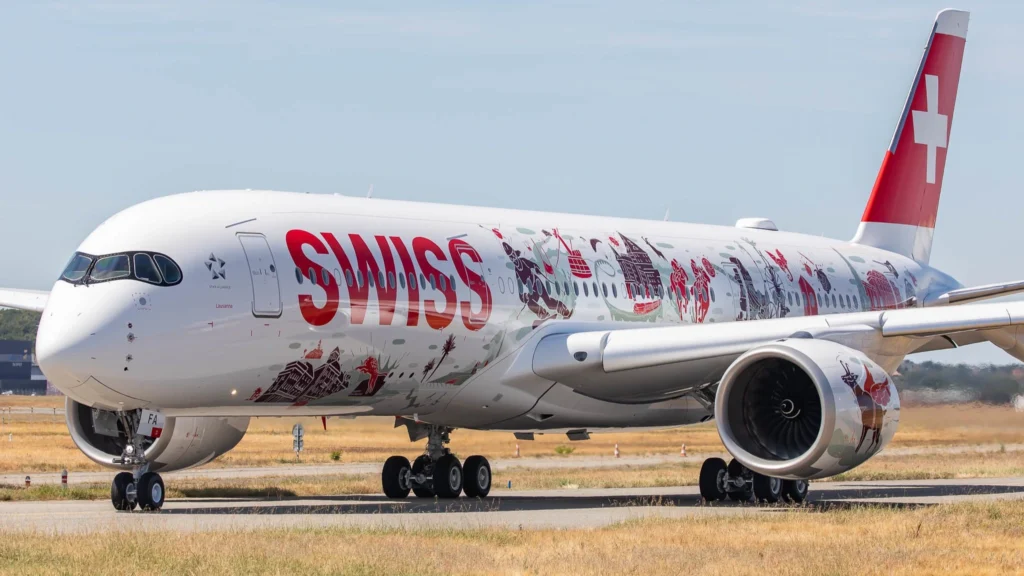
The aircraft involved in the Bangor diversion is registered HB-JHK. The same Airbus A330 was involved in another significant safety event earlier this year.
On April 26, the aircraft aborted its takeoff at Delhi Indira Gandhi International Airport (DEL) after its left Rolls-Royce Trent engine experienced a serious failure during the takeoff roll.
Because the aircraft was already traveling at high speed, the rejected takeoff generated intense heat in the wheels and brakes, producing visible smoke. Flight crews ordered an emergency evacuation using inflatable slides.
Six people sustained injuries during that evacuation, including two passengers who suffered broken legs. Following extensive repairs and inspections, the aircraft returned to commercial service on June 4.
Investigation Into Smoke Source Continues
Smoke inside an aircraft cabin is treated as one of aviation’s most serious emergencies because the source cannot always be identified immediately. Flight crews must assume there is a potential fire until inspections prove otherwise.
In this case, the crew’s decision to divert ensured the aircraft reached the nearest suitable airport before the situation could worsen. Although no fire was discovered after landing, maintenance engineers will carry out a detailed inspection to determine what caused the smoke inside the Business Class cabin.
The investigation remains ongoing, and SWISS has not provided a timeline for releasing its findings.
Stay tuned with us. Further, follow us on social media for the latest updates.
Join us on Telegram Group for the Latest Aviation Updates. Subsequently, follow us on Google News
