

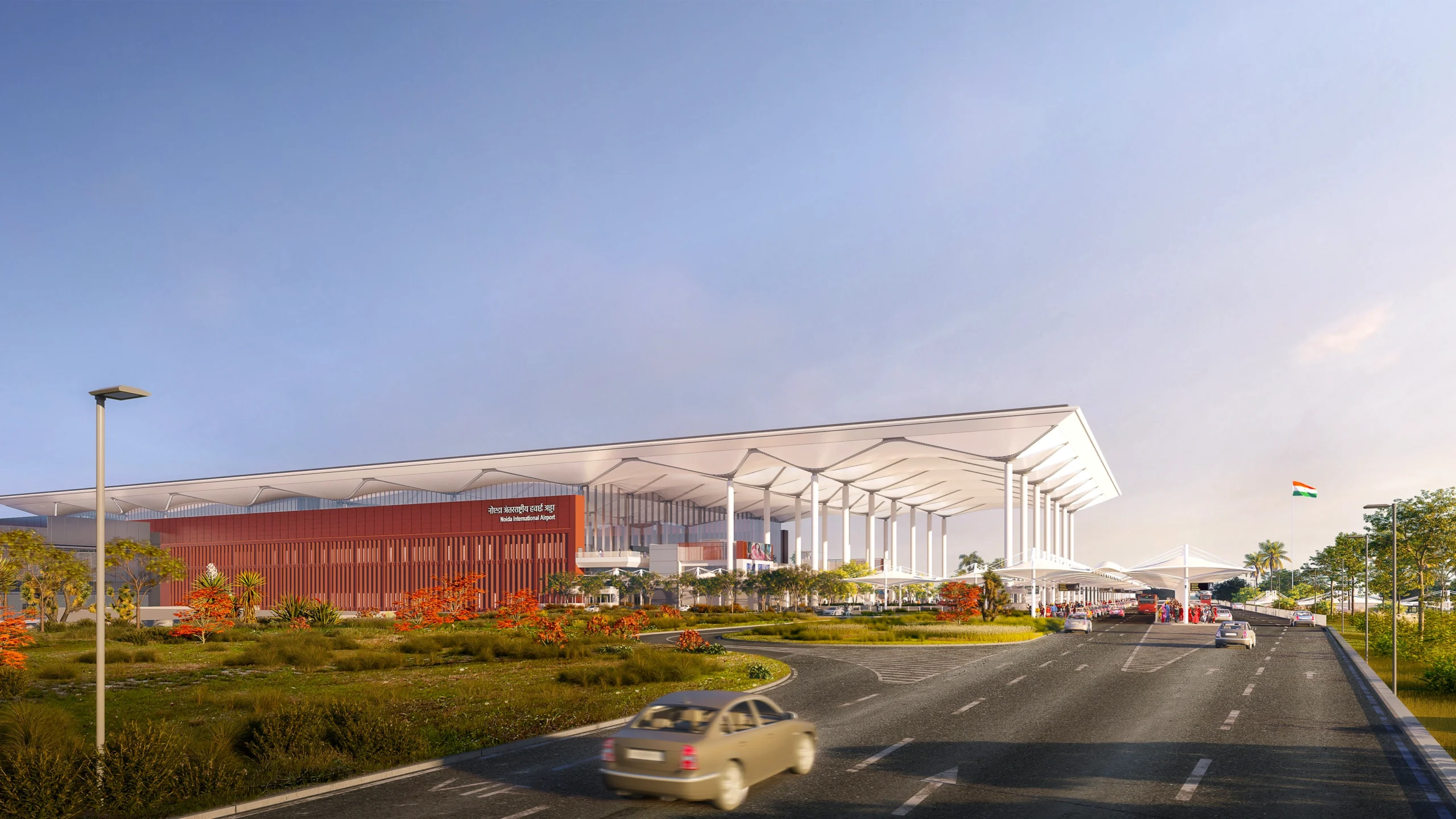
NOIDA- India’s aviation security regulator has rejected the security approval of Noida International Airport’s (DXN) Swiss CEO, creating a fresh hurdle before the airport can begin commercial operations.
The Bureau of Civil Aviation Security (BCAS) flagged the appointment as a violation of mandatory rules that govern greenfield airports in the country.
Christoph Schnellmann, a Swiss national who has led the Jewar project since 2020, does not meet the Indian nationality requirement set out by BCAS under a 2011 aviation security order.
The airport’s operator, Zurich Airport International AG, now faces a critical choice: appoint an Indian national as CEO or restructure security responsibilities before flights can begin.

Why India’s Security Rules Block a Foreign CEO
At the heart of the issue is a BCAS Aviation Security (AvSec) order dated January 17, 2011, which mandates that the CEO of every greenfield airport in India must also serve as the airport’s security coordinator.
This role is critical for implementing national aviation security protocols, and only an Indian national can hold it under the existing framework.
While foreign nationals are permitted to hold senior management positions at Indian airports, they must receive security clearance from the Ministry of Home Affairs (MHA) and undergo separate vetting by BCAS.
In Schnellmann’s case, the required clearances have not been granted, triggering the current regulatory roadblock. Director General of BCAS, Rajesh Nirwan, did not respond to queries on the matter.
Aviation officials note that airline CEOs are not designated as security coordinators under India’s AvSec framework.
Airlines operate under a separate security architecture where responsibilities are distributed across specialised roles rather than vested in the CEO, which is why foreign leadership is permissible at carriers but tightly restricted at airports, particularly greenfield projects classified as critical infrastructure.
According to officials familiar with the matter, BCAS first flagged this issue nearly two years ago and issued a show-cause notice to the airport developer.
No corrective action followed, allowing the problem to persist and eventually contribute to operational delays.
A senior government official confirmed that the airport must appoint an Indian national as CEO before commercial flights can commence.
Zurich Airport’s Investment and Stakes of Delay
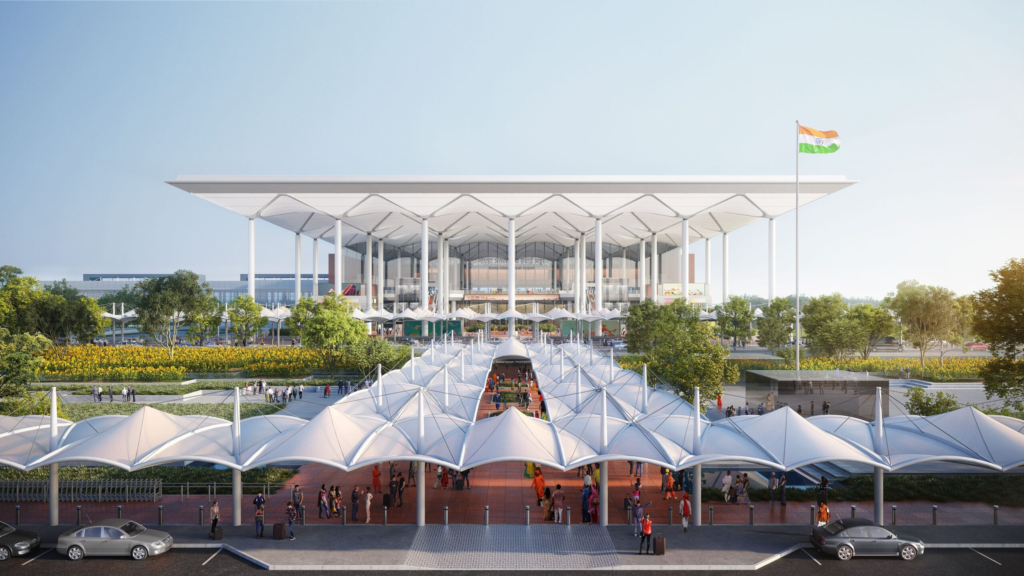
Noida International Airport (DXN) is located in Jewar, Gautam Buddha Nagar, Uttar Pradesh, around 75 kilometres from Delhi’s Indira Gandhi International Airport (DEL).
It is intended to complement IGI as part of the Delhi-NCR dual-airport system, with Phase I capacity set at 12 million passengers annually.
Zurich Airport International AG won the bid to develop and operate the airport for 40 years in 2019.
The project is being executed through its Indian subsidiary, Yamuna International Airport Private Limited (YIAPL), under a concession agreement that began in October 2021.
The group invested around Rs 7,200 crore in Phase I alone, making a swift start to commercial operations a key priority for the developer.
As reported by The Economic Times, Schnellmann has led the project for six years, making any leadership transition a complex decision for the Swiss operator. Noida International Airport is also the first case in India where a foreign investor holds 100% equity in an airport, adding further regulatory sensitivity to the situation.
Noida International Airport has reportedly raised the matter with the MHA, citing precedents such as foreign CEOs at Indian airlines, and is hopeful of securing approval for Schnellmann. However, no resolution has been confirmed as of now.

Aerodrome Licence Granted
On March 6, 2026, the airport received its aerodrome licence from the Directorate General of Civil Aviation (DGCA), officially clearing it for flight operations.
Phase I was then inaugurated by Prime Minister Narendra Modi on March 28, 2026, with scheduled commercial flights expected to begin in mid-April to May 2026, initially with limited domestic services.
However, the airport’s Aerodrome Security Programme (ASP) remains under review by BCAS, and without its approval, commercial operations cannot formally commence.
A spokesperson for Noida International Airport stated that the operator is working closely with BCAS to secure ASP approval.
“Following this, we will coordinate with all stakeholders to finalise timelines for the commencement of commercial operations. Our efforts are focused on ensuring that all systems, processes, and personnel are fully aligned to deliver a safe, efficient, and seamless start of operations,” the spokesperson said.
Three weeks after its official inauguration, the airport faces fresh uncertainty over the start of commercial flights, as the key security clearance for its CEO remains pending, raising the possibility of a delay to the planned mid-May launch.

Regional Aviation Hub for Western UP
Despite the regulatory challenge, Noida International Airport (DXN) holds significant strategic value for the region. IndiGo (6E), Akasa Air (QP), and Air India Express (IX) have confirmed plans to operate from the airport in Phase I.
The airport sits around 75 kilometres from the capital and is more likely to draw flyers from western Uttar Pradesh in its early years of operation.
Prime Minister Modi, while inaugurating the airport, underlined its importance for a vast area that includes Agra, Mathura, Aligarh, Ghaziabad, Meerut, Etawah, Bulandshahr, and Faridabad.
“The airport will benefit a vast region and will bring numerous new opportunities for the farmers, small and medium enterprises, and the youth of western Uttar Pradesh,” he said.
He further added, “Aircraft will fly from here to the world, and this airport will also become a symbol of a developed Uttar Pradesh taking flight.”
Navi Mumbai International Airport, developed by Adani Airports Holdings Ltd, complied with the same BCAS requirement by appointing an Indian national as CEO, a step that officials say contributed to its smoother path to operational readiness.
Noida International Airport’s situation presents a contrasting case that may set a significant precedent for future foreign-owned airport projects in India.
Stay tuned with us. Further, follow us on social media for the latest updates.
Join us on Telegram Group for the Latest Aviation Updates. Subsequently, follow us on Google News
