

DUBAI- Air travel often reflects more than transportation, revealing deeper social dynamics through premium cabin experiences.
A viral anecdote about first class highlights how perception of luxury varies based on exposure and background.
A traveler’s rare first class redemption contrasts with a child’s casual comparison, exposing the gap between earned aspiration and normalized privilege.
When First Class Feels Different to Different People
A widely shared social media post describes a traveler redeeming a large number of miles for a first class seat.
The experience represented a personal milestone achieved through planning and effort. During the flight, a child seated nearby remarked that the product was not as good as Emirates (EK) first class.
This brief comment reframed the moment. What felt like a peak experience for one passenger was treated as average by another.
The situation highlights how luxury is not absolute but shaped by repeated exposure and expectations.
Online reactions reflected this divide. Many agreed with the child, stating that Emirates first class sets a higher benchmark.
Others noted how a significant personal achievement was instantly diminished. Some responses blamed parenting, while others argued that well-behaved children belong in any cabin.
Airline Product Perception and Reality
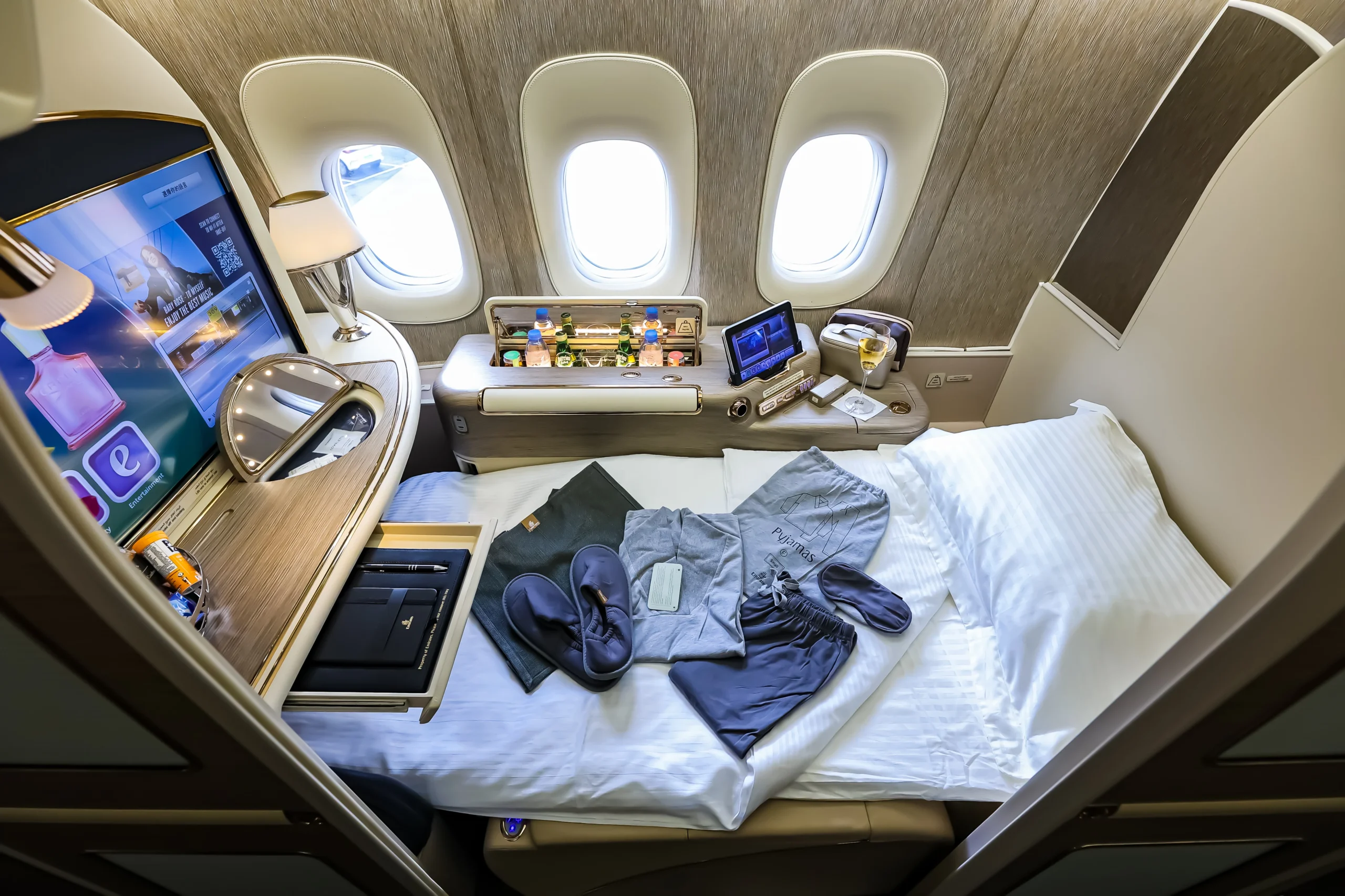
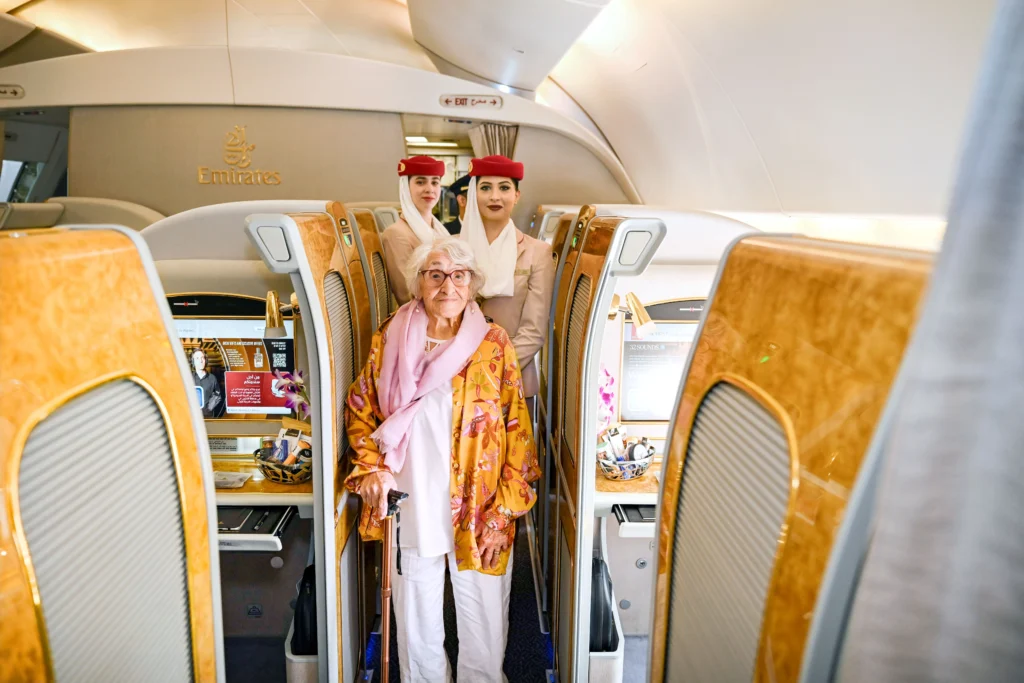
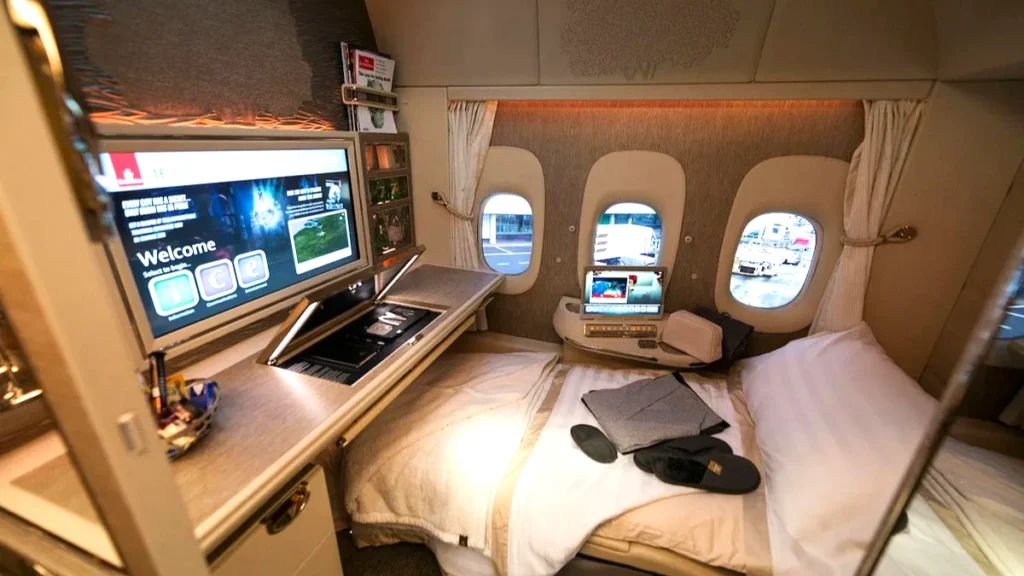
Emirates is widely viewed as a global leader in first class, driven by strong branding and onboard experience. Features such as private suites, premium dining, and onboard shower spas on select aircraft reinforce this perception.
However, product consistency varies. The Airbus A380 first class seats are considered dated in design, while newer Boeing 777 suites offer a more modern and competitive experience. Business class on some aircraft falls below industry averages in seat design.
According to View from the Wing, Emirates maintains its premium reputation through strong soft product elements such as food, beverage, and service, even when hardware is inconsistent. This creates a “halo effect” that shapes passenger expectations globally.
Miles as an Access Tool
Frequent flyer miles function as a gateway to premium travel. For many travelers, miles represent strategy, patience, and optimization.
Redeeming them for first class creates access to experiences that may otherwise be unaffordable.
Historically, miles were earned through frequent business travel, often by mid-level professionals. Today, credit card rewards dominate accumulation, making miles accessible to a broader demographic.
Despite this accessibility, experience differs. For some, first class remains a rare achievement. For others, including high-net-worth individuals who also optimize miles, it is routine. This difference in frequency shapes perception more than the product itself.

Air Travel as a Reflection of Social Hierarchy
The anecdote functions as a class metaphor rather than a simple airline comparison. It highlights the contrast between earned success and inherited baseline.
The traveler’s effort to reach first class represents aspiration. The child’s reaction reflects habituation. The emotional impact comes from realizing that one person’s achievement is another’s normal.
This aligns with several social theories:
- Thorstein Veblen explains premium cabins as forms of conspicuous consumption, where value depends on status signaling.
- Pierre Bourdieu highlights how tastes and expectations are learned early, making luxury feel natural to some.
- John Rawls frames this as the arbitrariness of birth, where access is determined by circumstances rather than effort.
- Robert Nozick supports the idea that access is justified if acquired legitimately, regardless of inequality.
- Elizabeth Anderson focuses on relational inequality, where perceived condescension creates discomfort.
- René Girard explains the reaction through memetic desire, where value diminishes when others treat it as ordinary.
- Aristotle connects behavior to learned habits, suggesting children reflect their environment rather than intent.
Role of Parenting and Industry Nuance
Children in premium cabins often express observations without social filtering. Their expectations are shaped by repeated exposure rather than entitlement.
A related example involves a young child boarding an Air Canada (AC) flight and asking if the aircraft had beds. The question reflected genuine curiosity based on prior experiences with long-haul premium cabins.
Such moments show how quickly standards form. Parents aim to balance exposure with awareness, ensuring children understand context without limiting opportunity.
Emirates serves as the comparison point partly due to mainstream recognition of its premium positioning.
At the same time, the airline has implemented restrictions in certain cases involving first class redemptions with children, reflecting how demand and exclusivity are managed.
This adds another layer to the discussion, where access is influenced not only by wealth or miles but also by airline policy and product strategy.

Outlook
The story resonates because it compresses status, effort, and luck into a single moment. It shows how quickly perception can shift when different lived experiences intersect.
A widely shared takeaway captures this dynamic clearly: nothing diminishes a big personal milestone faster than someone else treating it as average.
Stay tuned with us. Further, follow us on social media for the latest updates.
Join us on Telegram Group for the Latest Aviation Updates. Subsequently, follow us on Google News
