

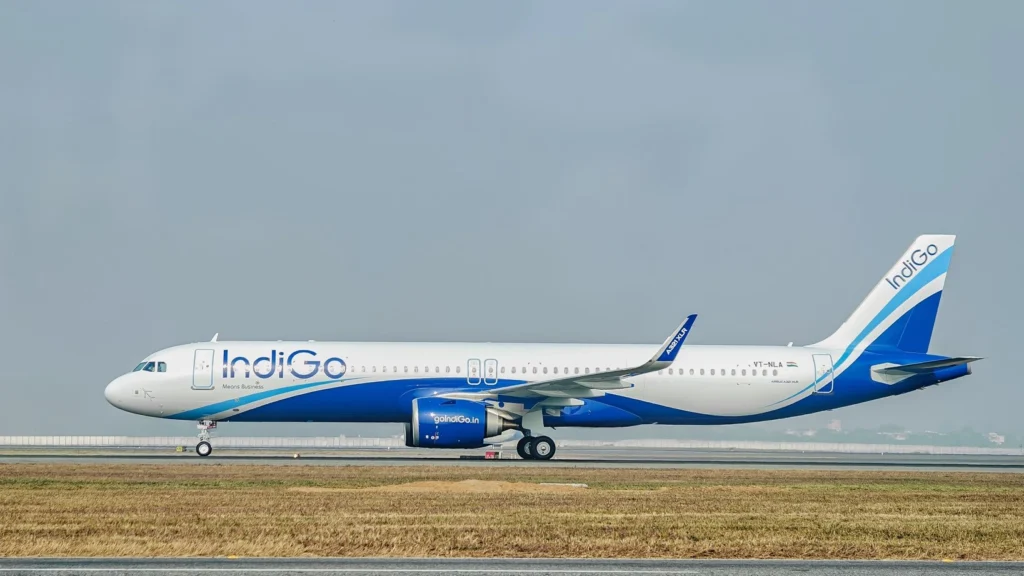
DELHI— IndiGo Airlines (6E) will deploy its Airbus A321XLR aircraft on the Delhi (DEL) to Istanbul (IST) route from April 19, eliminating the current technical halt at Jeddah (JED). The move marks a significant upgrade for one of India’s busiest international corridors.
The flight connects passengers to over 50 onward destinations through IndiGo’s (6E) codeshare partnership with Turkish Airlines (TK), strengthening international reach for Indian travelers flying out of Indira Gandhi International Airport (DEL).
IndiGo Upgrades Delhi-Istanbul Flight Route
The Airbus A321XLR operating on the Delhi (DEL) to Istanbul (IST) sector will be IndiGo’s (6E) second such aircraft.
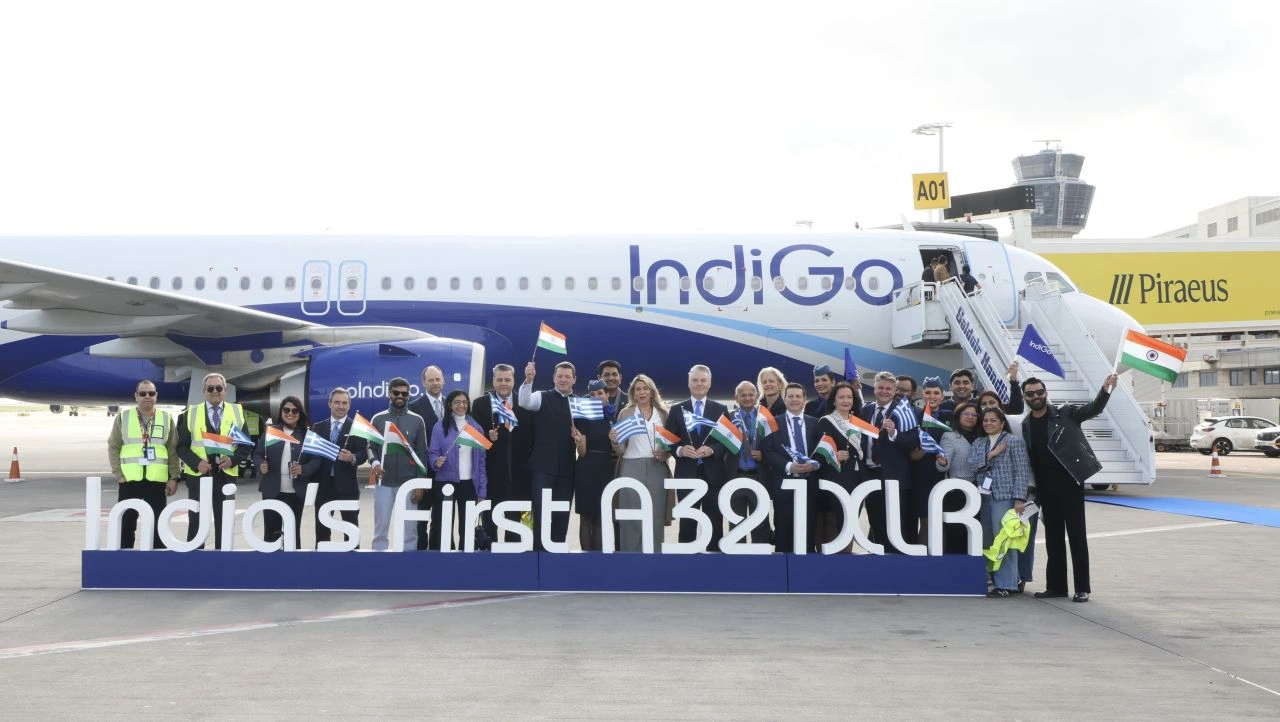
Earlier this year, IndiGo became the first Indian carrier to induct the A321XLR into its fleet, launching non-stop service to Athens (ATH) with the type.
The new-generation aircraft offers extended range, improved fuel efficiency, and enhanced cabin comfort compared to its predecessors. These capabilities allow IndiGo to operate thinner long-haul routes profitably, opening markets that were previously unviable with wider aircraft.
For the first time on this route, IndiGo will offer a dual-class configuration. The aircraft will seat 183 passengers in Economy and 12 in IndiGoStretch, the airline’s business class product. This adds a premium travel option on a route that previously operated without a business class cabin.
Background: From Wet Lease to Own Fleet
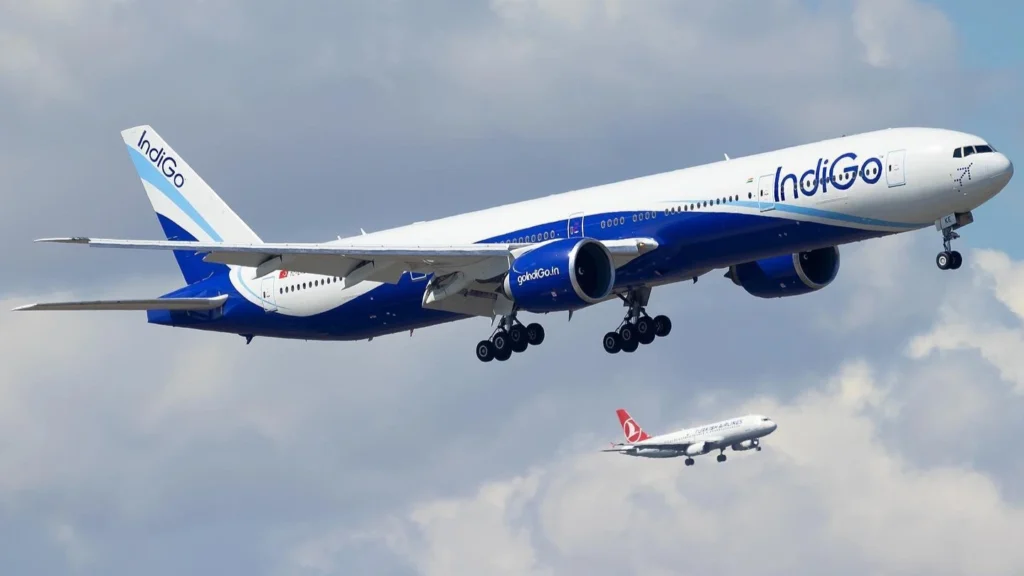
IndiGo (6E) wet-leased two Boeing 777 widebody aircraft from Turkish Airlines (TK) in early 2023 to handle growing international demand from India.
The first aircraft began operating the Delhi (DEL) to Istanbul (IST) route on February 1, 2023. The second entered service on the Mumbai (BOM) to Istanbul (IST) route from May 17, 2023.
A wet lease arrangement covers the aircraft, cabin crew, and insurance under a single agreement with the lessor. In this case, Turkish Airlines (TK) supplied all three components for IndiGo’s (6E) international operations on these routes.
The arrangement came under review after Turkey publicly condemned India’s Operation Sindoor, a strike targeting terrorist camps following the Pahalgam terror attack.
The Indian government subsequently directed IndiGo not to extend the wet-lease agreement beyond February 2026. The airline has now transitioned to operating the route with its own fleet.
What the A321XLR Means for IndiGo’s International Strategy
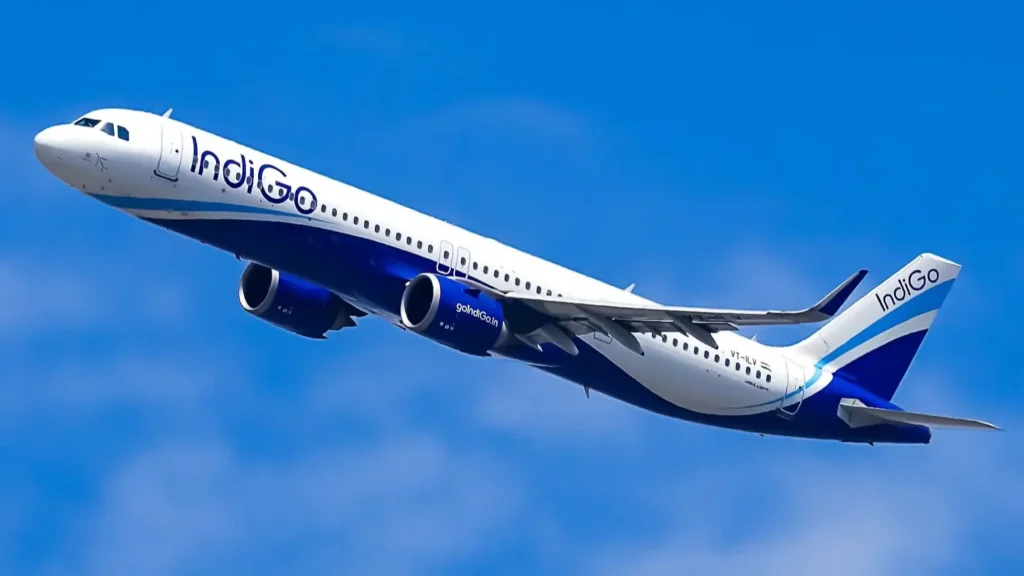
The A321XLR fills a critical gap in IndiGo’s fleet by enabling true long-range narrow-body operations without the cost structure of a widebody aircraft.
The aircraft’s range allows IndiGo to connect Indian cities directly to European and Middle Eastern destinations that were previously accessible only through stopovers.
The Delhi (DEL) to Istanbul (IST) route, now operated non-stop, removes the inconvenience of the earlier technical halt at Jeddah (JED). Passengers gain a more direct, comfortable journey with the added benefit of a business class option onboard.
The codeshare with Turkish Airlines (TK) ensures that the route also functions as a gateway to a broader international network beyond Istanbul (IST).

Istanbul Travel Guide
Istanbul is one of the world’s most historically rich cities, straddling two continents and blending thousands of years of Greek, Roman, and Ottoman heritage into a single, living destination. From grand mosques to bustling bazaars, the city offers travelers an experience unlike anywhere else on earth.
Visitors can explore monumental landmarks in the historic Sultanahmet district, shop through centuries-old markets, and unwind in local neighborhoods that most tourists never discover. This guide covers the city’s most essential areas with practical insight for every type of traveler.
Exploring Istanbul’s Most Iconic Districts and Landmarks
Sultanahmet: The Heart of Historic Istanbul
Sultanahmet sits at the entrance to the Bosphorus Strait and serves as Istanbul’s historic core. The district houses three of the city’s most visited landmarks: Hagia Sophia, the Blue Mosque, and Topkapi Palace.
While many visitors attempt to see all three in a single day, spreading visits across three to five days allows for a deeper appreciation of each site. Navigating this area is easier with a local driver and guide, given the heavy traffic.
Hagia Sophia
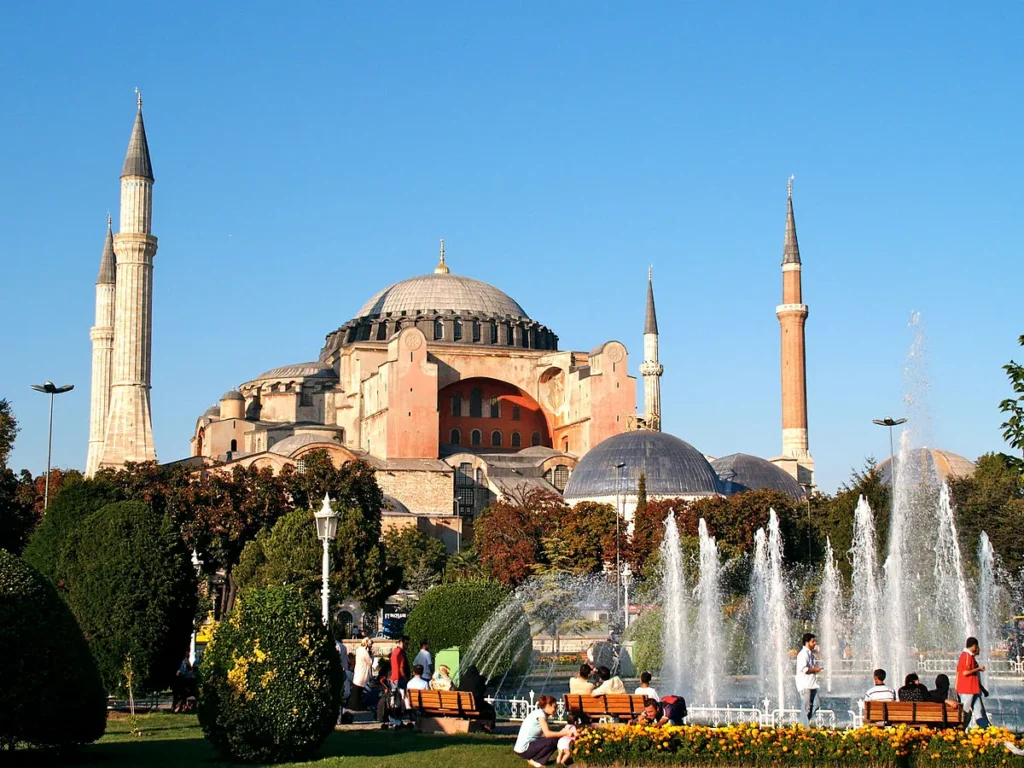
Emperor Justinian built the Hagia Sophia in the 6th century as the world’s first Greek Orthodox Patriarchal cathedral. Its massive central dome marked a bold departure from the traditional rectangular Roman basilica.
The structure was converted into a mosque in 1453 by Mehmet the Conqueror and later became a museum in the early 20th century. Inside, veined marble walls, gold mosaics, and geometric stone floor patterns create a sense of movement that contrasts with the building’s sheer scale.
The Blue Mosque
The Blue Mosque features a large central dome and six minarets that rise above Sultanahmet Square. Visitors get the best view of the building’s proportions by approaching through its main courtyard rather than the square. The mosque remains an active place of worship, so visits should be timed around the five daily calls to prayer.
Non-Muslims enter through a side door and must remove their shoes. Women are required to cover their hair, arms, and legs. The interior walls are lined with more than 21,000 Iznik tiles in cobalt blue, green, red, and yellow.
Topkapi Palace and Istanbul Archaeology Museums
Sultan Mehmed II began building the Topkapi Palace in 1465 on a hilltop overlooking the Bosphorus and the Golden Horn. The palace served as the heart of the Ottoman Empire for four centuries. Visitors should plan at least half a day to explore the complex, including the Chinese porcelain collection, the Palace Clothing Exhibition, and the harem quarters.
The nearby Istanbul Archaeology Museums, located within the palace grounds, are frequently overlooked but hold significant treasures, including tiles from the Ishtar Gate of Babylon, gold jewelry from Troy, and the sarcophagus of Alexander the Great.
Shopping in Istanbul: Grand Bazaar and Spice Market
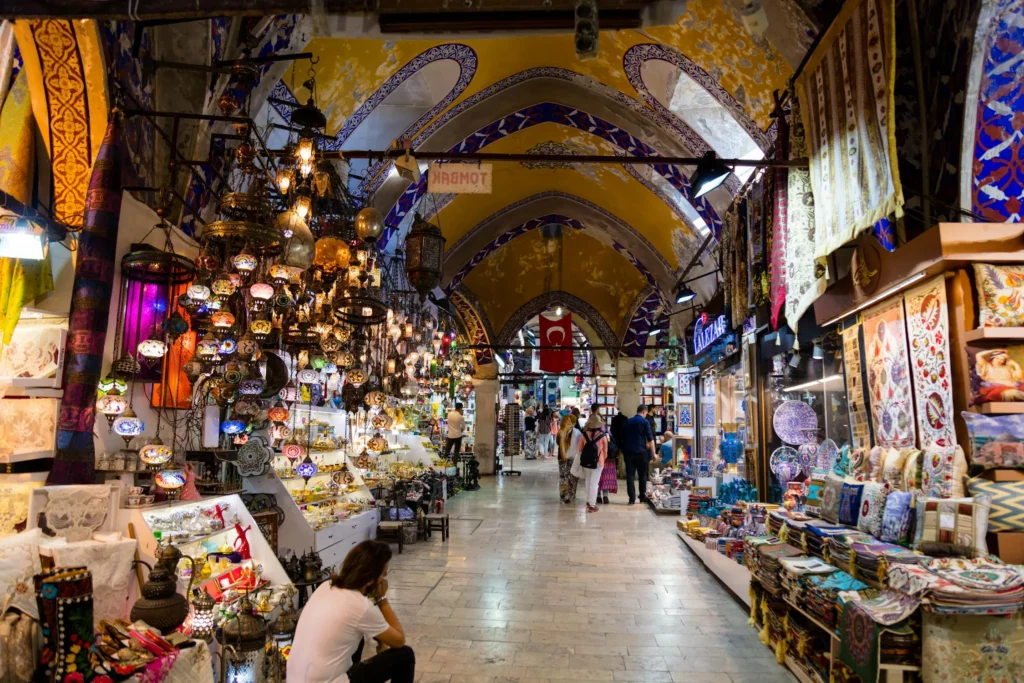
The Grand Bazaar, established in 1461, remains one of the world’s largest covered markets with 4,000 vendors spread across 66 streets. It caters to buyers from multiple continents and offers everything from golden bracelets and leather goods to carpets, lanterns, and designer shoes. It is also the best place in the city to purchase a tavla board, used for a local backgammon variant.
A ten-minute walk from the Grand Bazaar leads to the Spice Market, a smaller and quieter alternative established in the 1600s. Shops display aromatic spices, dried herbs, fruits, nuts, and sweets. The market is also known for oud oil perfume, a woodsy scent prized across the region.
Beyoglu and Taksim: Modern Istanbul
The Galata Tower, built by the Genoese in 1348, stands on a steep hill north of the Golden Horn. Its upper balcony offers panoramic views of the Old City. Below it, Istiklal Avenue stretches as a wide shopping boulevard lined with 19th-century buildings housing international retailers, Turkish designer boutiques, bookshops, synagogues, churches, and mosques. A vintage tram runs along the middle of the street.
Taksim Square marks the end of Istiklal Avenue and is surrounded by cafes, restaurants, and hotels. The square centers on a monument to Ataturk. Balik ekmek, Istanbul’s signature street food, is sold nearby from boats moored along the shore. The dish consists of grilled fish served in a crusty bread roll with lettuce, onions, and lemon juice.
Ortakoy and Karakoy: Local Neighborhoods Worth Visiting
Ortakoy sits at the base of the Bosphorus Bridge and offers a quieter alternative to the tourist-heavy Sultanahmet district. The area features waterfront cafes, a locals-focused market selling hats, shoes, handicrafts, and baked potatoes called kumpir, and a promenade along the Bosphorus where residents gather to drink coffee, smoke shisha, and play tavla.
Karakoy, located across the Golden Horn from the Old City, is a residential area known for its restaurant scene, nightlife, and coffee shops.
It is considered one of the best neighborhoods to experience traditional Turkish coffee, served in small cups with a thick dark foam.
The Bank Hotel Istanbul, a restored 19th-century Ottoman building with modern interiors, is one of the area’s top accommodation options and offers views of the Old City.
Stay tuned with us. Further, follow us on social media for the latest updates.
Join us on Telegram Group for the Latest Aviation Updates. Subsequently, follow us on Google News
