

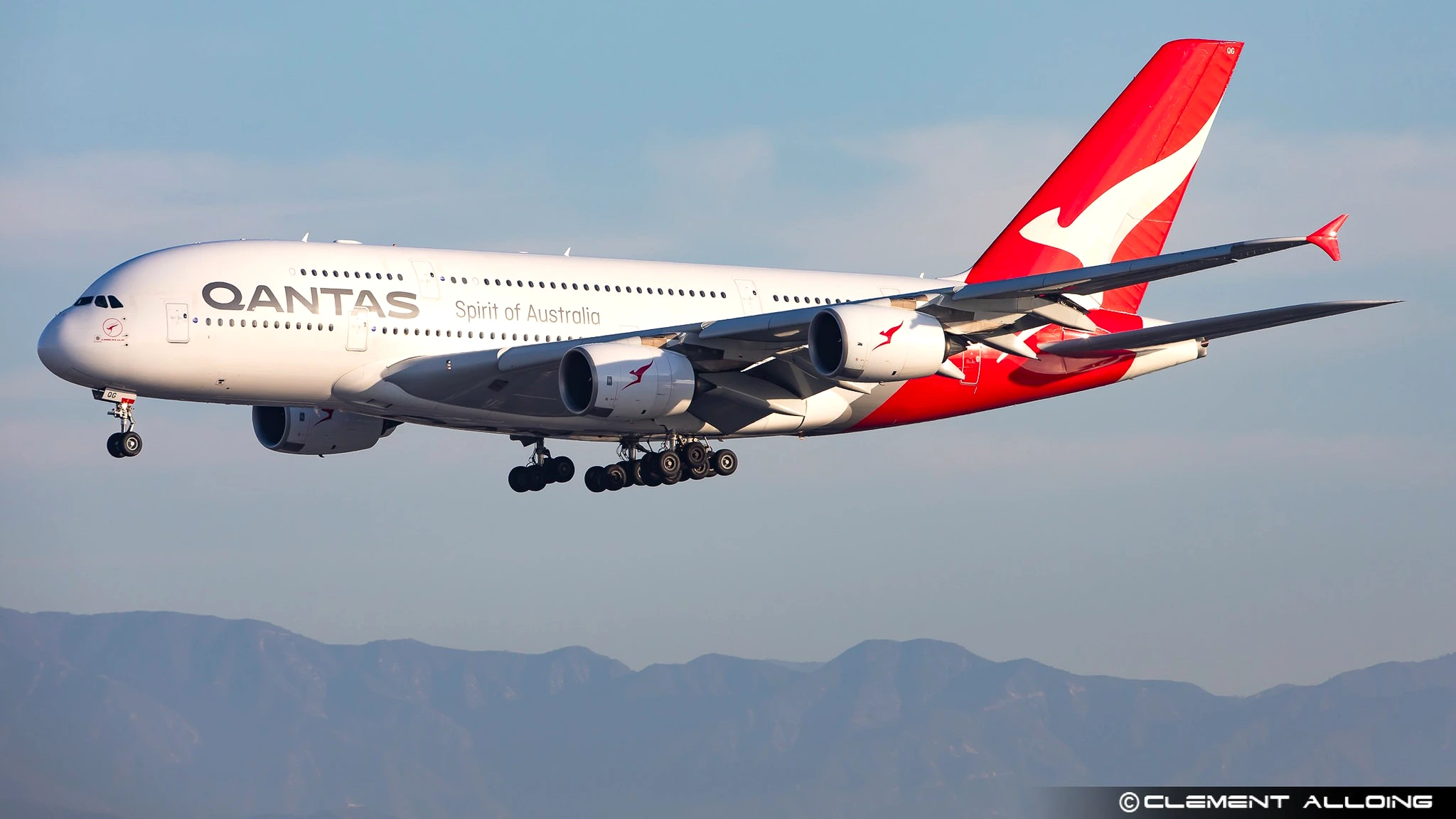
SYDNEY— Qantas Airways (QF) has introduced a mandatory tool verification step after a work light was left inside the wing of an Airbus A380 following maintenance at Sydney International Airport (SYD).
The aircraft, registered VH-OQK, later completed a round trip between Sydney and Dallas/Fort Worth International Airport (DFW) before the missing equipment was discovered.
The Australian Transport Safety Bureau (ATSB) investigated the January incident and found that existing tool-control procedures failed to detect the missing light.
No structural damage, system disruption or other adverse consequences resulted, but the incident highlighted weaknesses in safeguards designed to prevent maintenance equipment from remaining inside an aircraft.

Work Light Left Inside Wing
The incident occurred after the A380 arrived from Los Angeles for maintenance on its air conditioning system.
A four-person team, consisting of one licensed aircraft maintenance engineer and three aircraft maintenance engineers, was assigned several tasks, including replacement of an air generation unit heat exchanger sensor.
One engineer collected the required equipment from Qantas’ tool crib, including a toolbox, screw guns, and a work light assigned to VH-OQK.
Two engineers then entered the wing through a belly access panel, with one technician passing equipment to the other while the sensor replacement was completed.
The work light was switched off when the technicians exited the wing for functional testing.
However, additional troubleshooting was required after the aircraft’s auxiliary power unit failed, creating a more complex maintenance sequence before the air conditioning system eventually passed its test, Aviation Week flagged.
Qantas Changes Tool Checks
Technicians later reinstalled the access panel after inspecting the opening with a flashlight. They did not identify the work light, while the engineer who had signed out the equipment returned the task-specific tools without realizing the light remained inside the wing.
The licensed engineer subsequently certified the maintenance as complete. Two days later, a review of an unreturned-tool report revealed that the light had not been accounted for, prompting Qantas to locate the aircraft and recover it after its Dallas round trip.
Qantas’ existing procedures required maintenance staff to account for tools after completing assigned work, while licensed engineers had to verify that equipment had been returned before certifying the aircraft for service.
The ATSB noted that these measures relied heavily on human performance and lacked an effective safety net for catching errors.
ATSB Highlights Safety Risks
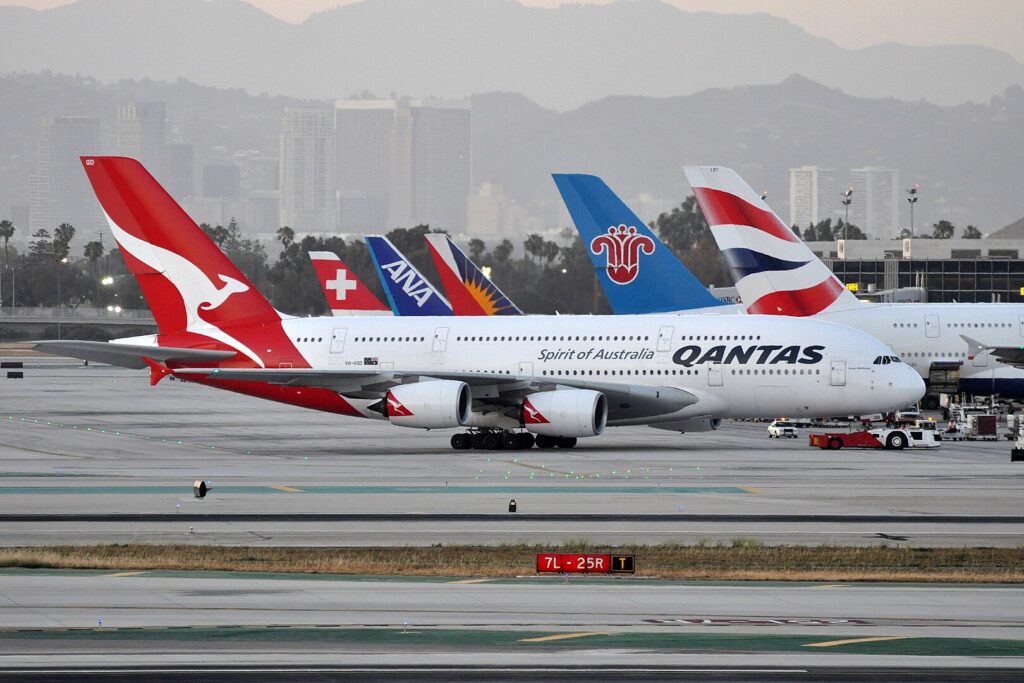
The ATSB said maintenance work can take place under operational pressure and in unpredictable conditions, increasing the possibility of human error.
It recommended that tool-control systems include stronger safeguards capable of detecting and correcting mistakes rather than relying solely on individual checks.
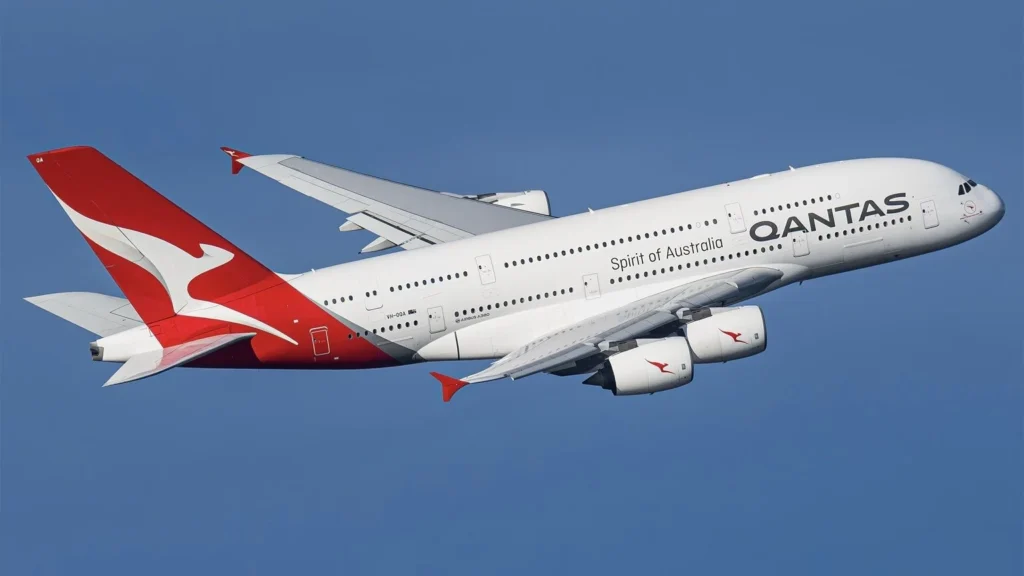
Qantas has responded by introducing a mandatory pre-clearance check confirming that all tooling has been accounted for before an aircraft returns to service.
The new step is intended to identify missing equipment earlier than the previous process, under which unreturned-tool reports were reviewed daily or at the end of shifts.
The January incident also follows a separate Qantas A380 tool-control event involving a fan-turning tool left inside an engine during maintenance in 2023. That aircraft completed 34 flight cycles before the tool was discovered, although neither incident resulted in aircraft damage.
Stay tuned with us. Further, follow us on social media for the latest updates.
Join us on Telegram Group for the Latest Aviation Updates. Subsequently, follow us on Google News
