

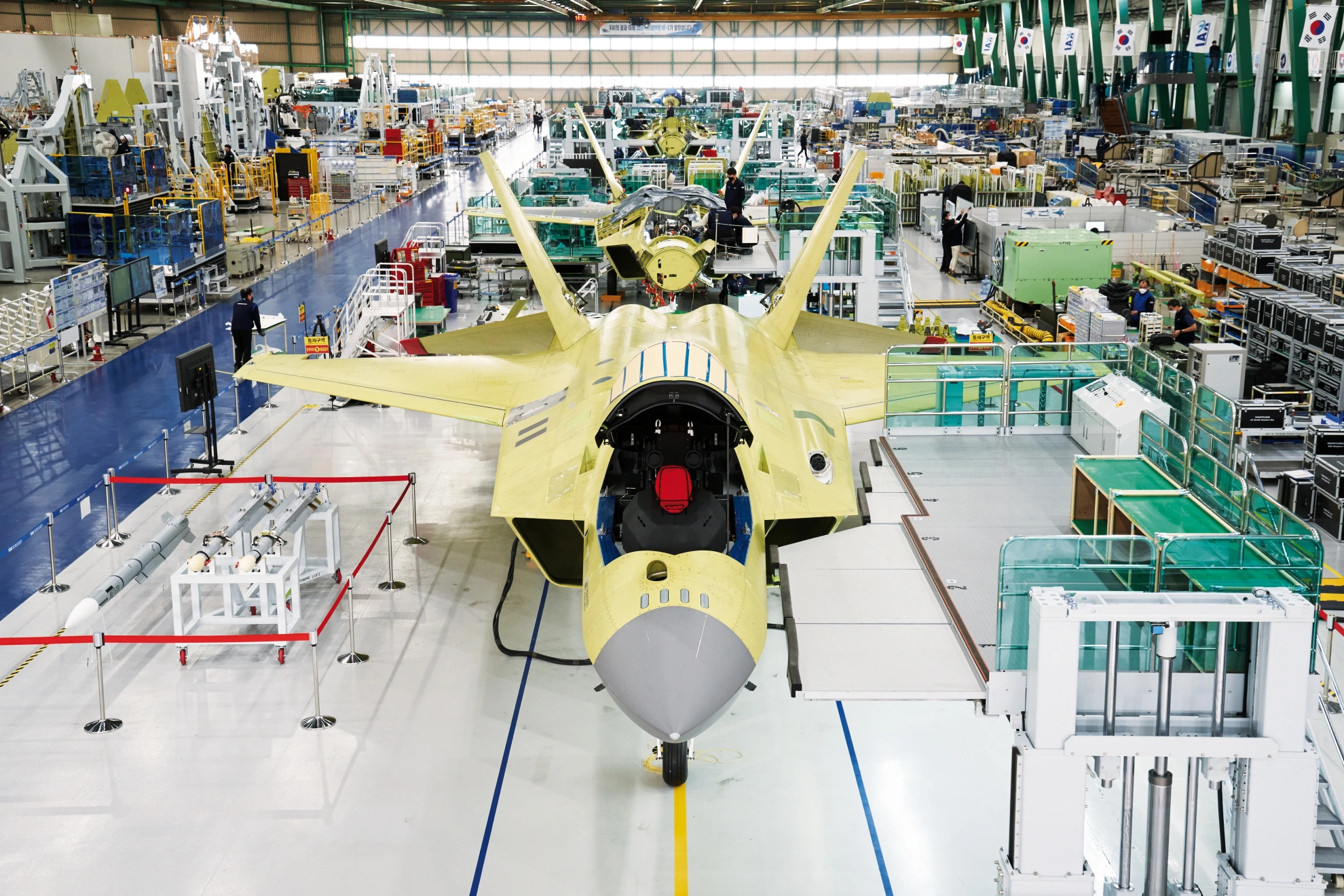
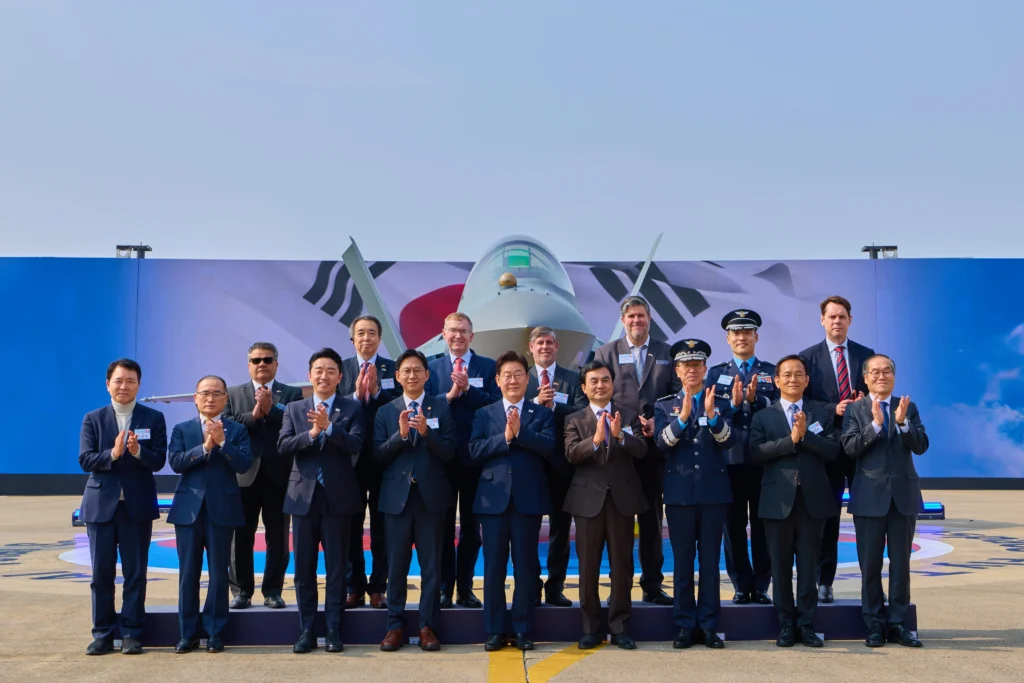
SEOUL- South Korea has rolled out the first series-produced KF-21 Boramae fighter jet, marking a major milestone in the country’s push for self-reliant defense. The ceremony took place at Korea Aerospace Industries (KAI) headquarters in Sacheon, just over five years after the prototype was unveiled in April 2021.
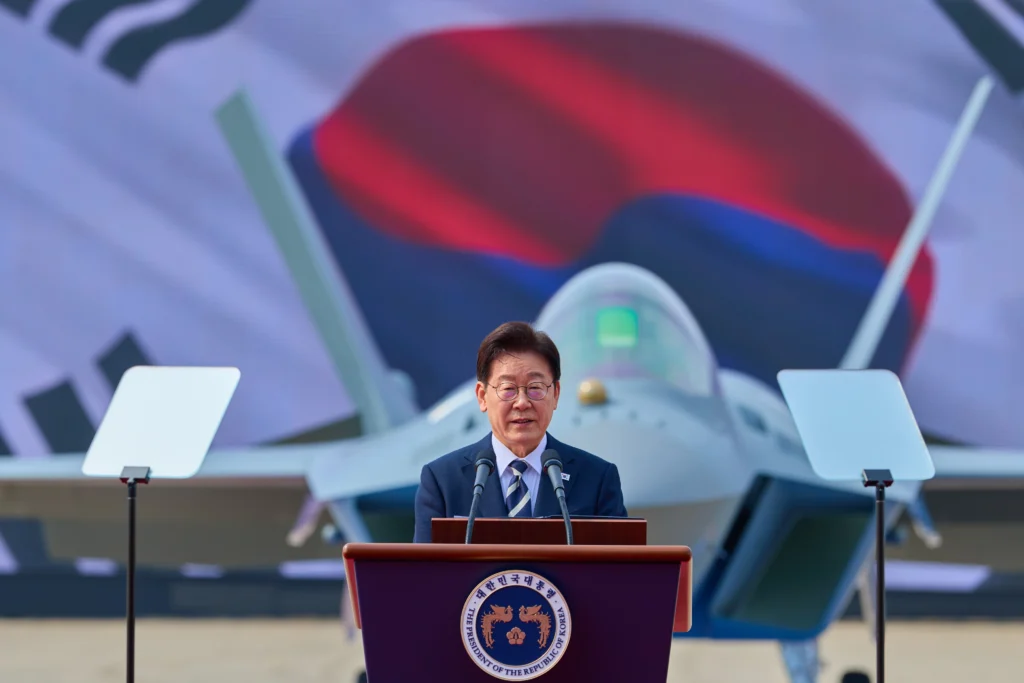
President Lee Jae Myung attended the event and reaffirmed South Korea’s goal of becoming one of the world’s top four defense powers, highlighting the KF-21 as proof that the country can now defend its skies with domestically developed technology, TWZ reported.

South Korea’s KF-21 Boramae Enters Series Production
The KF-21 program was formally launched in 2016, with the first prototype rolled out in April 2021 and its maiden flight completed in July 2022.
By May 2023, the jet was provisionally declared fit for combat. Six prototypes in total have been built and flown, including two two-seat variants.
The first series-produced example is a two-seater, reflecting the growing importance of the two-seat configuration for future crewed/uncrewed teaming missions. The Republic of Korea Air Force (ROKAF) plans to receive 40 KF-21s by 2028, with a full fleet of 120 aircraft in service by 2032.
A “4.5-Generation” Fighter by Design
South Korea deliberately positioned the KF-21 as a 4.5-generation fighter rather than a full fifth-generation platform. This decision allowed KAI to avoid the costly and time-intensive stealth-focused design processes that have delayed programs like the F-35 and Russia’s Su-57.
Unlike the F-35, the KF-21’s airframe is not primarily shaped by stealth requirements, and its sensor fusion is less advanced. However, this is a calculated trade-off.
The ROKAF already operates the U.S.-supplied F-35A for high-end missions, making a more cost-effective complementary platform practical.

Advanced Systems and Armament
Despite its 4.5-generation classification, the KF-21 carries a capable sensor and weapons suite. It features an active electronically scanned array (AESA) radar and an infrared search and track (IRST) system.
Its planned armament includes MBDA Meteor beyond-visual-range air-to-air missiles and locally developed long-range cruise missiles.
In its current form, weapons are carried externally or semi-conformally. The future Block 3 upgrade is planned to introduce internal weapons bays, moving the jet closer to fifth-generation standards. A dedicated escort jamming variant was also revealed at the rollout ceremony.
Crewed/Uncrewed Teaming and Combat Mass
South Korea is integrating the KF-21 into a broader crewed/uncrewed teaming concept.
The jet is expected to operate alongside domestically developed stealth drones, with the rear cockpit of the two-seat version accommodating a dedicated drone controller.
This approach is designed to extend combat reach and increase overall force effectiveness without the full cost of additional crewed aircraft.
Faster Than Its Rivals
The KF-21 program’s timeline stands out when compared globally. Only five years passed between the prototype rollout and the first series-produced aircraft.
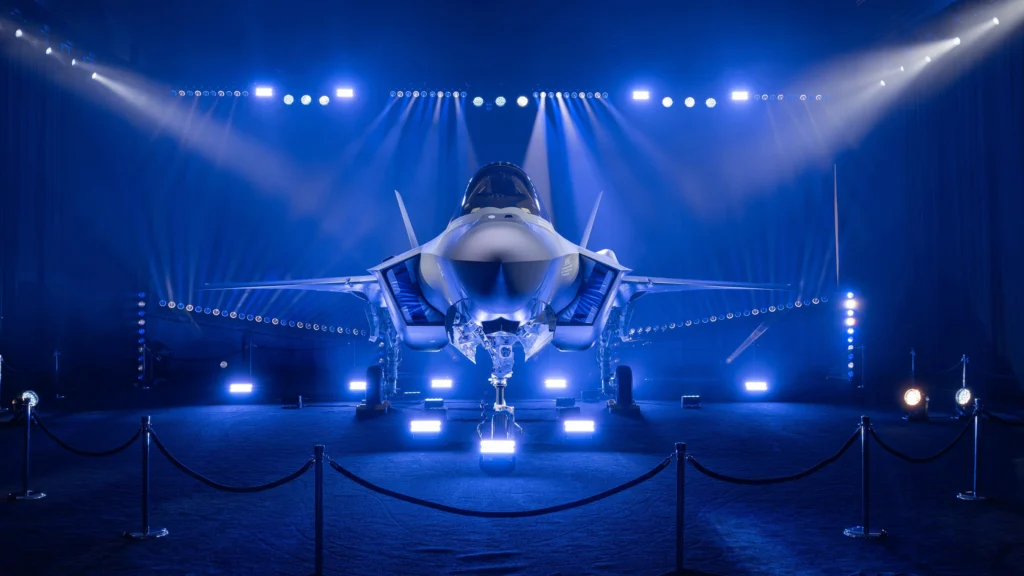
By comparison, the F-35 program saw roughly 11 years between the X-35 prototype’s first flight and the first full-production airframe.
Russia’s Su-57 took a full decade from the T-50 prototype’s first flight in 2010 to the first production aircraft in 2020.
Export Potential and Strategic Ambitions
South Korea is already in discussions to export 16 KF-21s to Indonesia, which had been a junior development partner before disputes over costs and workshares strained the relationship. President Lee indicated that Seoul would pursue additional partner nations to strengthen the competitiveness of its defense sector.
The KF-21 joins a growing list of Korean defense exports, including the K9 self-propelled howitzer, the Cheongung surface-to-air missile system, and the KAI T-50/FA-50 advanced jet trainer and light combat aircraft.
South Korea is also expanding its locally developed air-launched weapons portfolio, reducing dependence on foreign arms and bypassing restrictions such as the U.S. government’s International Traffic in Arms Regulations (ITAR).
Stay tuned with us. Further, follow us on social media for the latest updates.
Join us on Telegram Group for the Latest Aviation Updates. Subsequently, follow us on Google News
