

FORT WORTH- American Airlines (AA) is terminating flight attendants at an unusually high rate as it enforces stricter rules around reserve duty. Internal minutes from the Association of Professional Flight Attendants reveal a sharp rise in dismissals tied to crew members not being present near their assigned base, such as Dallas/Fort Worth International Airport (DFW).
Union records indicate that 59 flight attendants filed grievances in the past year after being terminated for “reserve not in position” violations. The figures suggest a growing crackdown by American Airlines as it investigates whether crew members were physically near their assigned airport when called to work.
American Airlines Firing Attendants
American Airlines has strengthened monitoring of flight attendants assigned to reserve duty, a scheduling system that requires crew members to remain available to report for work on short notice.
Under the airline’s policy, reserve flight attendants must be able to reach their assigned base within two hours. The window extends to three hours when co-terminal airports are involved.
Reserve duty exists to ensure the airline can quickly fill staffing gaps caused by delays, sickness, or operational disruptions. Flight attendants scheduled for reserve receive pay for these hours even when they are not assigned a flight.
However, many flight attendants do not live in the cities where they are based. Some travel away from their base during reserve periods and assume they will not be called for duty. If they are called while away, some attempt to call in sick or arrive late. American Airlines has increasingly treated these situations as policy violations.
Union minutes reviewed by aviation outlets show the airline has begun terminating employees for these incidents at a pace far higher than in previous years, View from the Wing reported.
Evidence Used in Investigations
The Association of Professional Flight Attendants (APFA) says the airline conducts detailed investigations when a reserve flight attendant fails to report on time or calls in sick after receiving an assignment.
Investigators may review several forms of evidence, including:
- Travel history on American Airlines and sometimes other airlines
- Activity on airline-issued tablets used by flight attendants
- Public social media posts
- Records of conversations with Flight Service staff
Union representatives say location data from company devices may reveal whether a flight attendant was outside the base city during a reserve period.
Some cases reportedly involve investigations even when a crew member did not miss a flight but was suspected of being away from the assigned base while on reserve.
Terminations Increasing Since 2022
The current enforcement effort follows earlier warnings from the airline. In 2022, American Airlines dismissed around 50 flight attendants for reserve availability violations. That figure was roughly three times the airline’s typical termination rate for similar cases.
Union leaders say management indicated that once a “trigger event” occurs, such as a missed assignment or suspicious sick call, the company may review a flight attendant’s travel records to determine whether they were outside the base city.
The union also warns that American may bypass progressive discipline and proceed directly to termination if evidence shows a reserve crew member was not positioned to report for duty.
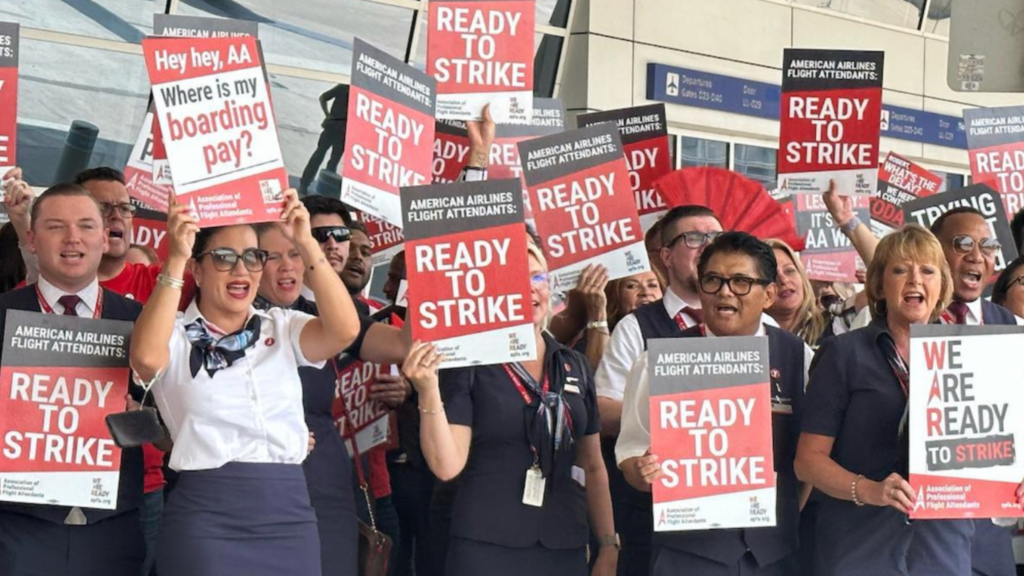
Reserve Policy and Operational Needs
Airlines rely on reserve crew members to maintain schedule reliability. When disruptions occur, airlines must quickly replace unavailable staff to avoid canceling flights.
From an operational standpoint, the requirement that reserve flight attendants remain close enough to report within two hours ensures aircraft can depart on schedule. Airlines argue that paying employees for reserve hours justifies strict enforcement of the availability rule.
At the same time, union representatives say the situation reflects broader challenges within airline staffing systems. Many crew members commute long distances between their homes and assigned bases, which increases the likelihood of conflicts with reserve availability rules.
Industry studies have also suggested that stricter discipline for illness-related absences does not necessarily improve attendance levels among airline employees.
Stay tuned with us. Further, follow us on social media for the latest updates.
Join us on Telegram Group for the Latest Aviation Updates. Subsequently, follow us on Google News
