

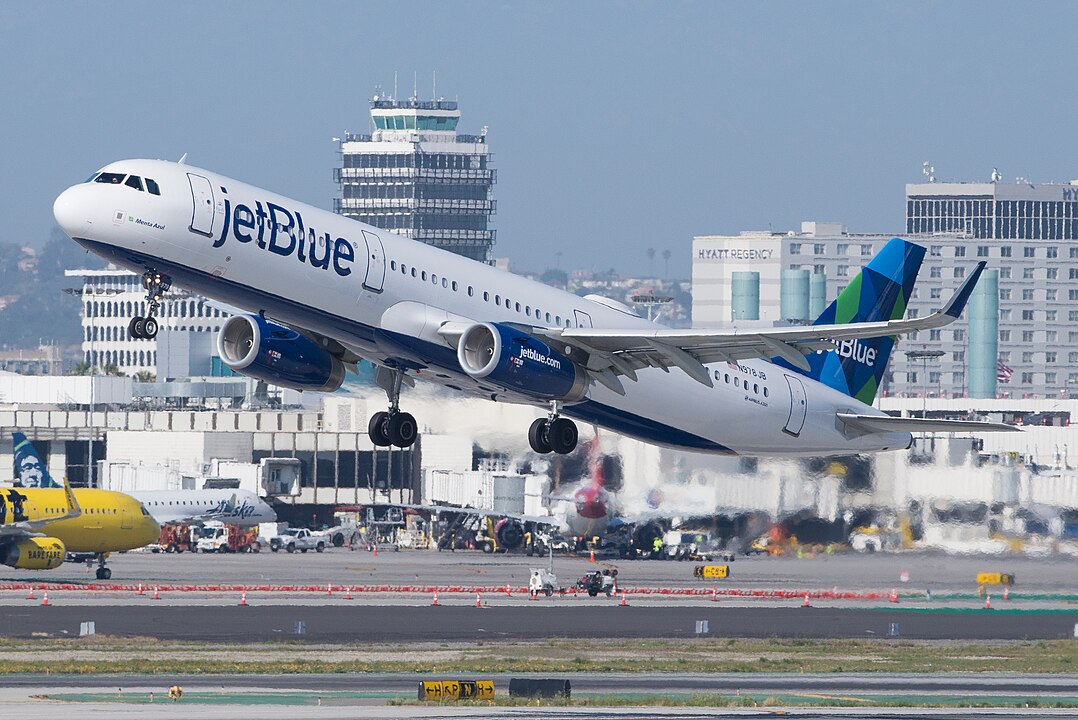
NEW YORK- JetBlue Airways (B6) CEO Joanna Geraghty says New York LaGuardia Airport (LGA) has become too expensive for the airline to operate large schedules after its multi-billion-dollar redevelopment.
The airline once operated about 50 daily flights from New York LaGuardia (LGA) but now runs only around 13, highlighting how rising airport costs are reshaping airline competition in New York.
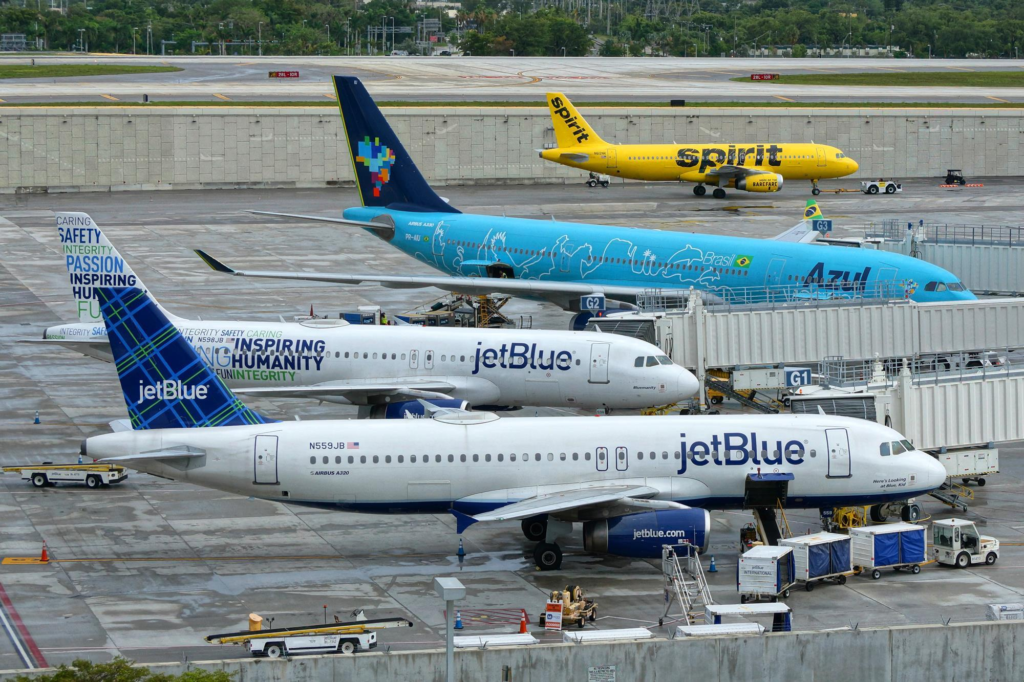
JetBlue Cuts New York LaGuardia Flights
JetBlue’s sharp reduction in flights at LaGuardia reflects a wider challenge facing low-fare airlines at major U.S. airports. Large infrastructure projects have modernized terminals and improved passenger experience, but they have also pushed airport operating costs sharply higher.
Airlines pay these costs through per-passenger fees and airport charges. For carriers that rely on low fares, such as JetBlue, these higher costs can quickly make routes unprofitable.
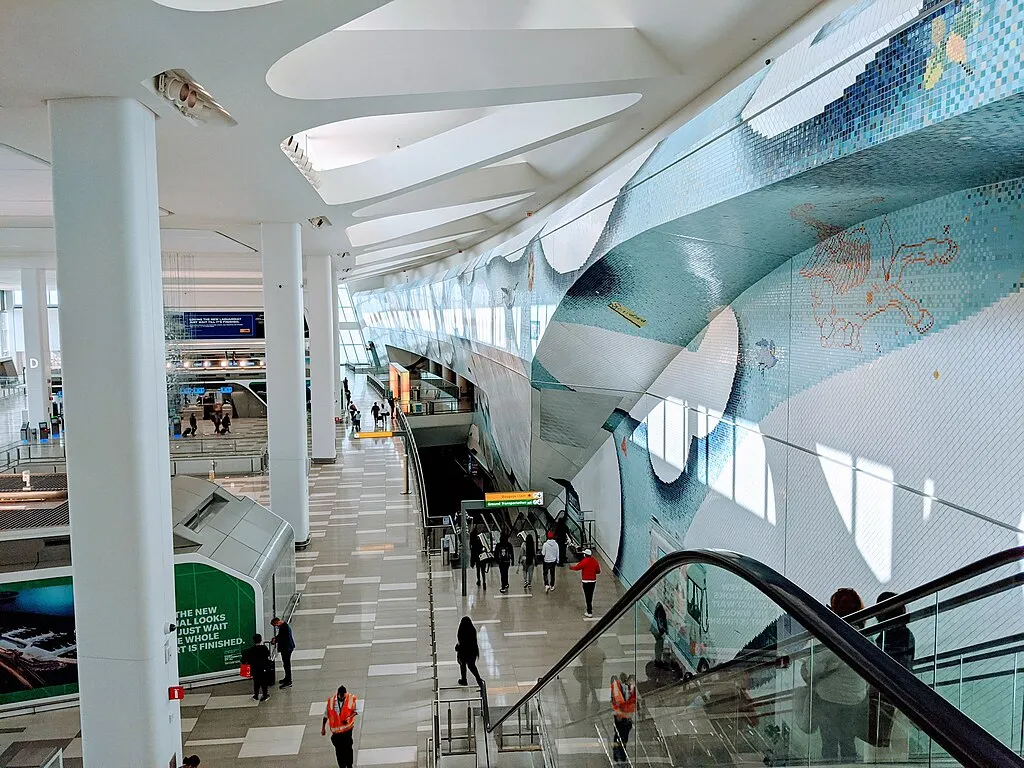
Geraghty noted that LaGuardia’s redevelopment created a modern airport with upgraded terminals, restaurants, and passenger facilities. However, the improved infrastructure also raised the cost of operating there.
JetBlue once maintained a significant presence at LaGuardia with around 50 flights per day. Today, the airline operates roughly 13 flights from the airport. The change illustrates how operating economics at premium airports can force airlines to scale back service, View from the Wing reported.
Slot Limits and Partnership Changes
Part of JetBlue’s reduction at LaGuardia also stems from regulatory and partnership changes.
Flight operations at LaGuardia are controlled by a slot system that limits the number of daily departures and arrivals. JetBlue previously operated many of its flights using slots that belonged to American Airlines (AA).
When the airline’s partnership with American Airlines ended, JetBlue lost access to many of those slots. That significantly reduced its ability to maintain a large schedule at LaGuardia.
Some of JetBlue’s current slot holdings were originally acquired through government-supported allocations, including slots distributed when US Airways sold most of its LaGuardia operations to Delta Air Lines (DL).

Newark Also Becoming Costly for Airlines
JetBlue has also raised concerns about operating costs at Newark Liberty International Airport (EWR).
According to Geraghty, Newark is now the most expensive airport in JetBlue’s network, even more costly than London Heathrow Airport (LHR). Much of the increase comes from the new Terminal A redevelopment project.
The upgraded terminal improved passenger facilities, but it also increased airport charges paid by airlines. Low-fare carriers struggle in such environments because their business model depends on selling lower-priced tickets.
If airport costs approach $50 per passenger, it becomes difficult for airlines to profit on fares as low as $99.
High-Cost Airports Favor Premium Airline Models
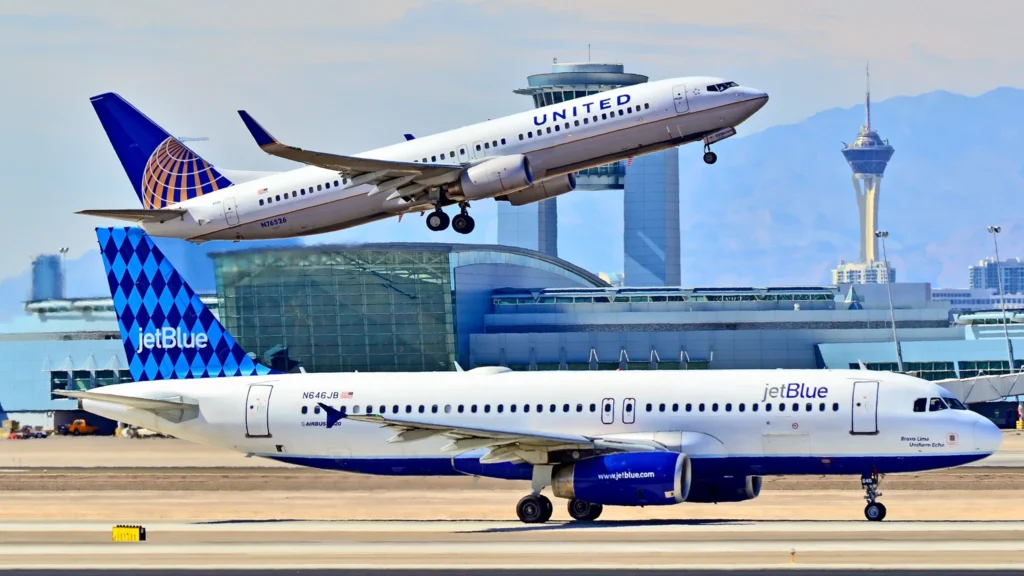
Airports with high operating costs often favor airlines that rely on premium passengers or large credit card revenue streams.
Premium travelers pay higher fares, which helps airlines absorb airport costs. Credit card partnerships also generate billions in revenue for major airlines, providing another financial buffer.
JetBlue historically lagged in both areas. The airline introduced its premium Mint cabin only on a limited portion of its fleet and did not develop a strong premium loyalty ecosystem for many years.
As a result, JetBlue has had less credit card revenue than similarly sized competitors. Alaska Airlines (AS), for example, has generated significant credit card income for decades despite having a comparable size.
Infrastructure Delays Are Driving Airport Costs Higher
The broader issue extends beyond airline strategy. Major infrastructure projects in the United States now take far longer to build and cost far more than in previous decades.
The Empire State Building was completed in just 410 days during the early 1930s. By contrast, modern airport projects often require a decade or more.
The new Terminal One project at New York John F. Kennedy International Airport (JFK) is expected to take about ten years to complete. The Landside Access Modernization Project at Los Angeles International Airport (LAX) has a similar timeline.
Planning, environmental review, and permitting processes can add years before construction even begins.

Environmental Reviews and Regulatory Processes Add Delays
Large infrastructure projects in the United States must pass through multiple layers of regulatory approval.
The National Environmental Policy Act requires environmental impact statements, public comment periods, and potential legal challenges. These steps can extend timelines and raise project costs.
If courts determine that an environmental analysis is insufficient, the process may have to restart. Multiple federal and state agencies must also coordinate reviews, which can slow decision-making.
These procedures were designed to ensure transparency and environmental protection. However, critics argue they now create excessive delays that make infrastructure projects more expensive and difficult to complete.
Expensive Airports Could Reduce Airline Competition
Rising infrastructure costs are reshaping the airline industry’s competitive landscape.
Airports with very high operating costs often favor airlines with premium business models and strong financial partnerships. Low-fare carriers struggle to maintain service when airport charges rise too high.
If these trends continue, fewer airlines may be able to operate profitably at major metropolitan airports such as LaGuardia, Newark, and JFK.
That could reduce competition and make low fares harder to sustain in some of the country’s busiest aviation markets.
Stay tuned with us. Further, follow us on social media for the latest updates.
Join us on Telegram Group for the Latest Aviation Updates. Subsequently, follow us on Google News
