

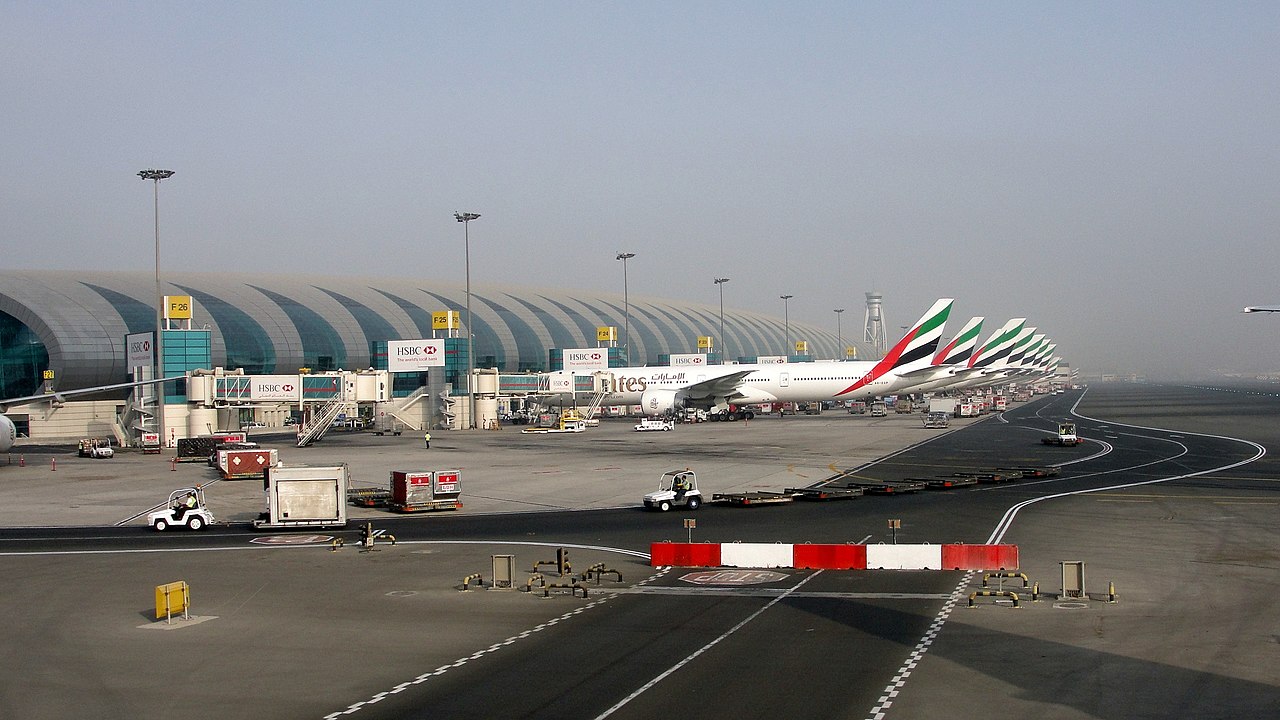
DUBAI, UAE- Dubai International Airport (DXB) confirmed minor structural damage and four staff injuries following an incident on March 1, 2026, during heightened regional hostilities. Emirates (EK) and other carriers temporarily suspended operations as safety assessments began.
The disruption at Dubai International Airport (DXB) and references to Zayed International Airport, Abu Dhabi (AUH) came amid reported Iranian strikes linked to tensions involving the United States and Israel, triggering airspace closures across parts of the Gulf.
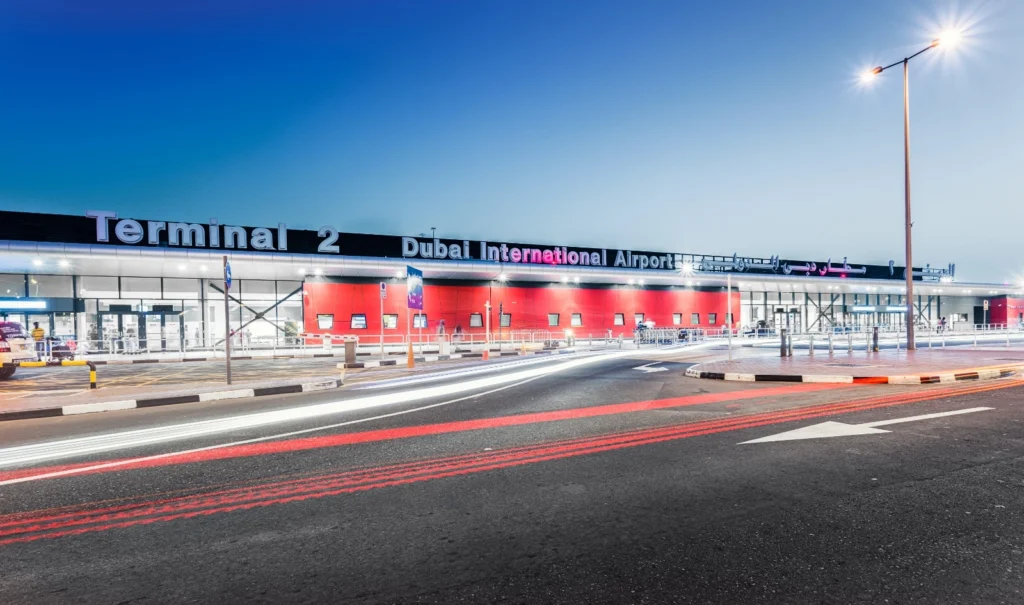
Dubai Airport Suffers Minor Damage
Dubai Airports stated that the early morning incident resulted in minor damage to a concourse area at DXB. Four airport staff members sustained injuries and received immediate medical attention. Authorities confirmed the situation was contained quickly through established emergency response protocols.
Emergency teams were deployed without delay. Passenger areas in affected sections were cleared as part of contingency procedures designed for security threats and infrastructure risks. Officials emphasized that these measures limited casualties and prevented wider disruption inside terminals.
While initial official statements did not specify the exact cause, multiple international media outlets linked the incident to overnight Iranian missile activity targeting strategic locations in the Gulf. Reports indicated that both DXB and AUH were referenced among potential aviation-related targets during the escalation.
Dubai’s media office confirmed only minor structural impact and four injuries, without attributing the damage directly to a confirmed strike.
Operational Impact Across UAE Airports
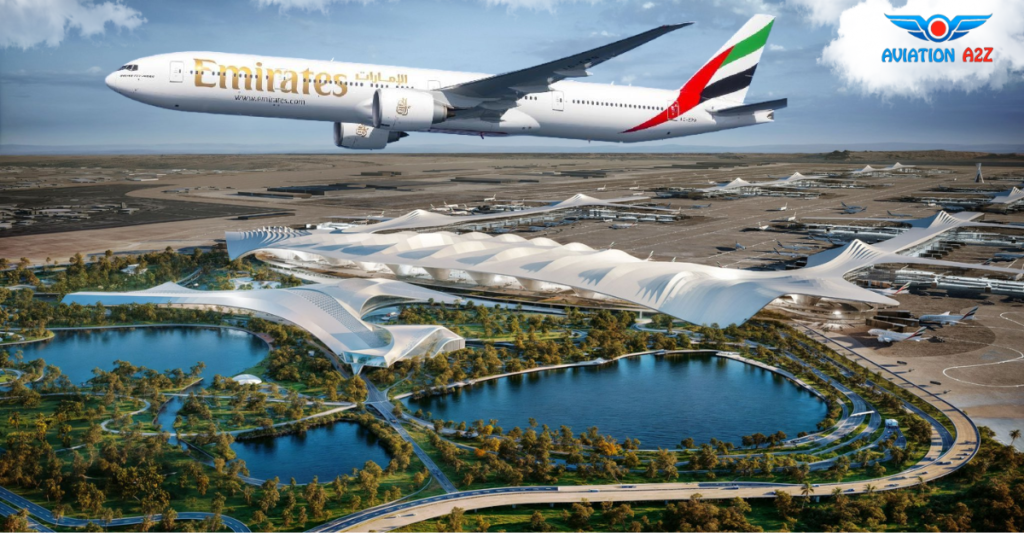
Following the incident, operations at Dubai International Airport (DXB) and Al Maktoum International Airport (DWC) were suspended pending safety reviews. Zayed International Airport (AUH) in Abu Dhabi also faced operational disruptions.
Airspace closures across parts of the UAE and neighboring countries forced airlines to cancel, delay, or reroute flights. Emirates (EK), along with other regional and international carriers, grounded aircraft or adjusted schedules to avoid restricted corridors.
The disruption extended beyond the UAE. Airlines across Europe, Asia, and North America modified long-haul routes that rely on Gulf transit hubs. The ripple effect demonstrated the interconnected nature of global aviation networks, where even localized incidents can cause widespread operational consequences.
Passenger Experience and On-Ground Response
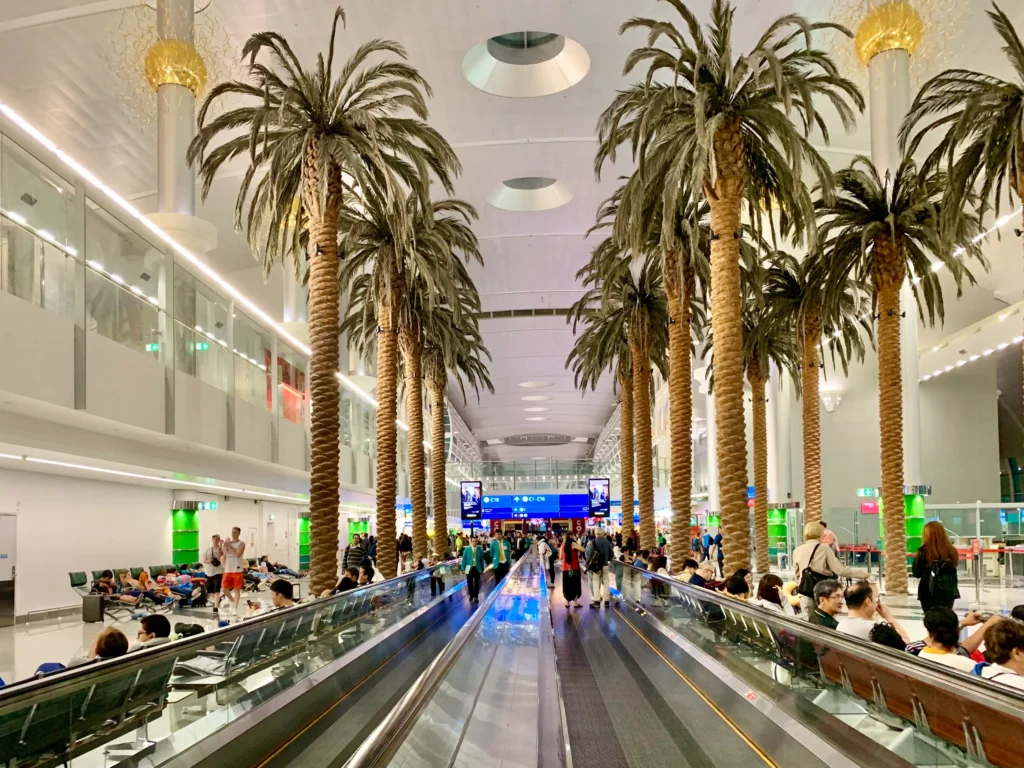
Eyewitness accounts described smoke and debris near sections of the airport complex. Social media posts showed rapid evacuation procedures in terminal areas, with security personnel directing travelers away from impacted zones.
Dubai Airports confirmed that most passenger areas had already been cleared as a precaution. The activation of emergency protocols reduced exposure to risk and ensured medical teams reached injured staff quickly.
Authorities stated that updates would follow as investigations continued. No additional injuries were reported in the initial confirmation.

Strategic Role of DXB in Global Aviation
Dubai International Airport (DXB) ranks among the world’s busiest international passenger hubs. It connects major long-haul markets across Europe, Asia, Africa, and the Americas. Emirates (EK) operates a significant share of its global network through DXB, making the airport a critical transit node.
Any operational disruption at DXB carries international implications. Flight suspensions, airspace closures, and safety inspections affect cargo flows, connecting traffic, and airline scheduling worldwide.
The March 1, 2026, incident highlights the vulnerability of civilian aviation infrastructure during regional military escalation. It also underscores the importance of rapid response systems, coordinated airspace management, and contingency planning to protect passengers and staff.
Stay tuned with us. Further, follow us on social media for the latest updates.
Join us on Telegram Group for the Latest Aviation Updates. Subsequently, follow us on Google News
