


DELHI- France and India have inaugurated a new Airbus helicopter assembly line in India, marking a major step in bilateral aerospace cooperation and local defense manufacturing growth.
The facility will produce Airbus Helicopters H125 models for domestic and regional demand while discussions continue around India’s potential purchase of additional Rafale fighter jets.
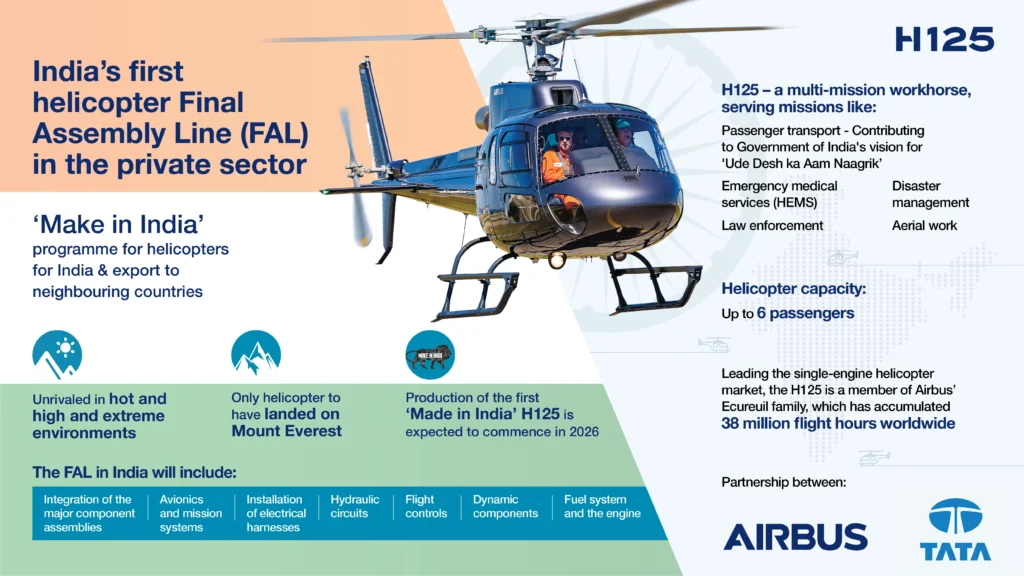
India Inaugurates H125 Assembly Line
French President Emmanuel Macron and Indian Prime Minister Narendra Modi virtually inaugurated the Airbus Helicopters H125 assembly line, developed through a partnership between Airbus and Tata Advanced Systems.
The event was conducted from Mumbai, while the production facility is located in Vemagal, Karnataka.
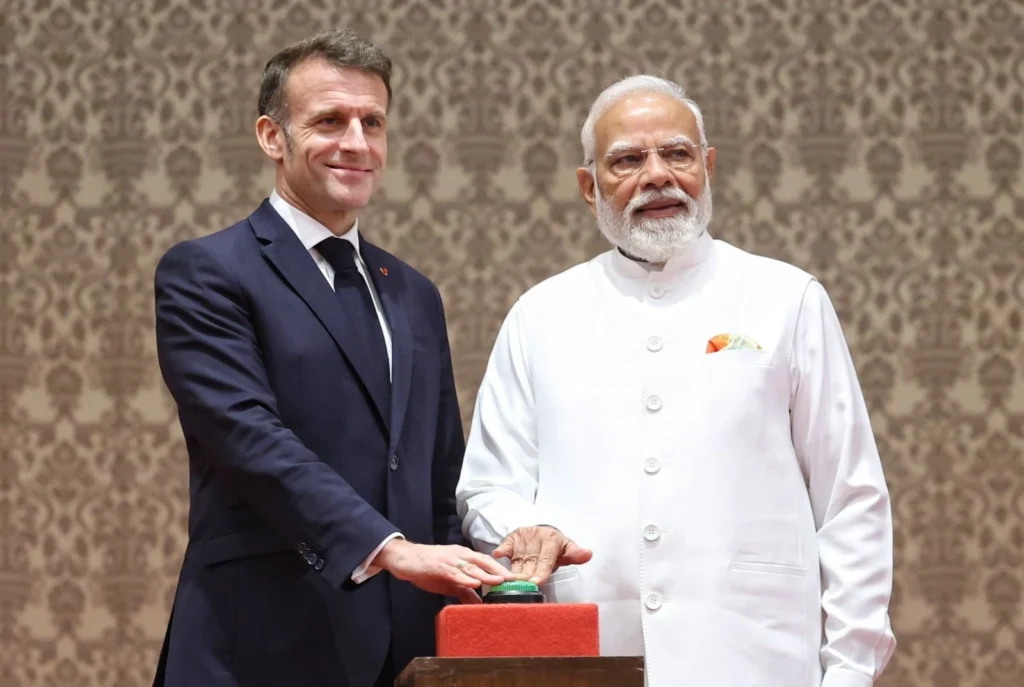
The facility represents India’s first private sector helicopter production line. It aligns with India’s Make in India policy aimed at strengthening domestic defense and aerospace manufacturing capabilities.
India’s Defense Minister Rajnath Singh highlighted the strength of bilateral cooperation, noting that the H125 is widely recognized as one of the most reliable single-engine helicopters globally.
Senior leaders present at the assembly line facility included Defence Minister Rajnath Singh, French Minister of the Armed Forces and Veterans Affairs Catherine Vautrin, Civil Aviation Minister K R Naidu, and Karnataka’s Minister for Large and Medium Industries M B Patil. Senior defence officials, including the Chief of the Air Staff and Defence Ministry leadership, also attended the event.
The inauguration also showcased the rollout of the first locally produced H125 helicopter, displayed in military camouflage colors. However, India has not yet confirmed an order for the H125M military variant.
Airbus previously stated that the production line will address both Indian market needs and export opportunities across neighboring regions.
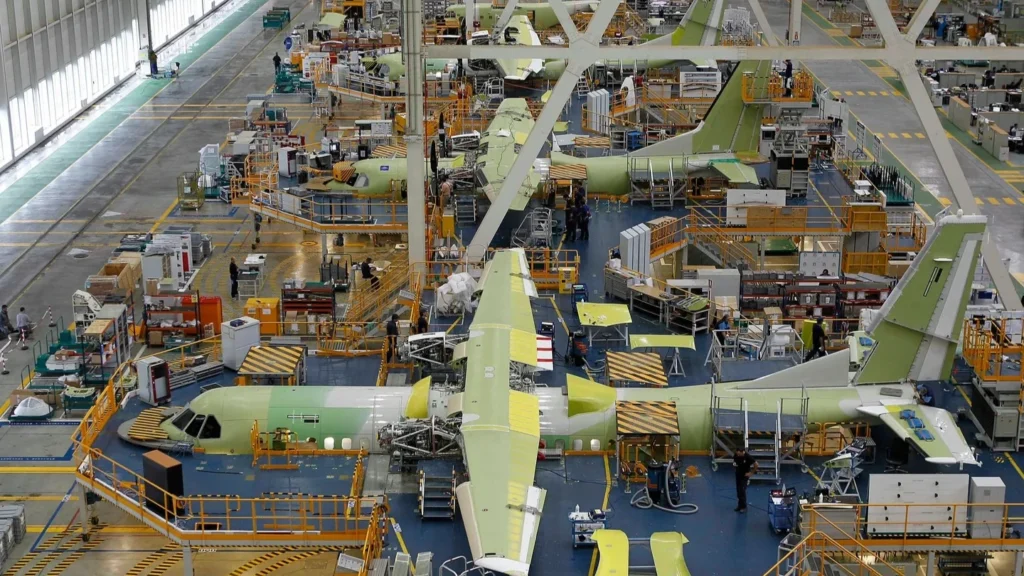
Tata and Airbus Strengthen Industrial Partnership
Tata Advanced Systems already collaborates with Airbus in producing C295 tactical transport aircraft in India.
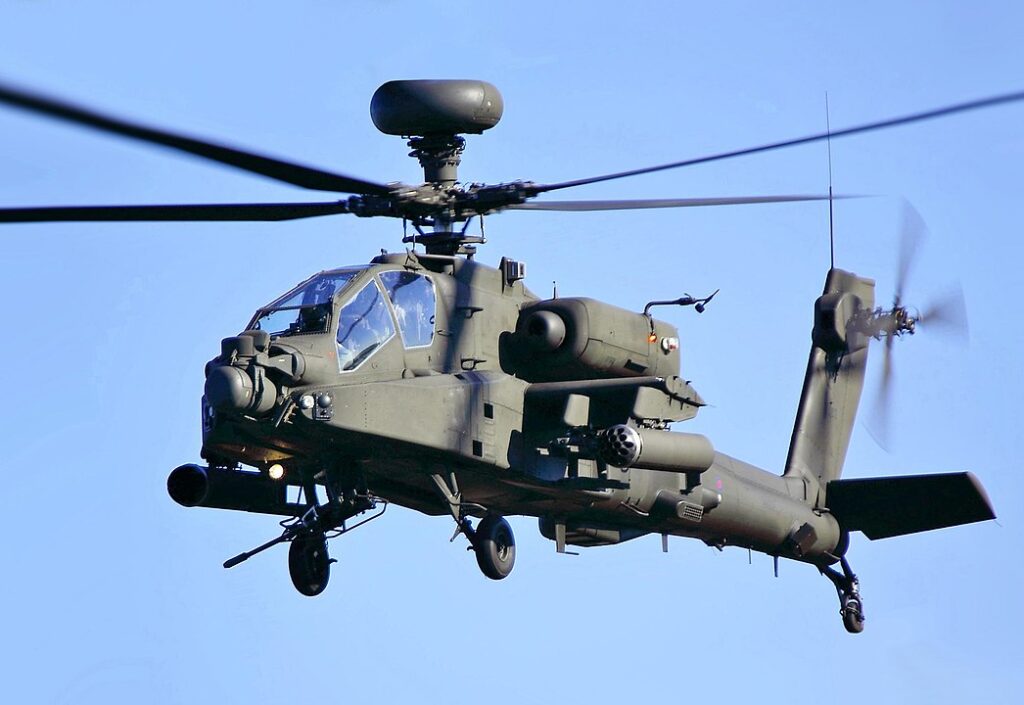
The company also supplies aerostructure components for global rotorcraft programs, including fuselage sections for Boeing AH-64 Apache and Sikorsky S-92 helicopters.
This experience strengthens India’s role in the global aerospace supply chain while expanding local industrial expertise in helicopter manufacturing.
Defense Agreements Extend Beyond Helicopters
During the visit, Bharat Electronics and Safran also signed an agreement to establish a joint venture to manufacture AASM Hammer precision-guided munitions in India, further deepening defense industrial cooperation.
The joint statement from both governments also welcomed India’s ongoing procurement of 26 Rafale M fighters for naval operations. Plans also include establishing maintenance, repair, and overhaul facilities in India for the Rafale’s M88 engine.
Both nations expressed interest in expanding cooperation in fighter aircraft and engine manufacturing under India’s domestic production initiatives.
Role of the Private Sector in Defense Manufacturing
India’s defence sector historically relied on public sector enterprises due to large capital requirements and long project timelines. Recent policy reforms, including corporatisation of ordnance factories, liberalized investment policies, and creation of defence industrial corridors, have encouraged private sector participation.
Private industry now accounts for nearly a quarter of India’s defense production, while exports have grown significantly. More than 16,000 micro, small, and medium enterprises support the defense supply chain, supplying components and systems to both domestic and international companies.
Officials encouraged global manufacturers to deepen cooperation with Indian firms through technology transfer and joint development programs.
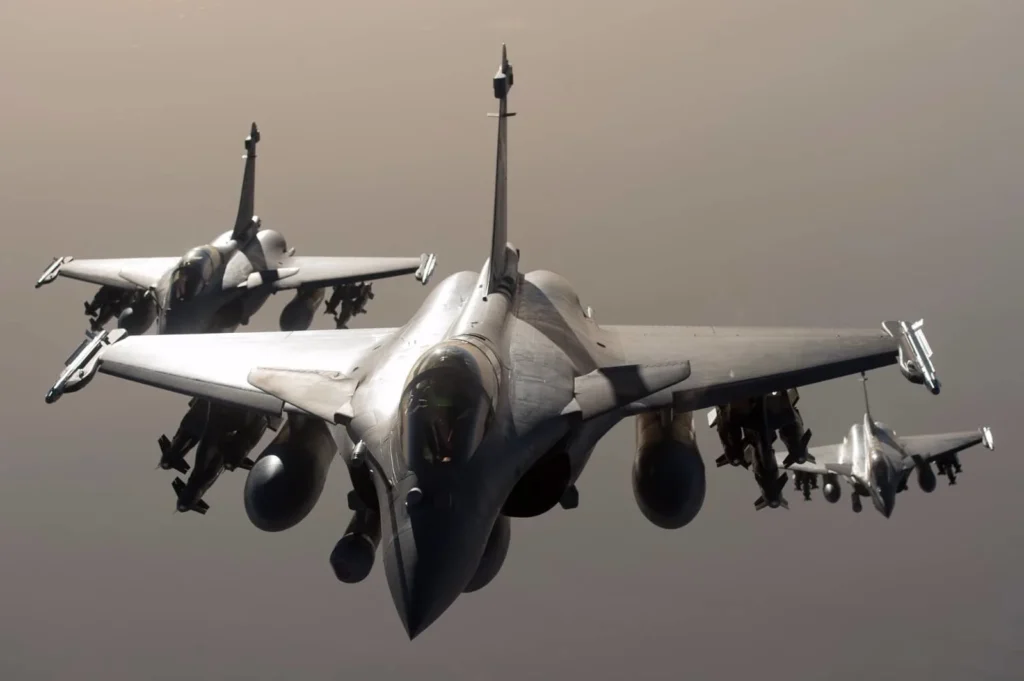
Rafale Fighter Procurement Still Under Review
India’s Defence Acquisition Council recently granted Acceptance of Necessity approval covering several arms purchases, including fighter aircraft requirements linked to the Rafale platform.
This approval allows the government to proceed with procurement procedures, including vendor selection and contract negotiations.
India previously selected the Rafale in 2012 under its Medium Multi-Role Combat Aircraft program, but negotiations collapsed in 2015 due to disagreements over cost, technology transfer, and local production responsibilities.
The renewed cooperation signals potential progress, though no new Rafale contract has yet been announced.
Stay tuned with us. Further, follow us on social media for the latest updates.
Join us on Telegram Group for the Latest Aviation Updates. Subsequently, follow us on Google News
