


ADDIS ABABA- Ethiopian Airlines (ET) plans to launch direct flights to Australia by 2028, linking Addis Ababa Bole International Airport (ADD) with an Australian gateway.
The expansion will make Ethiopian Airlines the only African carrier with direct operational presence on all six inhabited continents.
The Australia route strengthens Addis Ababa as Africa’s leading aviation hub while reinforcing Ethiopia’s economic growth, trade integration, and global influence.

Ethiopian Airlines Australia Direct Flights by 2028
Ethiopian Airlines has confirmed plans to enter the Australian market in 2028, closing the final continental gap in a network that already spans Africa, Europe, Asia, North America, and South America.
If realised, the airline will become the only African carrier with direct operational presence on every continent, marking both a symbolic and commercial milestone.
According to African Leadership Magazine, the move reflects aviation ambition aligned with Ethiopia’s broader economic trajectory.
For Ethiopian Airlines, the Australia route completes a long-held strategic objective. Network expansion enhances its global brand positioning, strengthens its role within Star Alliance, secures high value corporate travel contracts, and integrates intercontinental cargo flows into a seamless global system.
Direct Africa to Australia connectivity also reduces reliance on Middle Eastern transit hubs and offers competitive alternatives for trade and tourism flows between Africa and the Asia Pacific region.
Fleet Strategy and Aircraft Constraints
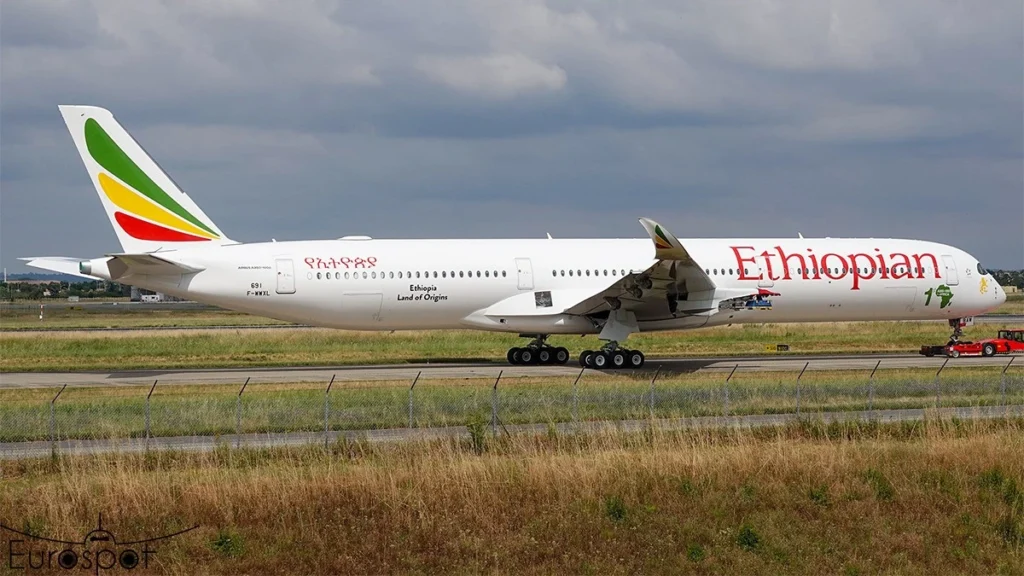
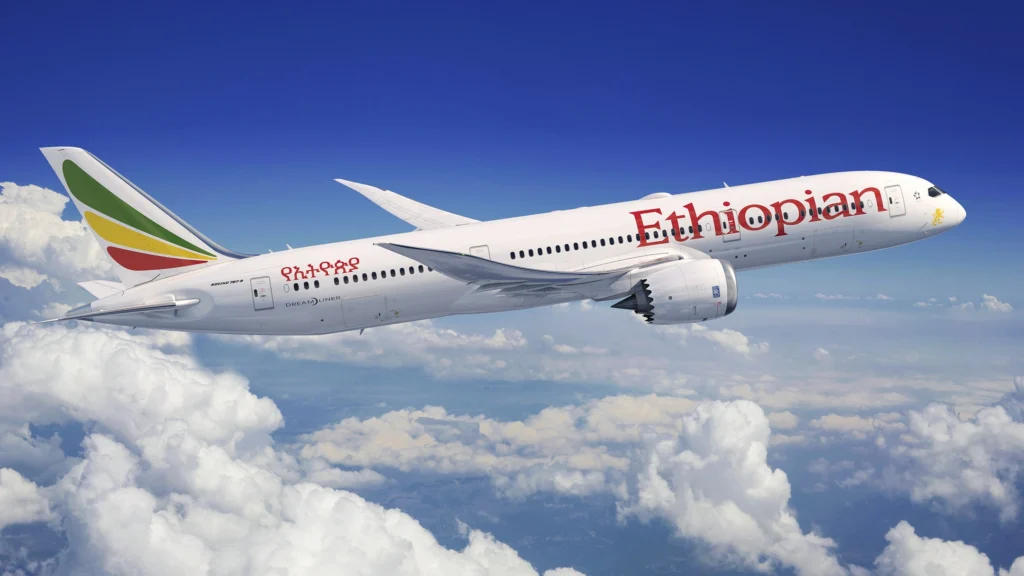
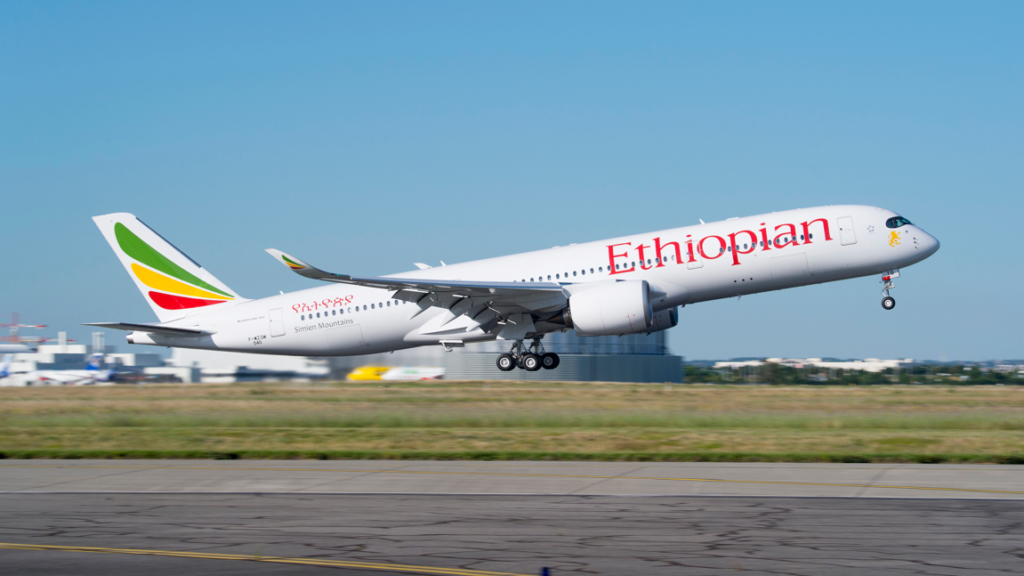
The airline operates a modern and diversified fleet anchored by Africa’s largest Boeing 787 Dreamliner fleet, supported by Airbus A350 aircraft and Boeing 737 Max jets.
While narrow-body deliveries continue through 2027, these aircraft cannot support ultra-long-haul Africa to Australia operations.
Chief Executive Officer Mesfin Tasew confirmed that at least two large wide-body aircraft are required to launch the route.
Delivery timelines from manufacturers extend beyond two years, with suitable aircraft not expected before 2028.
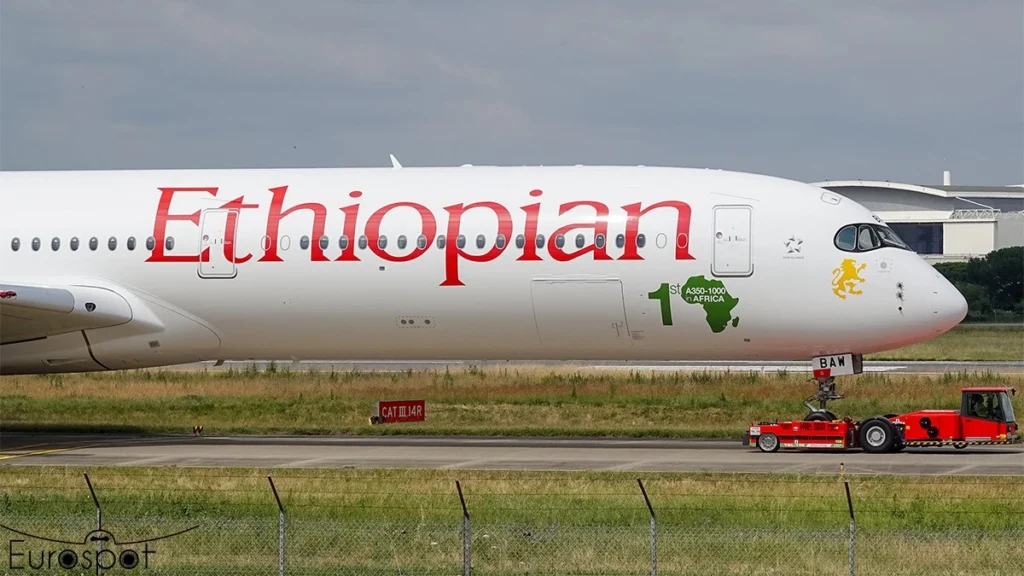
The airline is exploring leasing options as an interim solution. Long-haul deployment will require aircraft such as the Airbus A350-1000, combined with payload range optimisation, precise fuel planning, and strong connecting passenger feed from Africa and Europe.
Two Australian cities have been shortlisted, though final selection depends primarily on aircraft availability.
Financial Strength and Network Scale
Ethiopian Airlines remains Africa’s largest and most financially resilient carrier. It reported $7.6 billion in revenue for FY2024/25, an 8 percent increase, after carrying more than 19 million passengers.
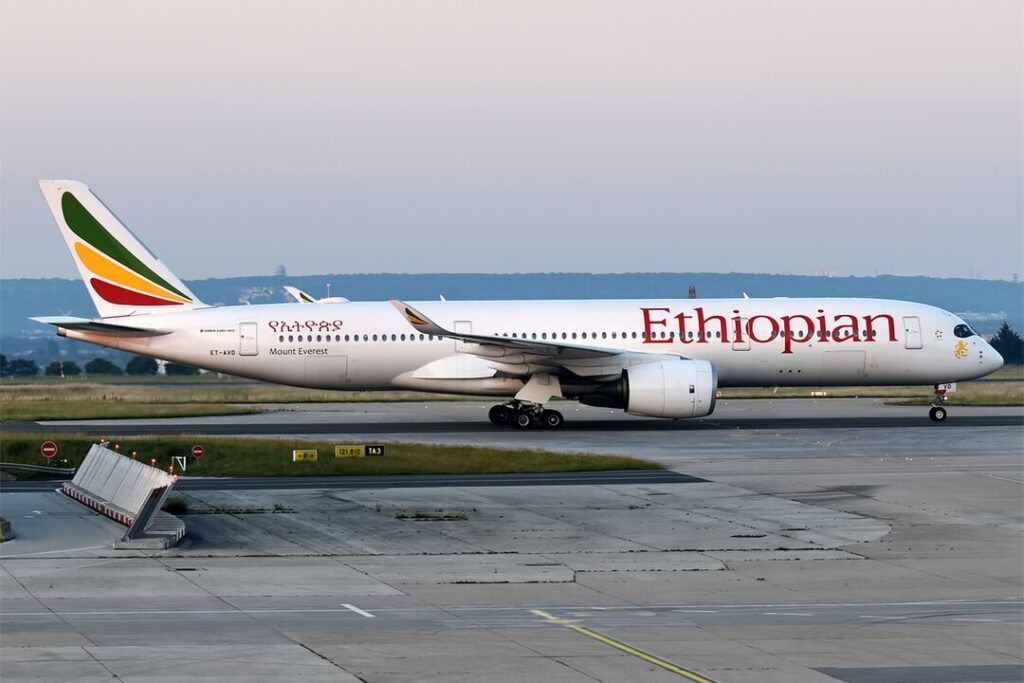
The airline operates 145 aircraft across 145 global destinations, including over 65 cities within Africa.
It transported more than 785,000 tonnes of cargo and added 13 new aircraft during the fiscal year.
Half-year revenue in FY2025/26 rose 14 percent year on year to $4.5 billion, reflecting sustained profitability in a volatile industry.
The airline targets over 270 aircraft and 67 million annual passengers by 2035. Unlike regional peers such as Kenya Airways and South African Airways, Ethiopian Airlines has maintained state ownership while preserving managerial autonomy.
This governance structure supports long-term planning, disciplined reinvestment, and consistent fleet modernisation.
Ethiopia’s Economic Transformation
Ethiopia’s economy is projected to reach between $205 billion and $210 billion in 2025, growing at 6.5 to 7 percent annually. With a population of approximately 125 million and a GDP per capita of $1,650, aviation contributes an estimated 5 to 7 percent of the national GDP.
Ethiopian Airlines serves as the country’s largest foreign exchange earner and supports more than 500,000 direct and indirect jobs.
During the COVID 19 crisis, it pivoted rapidly to cargo operations, converting passenger aircraft to transport medical supplies and personal protective equipment across continents.
This shift sustained foreign currency inflows when other sectors stalled, positioning the airline as a macroeconomic stabiliser.
Cargo operations have become the logistics backbone of Ethiopia’s export-led industrialisation. The airline supports horticulture, textiles, pharmaceuticals, and emerging manufacturing sectors.
Its growth aligns with national investments in railways, industrial parks, and manufacturing zones, reinforcing a coordinated development model.

Infrastructure Expansion and Hub Ambition
Addis Ababa Bole International Airport (ADD) currently handles up to 25 million passengers annually.
A $12.5 billion mega airport project is underway to expand capacity to between 60 and 100 million passengers, positioning Addis Ababa as a potential competitor to global hubs such as Dubai and Istanbul. Domestic airport upgrades further strengthen national connectivity.
This infrastructure expansion mirrors the airline’s growth trajectory. The integrated model includes cargo services, maintenance, repair, and overhaul operations, an aviation academy, catering services, and ground handling.
This diversified ecosystem insulated the airline during global shocks and supports sustained expansion.
Historical Evolution and Strategic Discipline
Founded in 1945 with technical assistance from Trans World Airlines, Ethiopian Airlines has remained majority Ethiopian-owned. Early decades focused on aggressive local training and rapid jet adoption.
During the liberalisation and state transitions of the 1990s, when many African carriers collapsed, Ethiopian Airlines maintained operational discipline and financial stability.
Its modern transformation was shaped by the Vision 2010 and Vision 2025 strategies, both achieved ahead of schedule.
Early adoption of the Boeing 787 and Airbus A350, alongside diversification into cargo, training, and maintenance, strengthened resilience and global competitiveness.
Trade Integration and Long-Term Outlook
Africa to Asia Pacific trade continues to expand across agriculture, minerals, pharmaceuticals, and tourism.
Direct connectivity to Australia will facilitate export flows and strengthen tourism corridors. The route also enhances Ethiopia’s geopolitical visibility and soft power.
Aircraft delivery bottlenecks, engine shortages, fuel costs, currency pressures, and geopolitical risks remain constraints.
However, the strategic direction is clear. The Australia expansion by 2028 completes a continental circuit decades in development and reinforces Ethiopian Airlines as a global aviation power.
Stay tuned with us. Further, follow us on social media for the latest updates.
Join us on Telegram Group for the Latest Aviation Updates. Subsequently, follow us on Google News
