

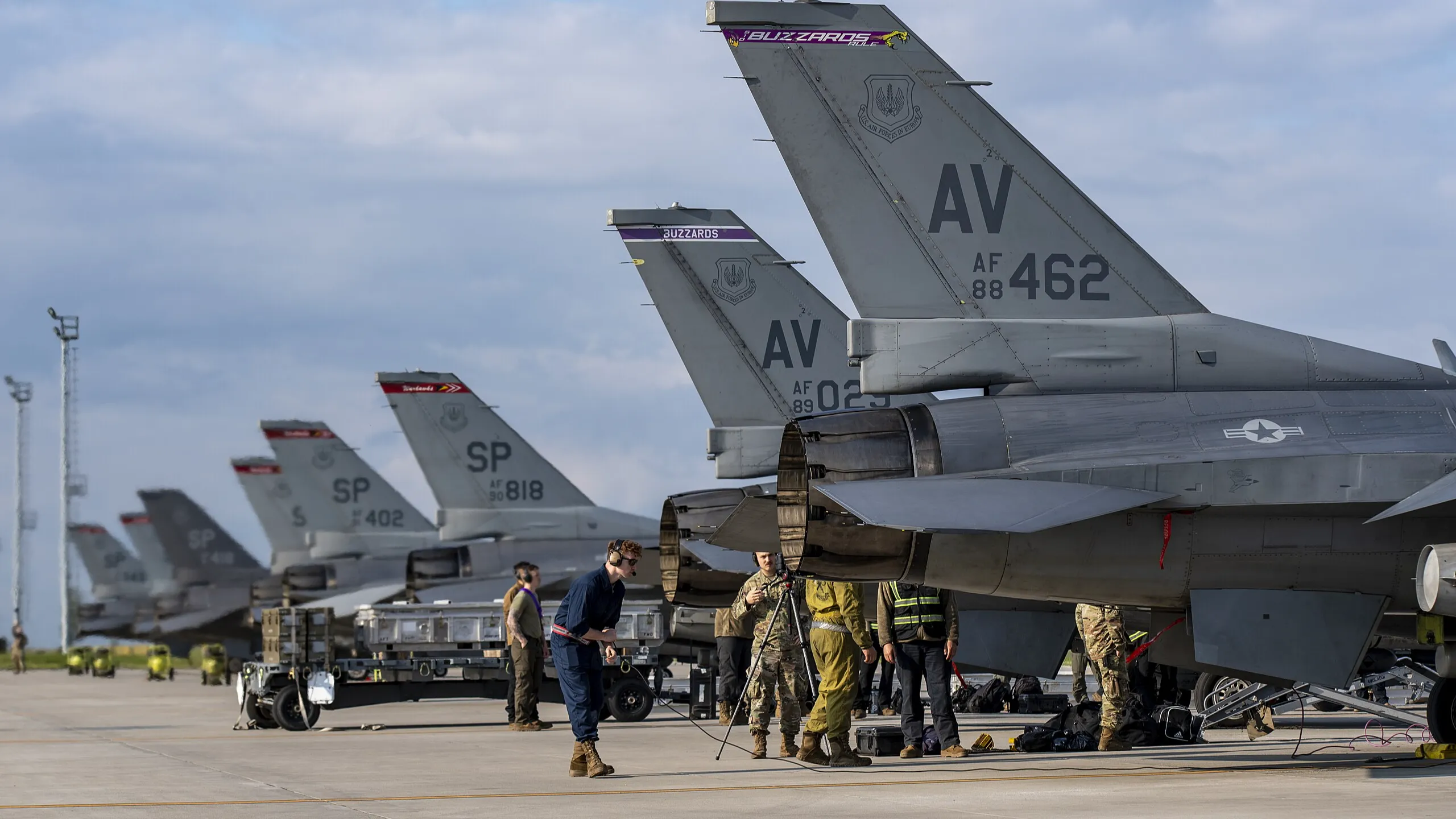
BRUSSELS- The US Department of Defense (DoD) has contracted Sabena Aerospace to maintain European F-16 fighter jet engines and manage materials supporting Ukraine’s growing fleet.
The agreement funds intermediate and depot-level maintenance for donated aircraft, strengthening Ukraine’s air defense capacity as more F-16s enter service.
Sabena Aerospace to Support Ukraine’s Incoming F-16 Fleet
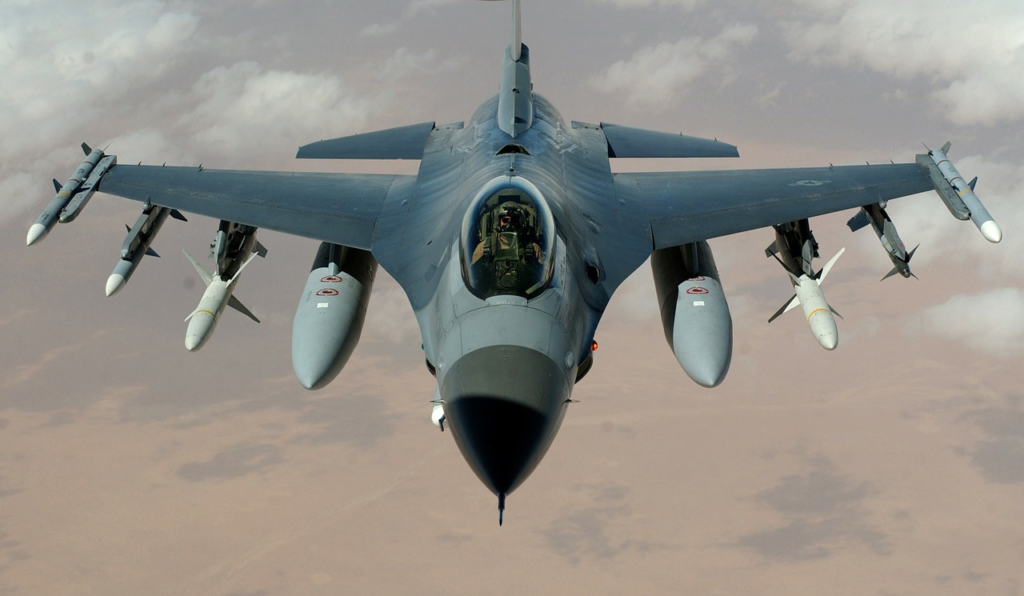
The US Department of Defense awarded Sabena Aerospace a contract covering engine maintenance and logistics support for European F-16 fighter aircraft that will join Ukraine’s Air Force fleet.
The work will take place at Sabena Aerospace’s Brussels facilities for at least three years. Contract data released on 29 January 2026 shows that nearly $70 million has already been allocated from a total funding ceiling of $235 million.
The contract focuses on intermediate and depot-level maintenance. These maintenance categories involve complex repairs, inspections, and overhauls that exceed the capability of regular Air Force engineering units.
Ukraine began operating F-16s in August 2024, but sustaining combat readiness requires deep industrial support networks, especially as aircraft operate in high-tempo combat environments.
Sabena Aerospace has supported Belgian military aircraft for over five decades and maintains multiple aircraft types, including A400M, C-130, Alphajet, A109, Mirage, and A-10 platforms. The company also seeks participation in future European F-35 and SkyGuardian programs.
The company declined public comment on details related to the new contract.
European F-16 Donations Continue to Expand
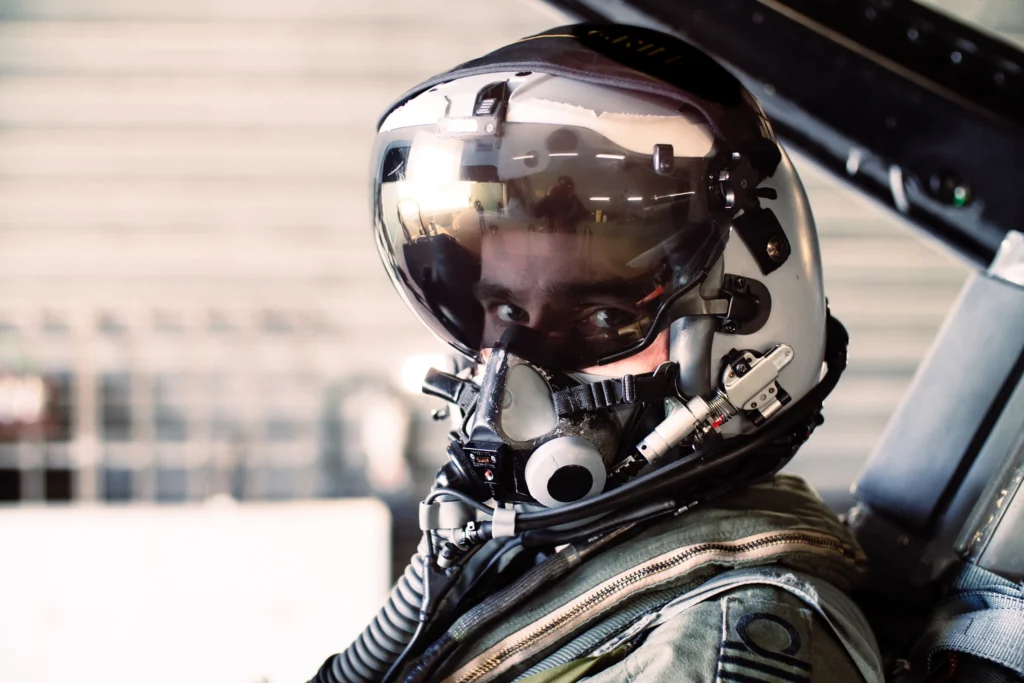
European nations are retiring legacy F-16 fleets as they transition to F-35 Lightning II fighters. Many of these aircraft are now pledged to Ukraine.
Confirmed commitments include:
- Belgium: 30 aircraft
- Denmark: 19 aircraft
- Netherlands: 24 aircraft
- Norway: 14 aircraft
These transfers represent one of the most significant upgrades to Ukraine’s air combat capability since the start of the conflict.
Former Ukrainian Defence Minister Denys Shmyhal emphasized the continued importance of F-16s during a Ramstein meeting in October 2025, highlighting their coordination with ground-based air defense systems.
In December 2025, Ukrainian authorities reported that F-16s intercepted and destroyed most of the 35 cruise missiles during a large Russian strike shortly before the holiday period.
ALSO READ: Denmark Orders 16 New Most Expensive Fighter Jets in the World Worth $2.6 Billion
Additional Fighter Jets Expected for Ukraine
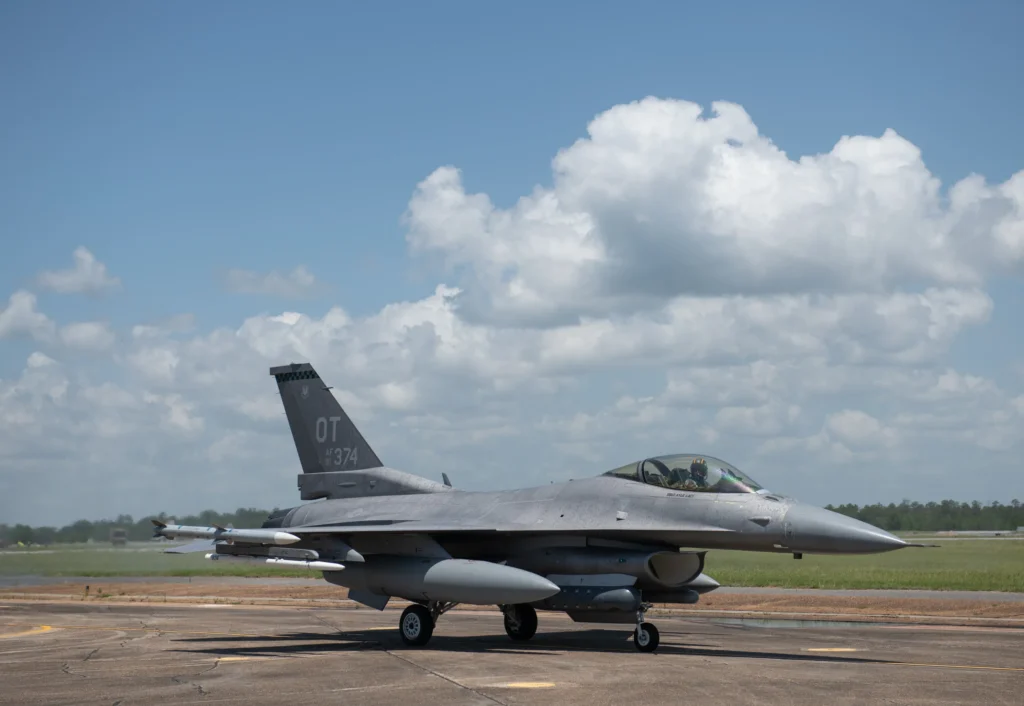
Ukraine also anticipates receiving additional fighter aircraft beyond the F-16 donations.
Defence Minister Mykhailo Federov announced expected deliveries of French Mirage-2000 fighters and at least 100 Swedish Gripen aircraft, which could significantly expand operational capability.
Ukraine is also exploring local production of British-made components used in Gripen fighters. Saab states roughly 35 percent of Gripen components originate from UK suppliers, making industrial cooperation possible.
Each aircraft type brings distinct strengths:
- F-16 offers multirole flexibility and strong payload capacity.
- Mirage-2000 excels in high-speed interception missions.
- Gripen provides agility and simpler maintenance requirements.
A mixed fleet allows Ukraine to better counter dense Russian air and missile defense networks while improving overall combat effectiveness.
Maintenance Infrastructure Key to Fleet Readiness
Aircraft donations alone do not guarantee combat readiness. Sustainment contracts like Sabena Aerospace’s ensure aircraft availability through proper maintenance, parts supply, and engine support.
As Ukraine integrates multiple fighter platforms, industrial maintenance networks across Europe and North America will remain critical to sustaining operational capability over the long term.
About the F-16 Fighting Falcon
Lockheed Martin’s F-16 Block 70/72 program marks a major modernization step for the world’s most widely operated fighter jet, now flying in 29 countries with over 19.5 million flight hours logged.
The new production standard combines advanced radar, cockpit upgrades, and safety systems to extend fleet relevance through 2060 and beyond.
More than 3,100 F-16s operate worldwide, supported by over 500 suppliers and a growing production pipeline serving allied air forces.
How the New Falcon Generation Strengthens Air Power
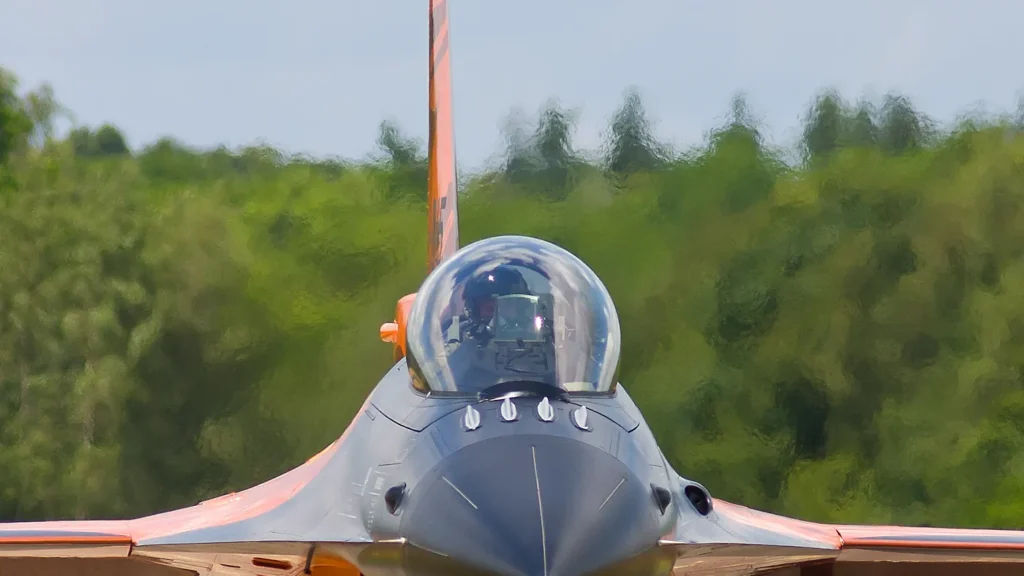
The Block 70/72 F-16 represents the most capable version of the fourth-generation fighter platform, built to deliver near fifth-generation capabilities while maintaining affordability and proven reliability.
The aircraft integrates Northrop Grumman’s APG-83 AESA radar, derived from technologies used in the F-22 and F-35 programs. This radar provides improved detection range, faster tracking, better resistance to electronic threats, and detailed digital mapping for all-weather operations.
A redesigned cockpit centers around a high-resolution Center Pedestal Display, allowing pilots to process radar, targeting, and flight data more efficiently. Enhanced color moving maps and improved helmet-mounted displays reduce pilot workload and improve combat awareness.
Together, these upgrades improve situational awareness, targeting precision, and mission flexibility in both air-to-air and air-to-ground roles.
Advanced Safety Systems Protect Pilots
Lockheed Martin’s Automatic Ground Collision Avoidance System, known as Auto GCAS, remains one of the most impactful safety upgrades for the F-16 fleet.
Since entering service with the U.S. Air Force in 2014, the system has prevented multiple fatal accidents by automatically recovering aircraft when pilots risk flying into terrain. Controlled flight into terrain historically accounted for 26 percent of aircraft losses and 75 percent of F-16 pilot fatalities.
Auto GCAS continues to protect pilots and aircraft worldwide, making it one of the program’s most valuable life-saving technologies.
Weapon Integration Keeps the F-16 Versatile
The F-16 remains one of the most adaptable multirole fighters due to decades of weapons integration experience.
Lockheed Martin has certified over 3,300 carriage and release configurations across more than 180 weapon and store types. This allows customer nations to integrate existing arsenals without extensive redesign, lowering operational costs while expanding mission options
Extended Service Life and Performance Upgrades
The Block 70/72 introduces structural improvements extending aircraft service life to 12,000 flight hours, over 50 percent longer than earlier production variants.
Conformal fuel tanks increase range without compromising aerodynamic performance. Engine improvements further boost reliability and mission endurance, enabling many air forces to operate their fleets for 40 years or more without major structural repair programs.
Global Production and Economic Impact
The F-16 program sustains a large international industrial ecosystem.
In the United States alone, over 500 suppliers across 41 states support production, generating roughly 46,000 direct and indirect jobs and contributing more than $1.3 billion in economic activity around Greenville, South Carolina.
Globally, 28 international suppliers in 12 countries support the program, contributing approximately 55,000 jobs and an estimated $7.5 billion in worldwide economic impact.
Production Pipeline and Fleet Growth
Current Block 70/72 production includes:
- 104 aircraft in backlog
- 36 aircraft delivered so far
- Deliveries planned across 6 countries
- Supported by approximately 530 suppliers worldwide
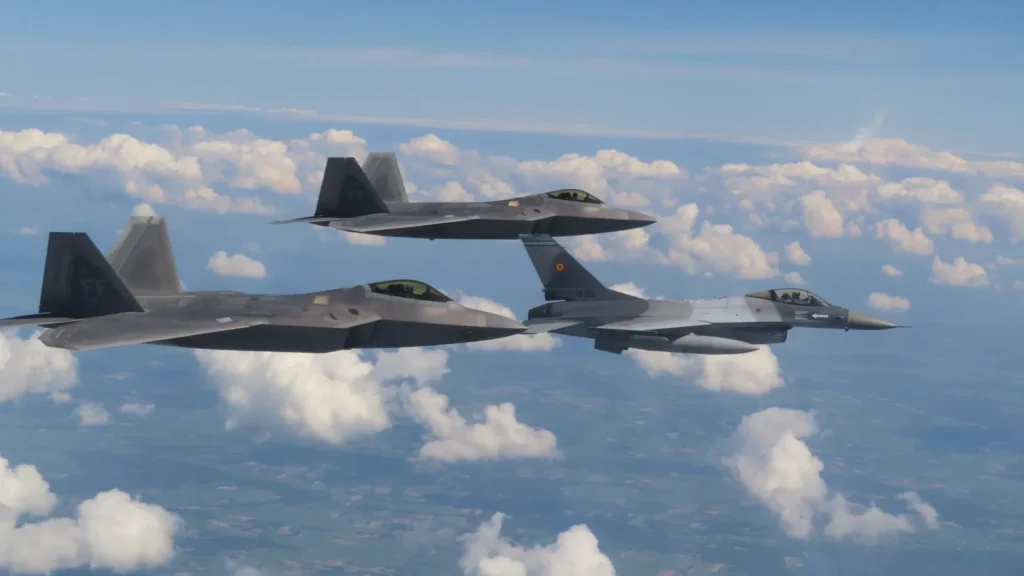
Recent developments include F-16 transfers to Romania, NATO air policing operations expansion, and new Block 70 deliveries to Slovakia and Bulgaria, strengthening allied defense capabilities.
Why the F-16 Remains Relevant
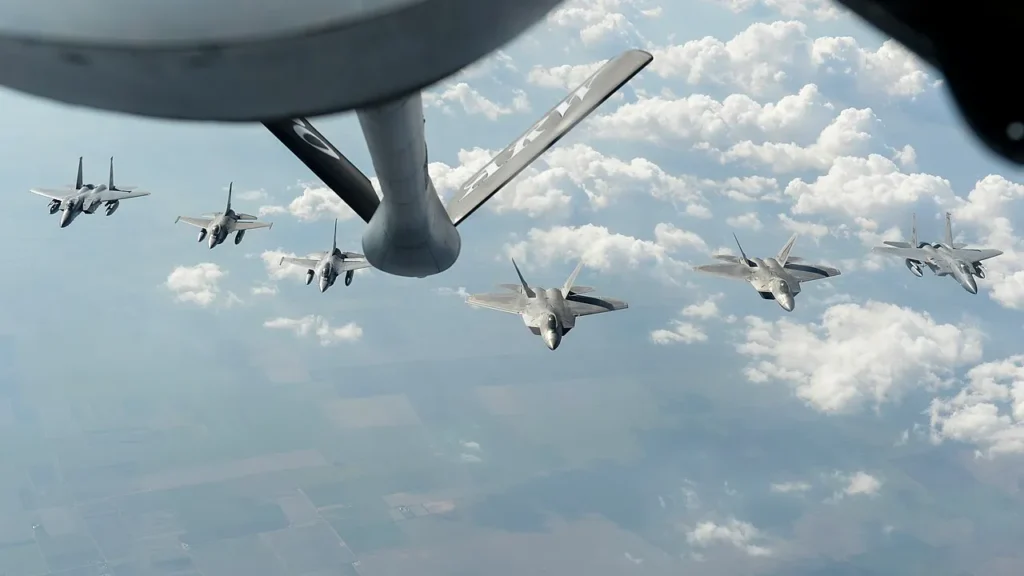
With millions of flight hours, global interoperability, modern avionics, and cost-effective operations, the F-16 continues to serve as a cornerstone fighter for many nations.
The Block 70/72 upgrades ensure the aircraft remains combat-capable and economically viable well into the mid-21st century, bridging legacy fleets with future air combat requirements.
Stay tuned with us. Further, follow us on social media for the latest updates.
Join us on Telegram Group for the Latest Aviation Updates. Subsequently, follow us on Google News
