

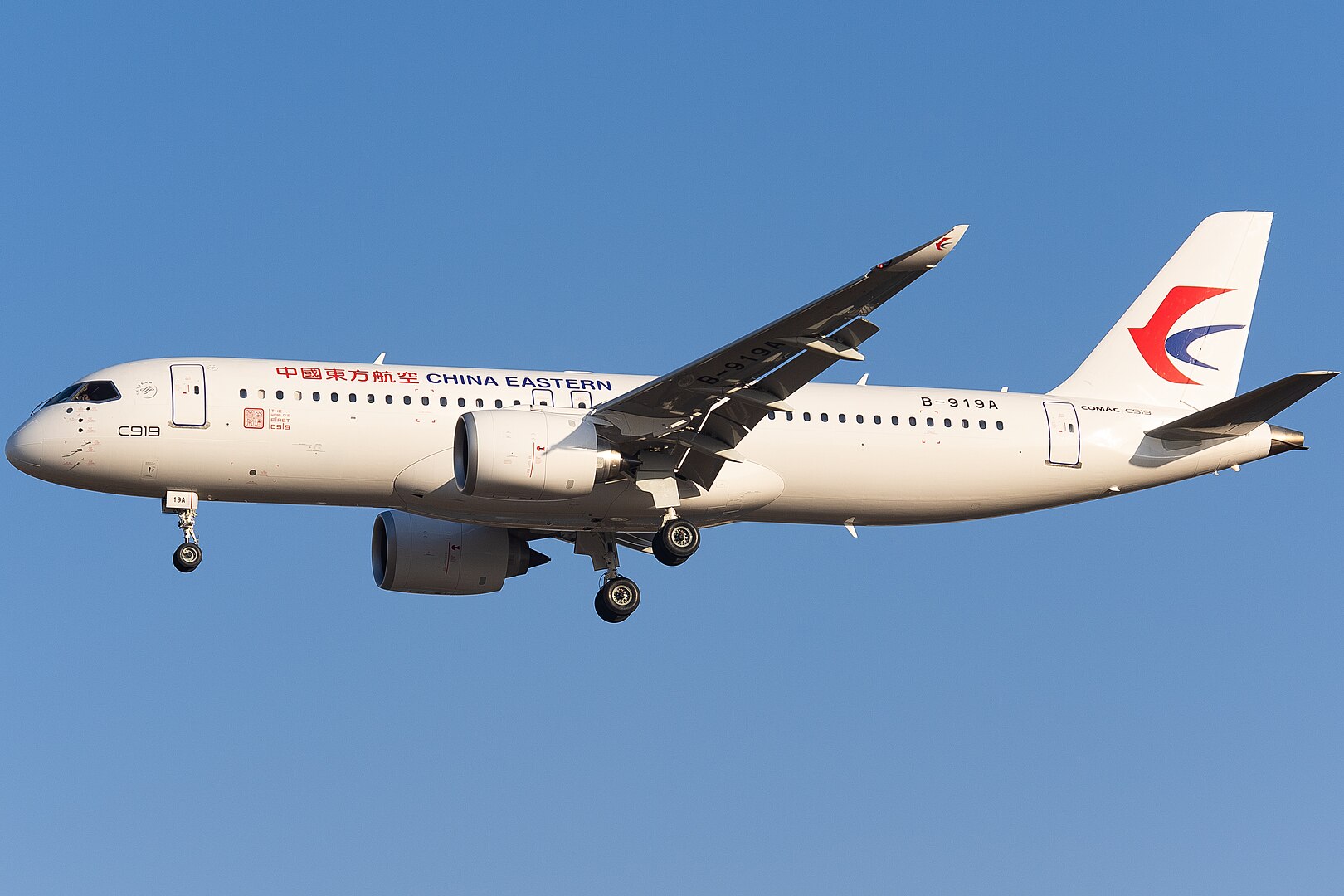
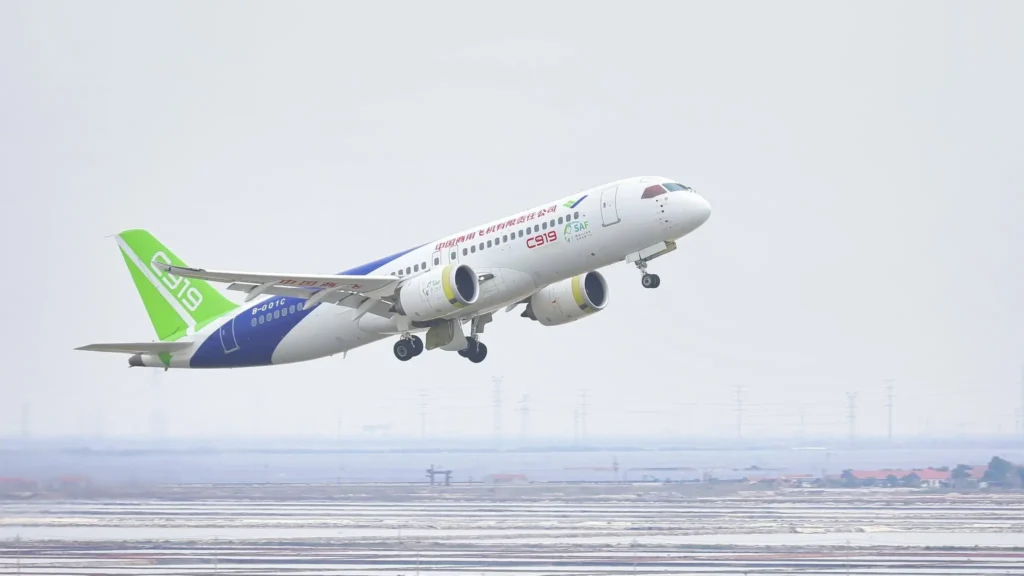
SHANGHAI- European regulators have started in-flight evaluations of China’s domestically developed COMAC C919 narrowbody jet, marking a critical phase in its long-running certification effort with Europe.
The aircraft, operated by China Eastern Airlines (MU) and flown from Shanghai Pudong International Airport (PVG), is being assessed by pilots from the European Union Aviation Safety Agency as Comac pushes for Western regulatory approval.
Europe Puts C919 Under Scrutiny
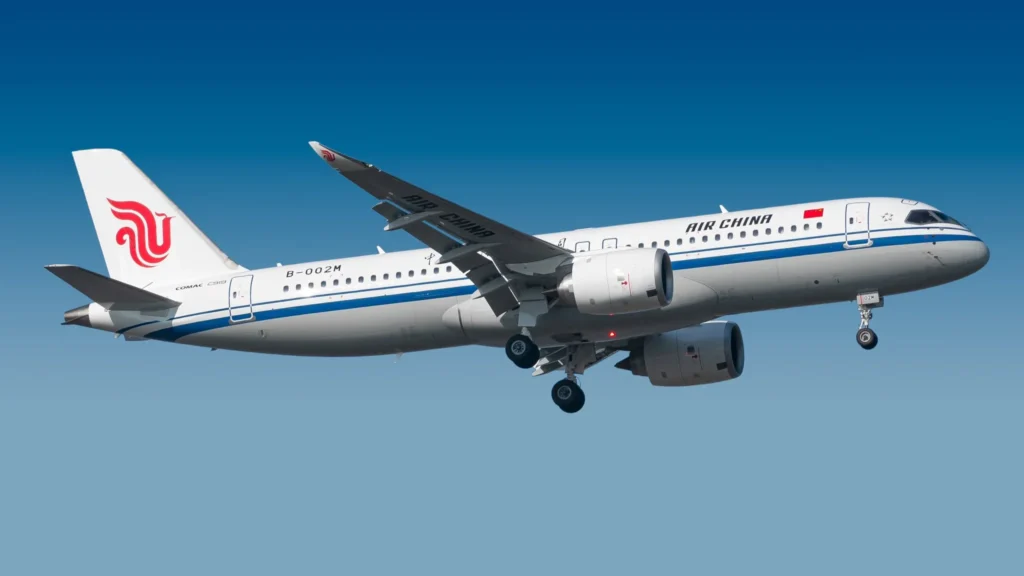
The European Union Aviation Safety Agency has conducted verification flights of the C919 in Shanghai as part of its formal type certification program with Commercial Aircraft Corporation of China. The flights were carried out by EASA test pilots and represent a visible step forward after delays in the approval process last year.
The test aircraft departed from Shanghai Pudong International Airport, located close to Comac’s headquarters and final assembly facilities.
Sources familiar with the evaluations said the aircraft met expected safety standards, with only minor early-stage technical issues identified. These issues required limited software refinements rather than structural or hardware changes.
EASA and Comac have increased technical exchanges in recent months, reflecting steady progress in compliance demonstrations and system reviews.
How the EASA Certification Process Works
Flight testing forms the third stage of EASA’s four-stage aircraft certification framework.
The process begins with a technical familiarization and design review phase, followed by ground-based compliance demonstrations. The third phase focuses on in-flight testing, where regulators assess aircraft behavior during extreme maneuvers, stall conditions, and adverse weather operations.
The final stage involves a complete compliance review, closure of open findings, and formal issuance of type certification.
The current C919 flights fall squarely within the in-flight evaluation stage, often viewed as the most visible and demanding part of the process.
Timeline and Regulatory Outlook
Despite recent progress, European certification remains a medium-term objective. In May last year, EASA Executive Director Florian Guillermet stated that the C919 would not receive approval before 2025, with a projected timeline of three to six years.
Guillermet noted that Comac has committed significant technical and human resources to the process and expressed confidence that certification would eventually be achieved, even if timelines extend.
EASA certification carries broader implications, as it often serves as a reference point for other Western aviation authorities when evaluating new aircraft types, SCMP reported.
Operational Record Inside China
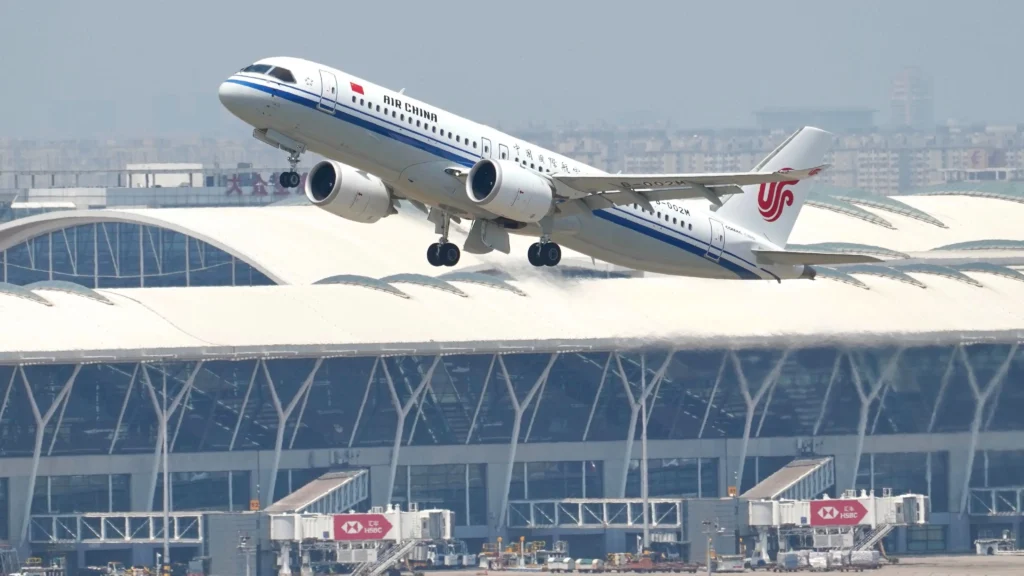
The C919 entered commercial service in May 2023 and has since operated exclusively within China. By the end of last year, the aircraft had transported more than four million passengers without major operational disruptions.
China Eastern Airlines remains the primary operator, though additional Chinese carriers have inducted or plan to induct the aircraft. As of early 2025, several dozen C919s have been delivered, forming the foundation of Comac’s narrowbody fleet strategy.
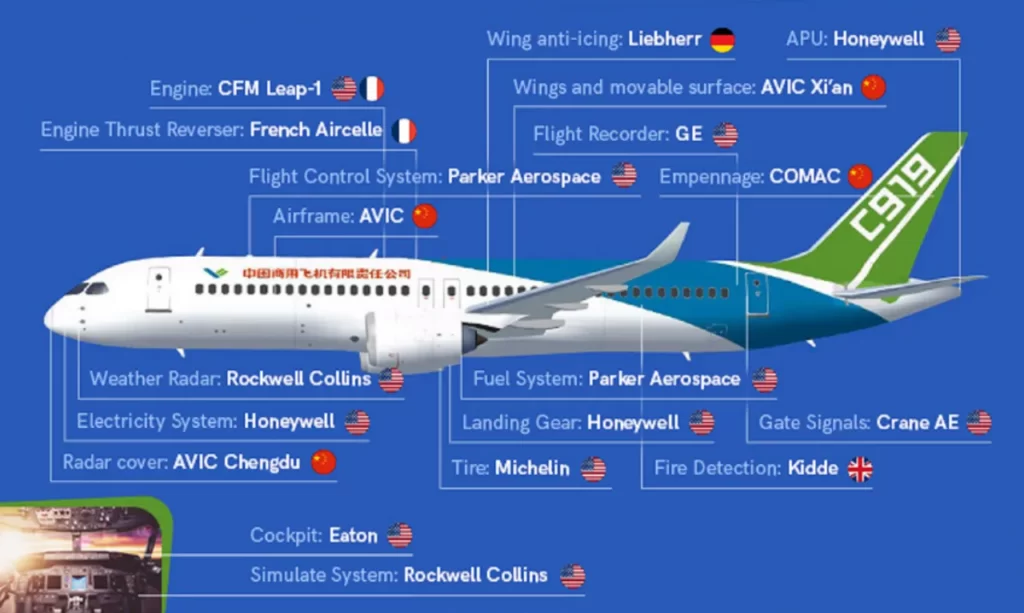
Designed as a single-aisle jet competing with the Boeing 737 and Airbus A320 families, the C919’s global ambitions depend heavily on securing Western certification.
Human Factors and Crew Assessments
Comac has also involved experienced Western pilots employed by Chinese airlines in simulator evaluations and technical dialogue with EASA. These pilots have participated in crew resource management assessments, a mandatory element of European certification focused on cockpit design, procedures, and human factors.
According to sources, the initial crew resource management checks have been completed successfully, with EASA satisfied with the results so far. Further assessments are expected as the certification program advances.
Recent inspections identified minor software-related issues linked to crew aircraft interaction. Regulators indicated that these findings require limited adjustments and do not involve hardware modifications.
Stay tuned with us. Further, follow us on social media for the latest updates.
Join us on Telegram Group for the Latest Aviation Updates. Subsequently, follow us on Google News
