


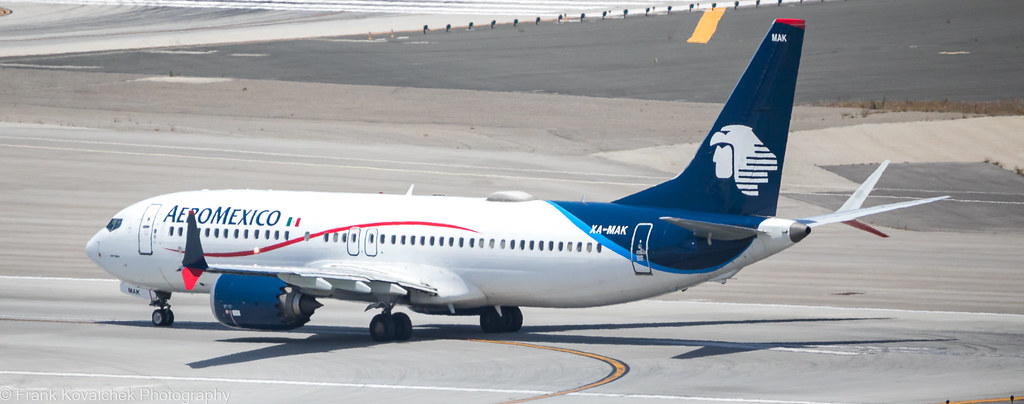
LOS ANGELES- An Aeromexico (AM) Boeing 737 MAX 8 returned safely to Los Angeles after the flight crew reported a cockpit overhead panel failure shortly after departure.
The aircraft, operating Aeromexico Flight AM649 from Los Angeles International Airport (LAX) to Mexico City Benito Juarez International Airport (MEX), conducted an overweight landing following standard procedures.
Aeromexico Pilot Makes U-Turn
Aeromexico Flight AM649 involved a Boeing 737 MAX 8, registration XA-GOS. Shortly after departure from Los Angeles International Airport (LAX), the crew informed air traffic control that the cockpit overhead panel had come loose and partially detached.
The flight was in the initial climb phase when the issue was identified. The crew assessed the situation and determined that a return to the departure airport was the safest option. No injuries were reported, and the aircraft remained fully controllable throughout the event.
After notifying SoCal Departure, the flight crew requested vectors and holding time to complete checklists and prepare for an approach back into Los Angeles. Air traffic control coordinated the request and cleared the aircraft to hold at altitude while maintaining separation from other traffic.
The pilots advised controllers that the aircraft would require an overweight landing due to limited fuel burn time. Runway 25R at LAX was requested and approved, aligning with standard procedures for heavier aircraft operations.
Approach, Landing, and Post-Event Outcome
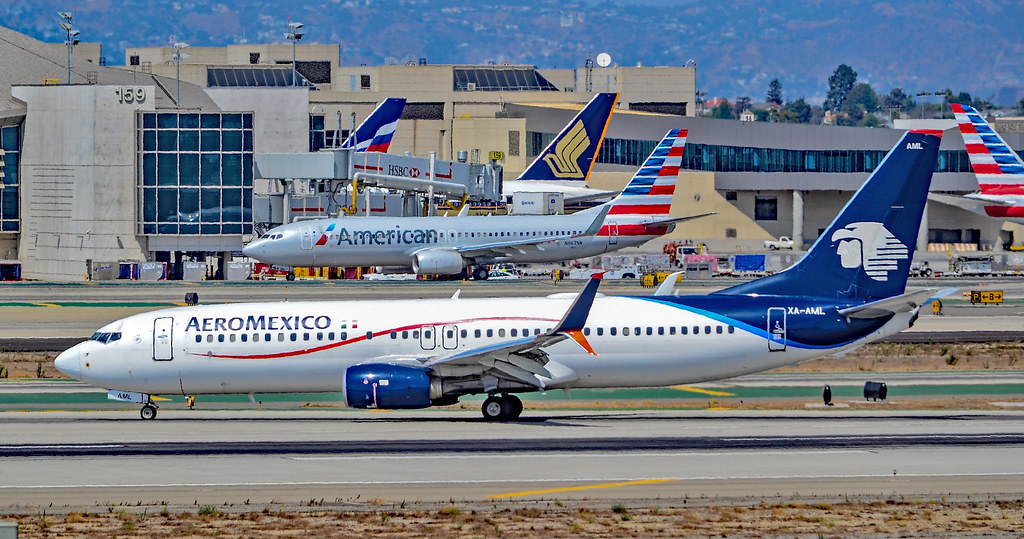
The aircraft was later cleared for a visual approach to Runway 25R. Speed adjustments were communicated to account for the aircraft’s weight and landing configuration.
The landing was completed without incident, and the aircraft exited the runway as instructed.
Approximately two and a half hours later, the same aircraft departed Los Angeles again and continued its scheduled service to Mexico City, indicating that the issue was addressed on the ground.
ATC and Pilot Communication
Here’s a detailed transcription of the communication between ATC and Aeromexico Pilot as flagged by YouCanSeeATC and recorded by LiveATC.net:
1. Initial Departure Contact (0:13 – 0:24)
Pilot (AeroMexico 649):
- “Departure, good day, AeroMexico 649, we are leaving 2400, 5000, flying heading 210.”
ATC (SoCal Departure):
- “AeroMexico 649, SoCal Departure, radar contact, direct PV, maintain 250 knots.”
Pilot (AeroMexico 649):
- “Direct PV, and maintain 210 knots, AeroMexico 649.”
2. Emergency Declaration (0:33 – 1:16)
Pilot (AeroMexico 649):
- “And AeroMexico 649, sir, we have a situation up here, you know, the overhead panel just came down, like with a screwdriver probably, so we’re going to need to come back, okay?”
ATC (SoCal Departure):
- “AeroMexico 649, sir, do you need to return to Los Angeles?”
Pilot (AeroMexico 649):
- “Yeah, can you give us a holding pattern over PV, or some areas, because we don’t have conflict with other traffic, so we can make our descent procedure and go back to LAX.”
ATC (SoCal Departure):
- “AeroMexico 649, you’re leaving my sky, and they’ll give you some holdings, try approach 134.35 and let them know the situation.”
Pilot (AeroMexico 649):
- “134.35, AeroMexico 649.”
3. Holding Request (1:22 – 2:01)
Pilot (AeroMexico 649):
- “Departure, AeroMexico 649.”
- “We’ll probably need like 15 minutes, it’s going to be sooner, but can you give us an area so we can hold and run some checklists up here?”
ATC:
- “Yeah, that’ll be great.”
- “Right, 9000, and it’s going to be vector, AeroMexico 649.”
Pilot (AeroMexico 649):
- “Heading 130, AeroMexico 649.”
4. Additional Information (2:06 – 2:38)
Pilot (AeroMexico 649):
- “That is not certain, you know, just the overhead panel came out, so it seems to be adjusted, but we don’t have to re-drive for some years.”
- “And just so you know, it’s going to be an overweight landing, so we’re going to request runway 25.”
ATC:
- “138.1, AeroMexico 649.”
5. Approach Contact (2:43 – 3:02)
Pilot (AeroMexico 649):
- “Approach, good day, AeroMexico 649, leaving 9000, hold to 11,000, fly to LAX, good day.”
- “We have information, AeroMexico 649.”
ATC (Approach):
- “You can expect, you can expect 25 right now.”
Pilot (AeroMexico 649):
- “Yeah, 25 right, AeroMexico 649.”
6. Speed Advisory (3:09 – 3:24)
Pilot (AeroMexico 649):
- “Yeah, and AeroMexico 649, we’re a little bit heavy up here, so we’re going to slow down the speed, probably we’re going to have like 180 until the final 6, fog left.”
ATC (Approach):
- “AeroMexico 649, what’s the next one?”
Pilot (AeroMexico 649):
- “249, AeroMexico 649.”
7. Visual Approach Clearance (3:31 – 3:54)
ATC (Approach):
- “AeroMexico 649, airport 10 o’clock, 15 miles, advise airport in sight.”
Pilot (AeroMexico 649):
- “This is how you say it, AeroMexico 649.”
ATC (Approach):
- “AeroMexico 649, cleared visual approach, runway 25 right.”
Pilot (AeroMexico 649):
- “Cleared visual approach, runway 25 right, AeroMexico 649.”
8. Final Approach Vectors (3:54 – 4:00)
ATC (Approach):
- “AeroMexico 649, fly heading 270 to join final runway 25 right.”
Pilot (AeroMexico 649):
- “Fly heading 270 and join final runway 25 right.”
9. Tower Handoff (4:10 – 4:19)
ATC (Approach):
- “AeroMexico 649, contact LA Tower, 120.95.”
Pilot (AeroMexico 649):
- “120.95, AeroMexico 649, thank you for your command, thank you.”
10. Tower Contact and Landing Clearance (4:19 – 4:28)
Pilot (AeroMexico 649):
- “Tokyo Tower, we’re good, AeroMexico 649, we are on final runway 25 right.”
ATC (LA Tower):
- “AeroMexico 649, LA Tower, 150.625 right, cleared to land.”
Pilot (AeroMexico 649):
- “Cleared to land, AeroMexico 649.”
11. Post-Landing Instructions (4:45)
ATC (Tower):
- “AeroMexico 649, exit right and contact ground 25.”
Similar Incident
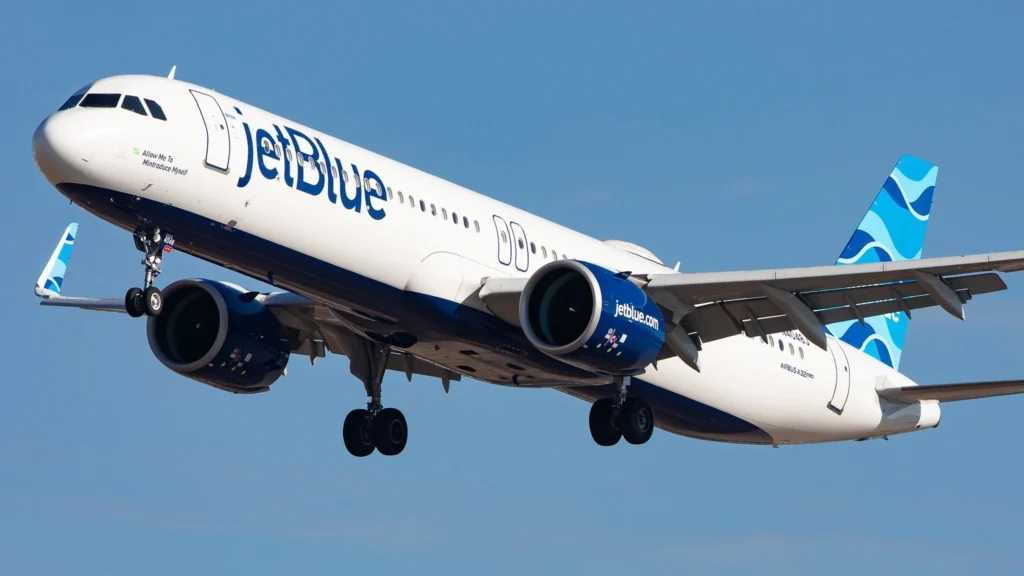
A JetBlue Airways (B6) flight turned back to New York after a cabin ceiling panel detached mid-climb and injured a flight attendant, prompting an in-flight emergency response.
The Airbus A321 made a precautionary return to JFK, where medical teams met the aircraft, and the injured crew member received evaluation.
Precautionary Return
JetBlue flight 1569 departed New York for Punta Cana when the flight crew was alerted to a serious issue in the rear cabin. While climbing through 23,000 feet, a large interior ceiling panel became loose in the aft section of the Airbus A321 and struck a flight attendant.
Air traffic control recordings confirm the crew halted the climb and remained at a lower altitude while assessing the situation. The pilots consulted company procedures and evaluated the condition of the injured crew member before deciding to return to the departure airport.
The flight crew advised controllers that the aircraft required priority handling and medical assistance on arrival. They also noted the need for an overweight landing due to the amount of fuel onboard.
During the return to New York, the pilots requested reduced speed and direct routing to minimize flight time. Air traffic control cleared the aircraft for a visual approach and positioned emergency equipment as a precaution.
The crew clarified that the incident involved an interior cabin panel and was not related to turbulence or external factors. This distinction allowed controllers to manage the return without additional airspace restrictions.
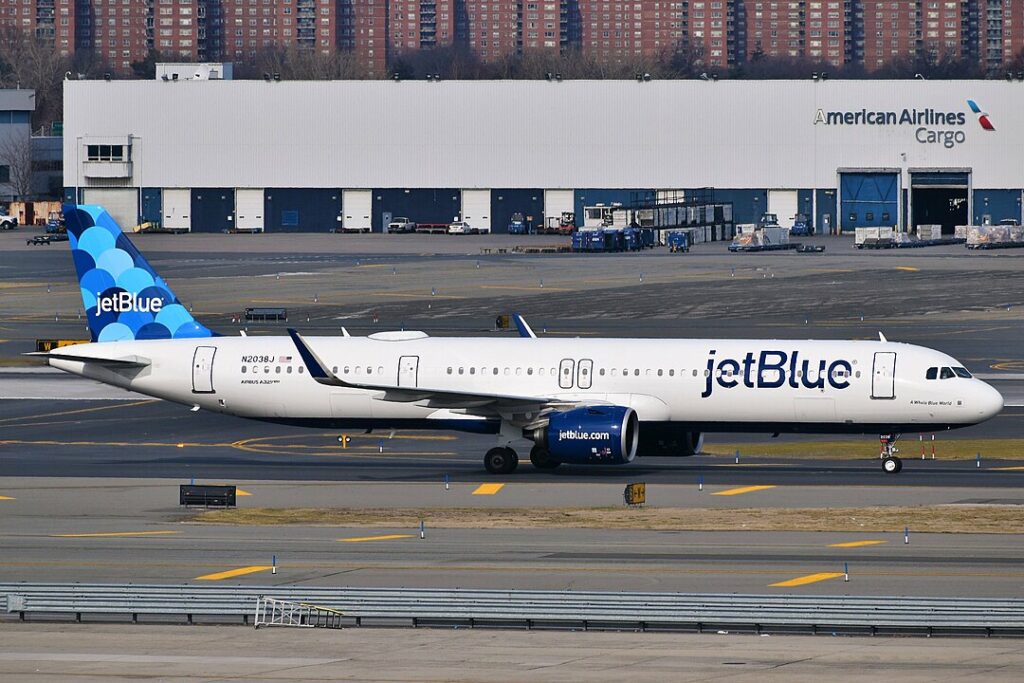
The Airbus A321 landed safely on runway 31L at John F. Kennedy International Airport and taxied to the gate without further complications. Emergency responders and medical personnel were waiting upon arrival.
The injured flight attendant, described as a male in his mid-30s, was struck on the head by the falling panel. Initial assessments indicated the injury was not life-threatening, but a medical evaluation was requested in line with standard safety protocols.
The aircraft involved was an Airbus A321 registered as N973JT. At the time of landing, the crew reported approximately 210 people on board and about 5.5 hours of fuel remaining, equal to roughly 34,000 pounds.
Stay tuned with us. Further, follow us on social media for the latest updates.
Join us on Telegram Group for the Latest Aviation Updates. Subsequently, follow us on Google News
