

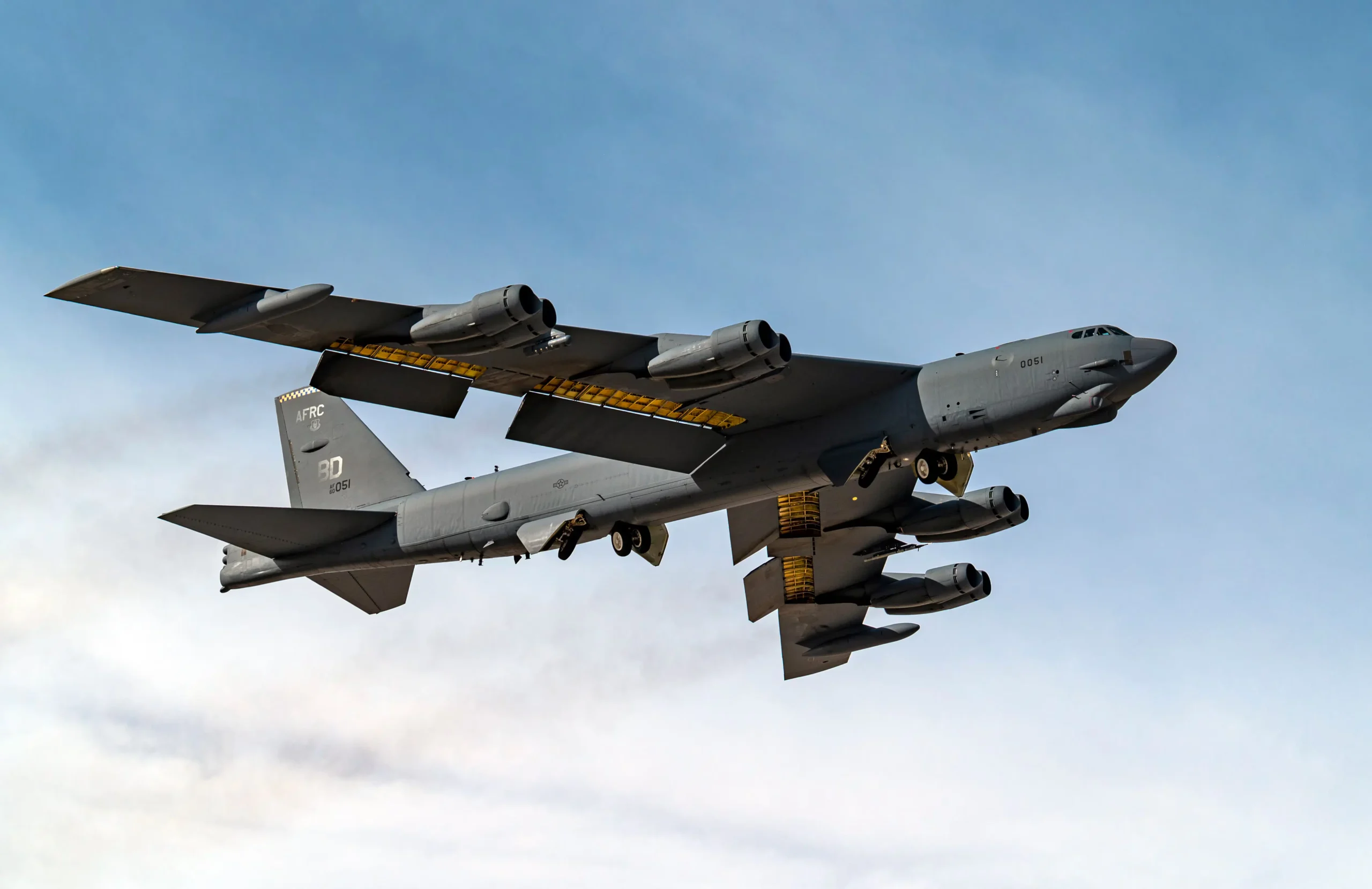
The United States maintains one of the world’s most capable long-range bomber forces, anchored by two aircraft that reflect very different design philosophies and operational roles. Operated by the United States Air Force, the Boeing B-52 Stratofortress and the Boeing B-1B Lancer continue to underpin American airpower from bases such as Barksdale Air Force Base, Louisiana (BAD).
Although both aircraft serve within the same bomber fleet, their missions, performance, and strategic value differ sharply. From Minot Air Force Base, North Dakota (MIB), these bombers project power globally, reinforcing deterrence while adapting to modern warfare demands shaped by speed, range, and payload flexibility.
Origins And Service
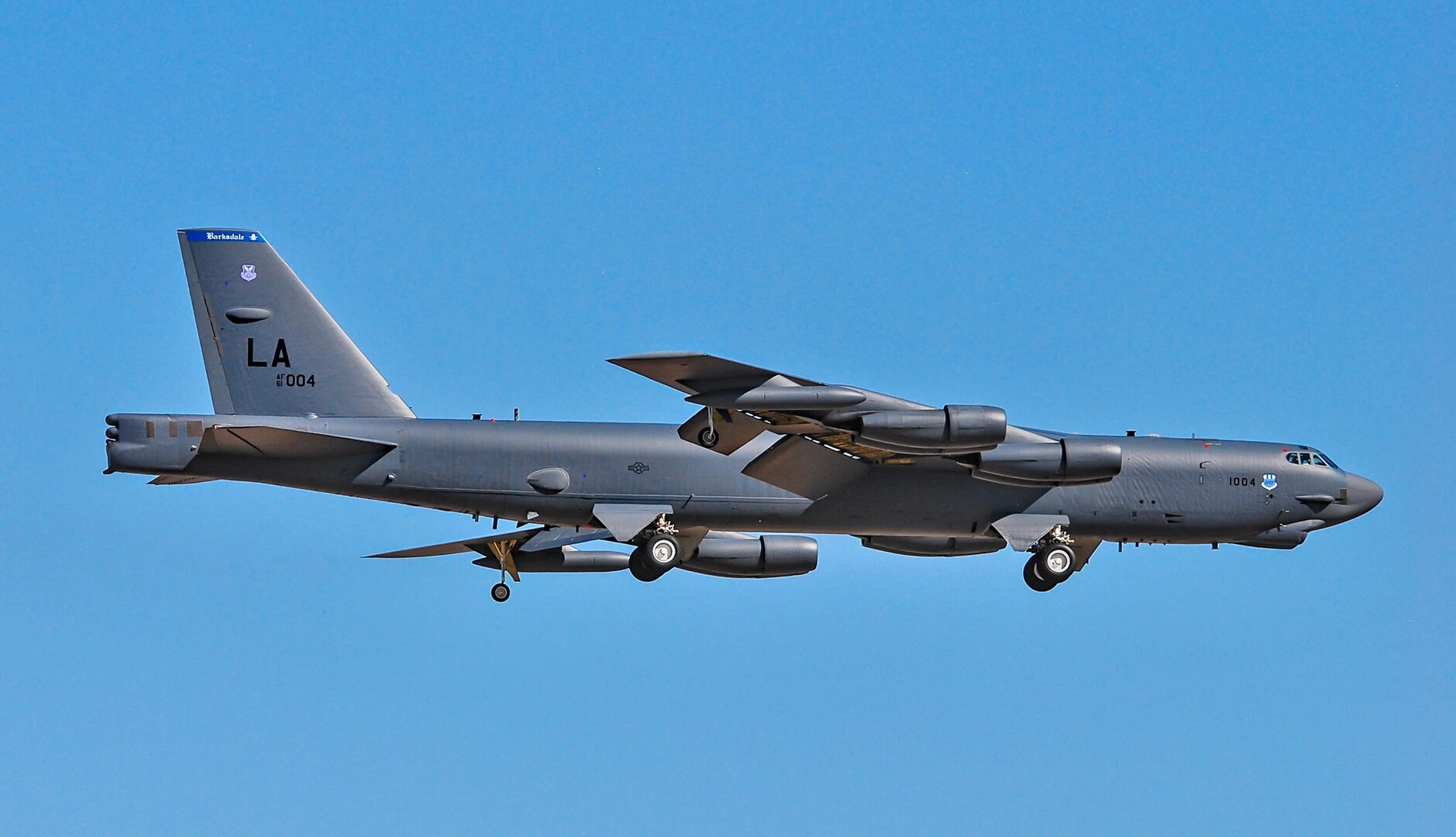
The B-52 entered operational service in 1955 and has remained continuously active for nearly seven decades. Designed during the Cold War, it established its reputation through nuclear deterrence missions before transitioning into a versatile conventional strike platform.
The B-1B Lancer joined the fleet much later, reaching operational status in the mid-1980s. Initially conceived as a supersonic nuclear bomber, it shifted to an exclusively conventional role in the early 1990s, aligning with evolving strategic priorities.
| Parameter | B-52 Stratofortress | B-1B Lancer |
|---|---|---|
| Maximum Speed | 650 mph (Mach 0.88) | Over 900 mph (Mach 1.2) |
| Combat Range | Over 8,800 miles | Long-range, classified |
| Refueling Capability | Yes | Yes |
| Maximum Payload | ~70,000 lbs (31,750 kg) | ~75,000 lbs (34,000 kg) |
| Weapon Types | Nuclear, conventional, cruise missiles | Conventional precision and non-precision |
| Payload Configuration | Internal and external | Internal only |
These different origins explain why both aircraft coexist today rather than compete directly. Each bomber addresses distinct mission requirements shaped by historical experience and modern threat environments.
Performance And Payload
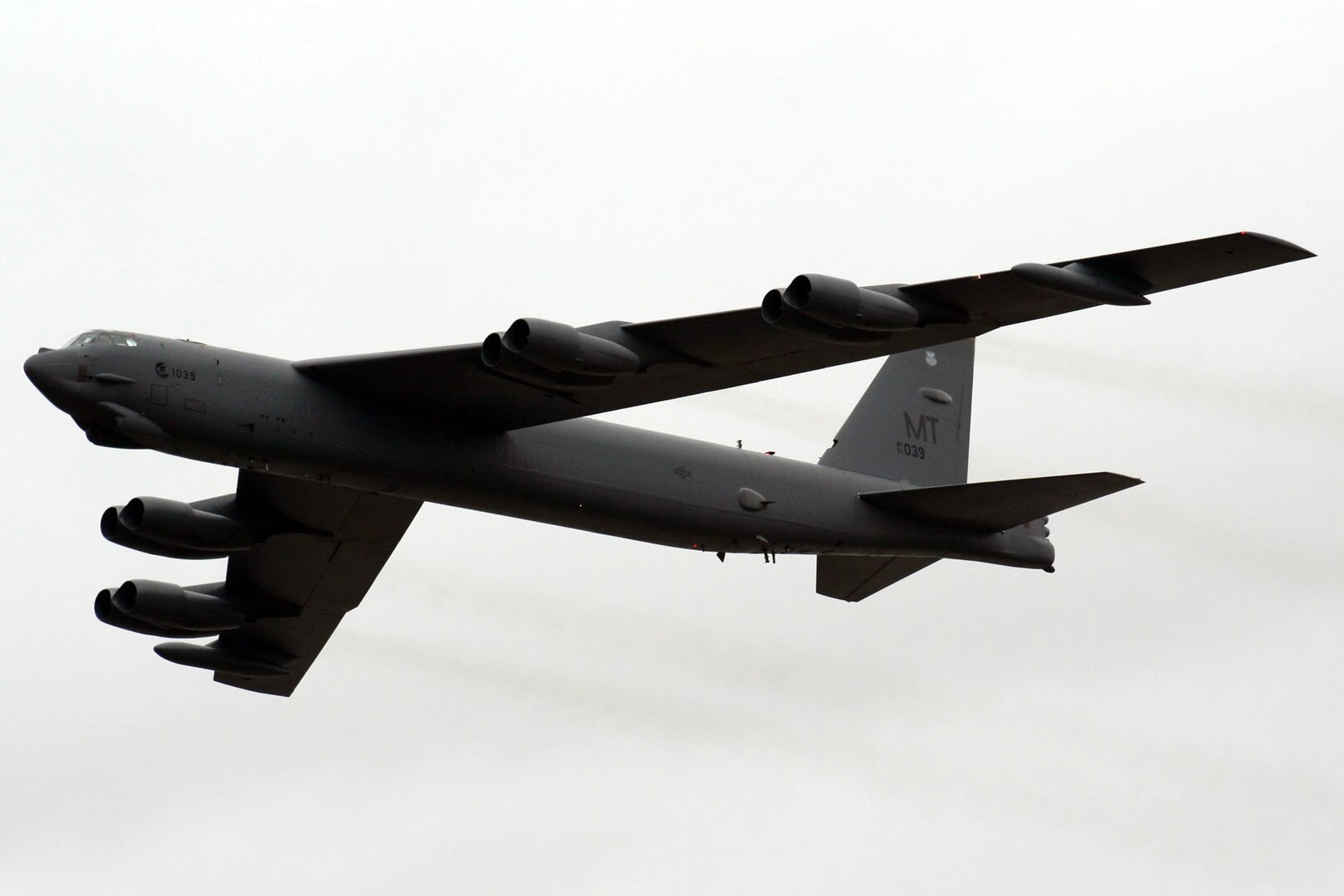
The B-52 emphasizes endurance and global reach over speed. Flying at subsonic speeds of roughly 650 mph, it can operate over intercontinental distances, supported by aerial refueling and large onboard fuel capacity.
In contrast, the B-1B prioritizes speed and responsiveness. Capable of exceeding 900 mph, it remains the fastest bomber in US service, allowing rapid deployment and time-sensitive strike missions.
Payload capacity further highlights their differences. The B-52 carries around 70,000 pounds of mixed ordnance, including cruise missiles and standoff weapons, while the B-1B can carry up to 75,000 pounds internally, making it the Air Force’s largest conventional weapons carrier.
| Parameter | B-52 Stratofortress | B-1B Lancer |
|---|---|---|
| Maximum Speed | 650 mph (Mach 0.88) | Over 900 mph (Mach 1.2) |
| Combat Range | Over 8,800 miles | Long-range, classified |
| Refueling Capability | Yes | Yes |
| Maximum Payload | ~70,000 lbs (31,750 kg) | ~75,000 lbs (34,000 kg) |
| Weapon Types | Nuclear, conventional, cruise missiles | Conventional precision and non-precision |
| Payload Configuration | Internal and external | Internal only |
Which is Best for the US Air Force
Today, the B-52 serves as a cornerstone of strategic deterrence, maintaining both nuclear and conventional strike capabilities. Ongoing upgrades, including radar and avionics improvements, ensure its relevance well into the coming decades.
The B-1B plays a complementary role focused on conventional warfare. Its advanced targeting systems, terrain-following capability, and large payload support precision strikes in contested environments.
Together, these aircraft provide operational flexibility that newer platforms alone cannot fully replace. Their continued use reflects deliberate planning rather than legacy dependence.

Bottom Line
The B-52 and B-1B remain vital because they address different strategic needs.
One delivers endurance and adaptability across decades, while the other offers speed and concentrated conventional firepower, ensuring balanced bomber capability for the United States.
Stay tuned with us. Further, follow us on social media for the latest updates.
Join us on Telegram Group for the Latest Aviation Updates. Subsequently, follow us on Google News
