

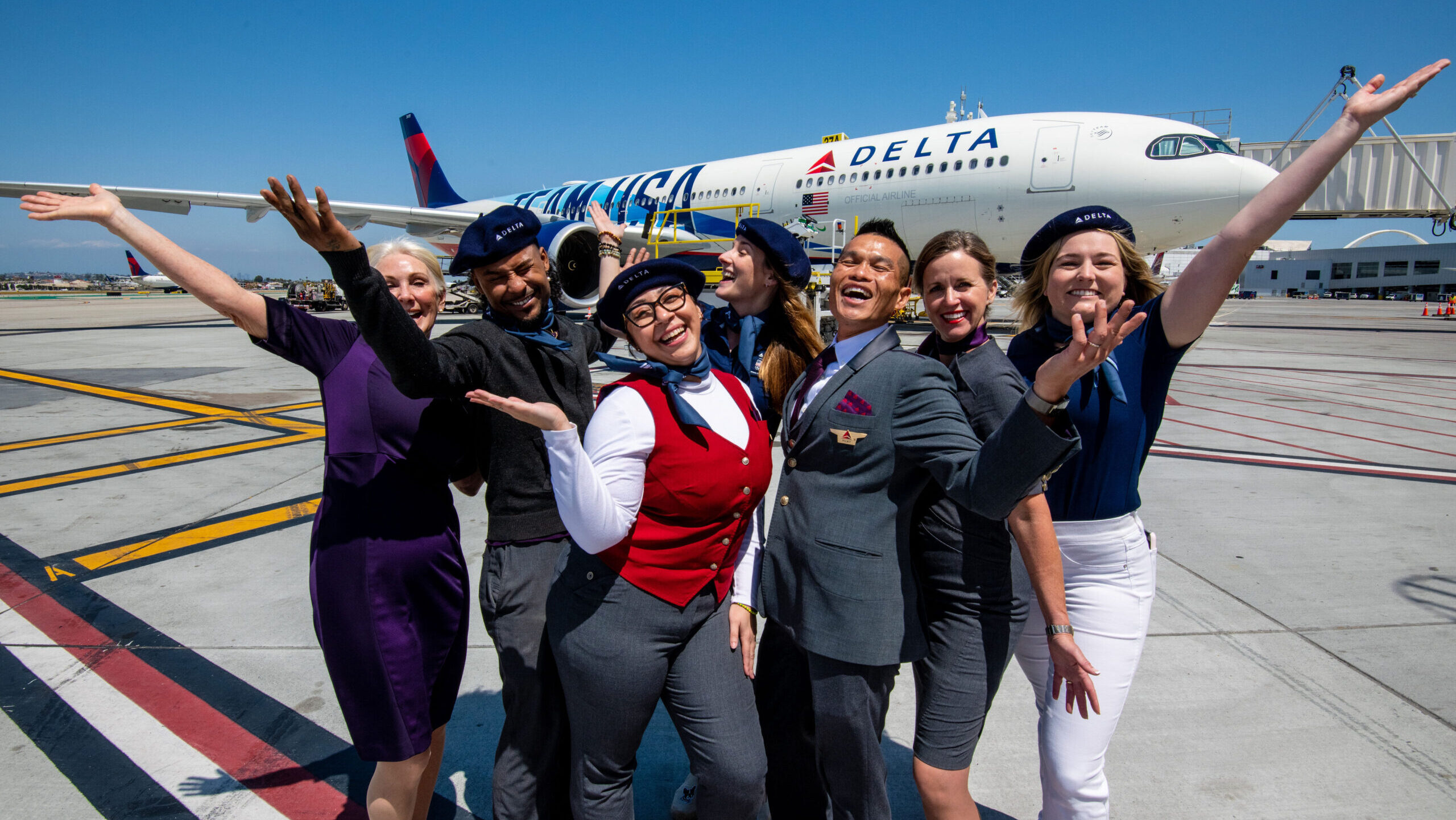
ATLANTA- Delta Air Lines (DL) is drawing junior flight attendants to Hartsfield-Jackson Atlanta International Airport (ATL) for high-volume opportunities.
Becoming a flight attendant at a US airline proves to be quite challenging in the first few years, at the very least, as low hourly pay is combined with reserve status demands. This junior Delta Air Lines attendant turned those challenges into a $78,000 annual salary after three and a half years.

Delta Flight Attendant $78,000 Salary
Junior flight attendants at Delta Air Lines (DL) endure a steep start, marked by low hourly rates around $36.92 and a life on reserve with no fixed schedule.
They receive assignments just hours before duty, often waiting at home or the airport without certainty of a flight.
No flight means no pay, which heightens the pressure. Trainees face six weeks of intensive preparation, where airlines cover only accommodation and some meals, leaving no take-home pay to speak of.
According to PYOK, these realities push many US flight attendants into a long-haul mindset, where they commit to climbing pay steps and building seniority.
This dedication pays off as seniority grows, allowing crew members to dictate their own schedules and secure a decent wage.
The Atlanta-based attendant exemplified this by bidding aggressively for high-value trips, which accelerated her progress beyond the typical grind.
Her earnings hit $78,000 before taxes in 2025, drawing from a mix of base pay and add-ons. Hourly rates advanced from $40.05 early in the year to $44.36 later, spanning steps 3 and 4 on Delta’s scale, with one month at $41.65.
She logged 106.3 average duty hours monthly over 86.97 flights, converting effort into steady income.
Boarding pay added $3,240.95, calculated at $13.35 to $14.79 per domestic instance and higher for transoceanic routes.
Per diem reimbursements hit $3.30 daily for standard trips and $3.55 for extended ones, covering meals effectively.
Flight leader roles brought $3.50 extras per flight, supplemented by international overrides, holding fees, and holiday premiums.
Vacation allotments and paid personal days contributed smaller amounts, while special assignments and training slots filled in gaps.
Profit sharing elevated her $73,262.64 base to the total, even as she opted out of some incentives for personal reasons. This structure rewards volume and versatility in the cabin.
Tactics for Rapid Earnings Acceleration
Strategic bidding defined her success, as she targeted 2 to 3-day domestic rotations for maximum credit hours and quicker seniority gains. These lines ensured 70 to 80-hour guarantees, minimizing unpaid downtime.
Transoceanic assignments, when available, amplified returns through elevated per diem and overrides, diversifying her schedule without excess fatigue.
She prioritized galley tasks and leadership for bonus credits, avoiding burnout while advancing up the ranks faster than her peers.
Reported fluctuations occurred, peaks in busy seasons drove higher months, but consistent averaging sustained her trajectory.
Sticking with Delta Air Lines (DL) prevented resets from job switches, preserving hard-earned progress toward lineholder status by year four.
Building a Sustainable Career Aloft
Seniority transforms the role at Delta Air Lines, granting top rates near $83 per hour, route preferences, and perks like travel passes.
The Atlanta base facilitates this with plentiful flying options, speeding credit accumulation.
Many flight attendants embrace the long haul for profit sharing and stability, viewing initial roughness as an investment.
Her approach, endurance paired with bidding savvy, offers a blueprint for juniors aiming to thrive in US airline cabins. Aspiring crew should master systems early to mirror such gains.
Stay tuned with us. Further, follow us on social media for the latest updates.
Join us on Telegram Group for the Latest Aviation Updates. Subsequently, follow us on Google News
