

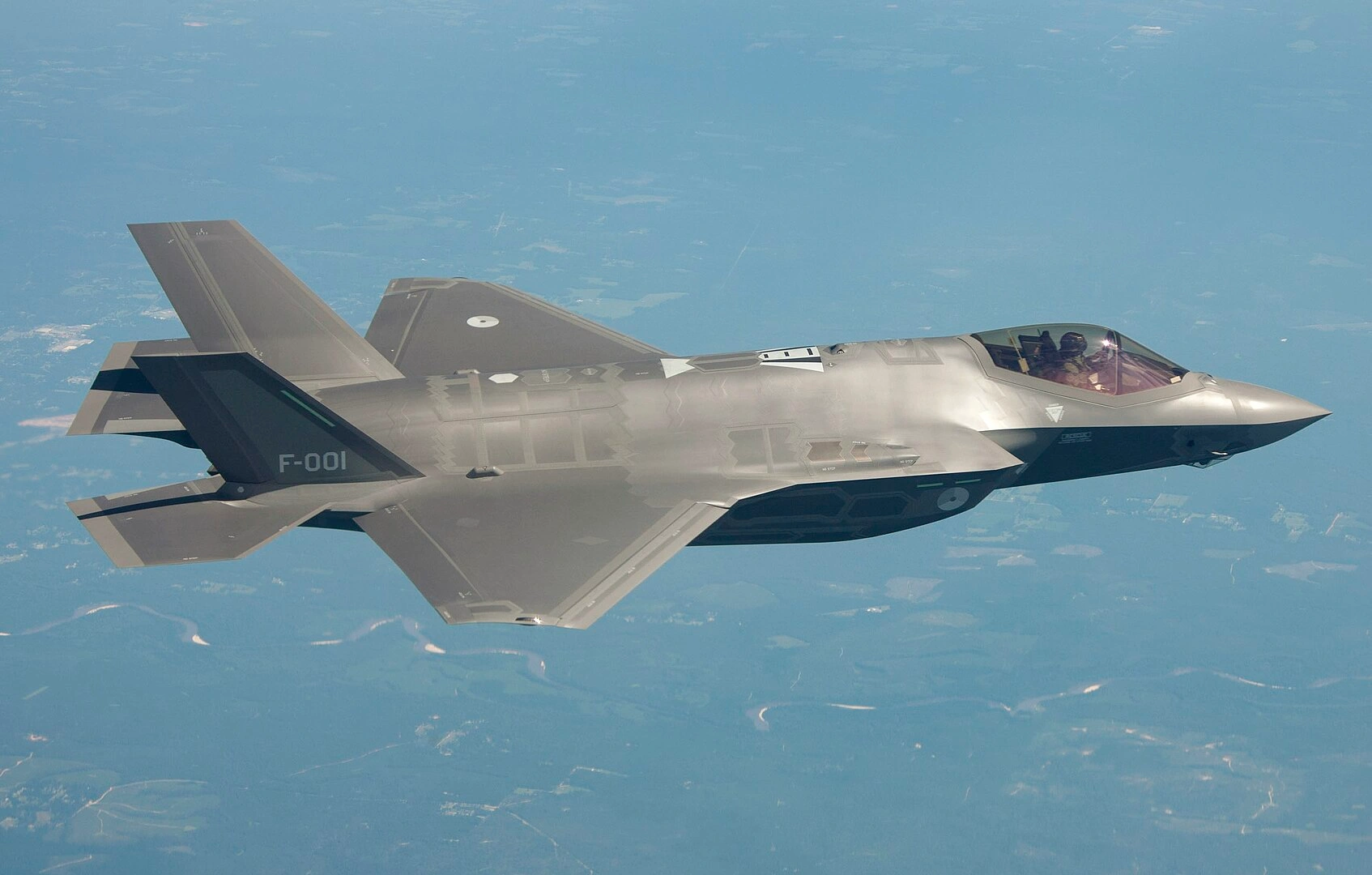
WASHINGTON- A December 19 inspector general audit found that the Department of Defense did not consistently hold Lockheed Martin accountable for poor F-35 sustainment performance under a 2024 contract.
Despite fleet availability averaging only 50 percent, the Pentagon still paid more than $1 billion without applying economic adjustments tied to results.
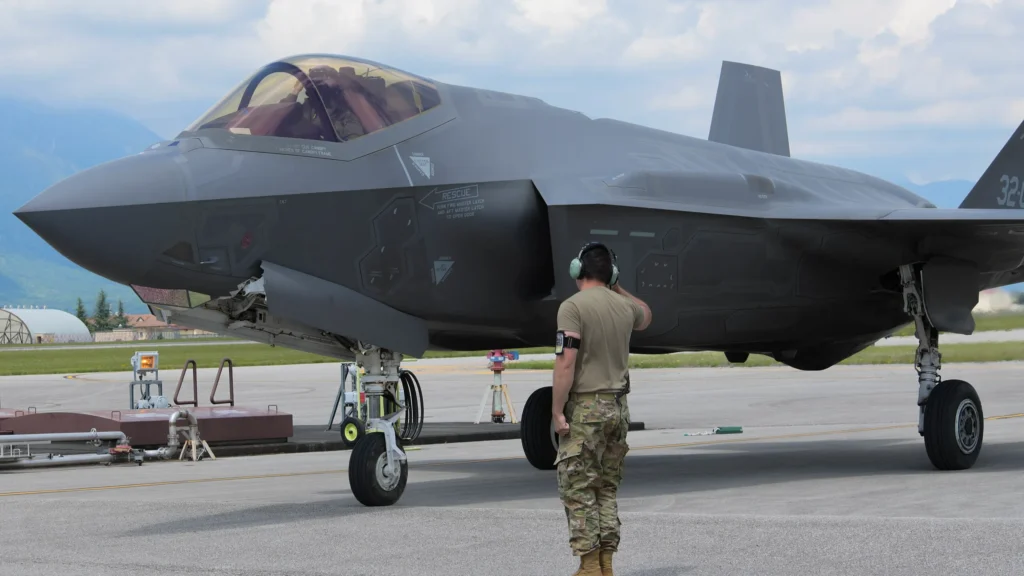
Lockheed Gets $1.7 Billion for F-35
The audit determined that the F-35 Joint Program Office did not include aircraft readiness performance or other measurable requirements in the June 2024 air vehicle sustainment contract.
As a result, the department had paid Lockheed Martin more than $1.7 billion by July 1, 2025, even though the Full Mission Capable, Mission Capable, and Air Vehicle Availability rates did not meet minimum service standards.
According to the Office of Inspector General memo, “The average Air Vehicle Availability rate for all F-35 aircraft in FY 2024 was 50 percent, meaning the aircraft were not available to fly half of the time.”
The audit also found that the Joint Program Office monitored performance but did not enforce material inspection and government property reporting requirements.
In addition, the audit reported that the office did not effectively use contracting officers’ representatives to oversee performance at F-35 operating locations. These representatives are responsible for the daily evaluation of contractor work and reporting site-level results.
The Joint Program Office manages F-35 production and sustainment and is responsible for a comprehensive sustainment plan.
The F-35 Joint Strike Fighter remains the largest acquisition program in Pentagon history, with total lifecycle costs exceeding 2 trillion dollars to buy, operate, and sustain the aircraft fleet.
The auditor’s report notes that F-35 aircraft are designed for a service life of about 8,000 flight hours. Testing on the F-35A variant shows the potential for extended use up to 24,000 flying hours, equal to three service lives, according to reporting by Simple Flying.
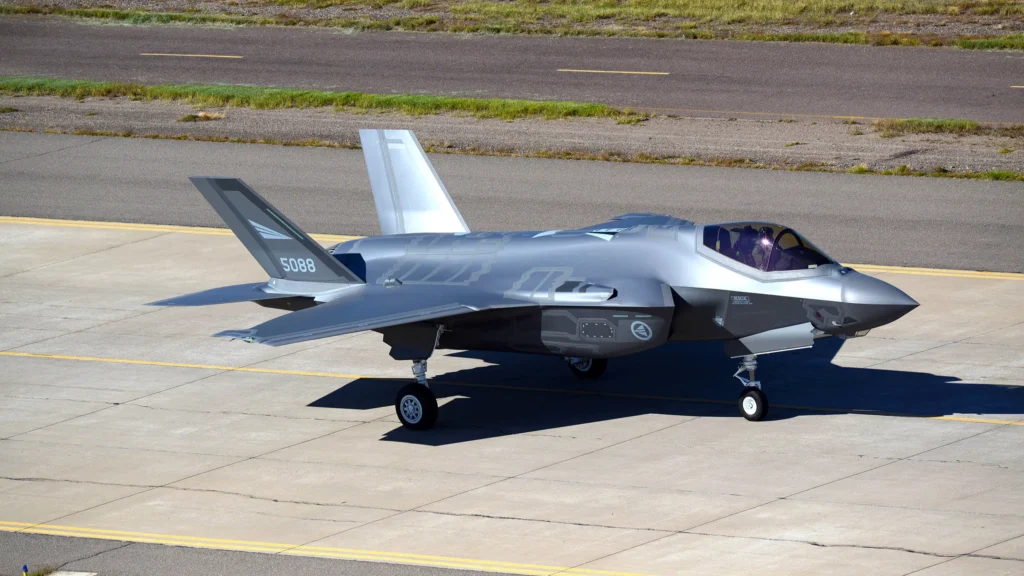
Recommendations from the Inspector General
The Office of Inspector General issued seven recommendations to the Under Secretary of Defense for Acquisition and Sustainment and to the Program Executive Officer for the F-35 program.
These include modifying the contract to include incentive metrics that align with service performance requirements, improving oversight duties of contracting officers’ representatives to collect impactful evaluation data, and reviewing staffing levels at every base where F-35 oversight is required.
The official performing the duties of the Assistant Secretary of Defense for Sustainment, responding on behalf of the Under Secretary and the Program Executive Officer, generally agreed with the findings. Of the seven recommendations, six are classified as resolved but remain open, while one is still unresolved.
The inspector general requested that the Under Secretary of Defense for Acquisition and Sustainment provide comments on the unresolved recommendation within 40 days of the final report. Resolved recommendations will close once management submits documentation proving corrective action.
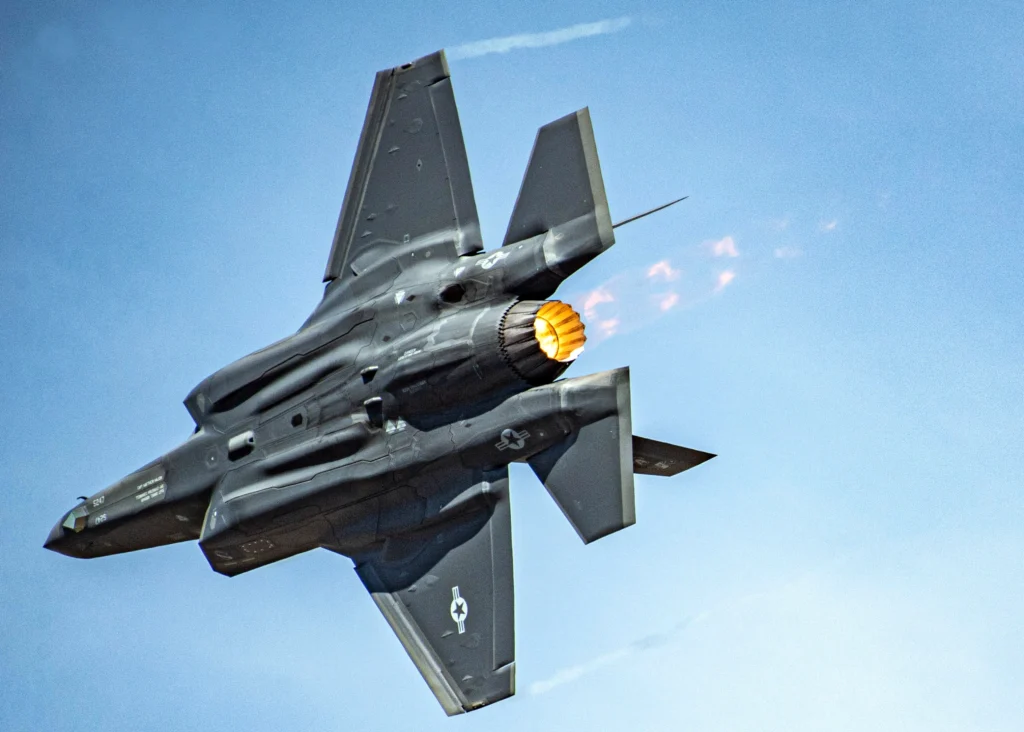
F-35: Most Advanced Fighter Jet in the World
The F-35A Lightning II is the U.S. Air Force’s latest fifth-generation fighter aircraft, built to replace aging combat jets and improve survivability in contested airspace.
It combines stealth design, advanced sensors, and powerful data sharing to support air dominance, strike missions, and joint operations worldwide.
Modern Air Superiority Built for Today’s Missions
The F-35A Lightning II is the conventional takeoff and landing variant of the Joint Strike Fighter program. It replaces legacy platforms such as the F-16 Fighting Falcon and A-10 Thunderbolt II by delivering stealth capability, advanced avionics, and strong multirole performance.
Designed to operate in heavily defended environments, the aircraft provides enhanced situational awareness and reduced vulnerability for both U.S. and allied air forces.
Powered by a Pratt & Whitney F135-PW-100 turbofan engine producing 43,000 pounds of thrust, the F-35A reaches speeds up to Mach 1.6 and operates above 50,000 feet. It is 9g capable and features an aerodynamic design optimized for agility and low observability.
The aircraft integrates advanced systems such as the Electro-Optical Distributed Aperture System, which offers 360-degree awareness for missile and aircraft detection, and the Electro-Optical Targeting System, which supports long-range detection and precision engagement.
A helmet-mounted display replaces traditional cockpit displays, projecting flight and targeting data directly onto the pilot’s visor.
Secure tactical data links allow the F-35A to share information across joint and coalition networks, strengthening interoperability. The aircraft uses an integrated logistics and maintenance system known as the Autonomic Logistics Information System.
ALIS tracks performance, maintenance status, training data, mission planning information, and health monitoring to improve reliability and reduce total life cycle cost.
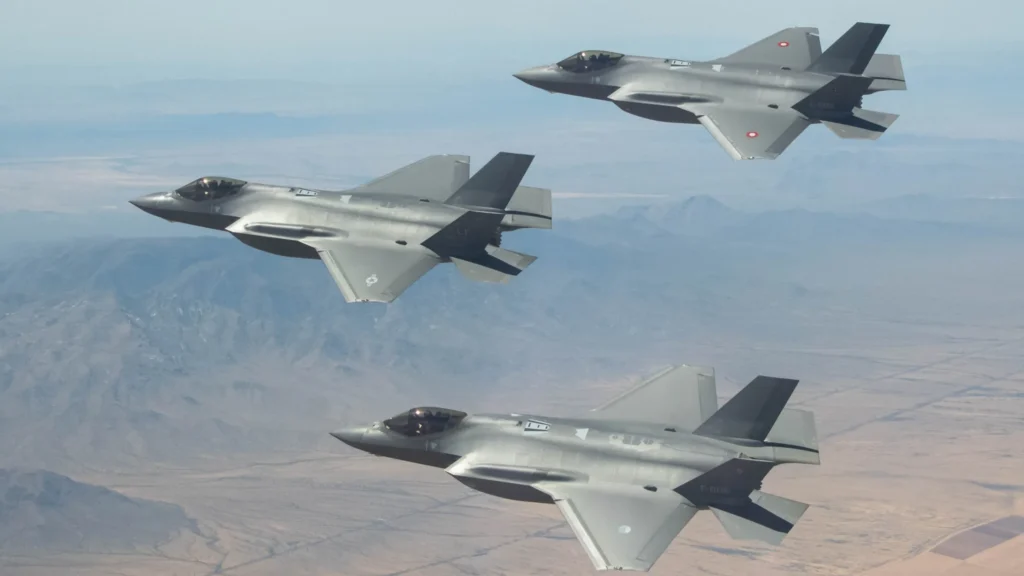
https://commons.wikimedia.org/wiki/File:US_Danish_Dutch_F-35A.jpg
Strategic Role and Global Cooperation
The F-35A supports homeland defense, irregular warfare, and large-scale combat operations. It acts as an information hub, collecting and distributing real-time battlefield data. This capability helps commanders make faster and more accurate decisions in complex airspace.
Nine partner nations participated in development: the United States, the United Kingdom, Italy, the Netherlands, Turkey, Canada, Denmark, Norway, and Australia.
The program supports shared logistics, common communication systems, and aligned capability development across allied forces.
Program History
On October 26, 2001, the U.S. Department of Defense approved the Joint Strike Fighter program for System Development and Demonstration.
The announcement was made by Under Secretary of Defense for Acquisition, Technology and Logistics Edward C. Pete Aldridge Jr. Lockheed Martin, partnered with Northrop Grumman and BAE Systems, was selected to develop and produce the aircraft.
The program adopted a phased block upgrade approach to integrate weapons, software, and systems over time while managing overall cost.
General Characteristics
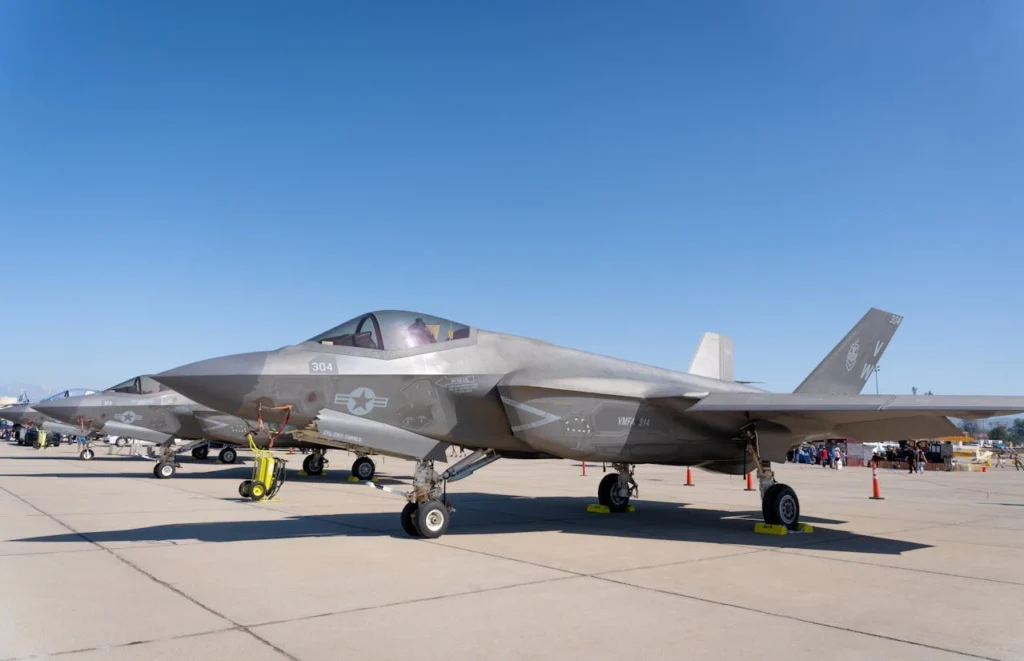
Primary Function: Multirole fighter
Prime Contractor: Lockheed Martin
Power Plant: Pratt & Whitney F135-PW-100 turbofan
Thrust: 43,000 pounds
Wingspan: 35 feet
Length: 51 feet
Height: 14 feet
Maximum Takeoff Weight: 70,000-pound class
Fuel Capacity (Internal): 18,498 pounds
Payload: 18,000 pounds
Speed: Mach 1.6
Range: More than 1,350 miles with internal fuel
Ceiling: Above 50,000 feet
Armament: Internal and external stores based on mission
Crew: One
Mission Systems and Combat Flexibility
The F-35A integrates sensor fusion, secure communications, and precision targeting. This design supports positive target identification and accurate strike missions in all weather conditions. Over-the-nose visibility and advanced mission software improve pilot performance during complex operations.
The aircraft employs a wide range of U.S. and allied weapons, allowing flexible mission planning across air-to-air and air-to-ground roles.
Stay tuned with us. Further, follow us on social media for the latest updates.
Join us on Telegram Group for the Latest Aviation Updates. Subsequently, follow us on Google News
