

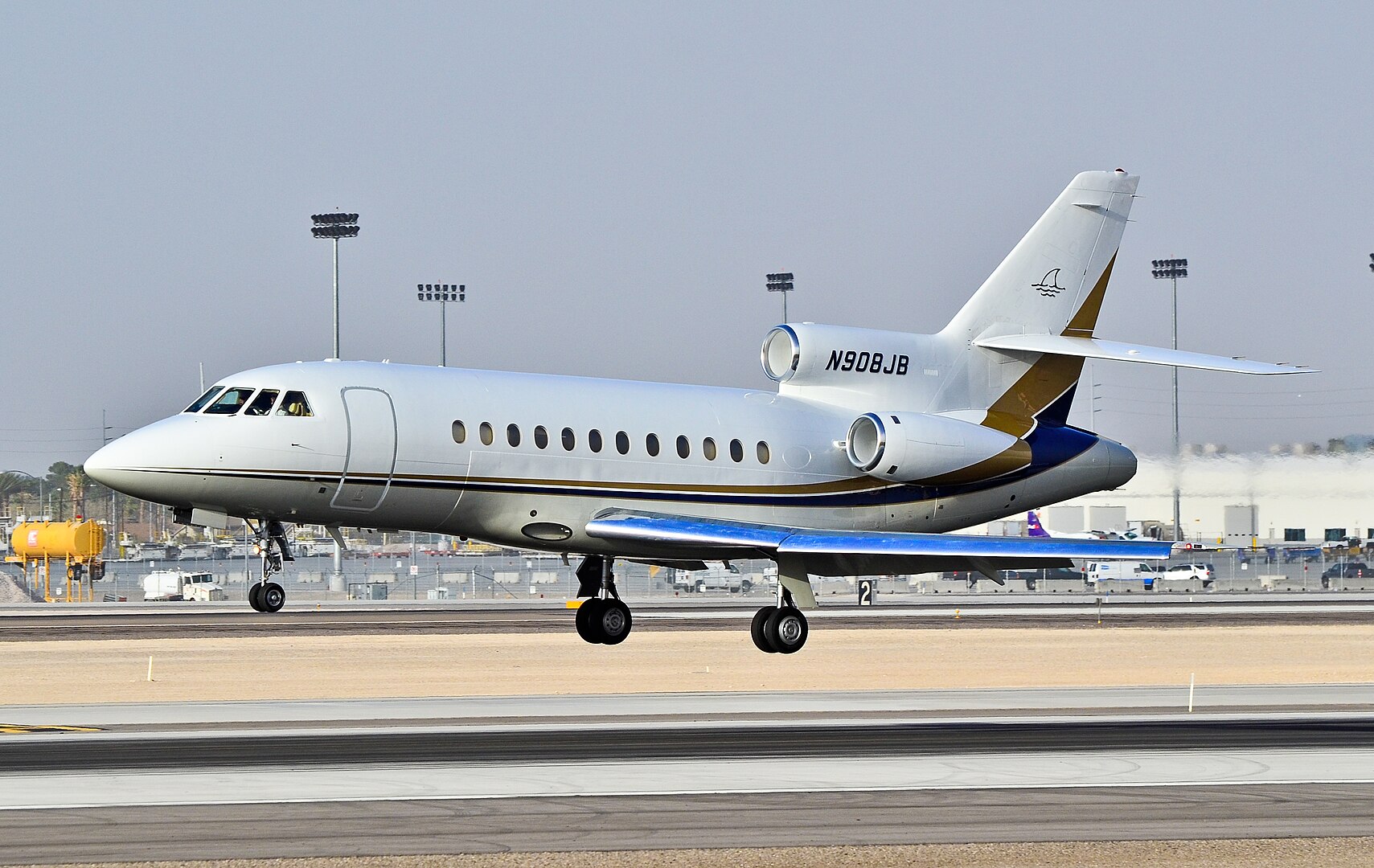
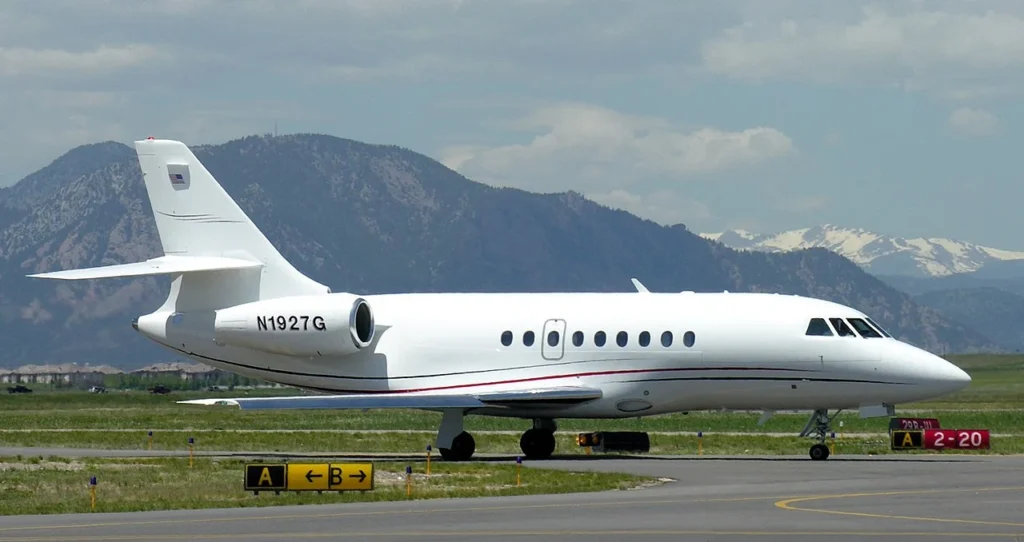
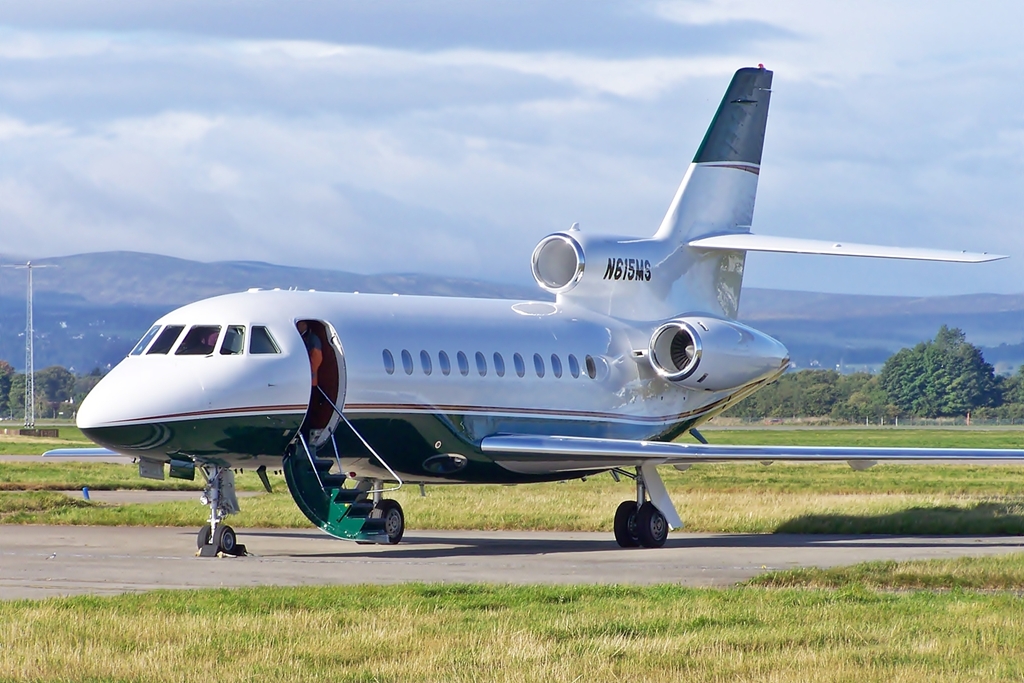
A Dassault Falcon 900 operating as N888ZA departed Oranjestad Queen Beatrix International Airport (AUA) for Miami Opa Locka Executive Airport (OPF) when it encountered close traffic shortly after takeoff.
The crew reported a near miss with an unidentified widebody aircraft after being instructed to turn due to conflicting radar returns north of Aruba.
Business Jet Avoids Collision
The Falcon 900 was climbing toward flight level 380 when Curaçao Center directed a right turn to avoid unidentified traffic ahead.
The crew complied but soon reported visual contact with an aircraft they described as large and unusually close. They questioned why no traffic alert was triggered and noted that the turn placed them on a converging path.
ATC advised that the unidentified aircraft was maneuvering irregularly and later warned of another aircraft approaching from the Falcon’s five o’clock position. The controller estimated the conflicting traffic at roughly flight level 260.
The crew stated they were climbing directly into its path and identified it visually as similar to a Boeing 777 or 767. ATC later confirmed that the trailing traffic had turned eastbound and no longer posed a risk.
ATC Communications Overview
The exchange shows the controller issuing avoidance vectors based on uncertain altitude data. The crew’s comments underscore the unexpected proximity and the absence of a resolution advisory.
Their visibility of the aircraft supported their assessment that it was a widebody type moving unpredictably.
Here’s a detailed a decription of communication between ATC and Pilot as flagged by YouCanSeeATC as recorded by LiveATC.net:
{ts:14}
Pilot: Hello, Curaçao, November 888 Zulu Alpha, 21.5 for flight level 240.
ATC: Good afternoon, climb FL380.
{ts:27}
ATC: 88 Alpha, turn right heading 020. Identified traffic at 12 o’clock, closing, 10 miles, level not known.
Pilot: Right 020 for 88 Alpha.
{ts:50}
Pilot: Right 020, 88 Alpha. We got that traffic. I don’t know how we didn’t get an RA for that, but they were really close and you turned us into them.
{ts:60}
ATC: They keep on turning irregular. Proceed direct to KFE, 88 Alpha.
{ts:69}
ATC: And 88 Alpha, you have another one coming up behind you at your 5 o’clock, 8 miles out.
Pilot: Okay, 88 Alpha.
{ts:90}
Pilot: 88 Alpha, could you indicate what altitude the traffic was on?
ATC: Somewhere around 260.
{ts:98}
Pilot: We were climbing right into him.
ATC: Roger, do you have any sight?
{ts:108}
Pilot: It was big, maybe like a Trip 7, 76, something like that, a widebody.
{ts:114}
ATC: Roger, notify them. The traffic that was behind you is currently proceeding eastbound, so you’re clear of traffic.
Pilot: Okay, thanks, 88 Zulu Alpha.
Altitude and Traffic Assessment
Based on the controller’s estimate, the unidentified aircraft was near flight level 260 while N888ZA was climbing through the mid-twenties.
The rapid closure rate would have reduced reaction time. The crew’s concern indicates a situational awareness gap caused by limited ATC information on the conflicting aircraft’s exact altitude and intentions.
Operational Takeaways
The event highlights the challenges of managing traffic with irregular or unverified altitude reporting. It also illustrates how climb instructions and avoidance vectors need precise timing and clarity when radar data is incomplete.
The Falcon 900 crew maintained visual vigilance and followed subsequent clearances once traffic separation was restored.
Stay tuned with us. Further, follow us on social media for the latest updates.
Join us on Telegram Group for the Latest Aviation Updates. Subsequently, follow us on Google News
