


KUALA LUMPUR- AirAsia (AK), Malaysia’s leading low-cost carrier, has approved a new uniform option that allows Muslim female cabin crew to wear the hijab, marking a major change after nearly 25 years of operating with one of the most recognizable uniform styles in the region.
The policy aligns with cultural expectations in Malaysia, home to Kuala Lumpur International Airport (KUL), and responds directly to long-standing staff feedback.
The airline confirmed that hijab head coverings and trousers will become available to female cabin crew beginning Ramadan 2026, expected to start around February 18th or 19th.
Meanwhile, the decision ends decades of maintaining a single, form-fitting outfit that defined the carrier’s brand.
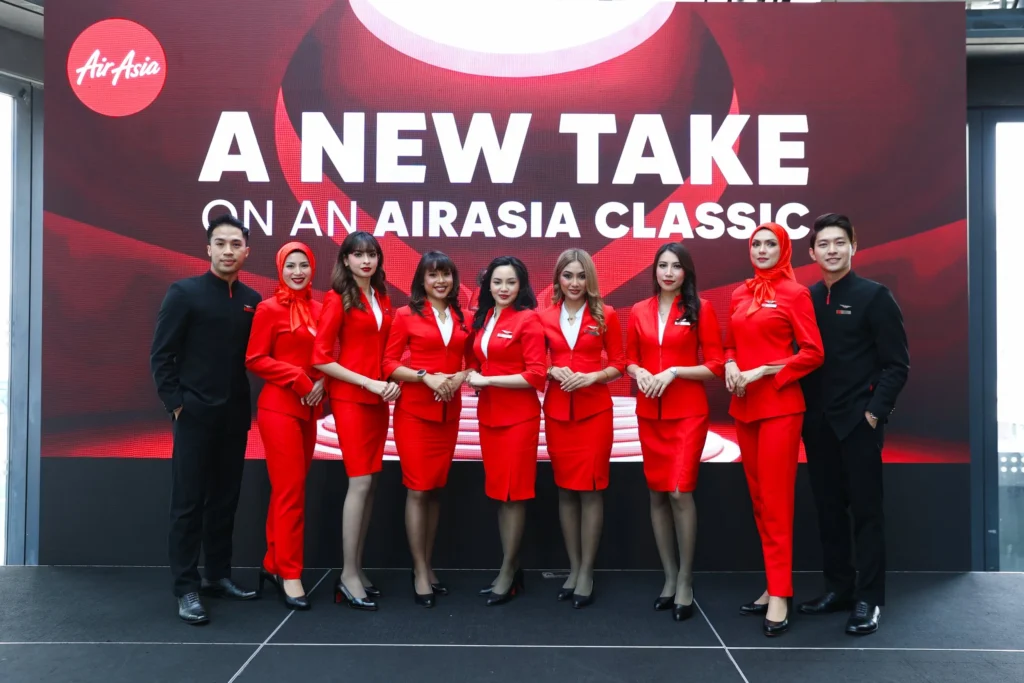
AirAsia New Hijab-Friendly Uniform
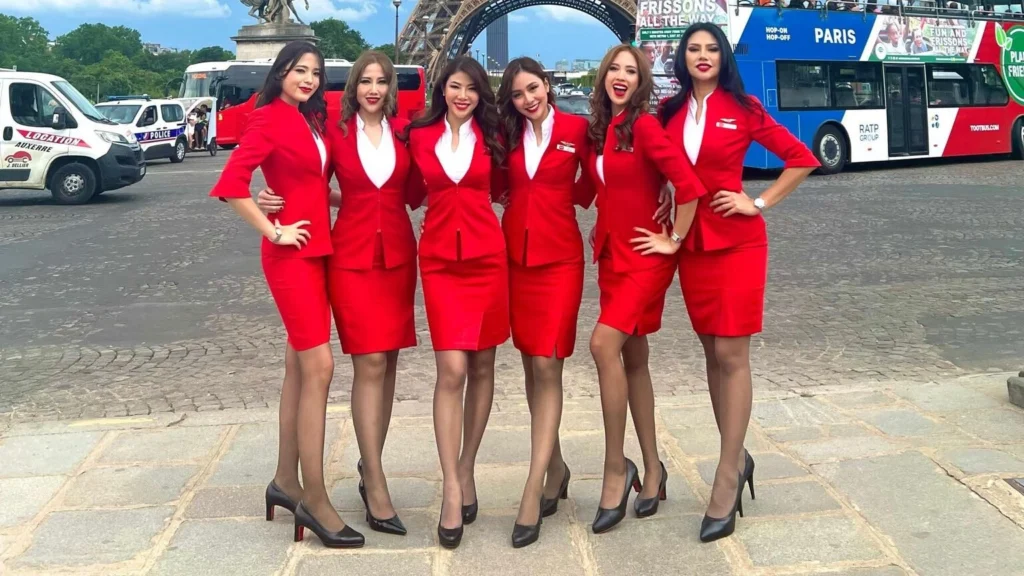
For almost a quarter of a century, AirAsia dressed its cabin crew in bright red uniforms featuring short above-the-knee skirts, sheer black tights, and open-neck shirts.
Designers created this visually striking look to attract attention, and it became a core element of the airline’s identity.
According to PYOK, feedback from employees and the public accelerated the transition to more modest attire, prompting the airline to expand uniform options.
AirAsia leadership emphasized that the policy change reflects a commitment to respecting diverse beliefs within the workforce.
Founder Tony Fernandes stated that listening to crew concerns is essential to organizational growth, highlighting that evolving together with employees supports long-term success.
The airline’s confirmation that the hijab can be worn across the network marks a shift from its previous stance of restricting the head covering to select destinations.
Past Practices: Compliance and Controversies
Before the updated policy, AirAsia allowed female staff to wear the hijab only when local authorities required it. Jeddah flights were the most notable example.
In 2019, the airline addressed hijab-related arrival requirements in Aceh, Indonesia, by rostering only male cabin crew.
Local regulations there required female personnel to wear a head covering on arrival, and the airline avoided placing non-Muslim female staff in that position. The new uniform rules resolve this inconsistency and provide a standardized, respectful approach for Muslim crew members.
Malaysia’s political environment has increasingly debated how broadly Islamic practices should apply in public services.
Some conservative lawmakers have called for Malaysia Airlines to remove alcohol from its inflight service.
However, political leaders argue that Malaysia must preserve its reputation as a moderate and welcoming nation, warning that enforcing religious obligations on non-Muslims could harm the tourism sector.
AirAsia’s updated uniform policy demonstrates an attempt to balance cultural alignment with operational practicality.
Why Hijab Remains Rare in Global Aviation
Hijab use among cabin crew worldwide is uncommon due to job requirements that include serving alcohol, a task with no exemptions under standard airline operating rules.
Some Muslim crew members may object to handling alcoholic beverages on religious grounds, which can limit eligibility for certain roles.
Despite this, many Muslim cabin crew around the world perform these duties, while more orthodox individuals may choose not to work in positions requiring alcohol service.
AirAsia’s revision does not change job responsibilities; it expands acceptable attire for those who can meet all service requirements.
Bottom Line
AirAsia will introduce hijab and trouser options for female cabin crew starting in 2026, ending decades of a single uniform style and acknowledging the cultural and religious needs of its workforce.
Additionally, the update follows extensive feedback and represents a significant operational and brand evolution for the airline.
Stay tuned with us. Further, follow us on social media for the latest updates.
Join us on Telegram Group for the Latest Aviation Updates. Subsequently, follow us on Google News
