

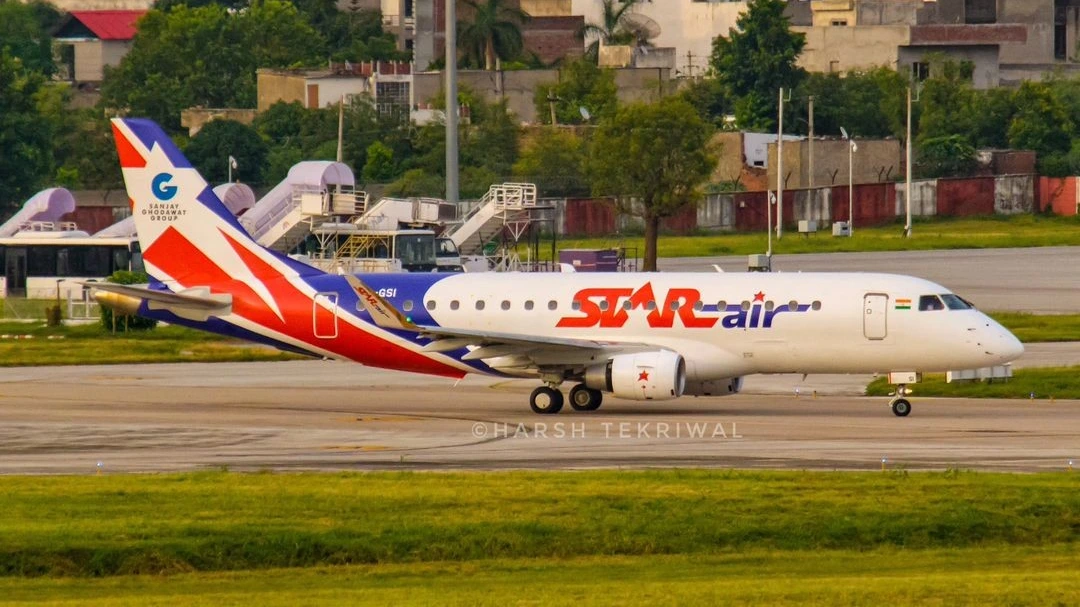
BENGALURU- Star Air (S5) is preparing for a significant Embraer aircraft order as it builds on steady regional growth across India. The airline has expanded its presence through the UDAN program and is now positioned for a larger national footprint.
The carrier aims to scale its fleet from 11 Embraer aircraft to about 50 fixed and rotary wing assets by 2030. This expansion goal aligns with its strategy to connect underserved cities and strengthen links to major hubs such as Delhi Airport (DEL) and other state capitals, TOI reported.
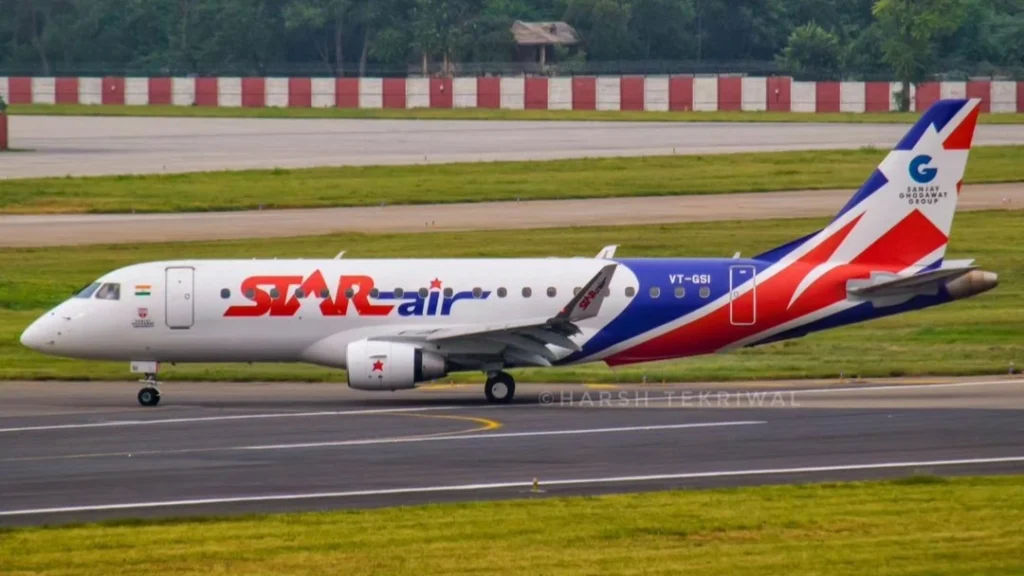
Star Air Embraer Order
Star Air began operations in 2019 with a single used Embraer jet and gradually added more aircraft through purchases and leases. Its network includes 31 cities, many supported by the UDAN regional connectivity scheme (RCS).
The airline currently operates 56 daily flights, with UDAN routes accounting for roughly two-thirds of its schedule. Annual UDAN support stands between 200 and 250 crore, which continues to play a direct role in sustaining services to low traffic markets.
Management has outlined a clear plan to reach 20 aircraft by April 2028, which would qualify the carrier for international operations.
Embraer has indicated interest in establishing a final assembly line in India if it receives commitments for around 200 aircraft from Indian buyers. A potential order from Star Air would be one of the first from the country and could influence broader interest in Embraer regional jets.
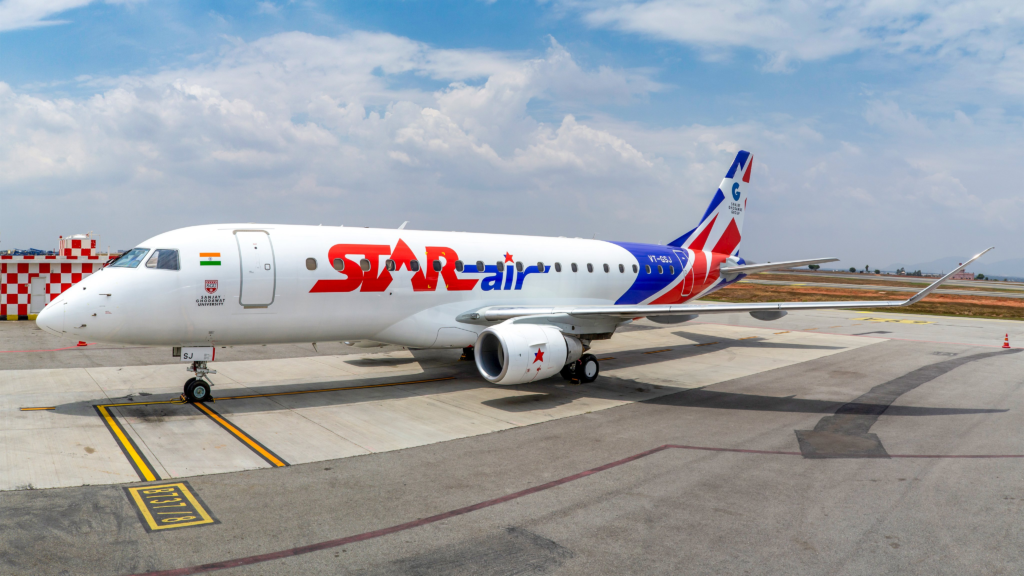
Operational Resilience and Financial Strategy
Star Air attributes its sustained growth to stable financial practices and disciplined operations. The airline completed the first stage of a 350 crore Series B capital raise, which will support future fleet expansion and infrastructure development.
Plans include building in-house maintenance, repair, overhaul, training, and aviation training capabilities to reduce long-term operating costs and improve technical control over the fleet.
The company highlights its approach during the pandemic as a key turning point. While the aviation sector faced severe disruption, Star Air maintained payments to lessors and employees. This stability helped the airline secure confidence from partners and investors, allowing it to continue adding aircraft during a period when many regional carriers struggled to remain viable.
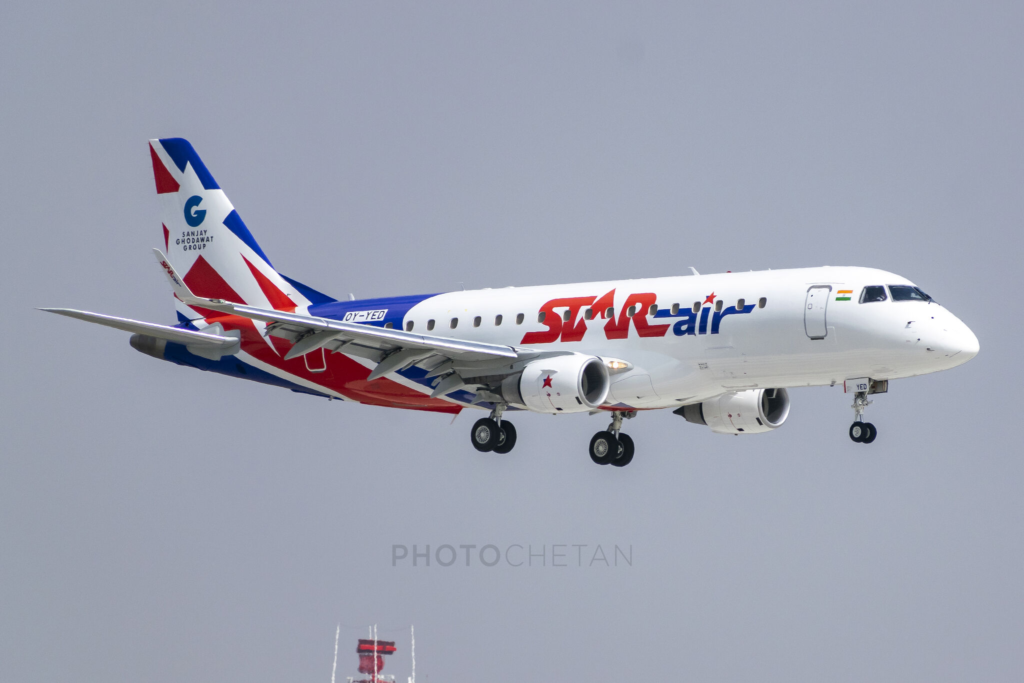
Growth Trajectory Toward 2030
Star Air expects to induct two additional aircraft this fiscal year and another five to six next year. This will bring the fleet closer to the medium-term target of 20 operating aircraft.
The long-term plan calls for adding eight to ten aircraft annually, including helicopters, to reach a total fleet of roughly 50 by 2030.
The strategy focuses on expanding access to underserved Tier 2 and Tier 3 markets and improving regional air mobility across India.
Stay tuned with us. Further, follow us on social media for the latest updates.
Join us on Telegram Group for the Latest Aviation Updates. Subsequently, follow us on Google News
