

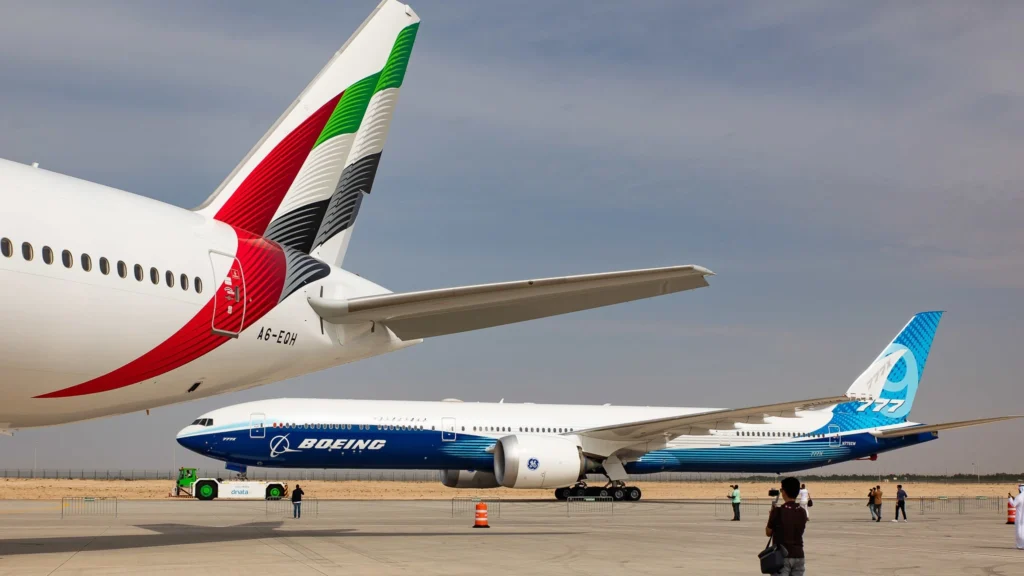
DUBAI- Emirates (EK), the world’s largest operator of Boeing 777-300ERs and top customer for the 777-9, presses Boeing to explore a stretched variant of the 777X family. This move addresses growing capacity needs as the Airbus A380 era winds down from the mid-2030s.
Dubai International Airport (DXB) handles over 80 daily A380 movements, cementing its role as the global hub for very large jets. Operators like Emirates face challenges from rising Persian Gulf traffic, with no direct 500-plus seat replacement in sight.
Airbus and Boeing Plan New Widebody Variants
Emirates Airline President Tim Clark spearheads efforts to convince Boeing and Airbus to study extended versions of their largest twinjets.
He argues that in widebody development cycles, the 2030s arrive swiftly, making now the ideal time for feasibility work.
Clark highlights Emirates’ recent order of 65 additional Boeing 777-9s on November 17, which includes conversion options to a larger model if Boeing proceeds.
At the Dubai Airshow, Clark urged Boeing to rigorously assess a 777-9 stretch, informally called the 777-10.
He acknowledges Boeing’s current workload but notes historical gaps of five to six years between variants, even in stable times.
For Emirates, hub congestion at Dubai International Airport (DXB) intensifies the need for high seat counts, though the shift to the expanding Dubai World Central Airport (DWC) by 2032 will ease frequency constraints.
Clark deems the 777-10 technically viable, citing upcoming maximum takeoff weight increases and shared wings with the 777-9.

The GE Aerospace GE9X turbofan offers inherent growth potential, he adds. While targeting a niche, Clark predicts broad appeal: “If you do this, we will not be alone,” he told Boeing.
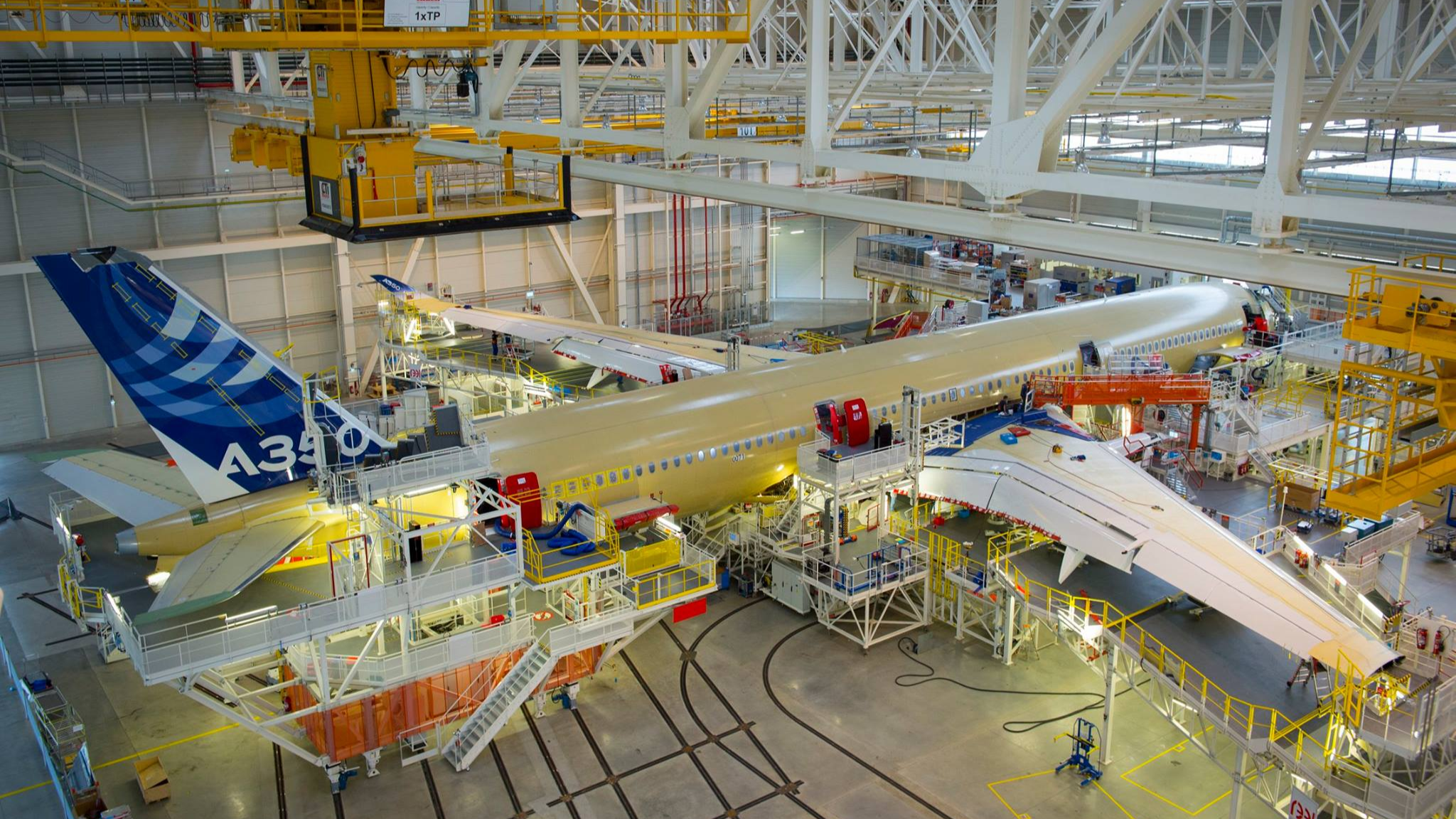
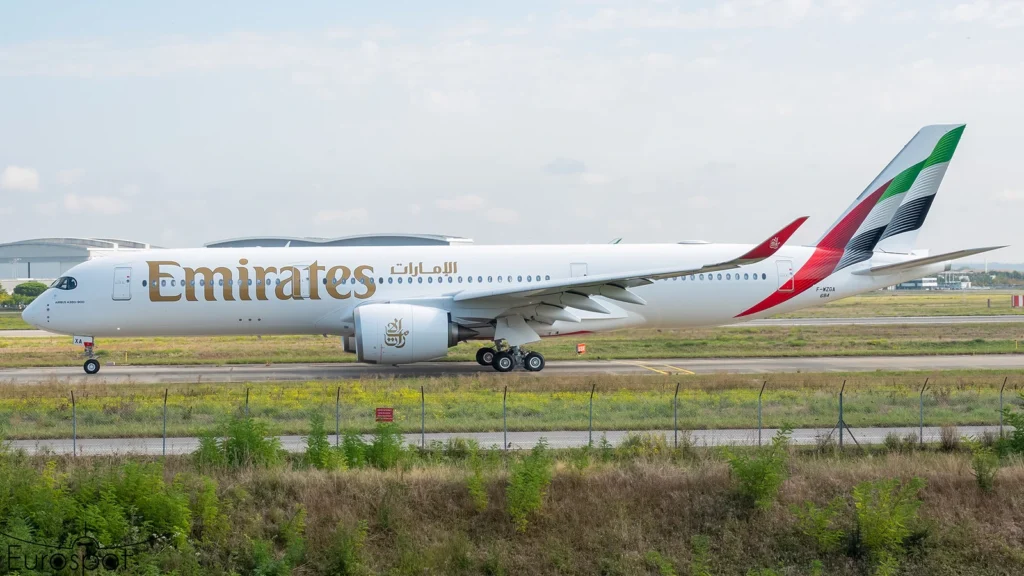
Emirates simultaneously pushes Airbus for an A350-2000, a stretch of the in-service A350-1000.
Clark shares ongoing discussions with Airbus Commercial CEO Christian Scherer but views Boeing’s stretch as simpler, avoiding the need for a new engine on the A350.
The Rolls-Royce Trent XWB-97 powering the A350-1000 lacks sufficient capability under Emirates’ operating conditions, Clark explains, though he insists fixes remain achievable.
Scherer confirms the Trent XWB can support a larger A350 and affirms Airbus’ ability to stretch the airframe.
Reported by Aviation Week, Scherer reveals rising demand from multiple customers seeking competition in large-capacity segments. “People pretty much everywhere are talking to us about it,” he says, noting a market longing for bigger aircraft.
Airbus eyes adding four rows or about 40 seats, keeping options flexible. Scherer contrasts this with the 777X’s development status: Airbus starts with a certified engine and airframe.
He addresses thrust limits at 97,000 pounds but emphasizes the A350-1000’s current status as the world’s longest-range jet. Upcoming engine upgrades will match regional durability standards.
At the Paris Air Show in June, Rolls-Royce Group Director Simon Burr described Airbus’ A350 stretch talks as tentative. A simple extension could enter service quickly via higher-thrust XWB-97 upgrades, rather than integrating the advanced UltraFan engine.
The UltraFan demands wing redesigns due to shifted weight distribution, making it a longer-term option, Burr notes.
Stretching trades range for capacity, Scherer admits, as thrust constraints extend takeoff distances. This shift poses no issue for targeted routes, he says: “We don’t need to fly from Auckland to London every day.”
Airbus prioritizes resource allocation for the A350 ultralong-range variant, freighter, and A220 stretch but remains unconstrained overall. Scherer withholds a launch timeline, stressing phased engineering deployment.
777-10 Feasibility Amid Certification Demands
Boeing commits to a joint study with Emirates on a 777-10, focusing on takeoff performance under engine-out scenarios.
These rules demand directional control, climb rates, and extended distances for twinjets, says Justin Hale, 777X customer leader. The study explores configurations from modest plugs, similar to the 777-300ER’s extension, to bolder leaps like the original 777-300’s 242-foot length.
The baseline 777-9 measures 251 feet 9 inches; a 16-foot stretch to 268 feet could add 50-plus seats, reaching 470 total.
Boeing’s electronic tailskid system safeguards against overrotation, but performance impacts dominate concerns. Evaluations will assess structural weight gains, payload shifts, and range adjustments.
Darren Hulst, Boeing’s vice president of commercial marketing, frames the effort as ongoing innovation beyond initial delivery.
Boeing probes market signals for more range, payload, or capacity. The study balances risk against versatility: over 1,000 aircraft above 350 seats, including A380s and 777-300ERs, face replacement.
Most favor the 777-9’s size for balanced growth, Hulst says, cautioning that excessive capacity risks prove costly. The core question pits added seats against platform flexibility for broader applications.
Stay tuned with us. Further, follow us on social media for the latest updates.
Join us on Telegram Group for the Latest Aviation Updates. Subsequently, follow us on Google News
