

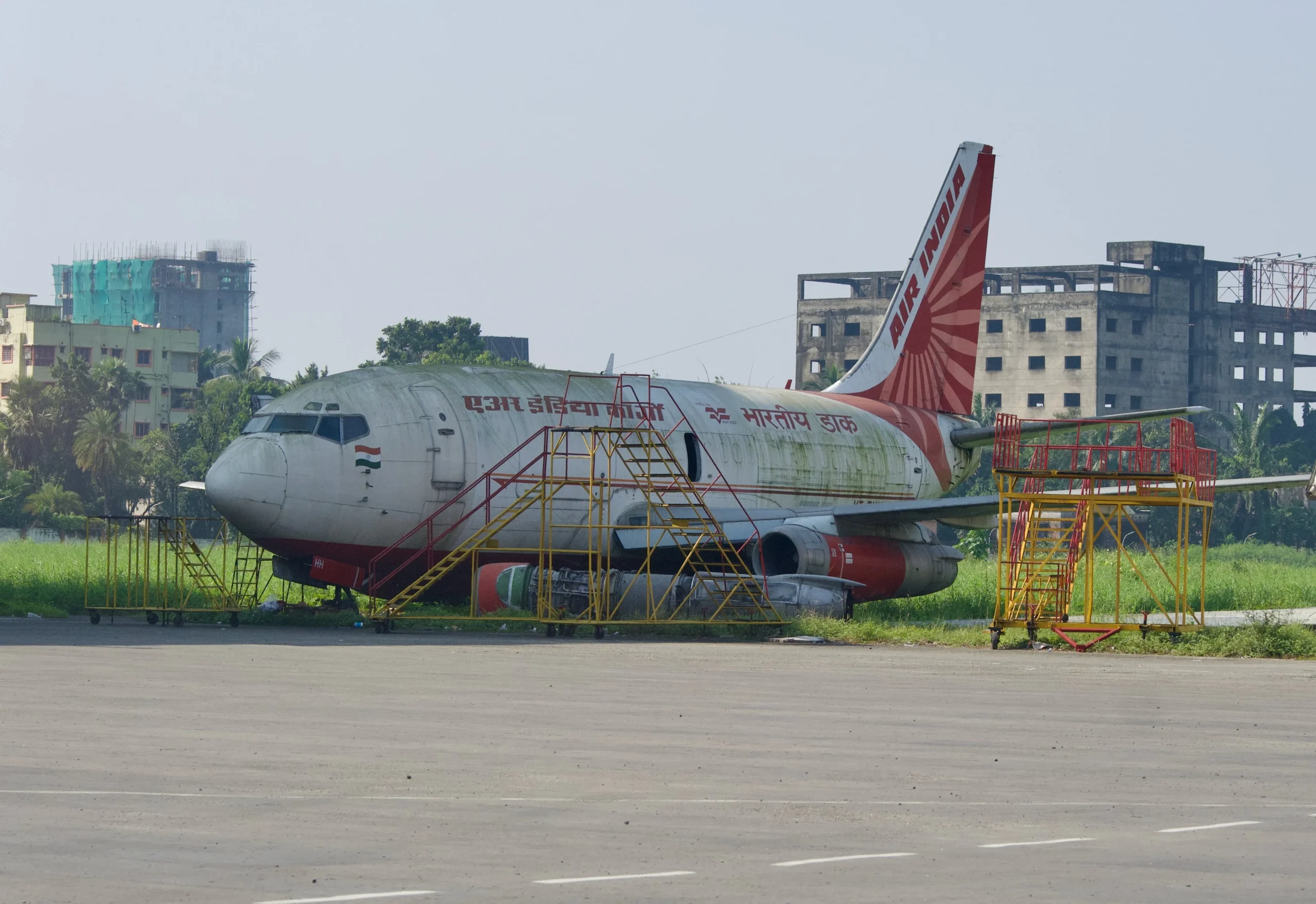
GURUGRAM- Air India (AI) identified a missing Boeing 737 at Kolkata Airport (CCU), uncovering an aircraft that had been abandoned for 13 years and overlooked across successive administrative cycles.
The jet, a 43-year-old Boeing 737-200, remained unnoticed until Kolkata Airport requested its removal.
The discovery triggered an internal audit that revealed how the aircraft vanished from official records before privatization.
The case reflects legacy gaps that once shaped the former state-run airline’s asset management practices.
Air India Found Missing 737
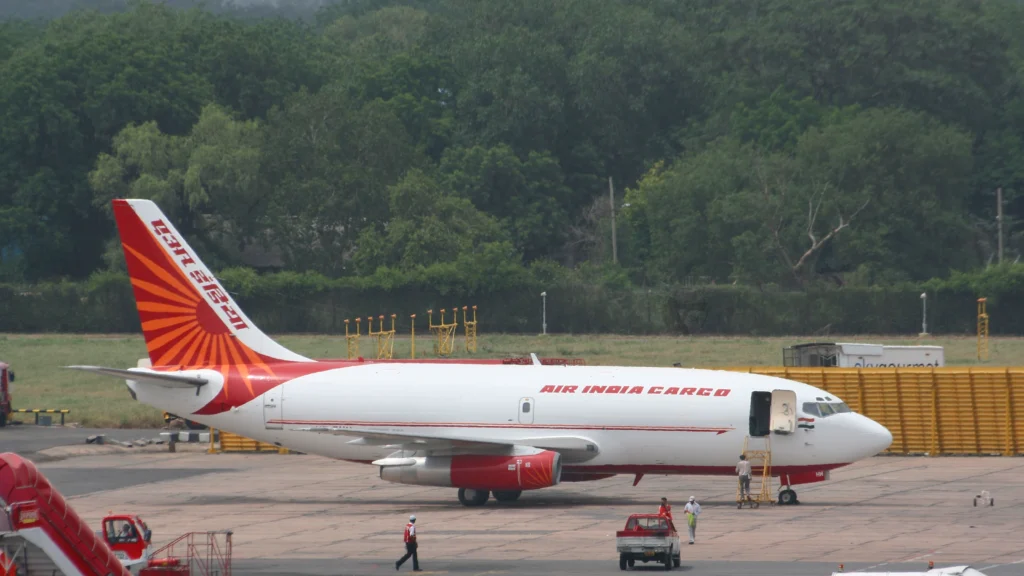
The aircraft, registered as VT-EHH, was a Boeing 737-2A8F from the Baby Boeing family. Delivered to Indian Airlines (IC) in 1982, it later operated with Alliance Air before Air India converted it into a freighter in 2007.
It flew with India Post titles but was grounded at Kolkata Airport (CCU) in 2012. Instead of being sold, scrapped, or parted out, the jet sat idle in a remote corner of the airfield and disappeared from the airline’s fixed-asset documentation.
Kolkata Airport officials eventually contacted Air India to request the removal of the abandoned jet.
This prompted a detailed internal check that confirmed the aircraft had been omitted from multiple documents for years.
The oversight meant depreciation schedules, insurance records, maintenance forecasts, and financing-related registers failed to reflect its existence.
At the time, taxpayers were responsible for losses, and the outdated processes allowed this lapse to persist.
Operational Oversight
Air India CEO Campbell Wilson informed staff that, in the years leading up to privatization, VT-EHH was repeatedly left out of internal records.
As a result, the aircraft did not factor into the valuation during the Tata Group acquisition. Before privatization, the carrier did not maintain the kind of structured fixed-asset registers that well-run airlines use to track depreciation, parking charges, insurance liability, and maintenance cycles.
Insurers, maintenance planners, and finance teams rely on such registers to understand operational risk and cost exposure, but VT-EHH had dropped completely out of view.
Additional historical accounts indicate that VT-EHH and another classic bird, VT-EGG, were stored together in Kolkata.
VT-EGG was later moved to Rajasthan to become an aircraft restaurant, while VT-EHH remained at CCU.
Other aviation observers noted that after its retirement, VT-EHH was seen in its final days at Delhi (DEL) before eventually ending up as a themed restaurant structure in Rajasthan.
Modernization Efforts and Organizational Cleanup
The missing aircraft underscores the challenges of modernizing a legacy carrier with decades of inconsistent documentation.
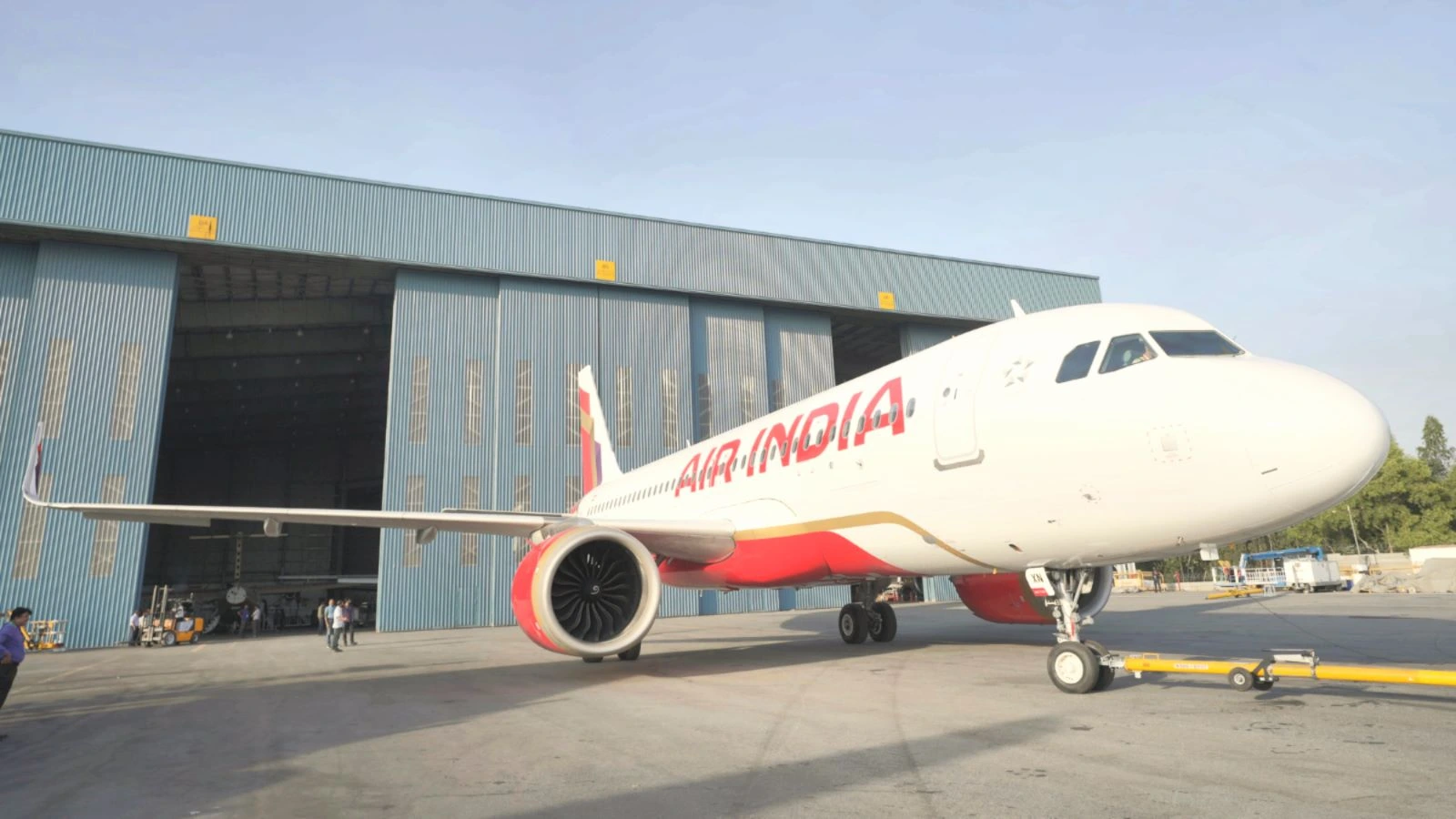
Since acquiring the airline, Tata Group has been rebuilding IT systems, renegotiating vendor contracts, cleaning up leases, and addressing HR gaps. These steps aim to establish governance standards that meet global aviation benchmarks.
The sale and transfer of VT-EHH were completed after its rediscovery, though the buyer and sale price remain undisclosed.
The outcome highlights why detailed record validation is essential when overhauling complex airline operations with long operational histories.
Stay tuned with us. Further, follow us on social media for the latest updates.
Join us on Telegram Group for the Latest Aviation Updates. Subsequently, follow us on Google News
