

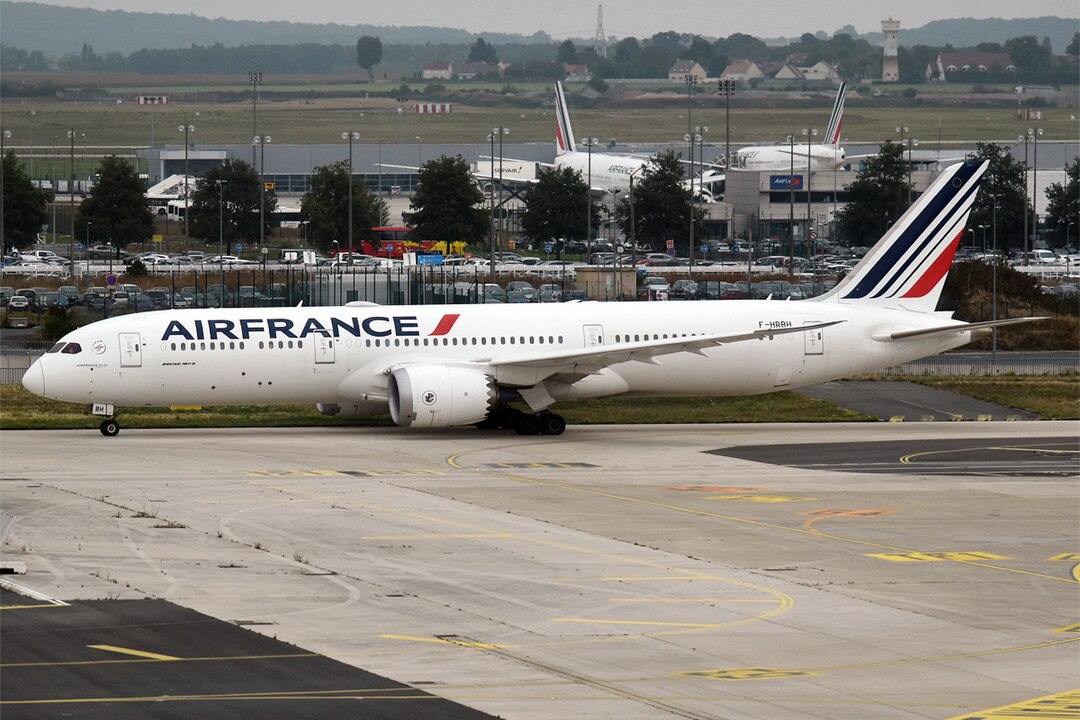
PARIS- Air France (AF) issued confirmed Flying Blue award tickets for a family of four, then cancelled them repeatedly, including once on the day of travel after the passengers had already checked in, according to a US Department of Transportation complaint filed on June 10, 2026.
The passengers were booked from New York (JFK) to London (LHR) on Virgin Atlantic (VS) in Premium Economy using transferred miles, redeemed by an assistant acting for the accountholder.
The case became public after Air France customer service accidentally forwarded its own internal emails to the affected customer.
As reported by View from the Wing, those messages show staff unable to determine why the tickets were cancelled, with a junior fraud analyst asserting “miles resale” without supporting evidence. The family eventually paid about £6,237 (US$8,354) for replacement seats from London Gatwick (LGW) to New York on Norse Atlantic (N0).
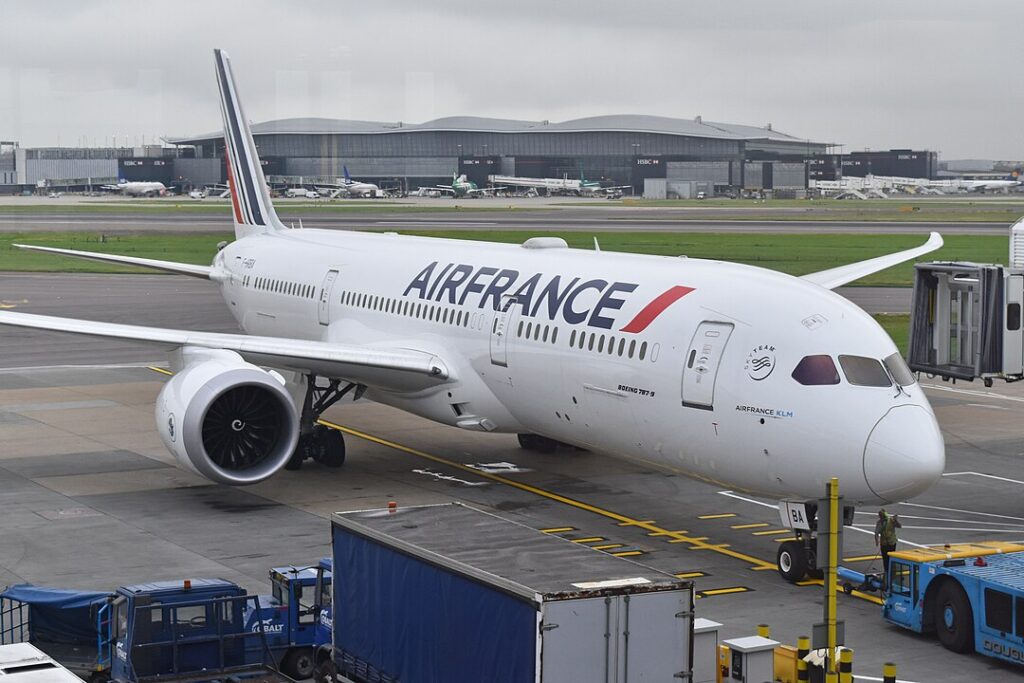
Confirmed Booking That Did Not Hold
The complaint describes a redemption that the Flying Blue fraud tool flagged and then cancelled without meaningful human review or timely notice.
Air France issued ticket numbers in “OK” status for all four passengers, then voided them minutes later. The airline never offered a consistent reason for the action.
The explanations shifted repeatedly over the course of the dispute. Air France cited “inconsistencies,” then account activity that “does not reflect frequent flyer activity,” then “miles resale,” and later “miles concierge servicing.”
The internal correspondence sent to the customer shows employees could not agree on a cause, so one analyst settled on “miles resale” without proof./
Three Cancellations, Step by Step
The regulatory filing describes a sequence that played out across several days. The DOT complaint identifies the person making the bookings as a religious leader’s assistant, redeeming on the accountholder’s behalf.
On July 2, 2024, the assistant transferred 166,700 Capital One points into Flying Blue and booked four passengers from JFK to LHR on Virgin Atlantic in Premium Economy, set to depart two days later. Air France cancelled the booking one minute after confirming it.
The assistant contacted Air France, which requested an identity form and a copy of the identification.
The customer returned both the same day. Air France then said the booking was cancelled for “inconsistencies” and account activity that did not reflect frequent flyer behavior, and stated that future requests could only be handled at an Air France or KLM (KL) ticket counter, refusing both online and call center service.
The family rebooked the outbound segment using American Airlines (AA) and Qantas (QF) miles, paying more points per passenger.
The following day, after the Flying Blue miles returned to the account, the assistant attempted the return from LHR to JFK on Virgin Atlantic in Premium Economy. Air France issued confirmations and tickets, then cancelled them two minutes later.
The assistant then tried a workaround. Suspecting the customer’s account was flagged, he linked his own account to the customer’s through Flying Blue Family accounts and booked the same four passengers home by phone using the customer’s points.
Those tickets held for several days. The passengers checked in online and printed boarding passes, but Air France cancelled the tickets on the day of travel.
With no way home, the family bought Premium Economy seats from LGW to JFK on Norse Atlantic for £6,236.79 across four passengers. They filed a UK261 claim with Virgin Atlantic, which rejected it on the grounds that the passengers held no valid tickets, since Air France had cancelled them.
Internal Emails Contradict the Official Account
The correspondence Air France mistakenly sent included internal exchanges between Air France and Virgin Atlantic. In them, Air France support staff asked fraud colleagues for the “correct reason” the tickets had been refunded, and the fraud team eventually selected “miles resale.”
The internal chain reveals shifting and conflicting positions. A junior fraud prevention analyst stated without evidence that the account was used for miles resale.
Another employee responded that mileage sales are not permitted, with no indication that this had actually happened.
Air France counsel later suggested the cancellation occurred because someone other than the accountholder made the booking. That explanation would not have applied to the first two reservations, where assistant redemption was allowed, and it effectively concedes that the original “miles resale” reason was false.
Air France’s later legal response claimed a “thorough review” found the Fraud Prevention team’s actions justified, citing patterns it described as “miles reselling” or “miles concierge servicing” across the two accounts.
At the same time, the airline said it did not contest how the miles were earned or the customer’s right to use miles for another person under permissible conditions. Air France declined to share its evidence, describing the fraud detection methods as confidential and proprietary.
The filing notes that no sale of points appears to have occurred, since the miles came from the customer’s own Capital One account, and no award booking service was involved beyond an assistant redeeming on the customer’s behalf.
One Fraud Category, Many Unrelated Situations
The complaint argues that Air France’s “third-party handling” label conflates very different actors. The same category can cover a mileage broker, a professional award booking service, a religious leader’s assistant, a family member, and an adult child helping a parent.
Nearly 2 years on, Air France still has not identified what it believes happened or which specific rules were broken.
The “miles concierge servicing” justification stands out because Flying Blue recently hired Tiffany Funk to lead the program. Funk previously ran One Mile at a Time’s PointsPros booking service before co-founding Point.me, which operates its own concierge booking service.
Air France KLM Senior Vice President Ben Lipsey has said the program was revamped to appear as the strongest option when customers compare redemptions through platforms such as Point.me.
Slow Response and a Stale Federal Filing
Air France took 272 days to respond through customer service and 155 days after the customer escalated through a lawyer.
The complaint also revealed that Air France’s agent designation for Department of Transportation service was 16 to 18 years out of date, listing an employee who had left the airline years earlier.
Air France updated the designation after the issue surfaced, and KLM did the same. Federal law under 49 USC 46103 requires air carriers operating in the United States to maintain and update a designated agent for service.
Fraud Model Drew Scrutiny
Flying Blue now sees most of its redemptions originate in the United States rather than Europe, with points earned primarily through credit card transfers. That structure lets Air France KLM capture a share of US card interchange in a home market where interchange is capped.
The redemption pattern in this case, transferred points followed by a quick booking, matches exactly the behavior the program’s business model encourages.
A fraud system can reasonably flag such activity for review. Cancelling tickets on the day of travel, for a booking made days earlier, without human escalation or a chance for correction, is the part the complaint frames as unfair and deceptive under DOT standards.
The filing acknowledges one weak point for the customers. Flying Blue terms did not require a conventional family relationship to share a family account, but adding an unrelated adult immediately after fraud cancellations, in order to bypass the airline’s controls, reflects poorly even if no rule was broken.
What the Complaint Asks the DOT to Do
The complaint seeks reimbursement for the day-of-travel replacement tickets the family was forced to buy.
It also pushes the DOT to require Air France to disclose how many US-related itineraries were cancelled after ticketing for fraud, mileage brokering, or concierge reasons, how many were cancelled within 24 hours of departure, how many already had check-in or boarding passes issued, how many consumers complained, and how many were reimbursed.
The complaint additionally raises the stale agent designation, which can carry penalties of $1,100 per day, though the general statutory maximum is $75,000. That issue points more to general sloppiness in the airline’s consumer redress process than to a likely large penalty.
Flying Blue Redemptions
The case renews longstanding concerns about relying on Air France KLM Flying Blue transfers for confirmed travel.
The program offers tickets, allows check-in, and issues boarding passes, then cancels seats based on a fraud accusation it has not substantiated nearly two years later, with its own staff unable to explain the reason.
The pattern appears more frequently with Air France than with most competing carriers, even if it is far less common than it was around 2015.
Stay tuned with us. Further, follow us on social media for the latest updates.
Join us on Telegram Group for the Latest Aviation Updates. Subsequently, follow us on Google News
