

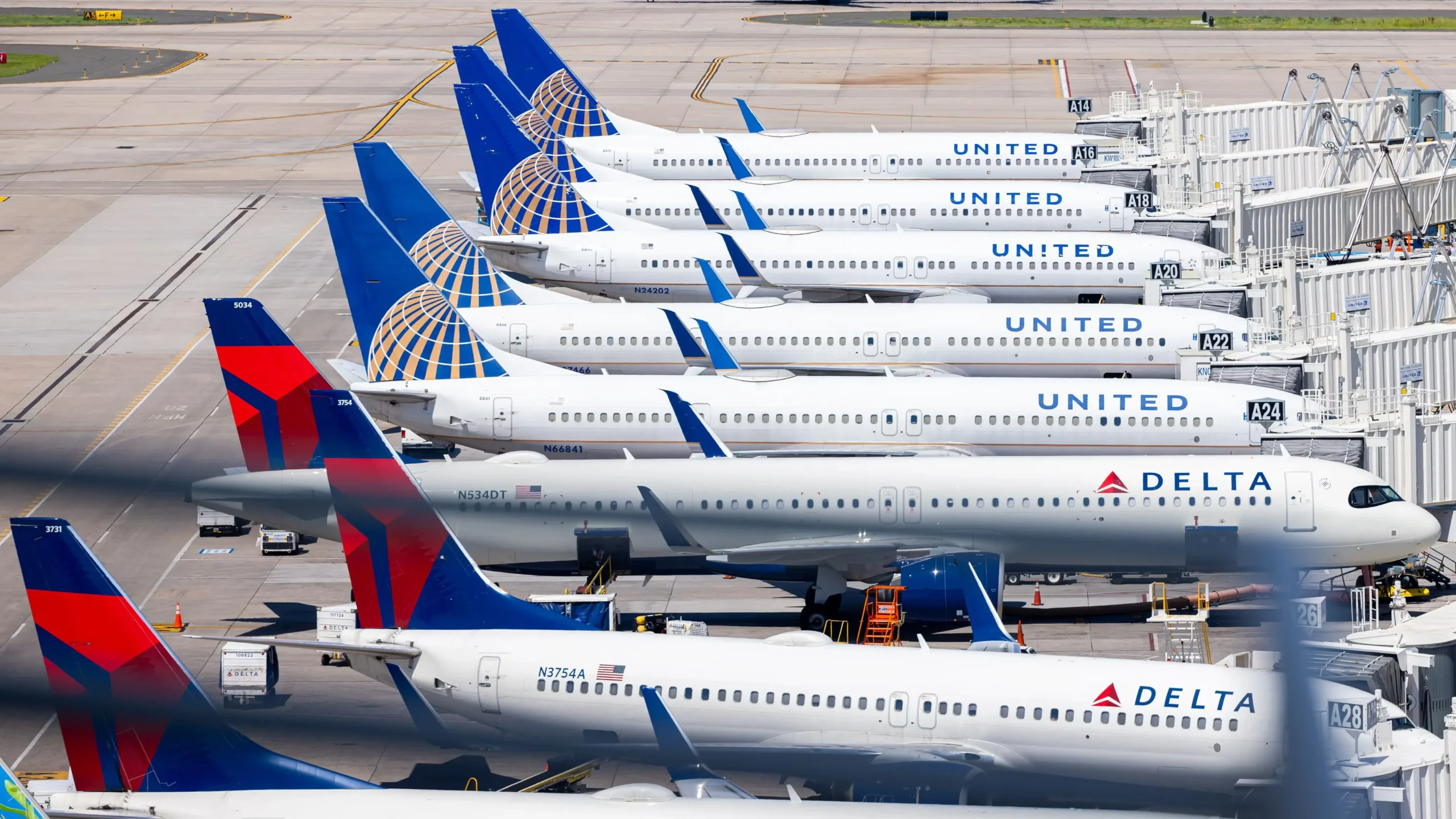
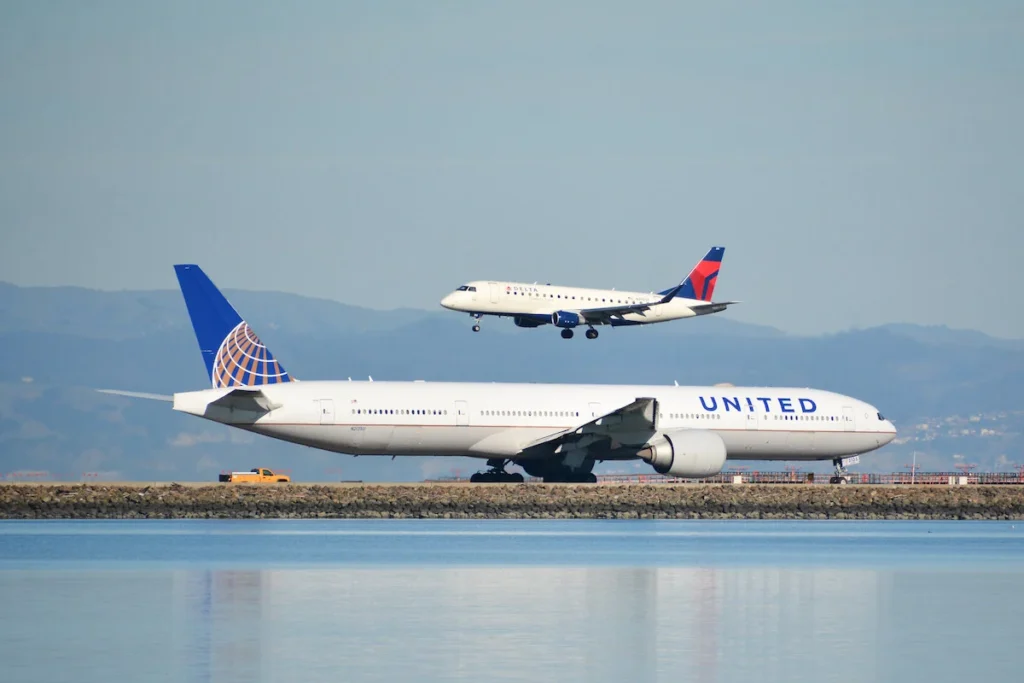
CHICAGO- United Airlines (UA) CEO Scott Kirby has reignited debate about the future of US aviation, asserting that only 2 premium full-service airlines will dominate long term: United Airlines and Delta Air Lines (DL).
His remarks follow rising concerns about American Airlines (AA), which continues to lose ground at key hubs such as Chicago O’Hare (ORD) and recently posted a loss during Q3 2025, historically one of the strongest quarters for US carriers.
Kirby’s comments on the Airlines Confidential podcast also shed light on his own leadership evolution, revealing how his strategic approach, communication style, and product investments have shifted since his earlier roles at America West (HP), US Airways (US), and American Airlines (AA).
Scott Kirby on US Premium Airlines
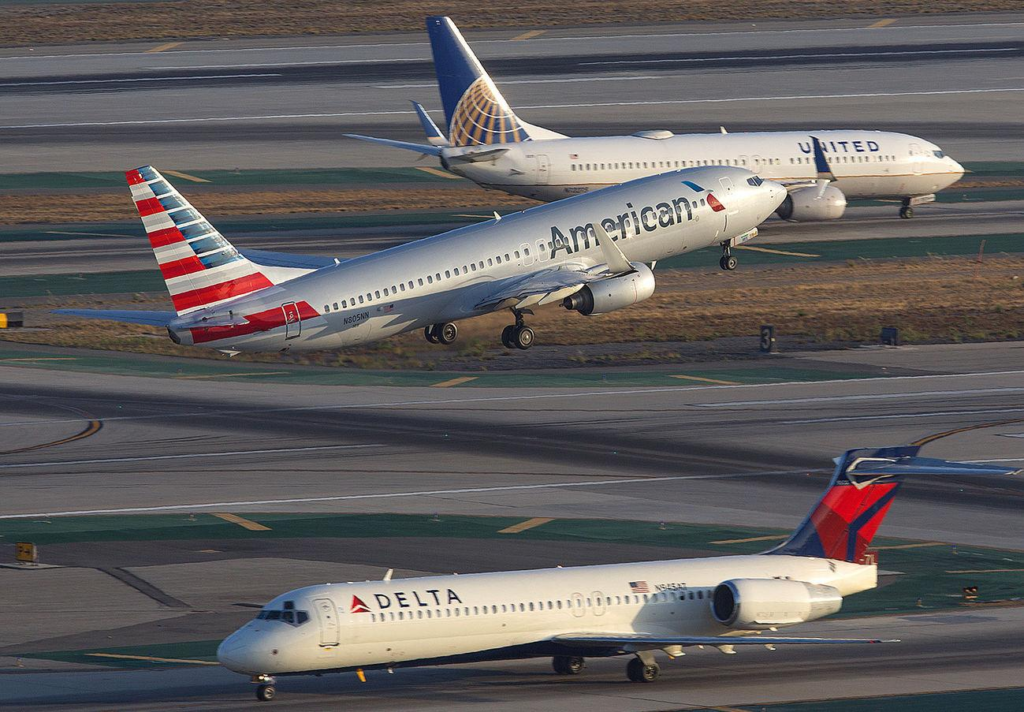
Scott Kirby’s latest statements reinforce a narrative he has repeated for years: the future belongs to two “large, revenue-diverse, full-service, brand-loyal airlines.”
Reported by OMAAT, he emphasized that competitors outside this group will compete largely for spill traffic and will continue shrinking over time.
When questioned whether he truly meant two instead of three, he doubled down, asserting that this is already the case today.
His view is influenced by United’s recent performance trends. United has gained share at Chicago O’Hare (ORD), prompting Kirby to remark that he “wouldn’t want to play American’s hand” there and that he “knows when to hold ’em, and knows when to fold ’em.”
Kirby also claims United has overtaken Delta by several metrics and would already be on Delta’s financial level if adjusted for Newark’s operational constraints and Delta’s oil refinery business. These claims remain debated but highlight an increasingly assertive vision.
Kirby’s critique of American Airlines (AA) is even sharper. He argues that American lacks a cohesive strategy, struggles with employee engagement, and has surrendered competitive relevance.
He points to American’s inability to motivate labor, echoing Scott McCartney’s observation that “once you lose labor, it’s over… it may take a couple of years or whatever, but it’s over.”
According to Kirby, American’s incremental customer-facing improvements fall short of a transformative plan, and the carrier’s recent financial underperformance, such as losing money in Q3 2025, suggests deeper structural issues.
Despite American’s strong assets, including joint-venture hubs in London (LHR), Sydney (SYD), and Tokyo (HND), powerful operations in Charlotte (CLT) and Dallas–Fort Worth (DFW), and Latin America dominance via Miami (MIA), the airline has not leveraged these advantages effectively.
Kirby’s Leadership Evolution
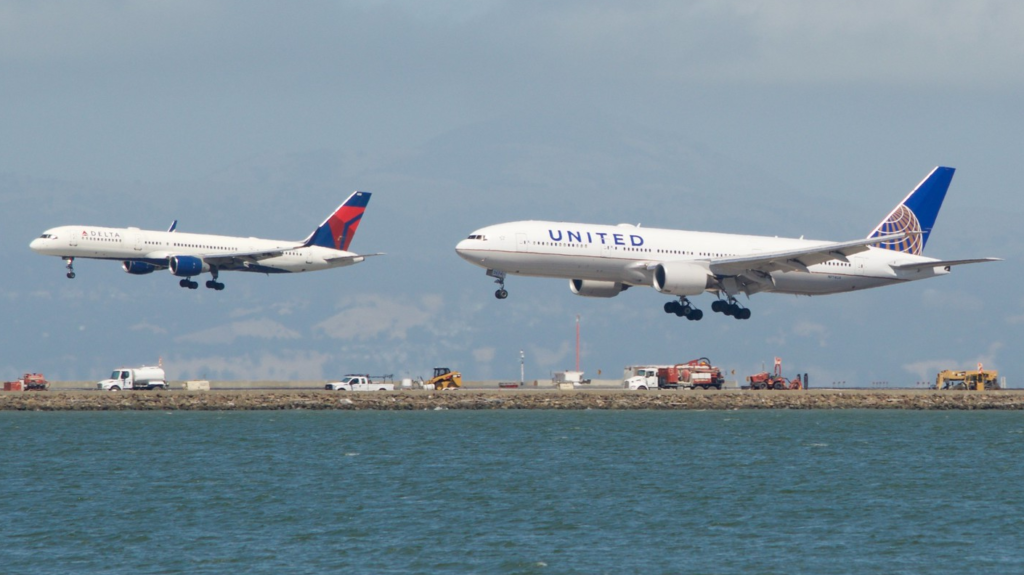
According to View from the Wing, Kirby’s leadership transformation is central to understanding United’s current strategy. Historically known as a “spreadsheet guy,” Kirby once refused investments until data proved unavoidable revenue loss.
At US Airways, in-flight Wi-Fi was postponed until it became clear that customers were avoiding the airline because it lacked the service.
That same analytical mindset guided his early years at United, where he focused on cost initiatives, loyalty program economics, and schedule growth as a driver of credit card revenue.
During that period, United even reduced premium cabin amenities, trimmed business-class staffing, and shortened domestic meal service windows.
Over time, Kirby’s philosophy changed. He now promotes “product matters” as a core belief, tracing this shift back to the late 1990s when JetBlue launched with live television onboard. Initially dismissing it as a gimmick, he tried it personally and admitted, “I was wrong.”
America West was so convinced of the value that it negotiated to install LiveTV on its aircraft, only to discover that JetBlue had bought the entire LiveTV company to block America West from adopting the same advantage.
This experience, combined with feedback from former United CEO Oscar Munoz, reshaped Kirby’s leadership identity. Munoz advised him to speak more openly about his vision and reminded him that employees misread him as purely numbers-driven.
Kirby now credits Munoz as the only boss who ever gave him direct performance feedback, a moment that pushed him to lead with greater transparency and conviction.
Today, Kirby’s United champions premium experiences such as seat-back entertainment, enhanced catering, and a fleet-wide investment in Starlink high-speed Internet.
Starlink’s low-latency LEO satellites eliminate page-loading delays, enabling real-time productivity, an important improvement after years of United’s reputation for unreliable Wi-Fi, particularly on its Boeing 737 fleet.
United now leapfrogs competitors with a service first adopted by JSX, in which United holds an equity stake.
Broader Strategy for US Airlines
Industry observers caution that no competitive advantage in aviation is permanent. Past claims of guaranteed profitability, such as Doug Parker’s assertion that American would “never lose money again,” illustrate the volatility of airline economics.
While Kirby’s vision is forcefully articulated, many analysts argue it reflects ambition as much as reality.
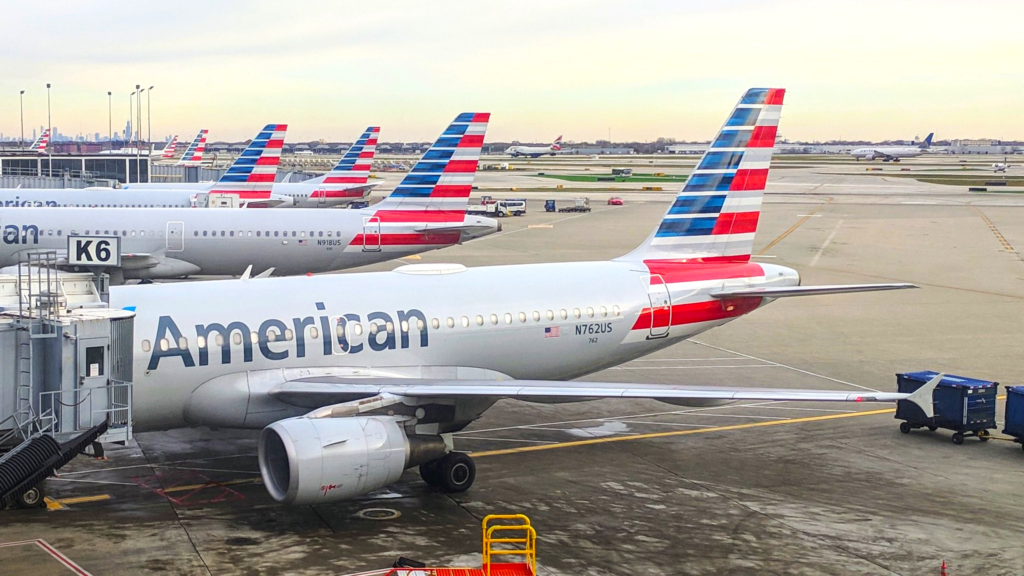
Still, United’s current product upgrades, hub growth strategies, and loyalty program expansion demonstrate a coordinated long-term plan. American’s path remains less clear.
Although the airline has declared “focus on the customer” as its current mantra, industry analysts view reliability and service as “table stakes” rather than differentiators.
Without a broader strategic reboot, American risks continuing to validate Kirby’s predictions by default rather than by any inherent inevitability.
United’s CEO claims customers have not fundamentally changed, he has. Yet questions remain about which aspects of his evolution are genuine shifts in belief versus strategic recalibrations based on market opportunity.
His public positions have varied over time, including notable swings in political messaging, making his long-term vision complex to interpret.
Future Outlook
The competitive landscape among United, Delta, and American is still evolving. United benefits from a confident CEO framing the narrative around premium leadership, strategic clarity, and employee engagement.
Delta remains a strong, stable competitor with deep customer loyalty and consistent execution. American holds powerful geographic and commercial assets but faces the urgent need for leadership alignment, employee motivation, and a unified strategy.
Kirby’s prediction of two dominant premium carriers may or may not materialize. But the current environment suggests that United and Delta are setting the agenda, while American must take decisive action to avoid becoming the carrier Kirby describes.
Stay tuned with us. Further, follow us on social media for the latest updates.
Join us on Telegram Group for the Latest Aviation Updates. Subsequently, follow us on Google News
