

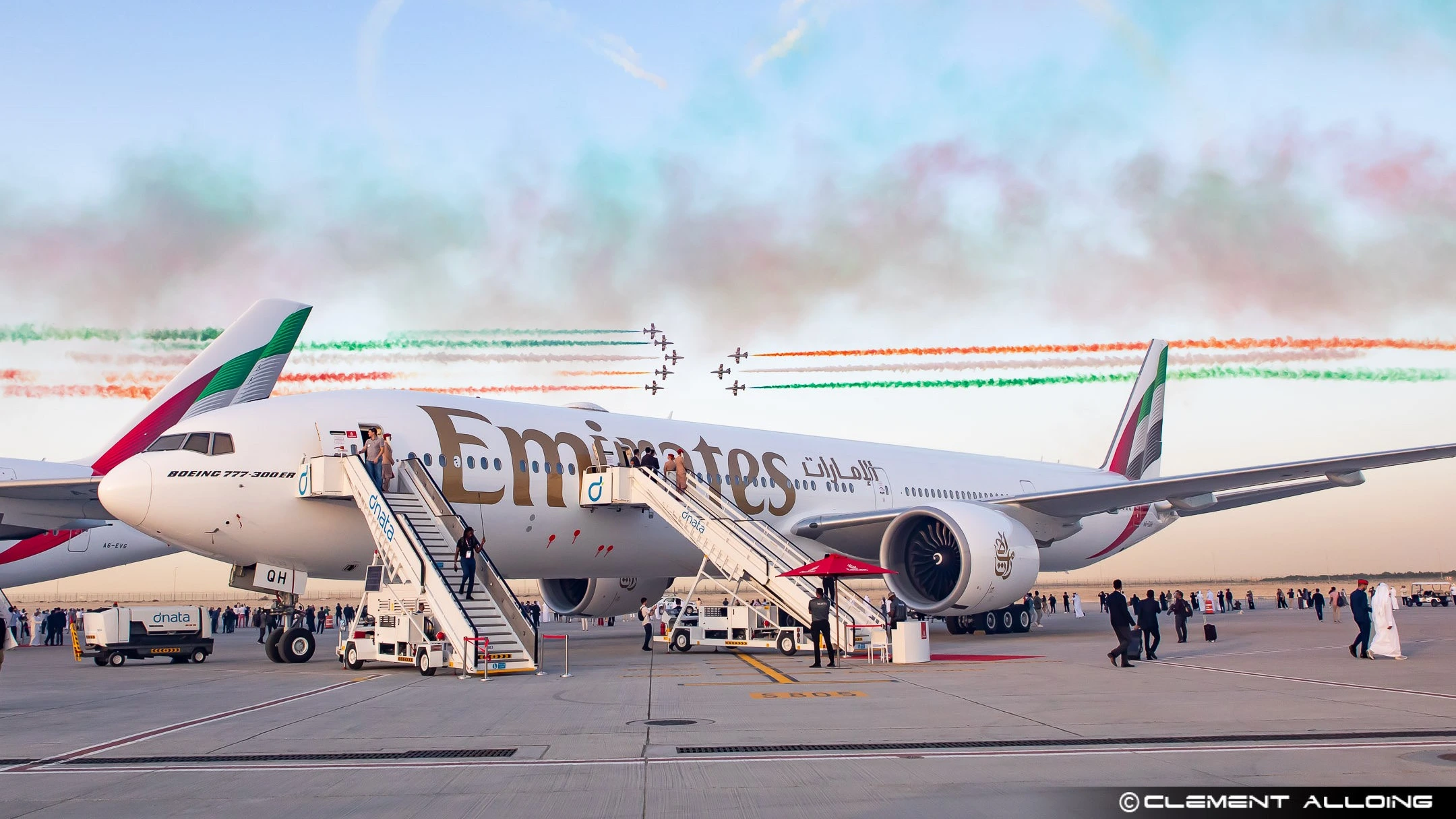
DUBAI- Emirates Airline (EK) is preparing for life after the Airbus A380 as it evaluates future widebody options that can replace the superjumbo at Dubai International Airport (DXB). The airline is pushing Boeing to study a stretched 777-10 while also monitoring Airbus and any plans for a higher-capacity A350-2000.
The carrier believes neither option can truly match the A380’s size, yet both could help bridge the eventual capacity gap once the A380 retires in the late 2030s and early 2040s.
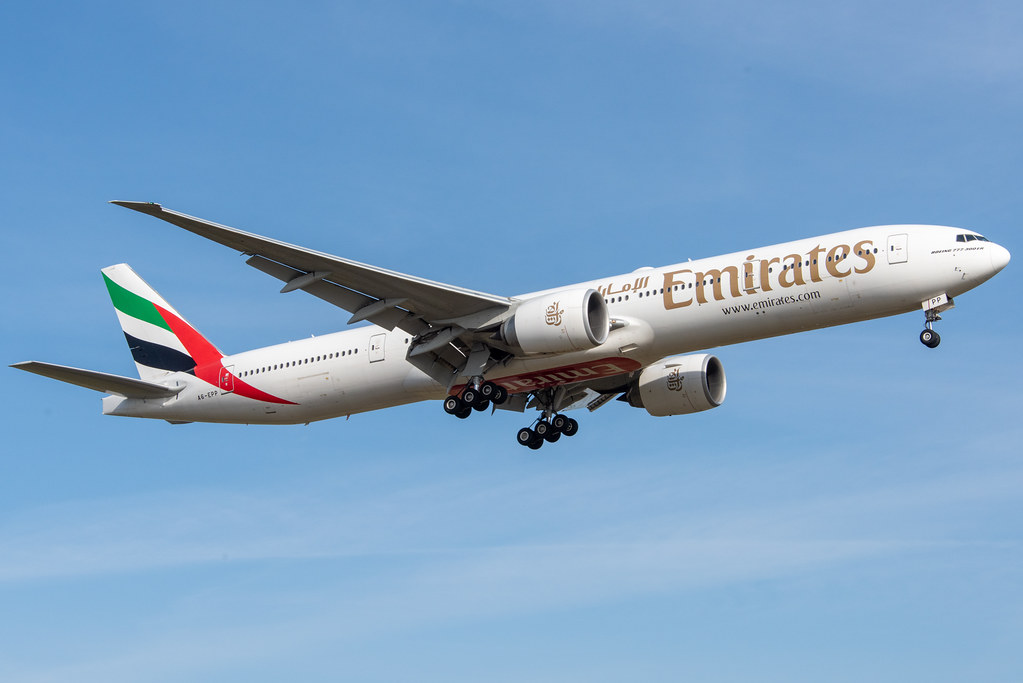
Emirates Eyes Boeing 777-10
Emirates president Tim Clark confirmed that the call for a 777-10 feasibility study stems from the need to secure enough seats when the A380 leaves the fleet.
The request followed Emirates’ order for 65 additional Boeing 777-9 jets, with the first delivery now expected in early 2027.
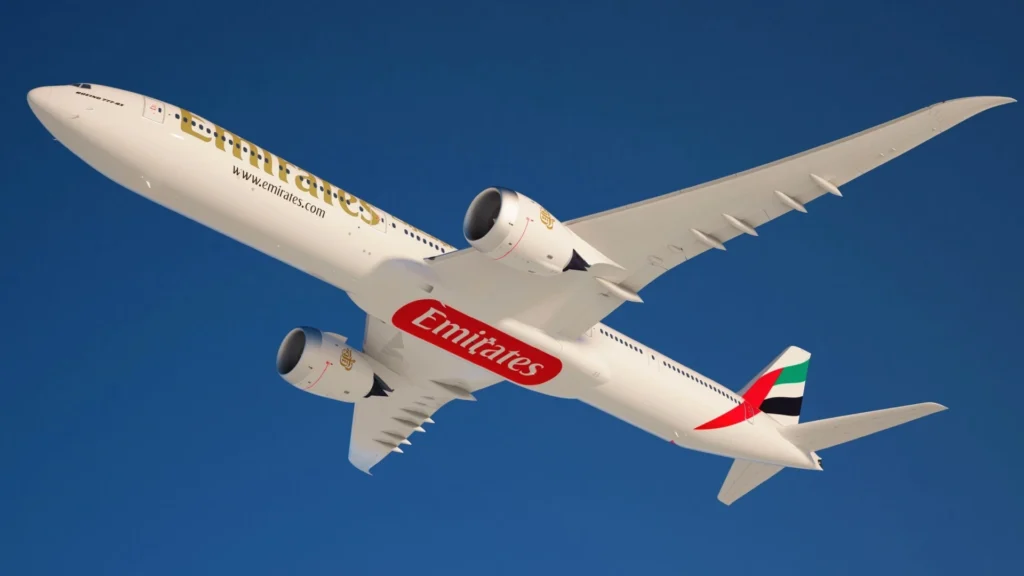
Clark explained that the airline wants direct involvement in shaping the 777-10’s design, noting that the GE9X engine has room for growth and that structural conditions support a stretch.
Clark reiterated that a 777-10 would be the only aircraft capable of approaching the seat count Emirates needs. He placed the ideal entry into service sometime in the 2030s, though acknowledged Boeing must first clear the 777-9 certification program.
He added that stretches of existing aircraft typically appear five or six years after initial entry into service, which aligns with Emirates’ long-term fleet planning horizon.
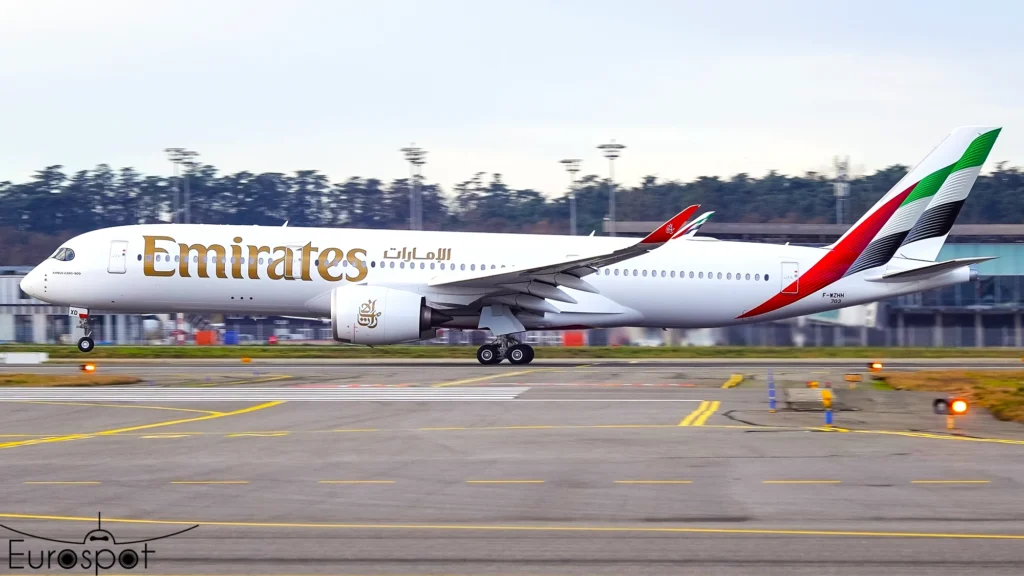
Airbus is also exploring possibilities for an A350-2000, but Clark said details remain vague. He believes such a variant would need a new powerplant suited for Middle East operating conditions and does not view the Trent XWB-97 as sufficient for the required performance.
These engine concerns are the main reason Emirates has not committed to the A350-1000, and Clark dismissed rumours that an order was imminent at the Dubai Airshow.
Technical Considerations Behind Widebody Development
Clark pointed out that Emirates has a long history of providing input on aircraft design, often influencing how variants evolve. He said this level of cooperation has not materialized with Airbus on the potential A350-2000.
The airline continues to voice concerns, but Airbus appears to be advancing in its own direction. Clark highlighted years of communication with Airbus Commercial CEO Christian Scherer over the A350-1000’s limited size, describing a consistent struggle to find a model suitable for Emirates’ high-density, long-range missions.
The requirement for higher takeoff performance in hot conditions remains an engineering challenge. For Emirates, an A350-2000 would need a powerplant beyond the current Trent XWB family. Without that capability, the airline cannot commit to a large A350 order.
Market Forces Driving Demand For Larger Aircraft
Clark expects many global carriers to seek larger widebodies as airport congestion, infrastructure limits, and slot constraints intensify. The A380 showed how high capacity can unlock growth when airports cannot expand.
Even so, past attempts at oversized aircraft concepts often stalled. Singapore Airlines explored both a stretched A350 and a stretched 777X around 2016, but neither project advanced.
Emirates ultimately became the only airline to operate the A380 at scale, shaping airport planning and passenger expectations worldwide. Its upcoming fleet decisions will again influence widebody development for the next generation.
Emirates and Safran Partnership
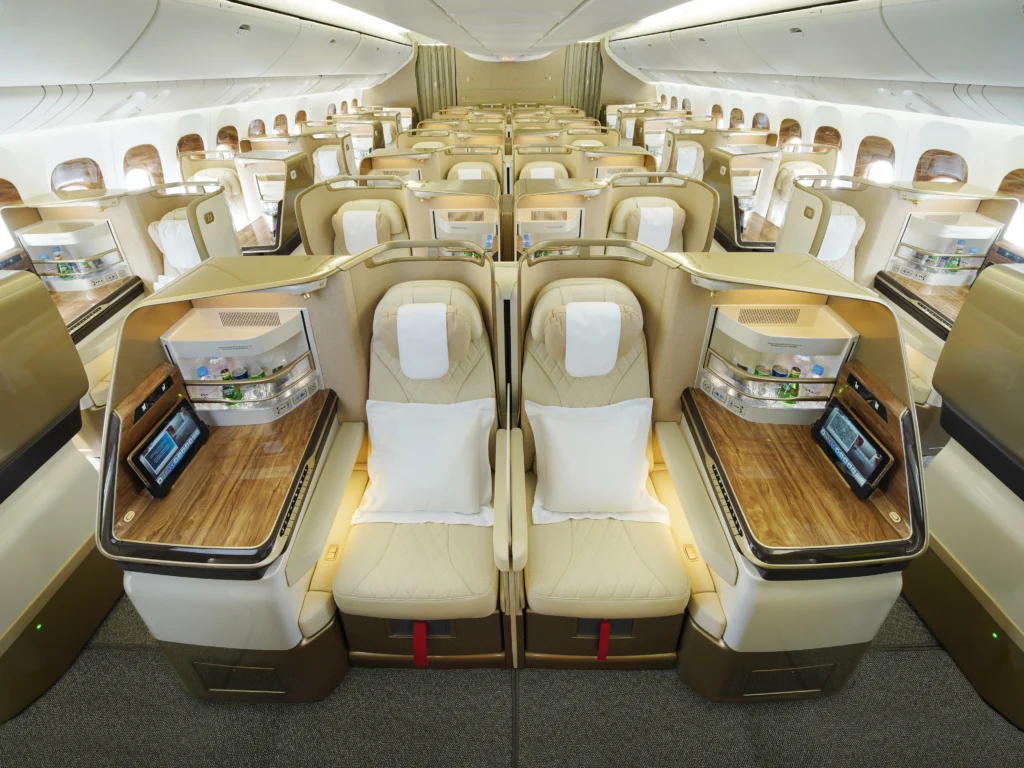
Emirates and Safran Seats have agreed to build a new aircraft seat manufacturing and assembly facility in Dubai, strengthening local production capabilities near Emirates operations.
The partnership also supports Emirates retrofit work at Dubai International Airport and positions the city as a growing aerospace hub.
New Facility Marks a Strategic Step Forward
The collaboration focuses first on Business and Economy Class seats for Emirates retrofit projects, with scope to expand into line fit later.
The planned site will serve both Emirates and other Safran Seats customers, giving the region direct access to advanced aircraft seating technology.
The project aims to boost industrial capacity and keep pace with rising global demand for aircraft seats. It will use modern production systems to increase efficiency and support the broader growth of the aviation supply chain in the UAE.
Supporting Dubai’s Aerospace Ambitions
Emirates leadership views the agreement as a milestone that strengthens the local aerospace ecosystem.
The company expects the facility to create skilled jobs, support future cabin interior programmes, and attract technology suppliers and specialists. The initiative aligns with Dubai’s long-term economic goals and supports the expansion of its aviation manufacturing base.
Safran describes the project as an extension of its long-term cooperation with Emirates. The company sees the facility as a way to prepare for worldwide production growth and continue developing next-generation seat technology.
Safran has supplied premium seats for the Emirates cabin refurbishment programme and for the airline’s new A350 fleet. The upcoming facility represents the first phase of a broader plan to build a larger aerospace manufacturing cluster in Dubai.
Construction is planned for completion by Q4 2027, covering about 20,000 to 25,000 square metres. Production will scale up in phases. Initial plans call for the assembly of up to 1,000 Business Class seats per year, with additional expansion built into the long-term roadmap.
Emirates to Invest $10-12 Billion in DWC
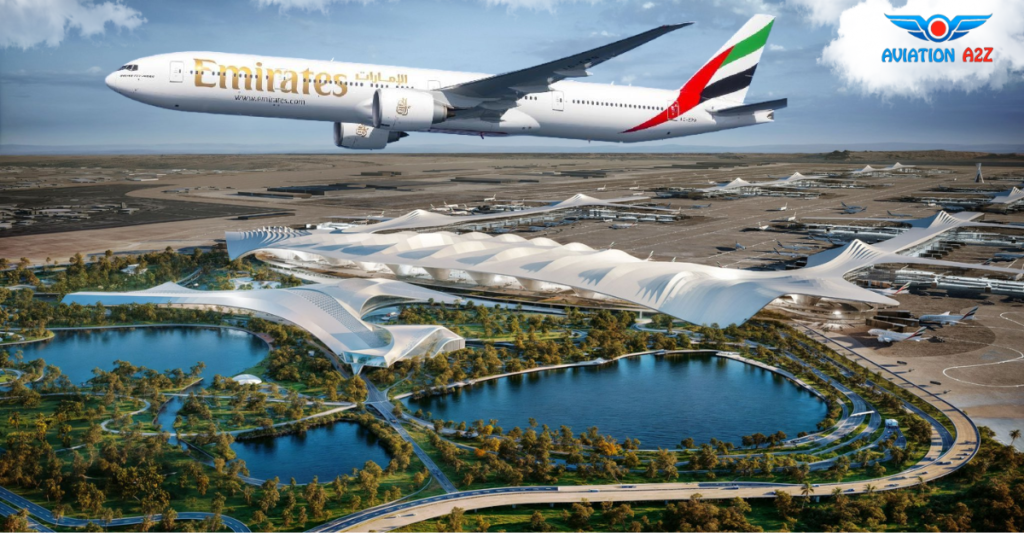
Emirates (EK) confirmed plans to invest 10 to 12 billion dollars in its future facilities at Al Maktoum International Airport (DWC). The airline outlined its role in shaping the new mega hub that forms part of Dubai’s long-term aviation strategy.
The investment supports the infrastructure being built at the new terminal site, separate from the wider 35 billion dollar expansion program already launched by the Government of Dubai for Al Maktoum International Airport (DWC).
Emirates outlines scale of its infrastructure needs
Sheikh Ahmed bin Saeed Al Maktoum shared that the airline’s budget will cover essential assets, including catering centers, maintenance hangars, and operational support buildings. These projects sit outside the government’s funding for the terminal itself and are crucial for handling future fleet growth and service requirements.
He noted that the airline’s contribution remains only one part of a larger development ecosystem. Multiple stakeholders are expected to invest as construction progresses, particularly as the airport prepares for a capacity of 150 million passengers early next decade, with room to scale to 260 million.
UK Export Finance recently issued a 3.5 billion dollar Expression of Interest to support British companies participating in the expansion. This added a strong international vote of confidence to the project during the Dubai Airshow 2025.
Government commitment to long-term capacity planning
Dubai’s 35 billion dollar allocation for the new terminal reflects the city’s goal to establish Al Maktoum International Airport as the future primary hub. The planned capacity aligns with the emirate’s passenger traffic forecasts and its broader economic targets for aviation and tourism.
Sheikh Ahmed said the airline is well-positioned to finance its share of development. He described Emirates’ current financial position as stable, supported by strong liquidity and consistent cash flow.
Stakeholder participation in the wider aviation program
The aviation ecosystem around the new terminal will include contributions from multiple entities beyond Emirates. The CEO highlighted that additional governments are encouraging their companies to join the project, signaling its scale and international relevance.
These combined investments will shape the airport into one of the world’s largest aviation platforms, designed to serve long-term passenger and cargo needs.
Stay tuned with us. Further, follow us on social media for the latest updates.
Join us on Telegram Group for the Latest Aviation Updates. Subsequently, follow us on Google News
