

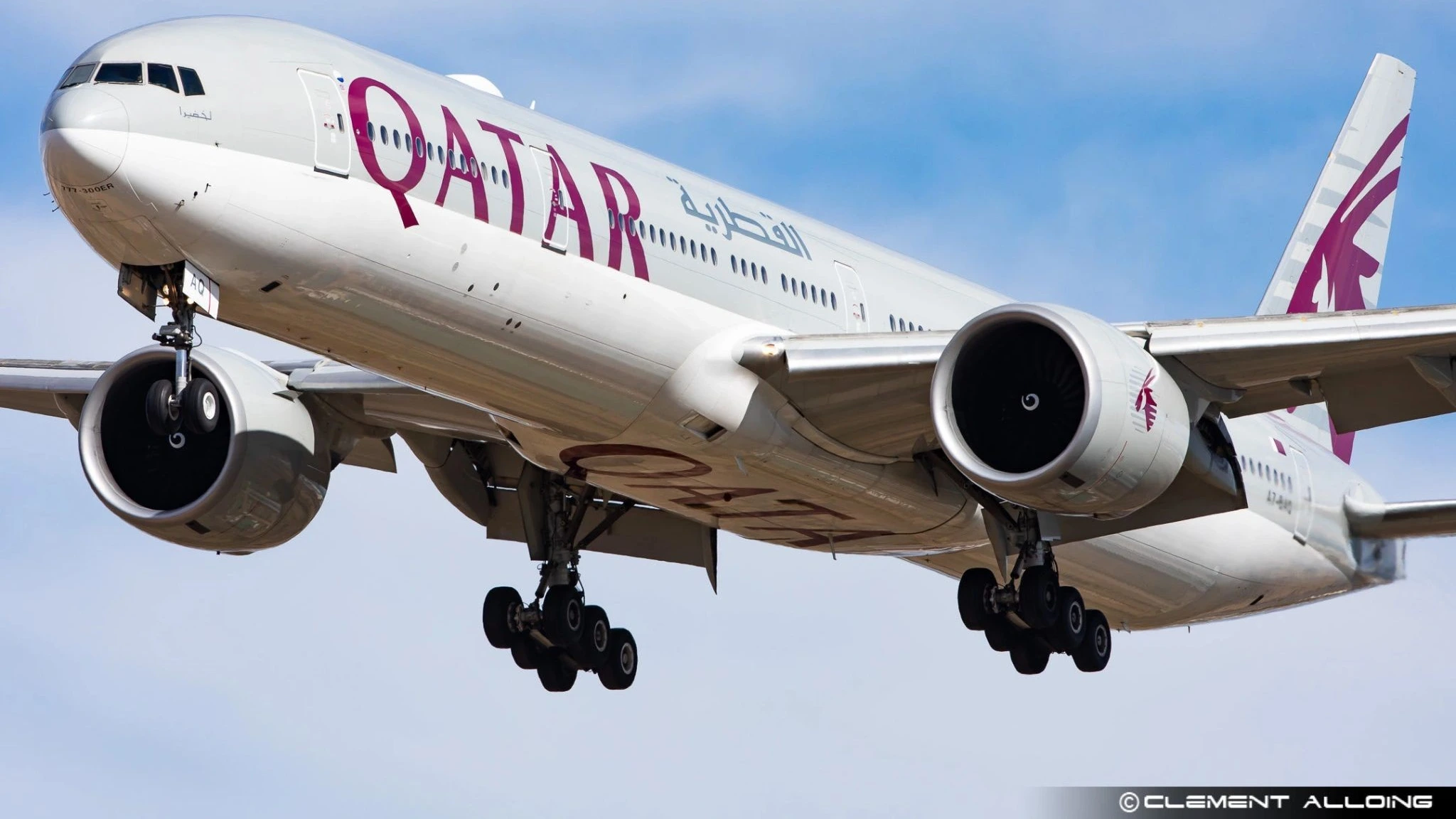
DOHA- A Virginia mother is suing Qatar Airways (QR) for $5 million after a flight attendant allegedly gave her three-year-old daughter a KitKat bar despite clear warnings that the child was severely allergic to dairy and nuts.
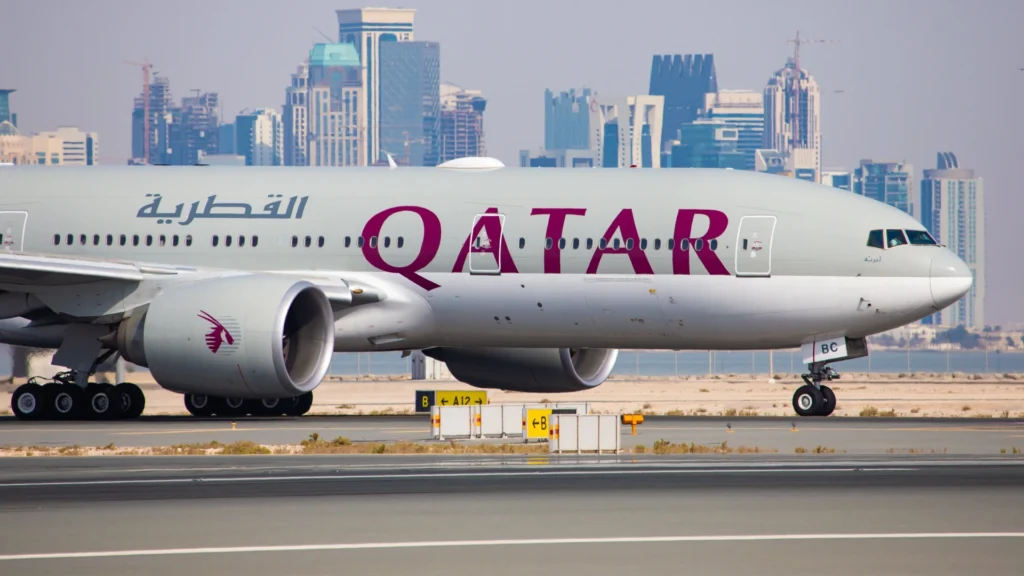
The incident occurred aboard Flight QR710 from Washington Dulles (IAD) to Doha Hamad International Airport (DOH). The child reportedly suffered a severe anaphylactic reaction mid-flight and had to be treated with an EpiPen to stabilize her condition.
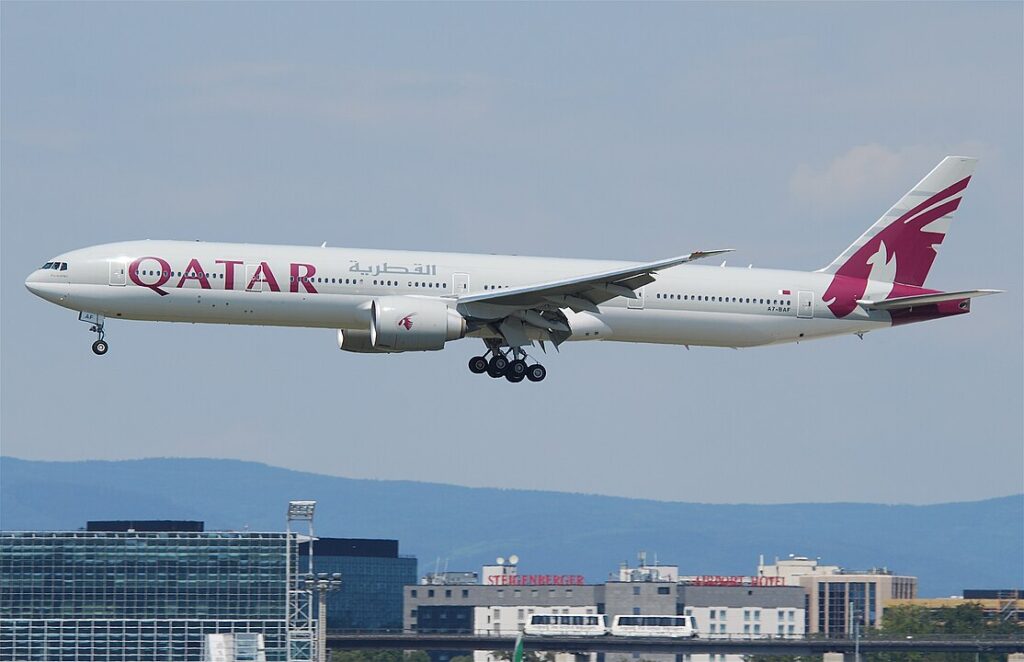
Qatar Airways $5M Lawsuit
Swetha Neerukonda, the mother involved, stated that she had informed Qatar Airways in advance about her daughter’s allergies and reminded the cabin crew again upon boarding.
According to the lawsuit filed in a Virginia district court, despite these repeated warnings, a flight attendant offered the young girl a KitKat bar while her mother briefly stepped away to the restroom.
When Neerukonda returned to find her daughter eating the chocolate, she immediately intervened. The complaint alleges that the attendant admitted to giving the snack but dismissed the mother’s concern and “mocked” her warnings.
The child’s condition deteriorated quickly, leading Neerukonda to administer an EpiPen when her daughter’s vital signs began to decline.
The lawsuit accuses the airline of failing to respond appropriately to a medical emergency, stating that no public announcement was made to seek help from medically trained passengers and no contact was initiated with any ground-based telemedicine provider.
Alleged Breach of Duty
The six-page complaint argues that once the airline was made aware of the passenger’s food allergies, its crew had a duty of care to prevent exposure to allergens.
Neerukonda’s legal team has filed the case under the Montreal Convention, which holds international carriers liable for injuries suffered by passengers during a flight.
While typical compensation limits under the convention are around $170,000, the mother’s claim asserts that $5 million represents “full, fair, and reasonable” damages for the physical and emotional distress caused. Reported by PYOK, the lawsuit highlights growing concern over how airlines handle passengers with life-threatening allergies.
FAA Regulations and Airline Medical Preparedness
In the United States, the Federal Aviation Administration (FAA) does not mandate airlines to carry EpiPens or their generic equivalents onboard. Airlines must only stock epinephrine vials, which require a trained medical professional to administer safely.
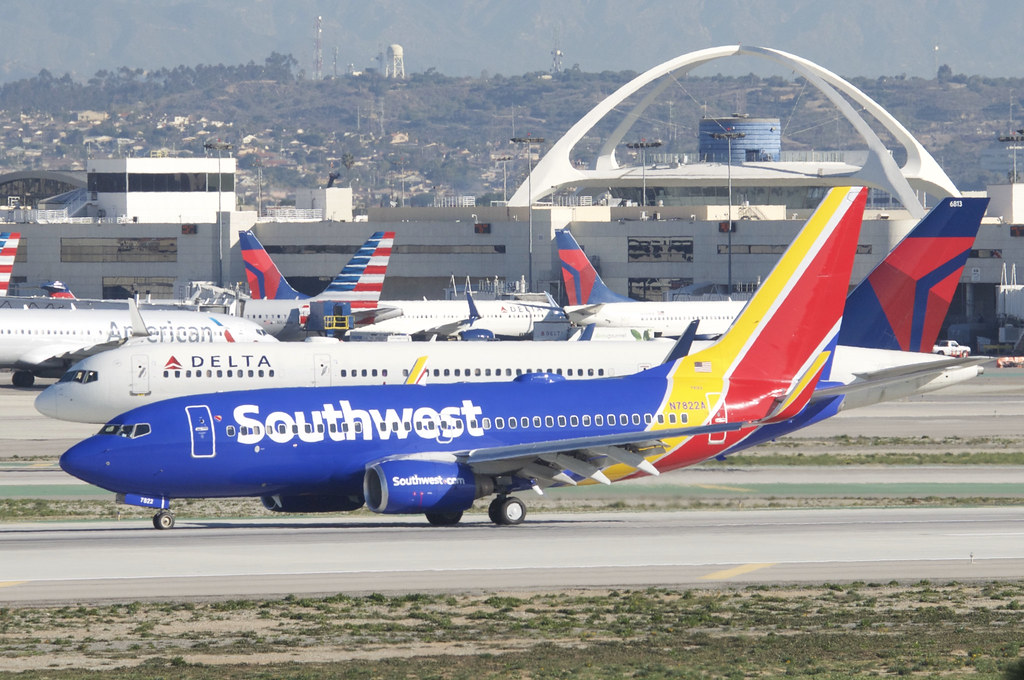
Some US carriers, such as Southwest Airlines (WN), voluntarily include EpiPens in their emergency kits, enabling cabin crew or passengers to administer the drug during severe allergic reactions.
A prior FAA-commissioned review recommended mandatory EpiPens on flights, but this suggestion has not yet been implemented.
Aftermath
Following the initial incident on Flight QR710, Neerukonda’s daughter experienced another allergic reaction during their connecting flight to India and was subsequently admitted to intensive care.
The case has reignited debate over airline responsibility, crew medical training, and passenger allergy management on international routes.
As air travel continues to grow, this case underscores a critical question: how prepared are airlines to protect passengers with serious medical vulnerabilities at 35,000 feet?
Stay tuned with us. Further, follow us on social media for the latest updates.
Join us on Telegram Group for the Latest Aviation Updates. Subsequently, follow us on Google News
